
Antique Maple Desk
When you want an antique maple desk, you are acquiring a sophisticated workspace defined by pale, figured timber and robust 19th- or early-20th-century cabinet-making.
Antique Maple Desk
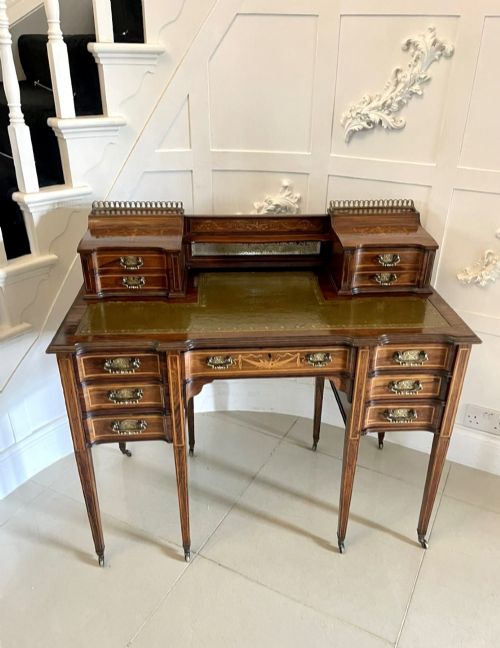
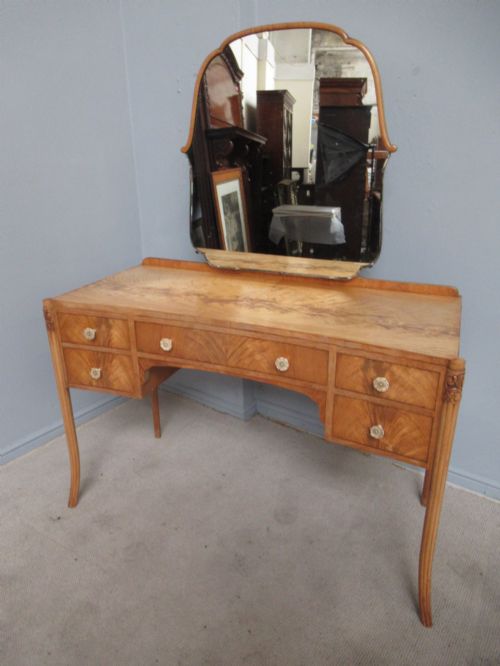
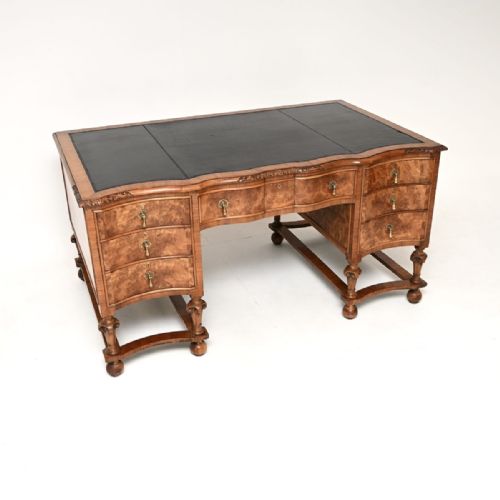
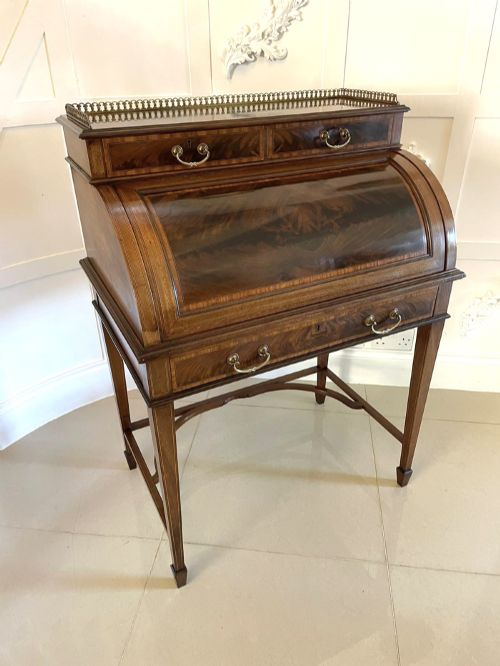
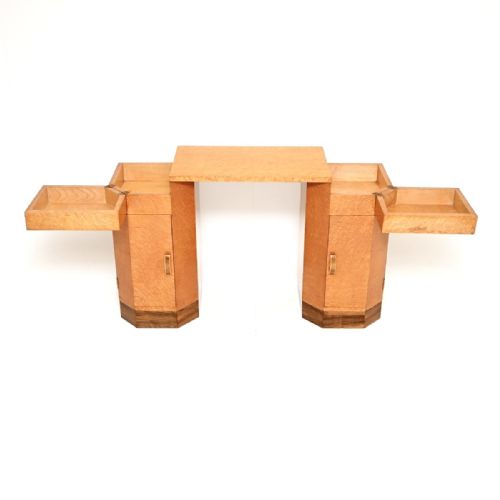
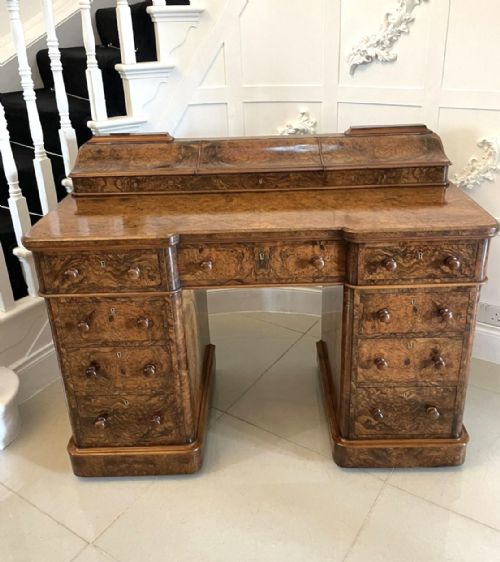
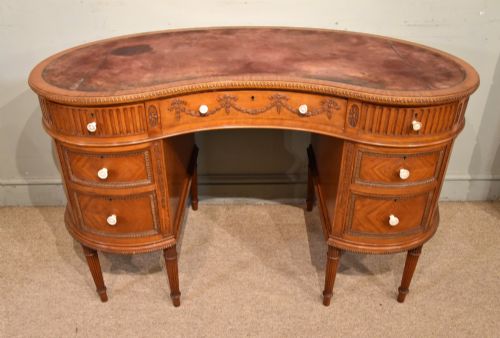
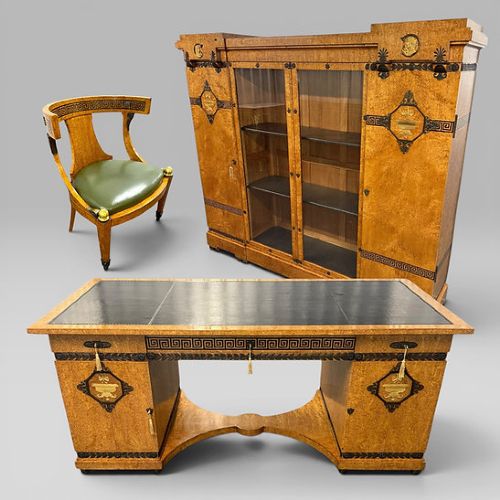
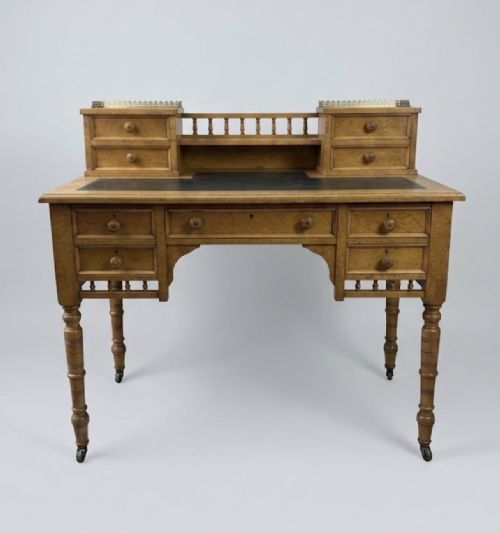
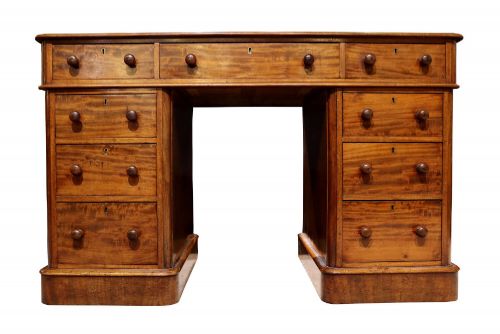
An antique maple desk encompasses writing tables, twin-pedestal pedestal desks, kneehole desks, and cylinder desks produced during the Victorian, Edwardian, and Art Deco periods. These pieces serve primarily as functional office furniture or display writing surfaces within a home study.
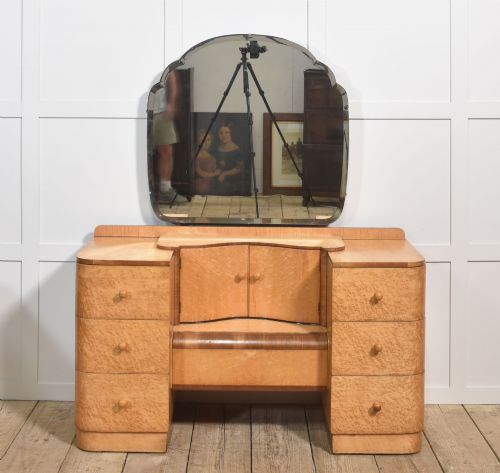
The most common forms encountered on this page originate from prolific London makers like Maple & Co., utilising the pale, bird's-eye figure of maple timber alongside contrasting woods such as mahogany and walnut.
Materials and Construction
Makers utilised solid maple and bird's-eye maple veneer laid over secondary timbers, often incorporating brass hardware, leather writing inserts, and inlaid satinwood or mahogany details.
Cabinet-makers constructed these desks using traditional dovetail joints for drawers and sturdy internal framing, occasionally combining maple with burr walnut or rosewood to create striking visual contrast.
Assessing Craftsmanship
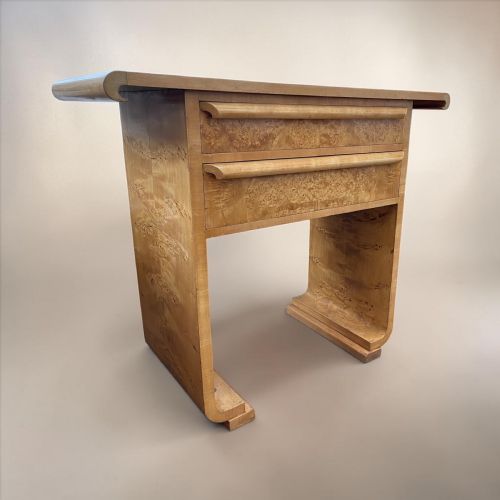
Quality rests on the density and figuring of the maple timber itself, particularly the catch of bird's-eye patterns across large flat surfaces like top panels and drawer fronts.
Superior examples display crisp marquetry inlay, original brass handles and leather inserts, and substantial structural integrity in the pedestals without excessive veneer patching.
Maple and Co·Harry and Lou Epstein·Mercier Frères
The Antique Maple Desk Glossary
- Bird's-Eye Maple
- A figure in maple wood that resembles tiny, swirling eyes, caused by local disruptions in the growth of the grain.
- Pedestal Desk
- A heavy writing desk supported by two banks of drawers running down to the floor on either side of the sitter.
- Cylinder Desk
- A writing desk featuring a rolling curved wooden shutter that conceals an interior arrangement of small drawers and pigeonholes.
- Inlay
- A decorative technique where contrasting materials are inserted into recessed cavities on the wooden surface to form patterns.
Antique Maple Desk: Frequently Asked Questions
What periods do these desks cover?
The pieces span the nineteenth century, the Victorian era, the Edwardian period, and extend into the nineteen-twenties and thirties.
Most examples reflect the heavy manufacturing output of late Victorian and Edwardian London workshops.
How do I maintain a leather top?
Leather writing surfaces benefit from occasional cleaning with specialised leather balms to prevent drying and cracking.
Keep them away from direct sunlight to preserve the original colour and gold tooling.
Are these desks suitable for daily work?
These pieces provide ample surface area and practical drawer configurations for modern writing and computer tasks.
Their solid internal construction ensures they withstand regular daily use in a study or office.