
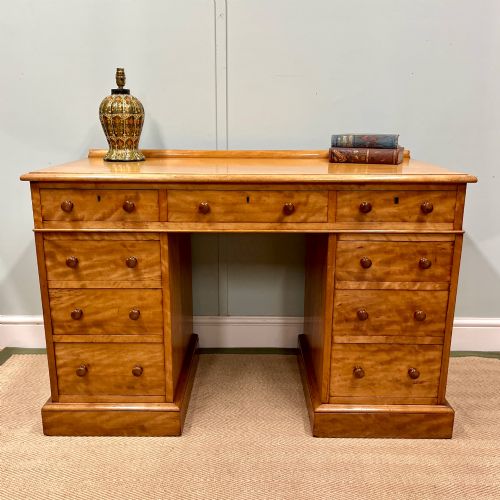
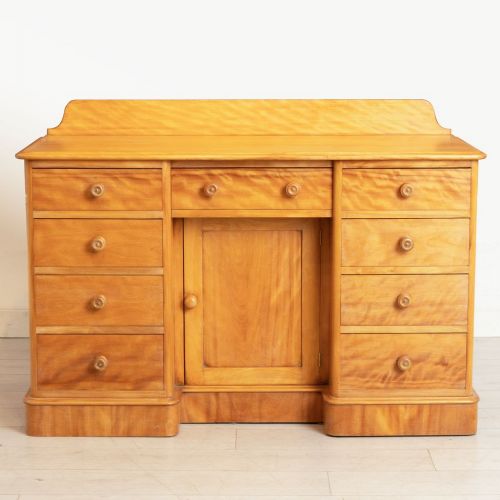


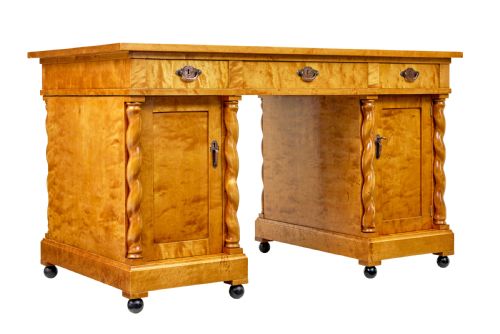

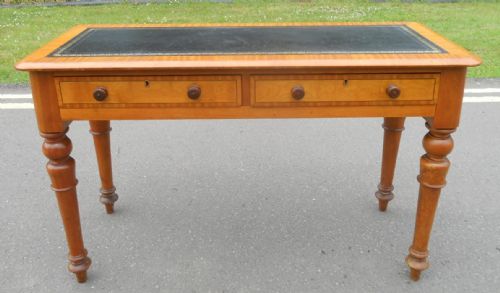


Blonde Wood Writing Table
These blonde wood writing table pieces offer pale timber surfaces suited for writing, drawing and study.
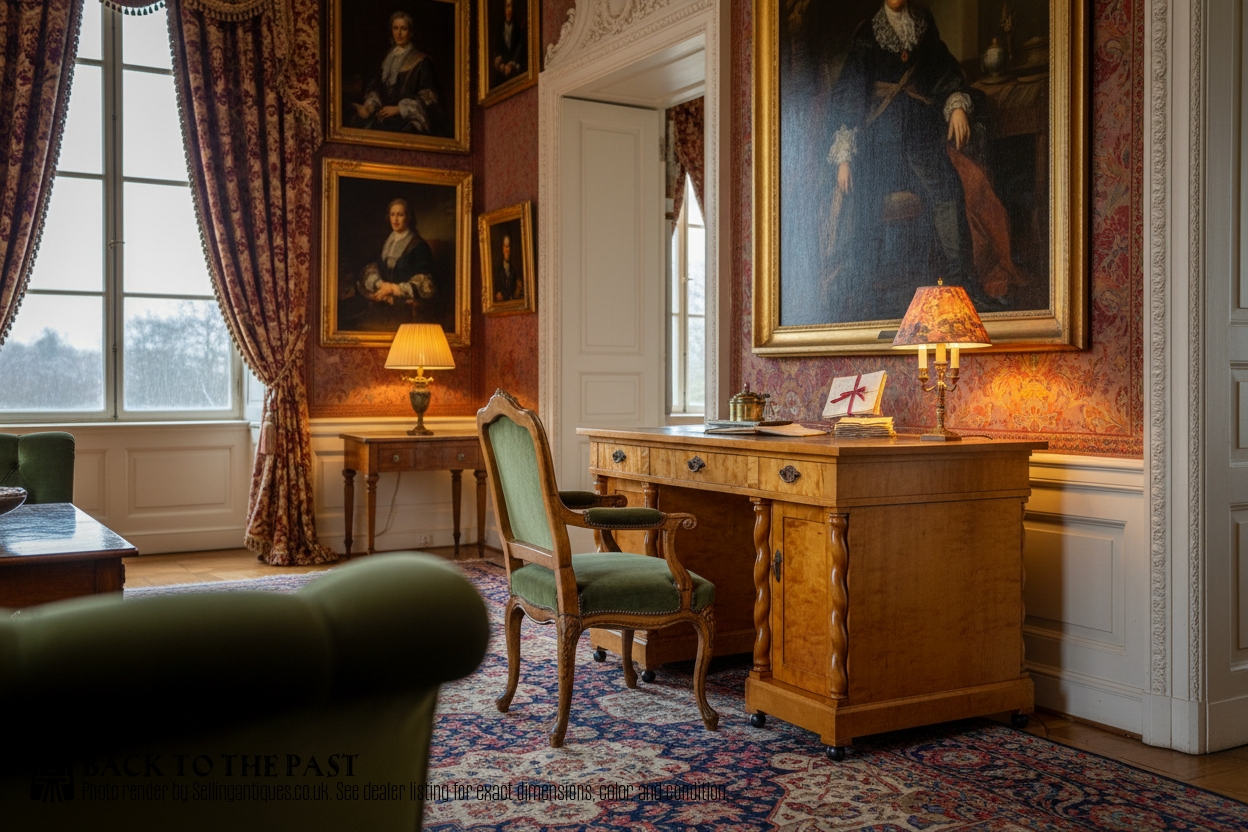
Blonde Wood Writing Table
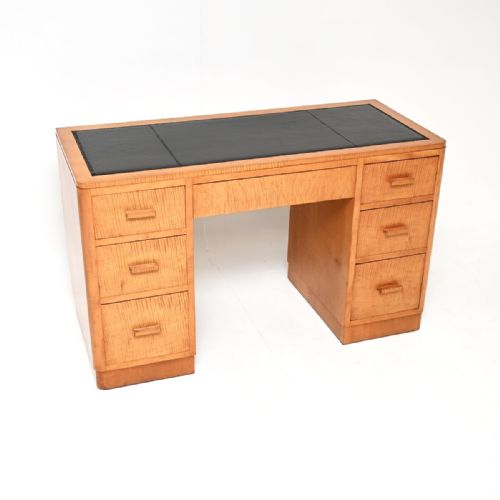
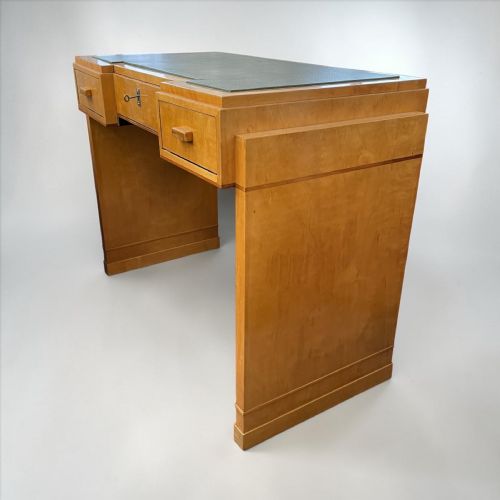
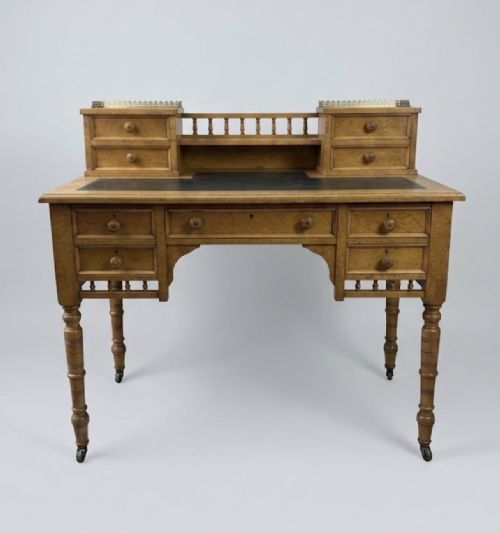
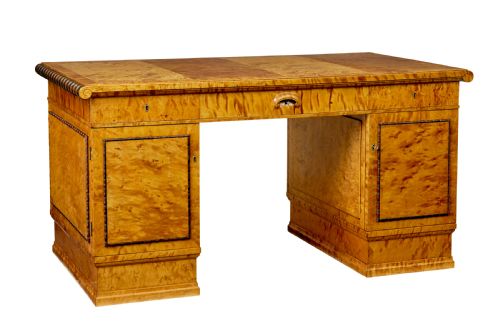
A blonde wood writing table brings pale timber surfaces into a room, taking forms such as pedestal desks, kneehole desks, and writing desks. These pieces appear across periods from the nineteenth century into the twentieth century, spanning Victorian, Art Deco, and Scandinavian classicism styles.
The most common examples on this page are pedestal desks and writing tables constructed in satin birch, birds eye maple, and ash. Makers and workshops shaped these timbers into practical study furniture fitted with drawers and occasionally superstructures.
Buyers encounter French provincial, French gothic revival, and Swedish influences alongside British nineteenth century pieces. The forms range from simple single drawer side tables to substantial nine drawer pedestal desks with leather top inserts.
How these pieces were made
Makers utilised light timbers including satin birch, birds eye maple, flame birch, ash, and blonde mahogany for the primary visible surfaces. These woods were selected for their distinctive grain patterns, which range from the spots of birds eye maple to the shimmering quality of satin birch.
Construction frequently incorporated contrasting details such as brass hardware and fitted leather writing surfaces inset into the timber tops. Carved elements appear on specific Scandinavian and French regional pieces, while Art Deco examples rely on clean geometric lines to showcase the natural wood.
Object forms span pedestal desks, kneehole desks, sofa tables, and single drawer side tables.
What varies in quality
Quality depends upon the selection and matching of the timber veneer or solid blonde wood across large surfaces like desk tops and drawer fronts. Better pieces display continuous grain alignment and careful timber preparation that accentuates the natural figure of birch, maple, or ash.
The sophistication of the internal drawer construction and the integration of brass fittings or leather writing inserts distinguish finer examples. Superior execution shows in the balance between structural joinery and the decorative potential of pale wood.
Heal and Son
The Blonde Wood Writing Table Glossary
- Satin birch
- A pale timber with a shimmering, lustrous grain often utilised in nineteenth and twentieth century cabinetmaking. It provides a bright surface finish.
- Birds eye maple
- A figure in maple wood that resembles tiny swirling eyes, highly prized for decorative veneer on desk fronts and table tops. This figuring occurs naturally in the wood.
- Pedestal desk
- A heavy freestanding desk supported by two matching banks of drawers or cupboards below the work surface. These offer substantial storage capacity.
- Kneehole desk
- A desk featuring a central recess for the user's legs, flanked by pedestals containing multiple drawers. This configuration provides a compact workspace.
- Superstructure
- An additional set of small drawers or compartments built onto the top rear surface of a desk. It holds stationery and small items.
Blonde Wood Writing Table: Frequently Asked Questions
What periods do these blonde wood writing table pieces cover?
The pieces span from the mid nineteenth century through the Victorian era and into early twentieth century Art Deco and Scandinavian designs. Different decades brought shifts in form, moving from heavily carved revival styles to cleaner modern lines.
Cabinetmakers across Britain, France, and Sweden adapted pale timbers to suit changing domestic fashions for lighter furniture. This temporal range gives buyers a choice of distinct historical aesthetics.
Which light woods appear most frequently?
Satin birch and birds eye maple dominate the material evidence, accompanied by ash, flame birch, and blonde mahogany. These pale woods were chosen specifically for their decorative grain patterns.
Makers allowed the natural colour and figure of the timber to act as the primary ornamentation. This creates a bright visual presence distinct from dark mahogany or walnut antiques.
How were these tables used originally?
These pieces served as functional writing desks, study tables, and administrative desks in private homes and offices. Fitted drawers kept correspondence, ledgers, and writing implements close at hand.
Larger pedestal variants accommodated daily clerical work, while smaller side tables and sofa tables functioned in parlours and drawing rooms. The inclusion of leather inserts provided a smooth surface for quill and pen.
How do I identify Art Deco examples?
Art Deco pieces from the nineteen twenties and thirties rely on streamlined silhouettes and symmetrical arrangement of wood grain. They discard nineteenth century revival ornamentation in favour of unadorned geometric shapes.
Makers utilised satin birch veneers to create striking visual patterns across flat surfaces and pedestal structures. This modernist approach emphasises the natural qualities of the blonde wood.