





Satin Birch Pedestal Desk
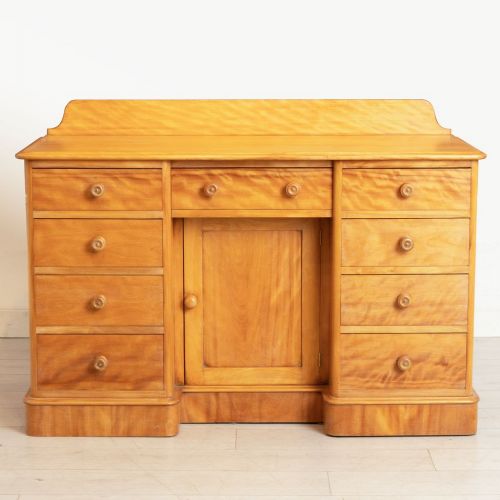
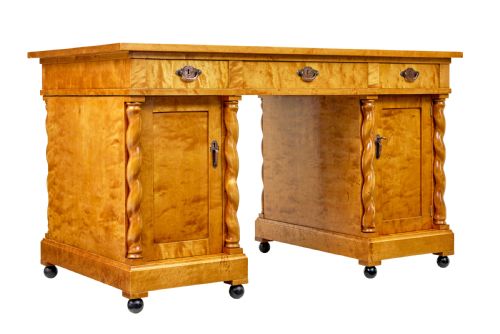
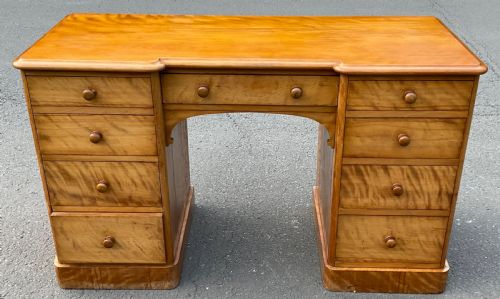
Satin birch pedestal desk pieces offer remarkable grain figure and sturdy workspace proportion, making them a handsome centrepiece for any study.
Satin Birch Pedestal Desk
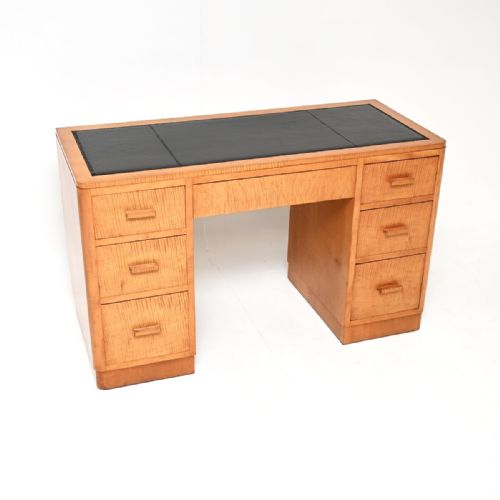
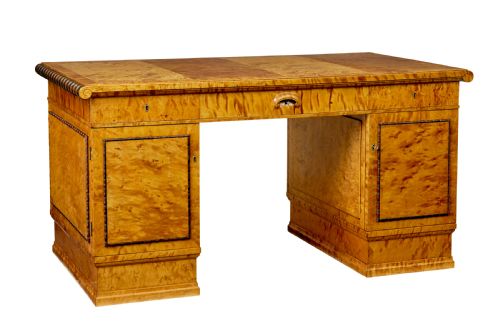
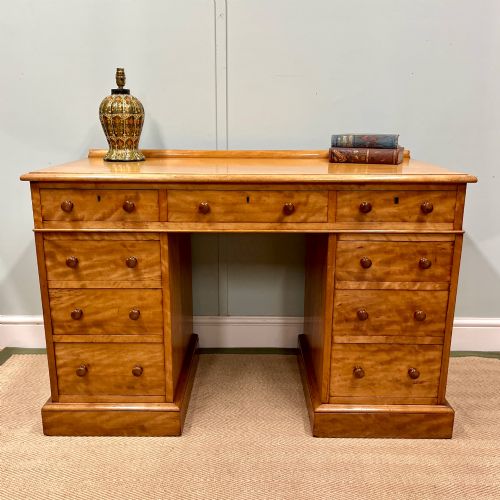
A satin birch pedestal desk is a substantial writing furniture form supported by two banks of drawers or cupboards flanking a central kneehole space. These workspaces appear across the nineteenth century and into the nineteen thirties, encompassing Victorian English examples and Scandinavian interpretations.
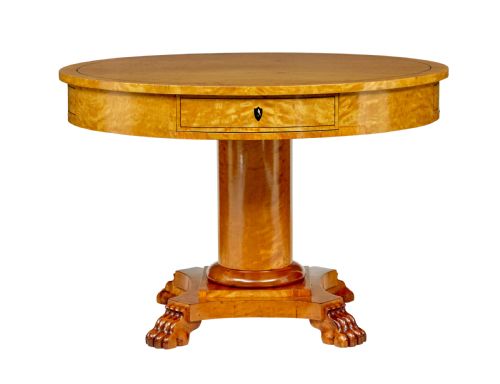
The most frequent version on this page is the Victorian pedestal desk, often executed in figured satin birch with an inset leather writing surface. Buyers also encounter Swedish variations from the early twentieth century, spanning Art Deco, Empire Revival, and Scandinavian Classicism styles.
Makers such as Heal and Son and Gillows produced notable examples, while other desks remain attributed to London workshops or Swedish makers. Formats range from traditional kneehole writing tables to compact pedestal configurations and occasional dressing tables.
How they were made
Construction relies upon solid wood and veneer timber framing, utilising pine and birch as structural carcase elements beneath figured satin birch surfaces. Flame birch veneers provide striking natural patterning across drawer fronts and pedestals.
Writing surfaces are typically inset with contrasting leather panels, while drawer construction frequently incorporates mahogany or pine linings with hand-cut dovetails. Details such as brass handles and occasional ebony stringing complete the execution of these desks.
Listings feature satin birch and flame birch combined with leather, brass, and pine across nineteenth-century and early twentieth-century periods.
What varies in quality
Quality rests significantly in the selection and matching of the satin birch timber, where intensely figured or flame grain patterns distinguish finer pieces from plain surfaces. The skill of the cabinetmaker shows in the crispness of carved details and the precise alignment of drawer frames.
The integration of secondary timbers and original hardware also defines the standard of a desk, alongside the integrity of fitted leather writing surfaces. Retained maker signatures or documented attributions to firms like Heal and Son elevate historical standing.
Heal and Son·Gillows·JAS Shoolbred
The Satin Birch Pedestal Desk Glossary
- Satin birch
- A timber derived from specific birch species exhibiting a lustrous, golden sheen and distinctive grain figure. This wood takes a high polish and forms the primary visual surface of these desks.
- Pedestal desk
- A form of furniture featuring a top surface supported by two independent pedestals containing drawers. This arrangement provides stability and extensive storage capacity beneath the worktop.
- Kneehole
- The recessed central space beneath a desk top designed to accommodate the user's legs while seated. In pedestal desks, this area sits directly between the two drawer banks.
- Biederman
- A Central European and Scandinavian style characterised by utility, clean lines, and polished wood surfaces. Swedish Biedermeier examples often highlight the natural beauty of birch veneers.
- Stringing
- A narrow inlay of contrasting wood or dark material embedded into the surface of furniture to create decorative borders. This technique frequently frames drawer fronts and tabletops.
Satin Birch Pedestal Desk: Frequently Asked Questions
How do I care for satin birch?
Keep the wood away from direct heat sources and strong sunlight to prevent the timber from drying out or fading. Apply a microcrystalline wax periodically to nourish the surface and maintain the natural lustre of the grain.
Avoid using harsh chemical sprays or excessive moisture during routine cleaning. A soft, dry cloth is sufficient for removing dust from carved details and polished surfaces.
Are these desks suitable for daily work?
These pieces provide stable writing surfaces and functional drawer storage suited for contemporary study use. Many accommodate modern writing equipment while offering traditional workspace dimensions.
Consider the kneehole height and overall desk depth relative to your chair and seating posture before regular daily placement.
How do I tell Victorian from Art Deco pieces?
Victorian examples typically feature traditional proportions, turned pulls, and occasionally carved decoration reflecting nineteenth-century revival styles. The timber selection often emphasises highly figured or flame birch within classic pedestal layouts.
Art Deco desks from nineteen thirty lean towards geometric simplicity, streamlined profiles, and minimal ornamentation. These pieces often showcase Swedish manufacturing traits and unadorned surfaces.
Where were Swedish desks made?
Swedish pedestal desks originate from Scandinavian workshops active during the nineteenth and early twentieth centuries. These makers often worked within Empire Revival and Scandinavian Classicism traditions.
The regional focus emphasised native birch timbers, resulting in pieces with distinct grain characteristics compared to British workshop productions.