

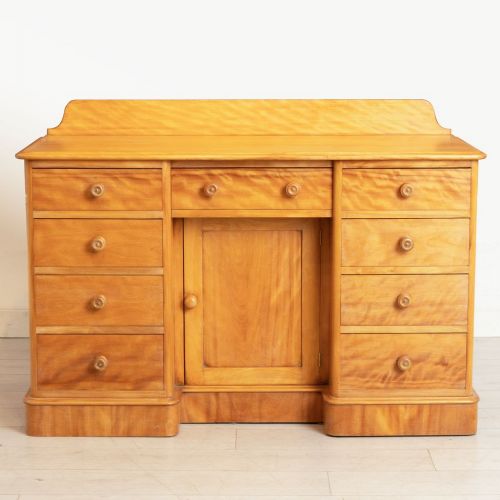


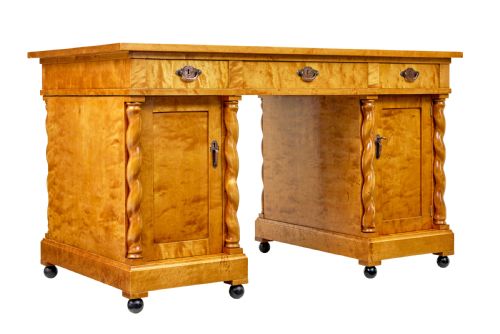


Satin Birch Writing Table
A satin birch writing table brings pale warmth and distinct grain to a study, built across the nineteenth and early twentieth centuries.
Satin Birch Writing Table
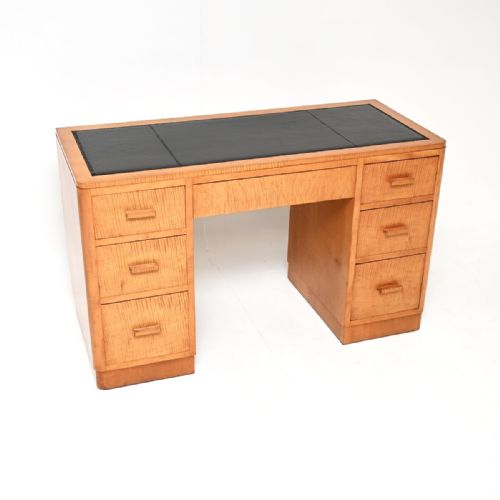
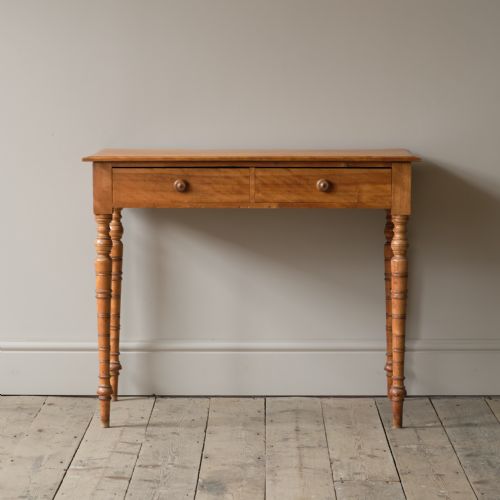
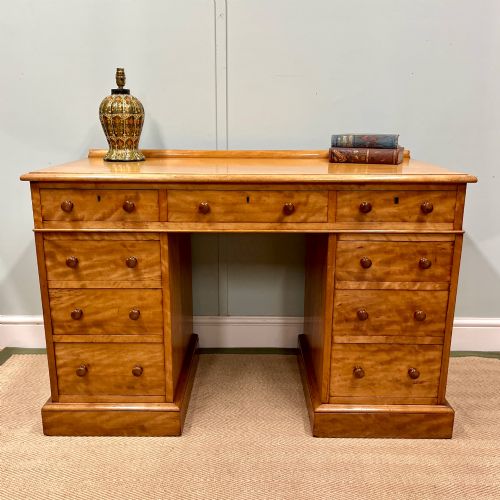
A satin birch writing table provides a dedicated surface for correspondence, appearing primarily in Victorian and later twentieth century forms. These pieces range from simple side tables and drum tables to substantial kneehole and pedestal desks.
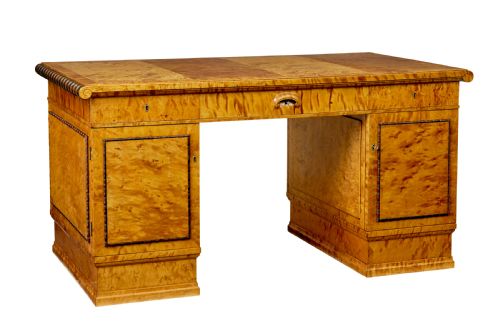
The most common examples on this page date from the Victorian era, alongside twentieth century expressions including Art Deco and Swedish revival styles. Makers favoured this timber for its shimmering, light surface which contrasted sharply with darker traditional woods.
Forms vary from compact side tables with single drawers to twin pedestal desks fitted with leather writing surfaces. Each piece reflects the functional requirements of its period, whether for a grand library or a modest parlour.
Evaluating Quality
Quality rests upon the selection of the timber and the intensity of the grain figure, where highly figured flame birch commands greater visual presence. The integration of secondary materials like ebonised accents and brass fittings also influences character.
Attribution to documented makers elevates an example, as seen in pieces bearing the marks of established cabinet makers. Structural integrity, clean drawer construction, and well-preserved leather inserts define the better surviving specimens.
Several desks hide compartments behind flame birch veneers, ready to swallow up stray fountain pens and secret notes.
Heal and son·J Shoolbred·Howard and Sons·C Hindley and Miles and Edwards
The Satin Birch Writing Table Glossary
- Satin birch
- A timber featuring a natural sheen and fine grain, prized for nineteenth century cabinet making. It offers a pale, golden alternative to darker mahoganies and walnuts.
- Pedestal desk
- A writing table supported by two banks of drawers rather than legs. This form offers generous storage beneath the working surface.
- Drum table
- A round freestanding table with a deep frieze containing drawers, rotating on a central column. These pieces sat in the centre of rooms during the nineteenth century.
- Kneehole desk
- A writing desk featuring a central recess for the user's legs, flanked by pedestals. They became standard domestic furniture during the Victorian period.
- Ebonised wood
- Timber treated to resemble ebony, providing dark contrast against lighter woods like satin birch. Makers used this finish for mouldings and decorative highlights.
Satin Birch Writing Table: Frequently Asked Questions
How do I care for a satin birch top?
Keep the wood away from direct sunlight and excessive heat to prevent the pale timber from darkening or splitting. Regular dusting with a dry cloth maintains the natural sheen.
Avoid commercial polishes containing silicone, opting instead for traditional beeswax applied sparingly when the wood appears dry.
What is the difference between a writing table and a pedestal desk?
A writing table generally stands on four legs, sometimes with one or two shallow drawers beneath the top. It offers an open, lighter silhouette suitable for a parlour or bedroom.
A pedestal desk rests upon two solid banks of drawers, providing heavier proportions and substantial storage capacity intended for a study or library.
Are these desks suitable for daily laptop use?
Most antique writing tables easily accommodate modern laptops and papers, though historical drawer heights can occasionally limit knee clearance. It helps to check the internal dimensions before placing a chair beneath.
Leather surfaces provide a durable writing pad, but protective mats prevent scratches from modern equipment.
How do I identify a Victorian piece from a later revival?
Victorian examples display construction methods typical of the nineteenth century, including hand-cut dovetails and secondary woods like pine. Their proportions align with nineteenth century domestic spaces.
Revival pieces from the twentieth century often adopt cleaner Art Deco lines or Scandinavian classicism while retaining the characteristic birch veneer.