







Malayer Area Rug
A malayer area rug brings centuries of Persian village weaving traditions straight to your floor.
Malayer Area Rug
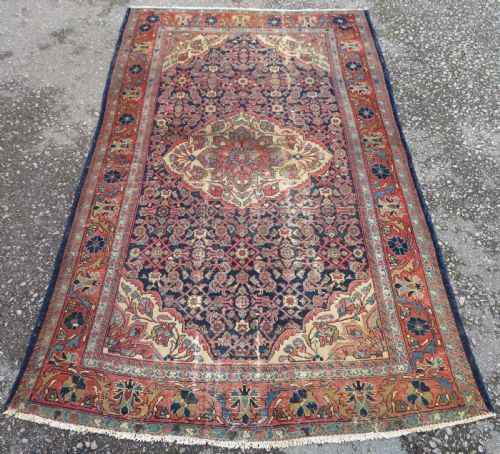
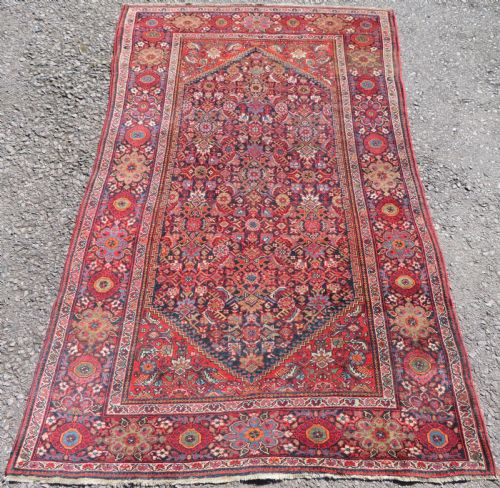
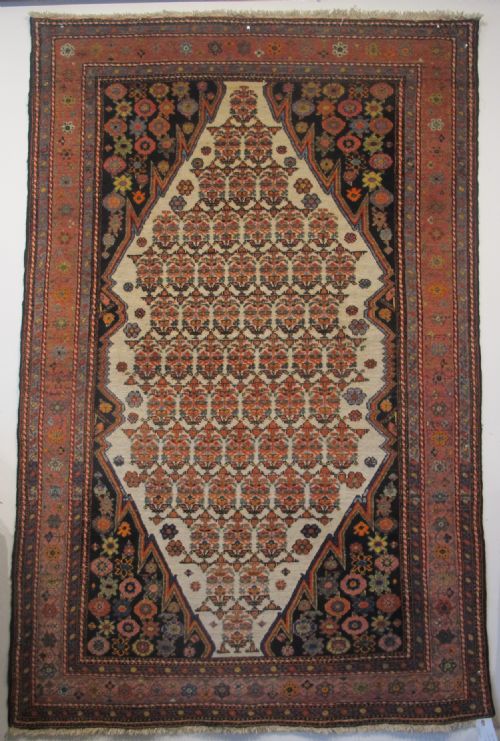
A malayer area rug is a woven floor covering originating from the West Persian district of Malayer, created by village weavers working in traditional styles. These pieces date across several decades spanning the late nineteenth century and the early decades of the twentieth century. They arrive in various formats including standard rugs, larger carpets, and smaller kelleh proportions.
The version most commonly met on this page is an antique village rug bearing characteristic regional designs such as the Herati pattern, boteh motifs, or all-over lattice arrangements. They represent the output of skilled domestic artisans rather than large urban manufactories, displaying a distinct regional character. Buyers look for these items to introduce authentic Persian textile history into interior spaces.
Judging quality and character
Quality in these textiles depends on the fineness of the knotting and the clarity with which the design motifs, such as boteh or Herati patterns, are executed across the field. Tighter knots allow for sharper graphic details and greater durability over decades of domestic use.
The harmony of the soft colour palette and the preservation of the original borders and selvedges also separate superior examples from more standard village work. Individual artistic touches, including unusual pictorial elements like birds or lions, elevate specific pieces within the broader range.
Malayer Area Rug Retail Price Guide 2026
Typical asking prices for malayer area rug among the pieces listed under this phrase on Sellingantiques today, from the lower quarter to the upper quarter. They describe what is for sale here now, not the wider market.
The Malayer Area Rug Glossary
- Boteh
- A stylised almond or pear-shaped motif representing a shrub or palm leaf. It appears frequently in various sizes across Persian village weaving.
- Herati
- A repeating floral pattern composed of a central rosette framed by four leaves and flanked by curved acanthus leaves. This classic design covers the field in many traditional carpets.
- Kelleh
- A long, rectangular format of carpet traditionally suited for narrow rooms or hallways. These pieces offer extended proportions compared to standard square or rectangular area rugs.
- Mishan
- A sub-category or regional designation often associated with specific stylistic refinements within the broader Malayer output. Pieces bearing this descriptor display particular nuances in drawing and wool quality.
Malayer Area Rug: Frequently Asked Questions
How do I care for my malayer area rug?
Vacuum the piece regularly using gentle suction without a rotating brush roll to protect the wool pile from unnecessary friction. Professional cleaning by a specialist familiar with antique Persian textiles ensures the natural dyes and fibres remain preserved.
Keep the item out of direct, prolonged sunlight to prevent fading of the soft colour palette. Rotating the floor covering every year distributes foot traffic evenly across the surface.
What is a mishan malayer rug?
A mishan malayer rug represents a specific grouping within the regional tradition, often noted for particular design refinements. These variations reflect the distinct aesthetic preferences of individual village workshops.
Collectors look for this designation when identifying finer examples from the district. The construction materials remain consistent with standard regional production while the artistic details show unique execution.
How old are these rugs?
The pieces in this selection date primarily from the late nineteenth century through to the early decades of the twentieth century. Production spans decades such as the 1880s, 1900s, and 1930s.
Dates are estimated based on stylistic markers, structural analysis, and historical weaving practices. Each piece reflects the aesthetic standards of its specific period of origin.
Where were these rugs made?
These textiles were woven in the Malayer district located in West Persia. The region encompasses numerous villages where domestic weaving traditions were passed down through generations.
Village weavers produced these items independently rather than in large city factories. This local origin gives each piece its characteristic rustic charm and regional design vocabulary.