
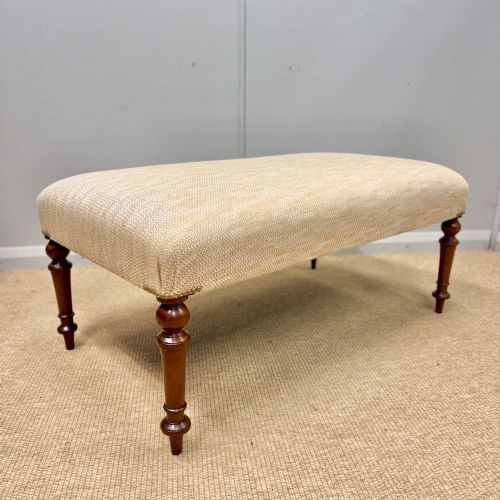
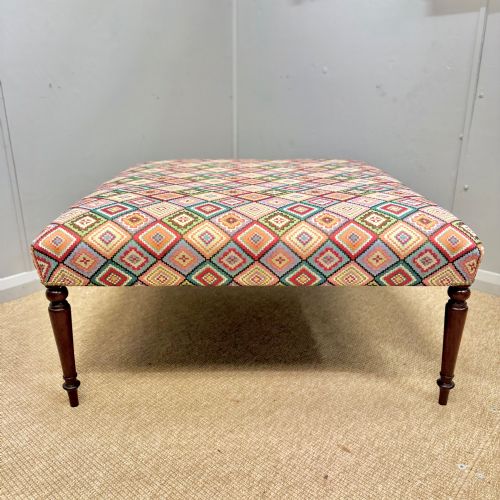
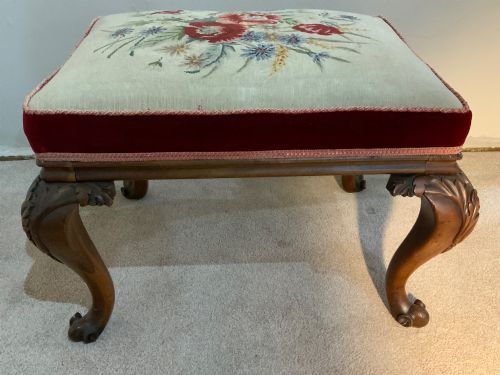
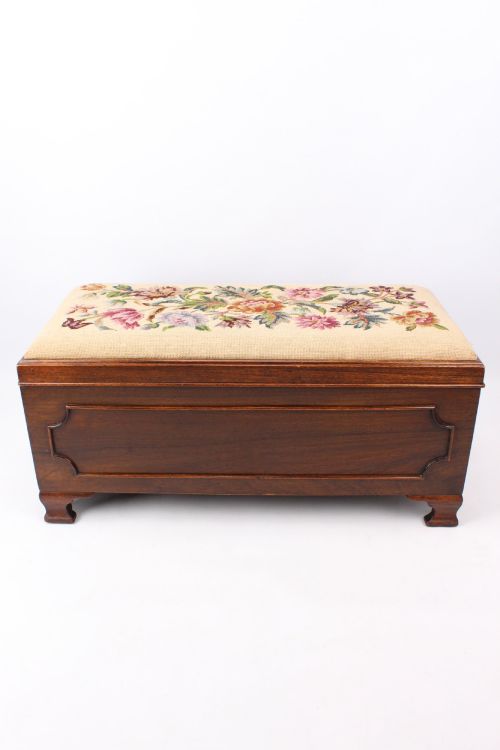
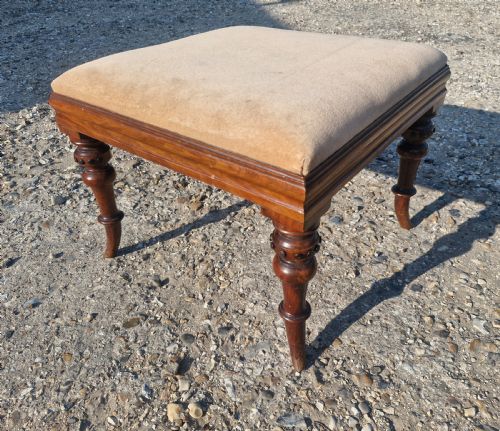
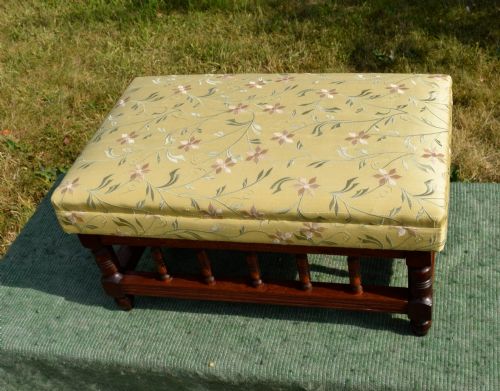
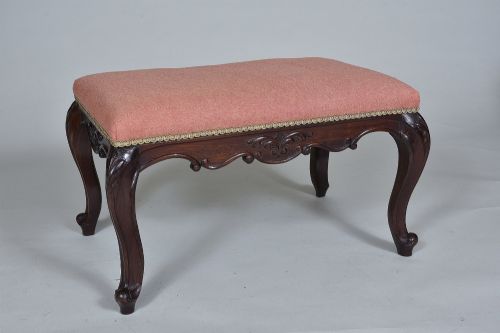
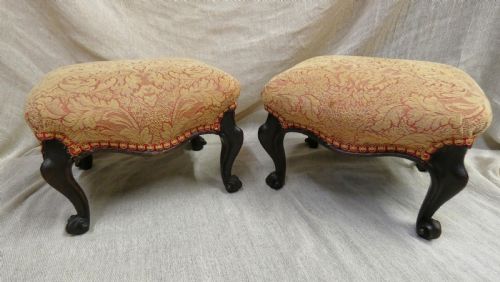
Mahogany Upholstered Ottoman
A mahogany upholstered ottoman brings rich timber and tactile seating together, offering a practical compartment or a low resting place for the feet.
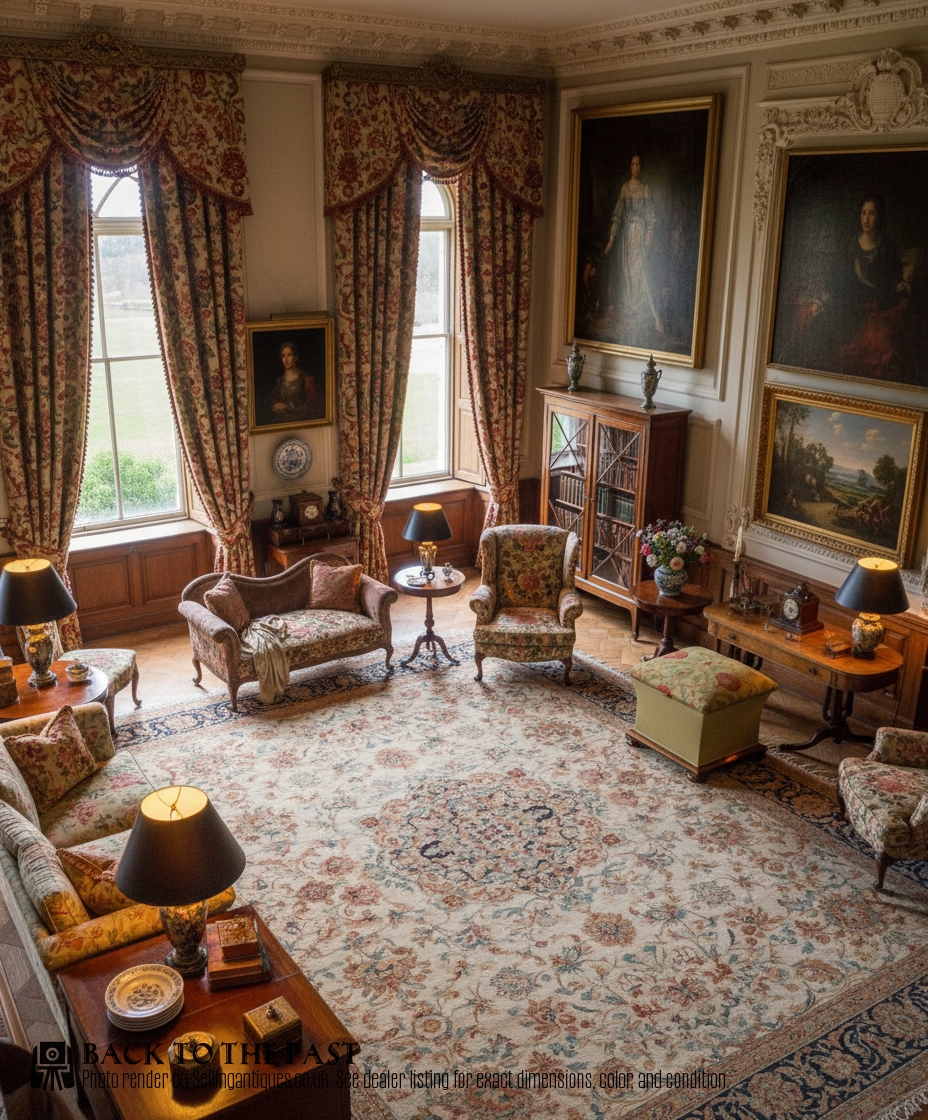
Mahogany Upholstered Ottoman
When searching for a mahogany upholstered ottoman, buyers encounter low seating, footstools with storage trunks, and long window seats originating from the Georgian, Regency, and Victorian periods.
Many examples date from the nineteenth century, including William IV and Edwardian variations, often constructed with hinged lids to reveal hidden compartments lined for storage.
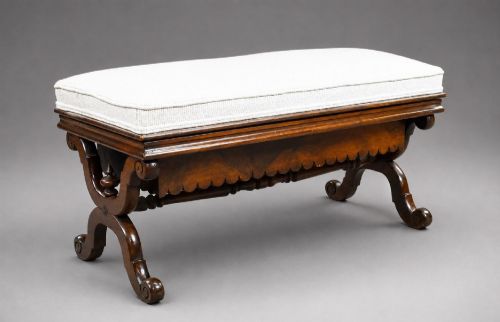
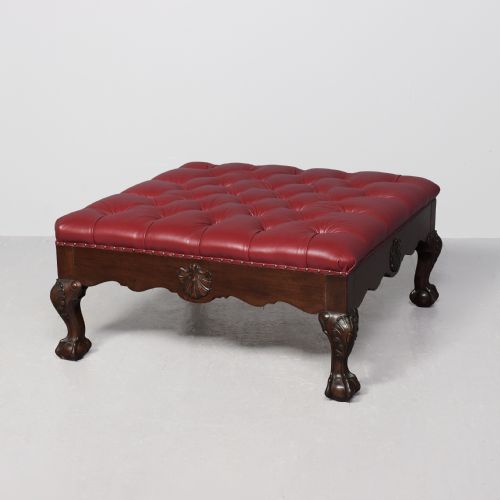
The forms range from square leather boxes to large concave trunks and x-frame stools, reflecting diverse stylistic revivals such as Chippendale and Rococo.
Materials and construction
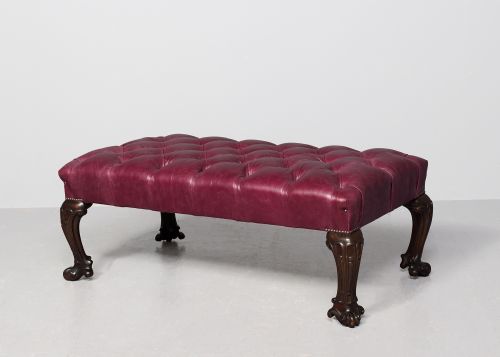
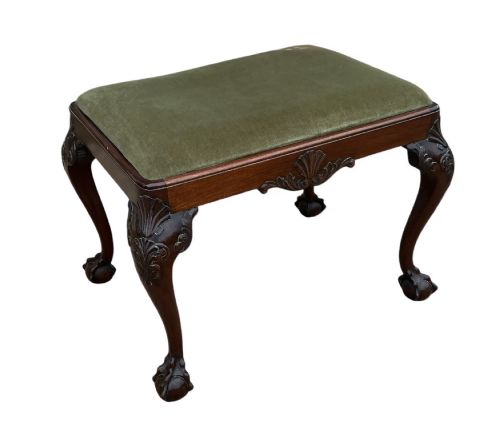
The framework utilises solid mahogany, shaped into cabriole legs or supported by brass castors, demonstrating robust cabinet-making techniques.
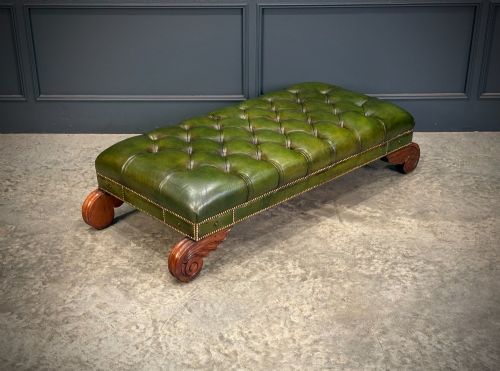
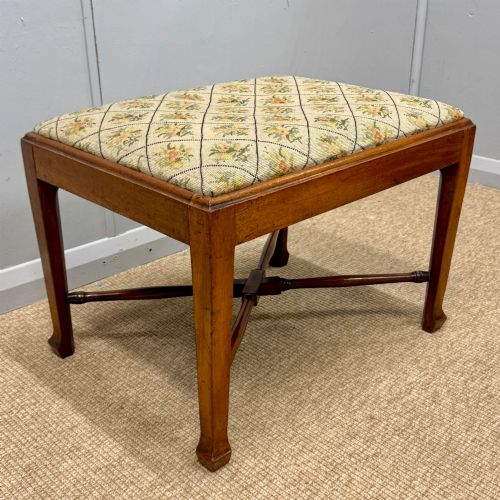
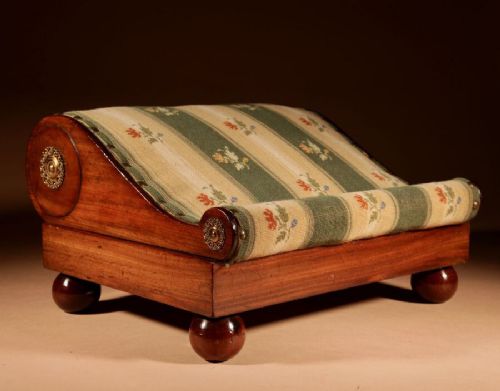
Upholstery materials vary from buttoned leather and hide to woven tapestry, wool, fabric, and crewel work, secured frequently with brass-studded detailing.
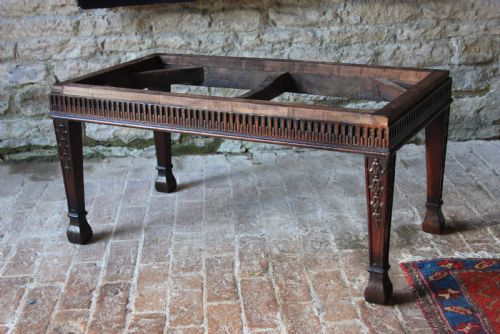
Internal trunk spaces utilise timber box construction, whilst complex forms incorporate carved cross stretchers and scroll tops.
Some nineteenth-century makers doubled their utility by designing music seats that doubled as hidden storage trunks for sheet music.
Distinctions in craftsmanship
Superior examples exhibit meticulous timber carving, substantial proportions, and refined details such as brass-studded hide upholstery or period needlework.
Construction integrity defines the upper tier, seen in sturdy internal trunk joints, original castors, and well-preserved frame joinery rather than later alterations.
The choice of covering material and the execution of buttoning contribute significantly to the visual weight and finish of the piece.
Howard and Sons·Hallett and Sons
The Mahogany Upholstered Ottoman Glossary
- Ottoman
- A low seat or upholstered chest without arms or a back, frequently fitted with a hinged lid for storage. These pieces function as footstools or casual seats.
- Buttoned leather
- Upholstery secured with deep indentations held by buttons, creating a padded and textured surface. This finish appears frequently on nineteenth-century hide examples.
- Cross stretcher
- An intersecting timber brace placed between the legs of a stool to provide structural stability. Such supports often feature central turnings or carved details.
- Crewel work
- Embroidery executed in wool onto a sturdy base fabric, often depicting floral motifs. This textile appears on nineteenth-century box ottoman lids.
- X-frame
- A furniture base formed by intersecting curved or straight wooden members resembling the letter X. This structural form supports decorative footstools and window seats.
Mahogany Upholstered Ottoman: Frequently Asked Questions
How do I use an ottoman in a living room?
These pieces serve dual functions as low footrests and hidden storage chests for blankets or books. Place them centrally before a sofa or beside a window.
Their substantial timber frames and upholstered lids also provide extra casual seating when hosting guests.
What is the difference between an ottoman and a footstool?
An ottoman typically incorporates a hollow internal compartment accessed via a hinged upholstered lid. Standard footstools consist solely of a solid or open frame beneath a padded surface.
Both forms share similar mahogany framing and revival styles across the nineteenth century.
How do I care for leather upholstery?
Maintain leather surfaces by dusting regularly with a soft dry cloth and applying appropriate leather balms to prevent drying. Avoid placing antique hides in direct sunlight.
Check brass studs periodically to ensure they remain secure within the timber frame.
How do I identify a Victorian piece?
Victorian examples often feature dark mahogany timbers, robust box constructions, and buttoned leather or tapestry coverings. Many incorporate functional storage trunks and brass castors.
Stylistic cues draw upon earlier Georgian and Rococo revivals executed during the mid to late nineteenth century.