
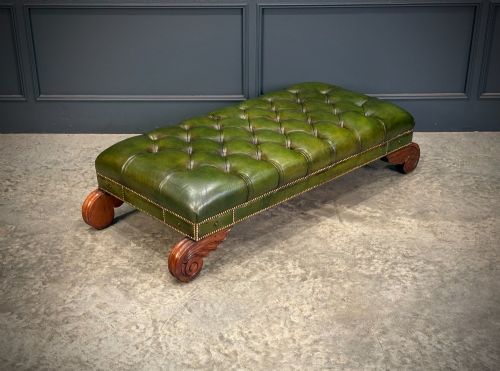
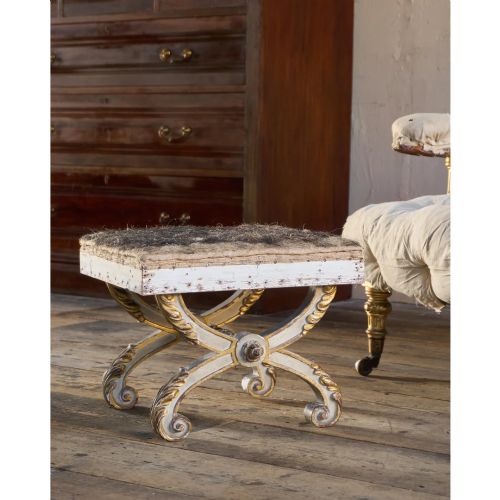
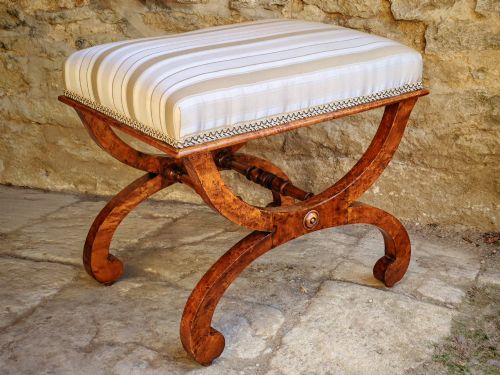


Regency Style Footstool
These regency style footstool pieces combine classical form with practical comfort, offering collectors an elegant seat or support.
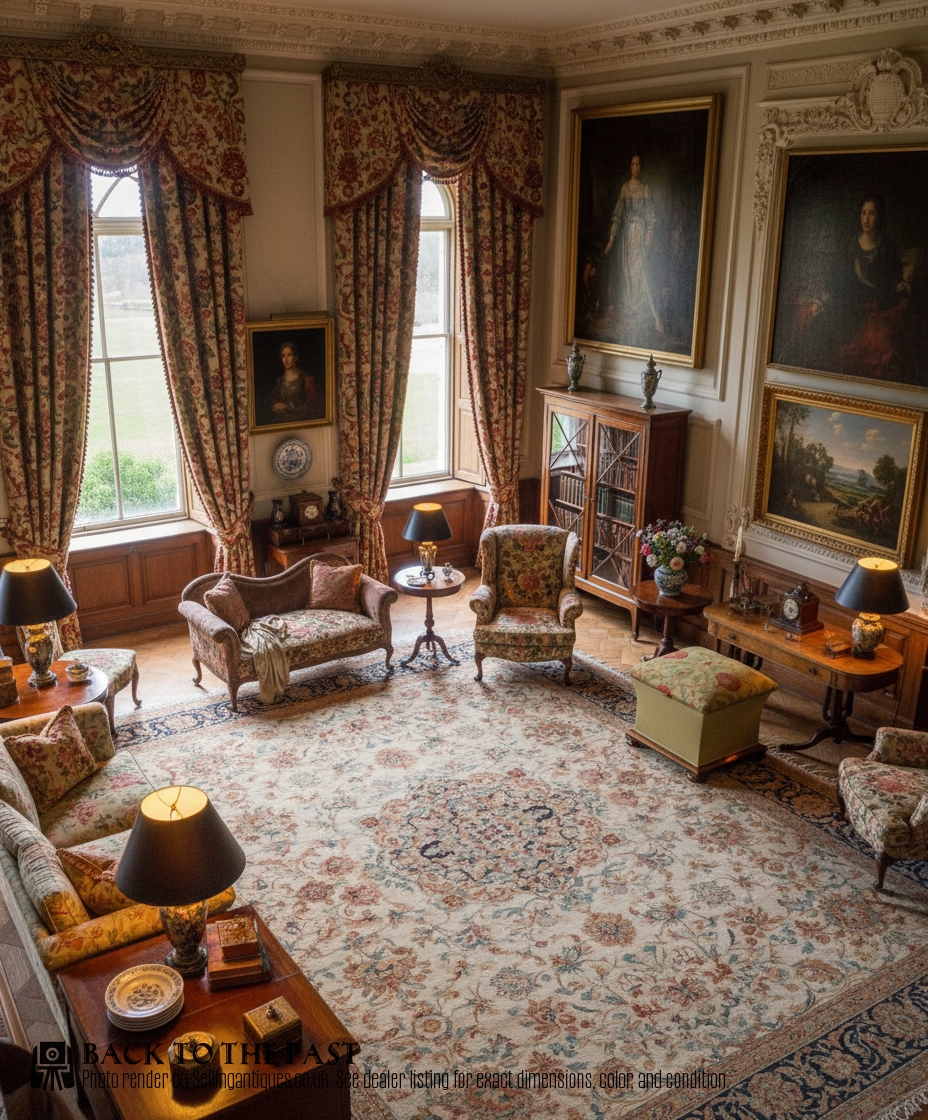
Regency Style Footstool
When you search for a regency style footstool, you encounter low seats and ottomans originating primarily from the nineteenth century, alongside later revivals. The forms include X-frame curule bases, square mahogany frames with caned tops, and waisted window seats designed for classical interiors.
Most examples belong broadly to the Regency, William IV, and French Empire periods, utilising mahogany, giltwood, and burr maple. Buyers frequently meet substantial leather ottomans and gilded stools reflecting neoclassical taste.
How they were made
Cabinetmakers shaped these frames from dense hardwoods like mahogany and maple, often applying giltwood enrichment to carved details. Joinery techniques secure the curved X-frames and cabriole legs that support the weight of the user.
Upholstery relies on traditional stuffing covered in leather, velvet, or woven fabric, sometimes finished with buttoning or brass tacks. Caned tops provide an alternative woven surface on specific square tables and stools.
The selection spans eighteenth-century Georgian origins through the Regency, William IV, and mid-nineteenth-century revivals.
What varies in quality
The sophistication of the carved ornament and the integrity of the timber frame distinguish finer examples from simpler workshops. Crisp definition in gilded gesso or figured grain in burr maple elevate the visual presence of a stool.
Original upholstery materials and period leather contrast with later replacement covers, influencing the historical consistency of the piece. The structural firmness of curved curule supports determines how well the frame preserves its intended stance.
Miles & Edwards
The Regency Style Footstool Glossary
- Curule stool
- A seat featuring intersecting X-shaped legs derived from ancient Roman magistrate chairs. This form provides both structural stability and architectural elegance.
- Giltwood
- Timber coated with a thin layer of gold leaf or gesso over a prepared base. It captures light in formal neoclassical drawing rooms.
- Ottoman
- A low, upholstered seat without a back or arms, often built on a larger scale than a standard footstool. These serve dual functions for seating and resting feet.
- Caned top
- A seating surface woven from split rattan or cane in a patterned mesh. This technique offers a lighter visual weight on mahogany frames.
- Waisted
- A frame profile that curves inward toward the centre before flaring outward again. This contour defines specific window stools and ottomans from the period.
Regency Style Footstool: Frequently Asked Questions
How do I identify a true period piece?
Examine the timber construction methods, joinery wear, and material ageing beneath the upholstery webbing. Period pieces show hand-tool marks and traditional seasoning consistent with nineteenth-century cabinetmaking.
Compare the silhouette against documented neoclassical and Regency design plates to confirm stylistic alignment with the era.
Where were these stools placed originally?
Wealthy households positioned these low seats in drawing rooms, libraries, and grand window recesses. They provided flexible seating options near fireplaces or served as foot rests before large armchairs.
Ottomans also functioned as impromptu tables or work boxes depending on their internal construction and top design.
Can I use an antique ottoman daily?
Solid mahogany and framed hardwood structures easily withstand everyday domestic use when the internal joinery remains stable. Periodic inspection of the frame ensures the historic wood endures normal weight loads.
Delicate gilt surfaces and antique leather require careful placement away from direct heat sources and strong sunlight.
What is the difference between an ottoman and a footstool?
Ottomans generally offer a larger surface area designed to sit comfortably at the end of a room or window seat. Footstools remain more compact, built specifically to support the feet of someone seated in a chair.
Both forms utilise similar upholstery methods like buttoned leather and decorative fabric covers.