
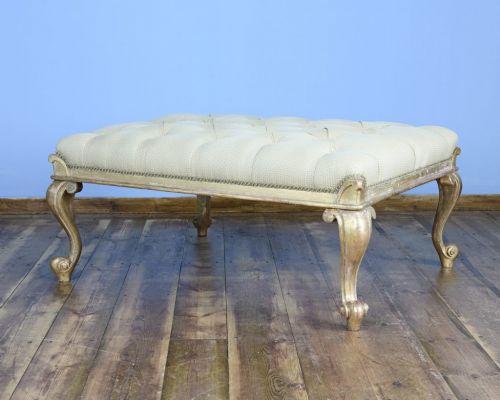


William IV Ottoman
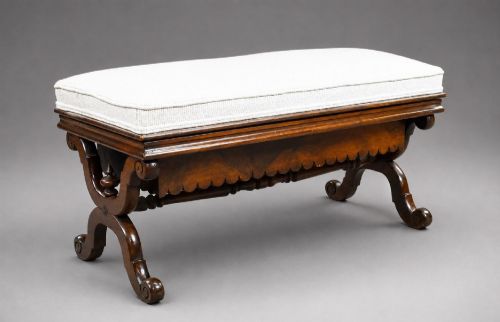
A william iv ottoman is a substantial upholstered seat or storage box built for comfort, and you will find sturdy mahogany and rosewood frames here.
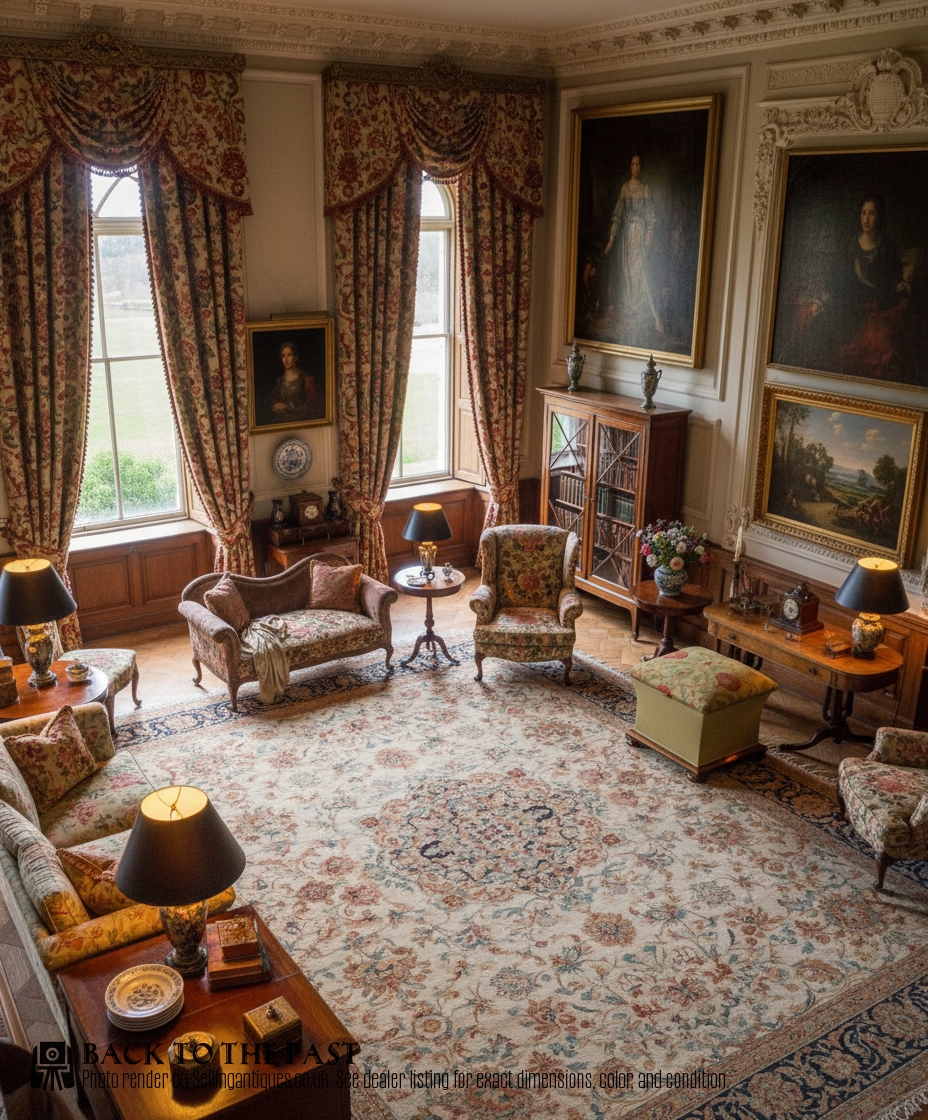
William IV Ottoman
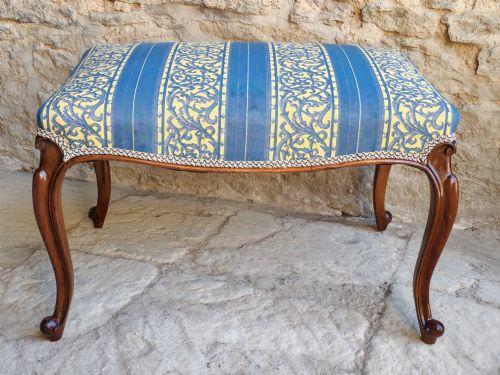
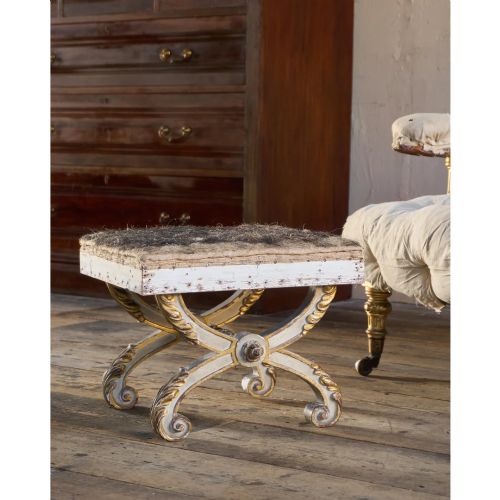
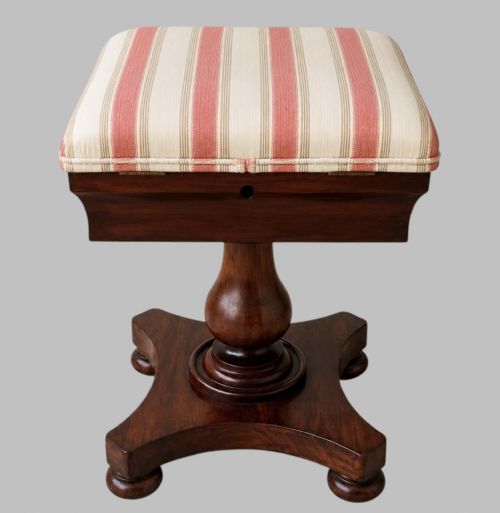
A william iv ottoman combines seating with interior storage or serves as a generous footstool designed for nineteenth-century interiors. You encounter large rectangular forms, clever work boxes, and X-framed curule shapes across these listings.
The materials span solid mahogany, burr walnut, and rosewood, frequently paired with original leather, needlework, or silk upholstery. These pieces sit comfortably within Regency and Victorian traditions, often featuring brass castors and carved details.
How they were made
Cabinetmakers constructed the structural frames using dense timbers like mahogany, rosewood, and walnut, frequently incorporating turning and carving into the legs. Wood was selected for grain pattern and stability before being polished to a deep lustre.
Upholstery techniques involved webbing, stuffing, and stitching layers of fabric or leather directly onto the wooden carcase, sometimes incorporating internal storage compartments with hinged lids.
One exceptional listing connects a brass bed directly to the Prince of the Ottoman Empire through nineteenth-century records.
What varies in quality
The standard of timber selection and the crispness of the carving distinguish finer examples from simpler workshop output. Burr walnut and figured rosewood veneers indicate higher status pieces commissioned for principal rooms.
Internal construction details, such as dovetailed storage boxes and robust framing joints, separate durable items intended for daily use from lighter decorative pieces.
Miles & Edwards·R W Winfield
The William IV Ottoman Glossary
- Ottoman
- A padded seat without a back or arms, often featuring a hinged lid that opens to reveal storage space inside. This form became popular for resting feet or lounging in nineteenth-century drawing rooms.
- Curule
- An ancient Roman chair shape characterised by intersecting X-shaped legs that provide structural support and a distinctive silhouette. Makers revived this classical form during the Regency and William IV periods.
- Mahogany
- A durable, reddish-brown tropical hardwood favoured by cabinetmakers for its strength, rich colour, and ability to take fine carved detail. It forms the primary structure of many nineteenth-century seating pieces.
- Parcel Gilt
- A decorative technique where specific carved highlights on a wooden surface are partially covered in thin gold leaf. This method draws the eye to particular architectural details on formal furniture.
- Castor
- A small wheel attached to the base of furniture legs to allow easier movement across carpets and floors. They are frequently cast from brass and fitted with ceramic or wooden rollers.
William IV Ottoman: Frequently Asked Questions
What is a william iv ottoman used for?
These pieces served multiple functions in the nineteenth-century home, acting as comfortable footstools, extra seating for guests, or hidden storage boxes for sewing materials and linens. Their generous proportions made them central items in formal drawing rooms.
Today, they adapt easily to modern living spaces as coffee table alternatives or end-of-bed seating. The internal storage compartments remain practical for keeping blankets and household items out of sight.
How do I identify a william iv period piece?
Look for specific stylistic markers such as robust proportions, scrolled or turned mahogany and rosewood legs, and classical revival motifs. The transitional style bridges late Regency elegance and early Victorian mass production.
Construction methods also help with dating, as solid timber framing combined with hand-stitched upholstery techniques points directly to craftsmanship from the eighteen-thirties.
Are these ottomans comfortable to sit on?
Original padding relies on traditional stuffing materials like horsehair and wool, which tend to feel firmer than modern foam cushions. Many surviving examples retain their historic firmness while offering solid support.
Depending on the history of the piece, some have been re-upholstered over the decades to ensure they remain practical for everyday use in a contemporary room.
Can I use an antique stool as a coffee table?
Many people place a solid tray on top of a flat-topped upholstered stool to create a stable surface for cups and books. The sturdy wooden frames easily support this everyday domestic use.
Care should be taken with leather or delicate needlework surfaces, ensuring any liquids are kept in containers on trays to protect the historic material underneath.