

Mahogany Tilt Top Dining Table
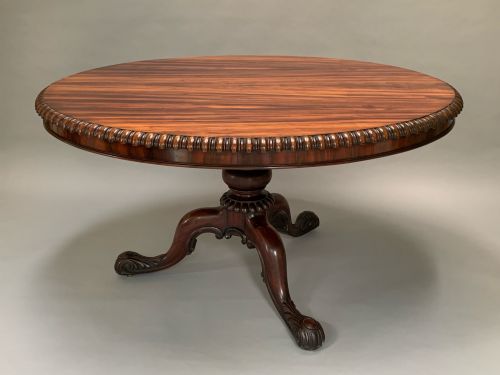
A mahogany tilt top dining table offers the dual function of a stable dining surface and a space-saving tipping mechanism.
Mahogany Tilt Top Dining Table
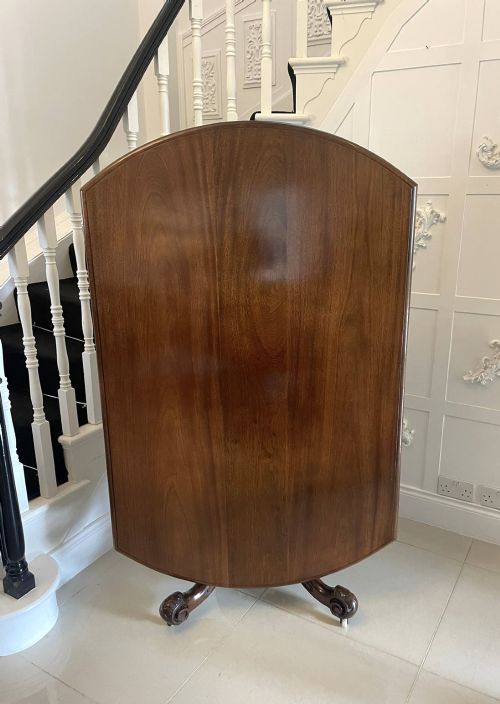
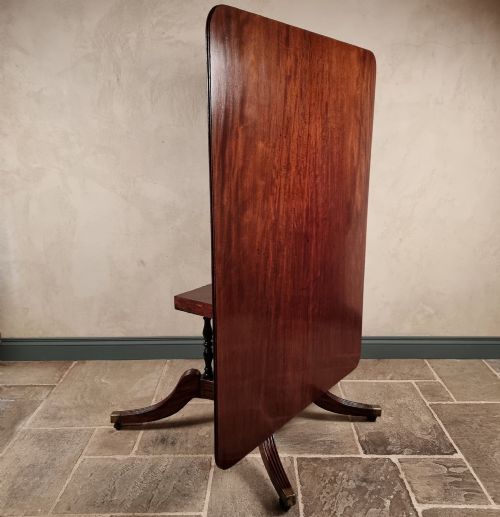
A mahogany tilt top dining table serves both as a primary eating surface and a clever space-saving invention that tips upright against a wall when not in use. These pieces appear frequently from the Georgian, Regency, and Victorian periods, spanning the eighteenth and nineteenth centuries.
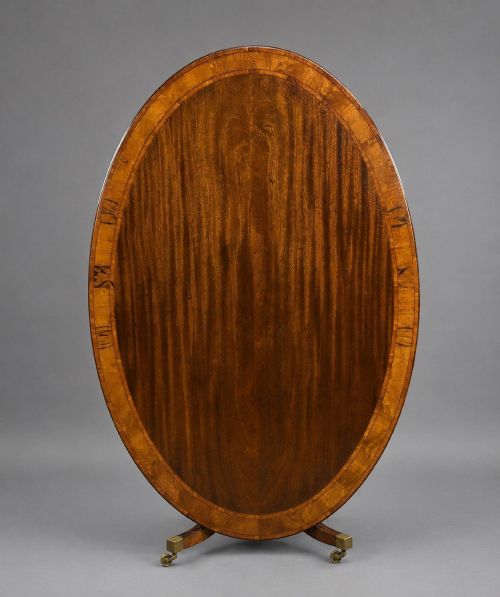
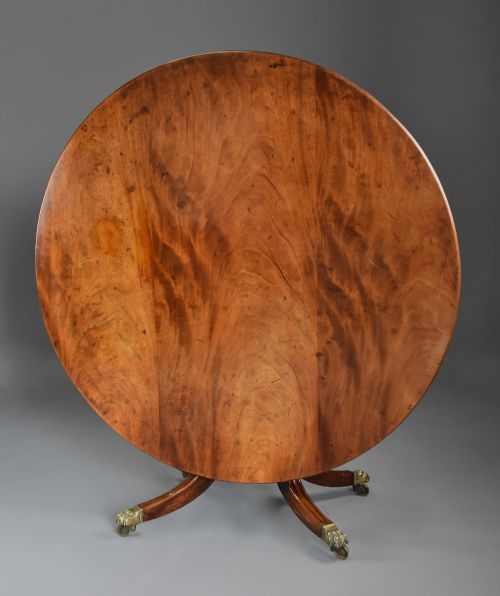
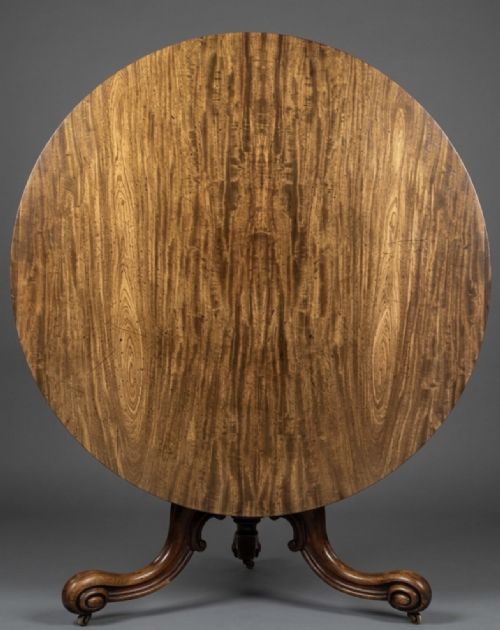
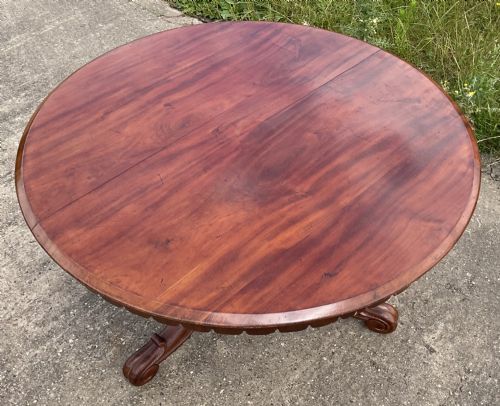
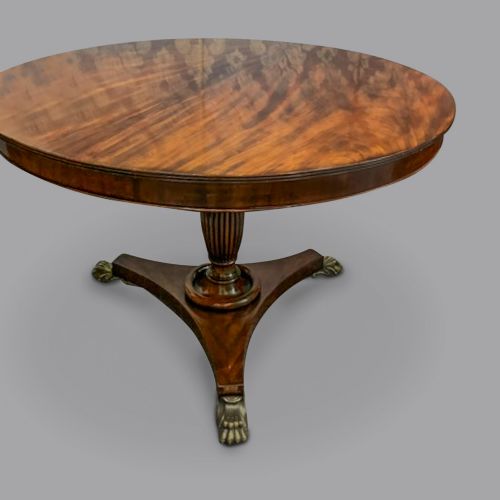
The format ranges from circular breakfast tables to larger oval or rectangular pieces designed to seat six to eight diners. Most examples stand on a central pillar supported by a tripod or pedestal base.
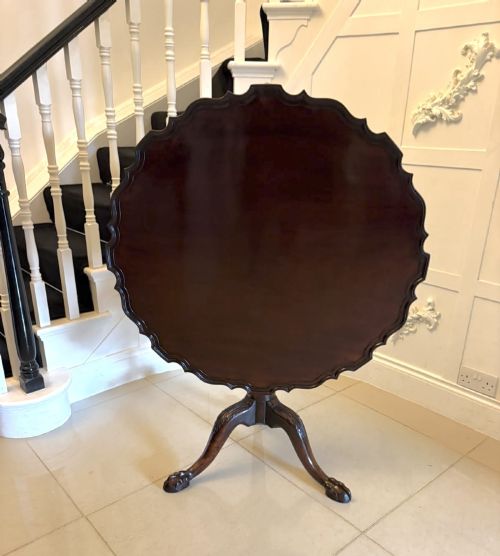
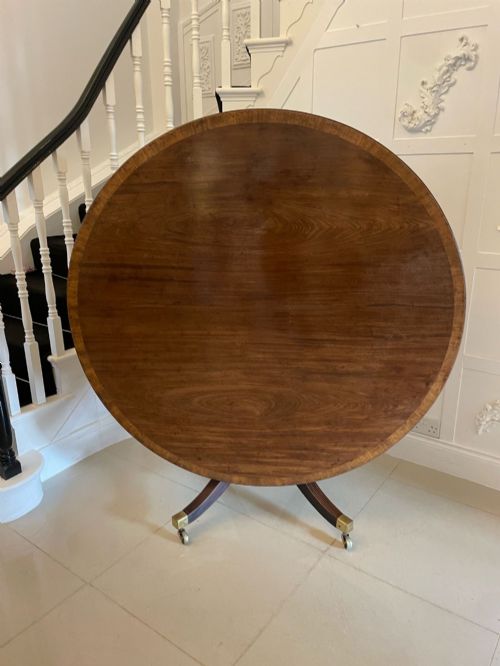
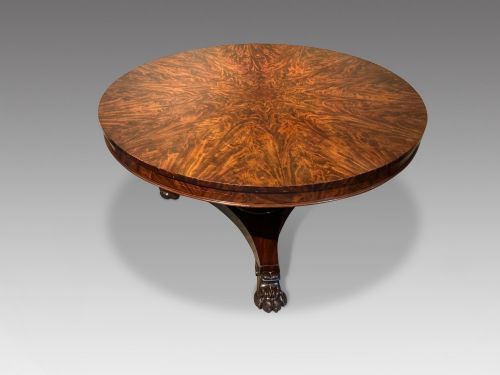
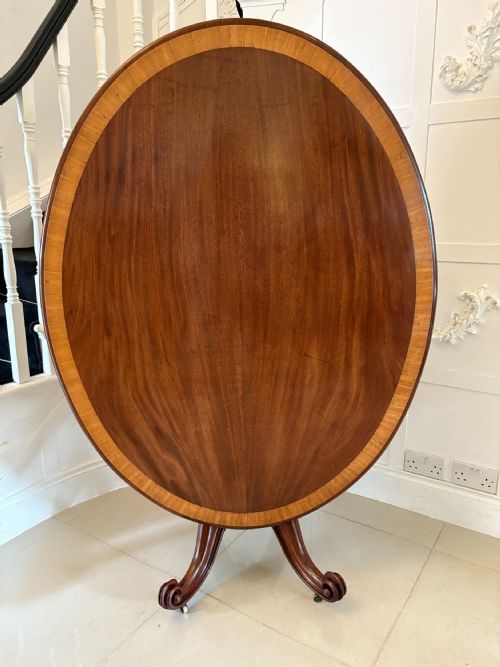
Buyers encounter variations including piecrust edges, brass inlay, and crossbanded borders in satinwood or rosewood. The core structure relies on solid mahogany or figured mahogany veneer over secondary timbers like oak.
Materials and construction
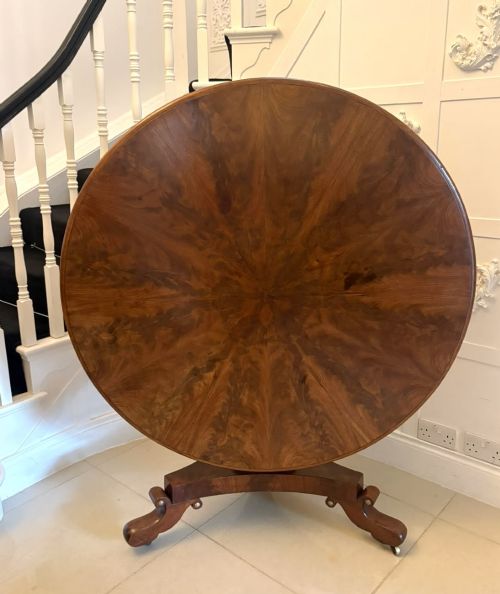
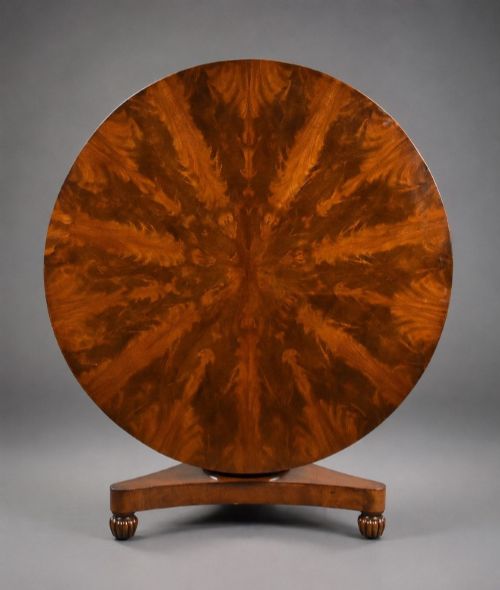
Cabinet makers utilised solid mahogany and flame mahogany veneer, often selecting timber with rich natural figuring. Secondary woods such as oak appear in the internal framing and structural blocks.
Decorative elements frequently incorporate brass inlay, hand carving, and contrasting veneers like satinwood and rosewood for crossbanding. Pillar supports rest on tripod legs or heavy pedestals, sometimes terminating in paw and claw feet.
Listings feature mahogany, brass, satinwood, rosewood, and oak across Georgian, Regency, and Victorian periods.
Judging the work
Quality rests in the selection of the mahogany veneer and the stability of the tilting mechanism. Figured and flame mahogany timbers display deeper visual movement and richer natural patination than plain boards.
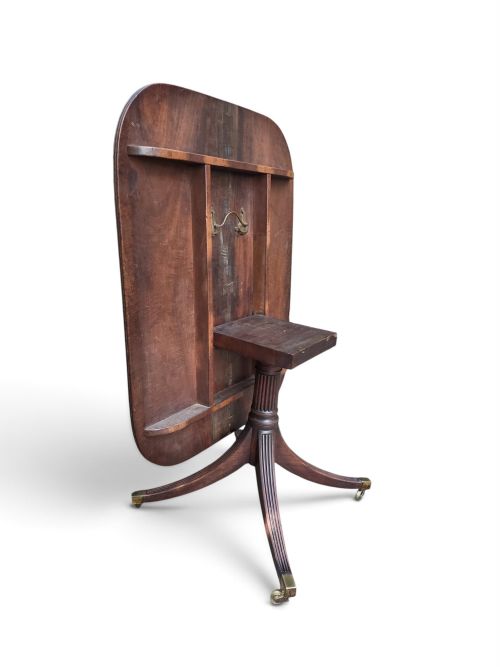
Master cabinet makers ensured the top sat entirely flat when lowered, without wobble or play in the central catch. Finer examples display crisp hand carving on the pedestal base and precise brass inlay work.
Gillows·Walker-Lancaster
The Mahogany Tilt Top Dining Table Glossary
- Tilt-top
- A hinged tabletop mechanism allowing the surface to pivot vertically for storage. This design saved valuable floor space in period rooms.
- Crossbanding
- A border of veneer laid with the grain running perpendicular to the main surface. It frames the central mahogany panel.
- Piecrust edge
- A raised, carved decorative border shaped in curves around the perimeter of a circular tabletop. This feature typically occurs on eighteenth-century pieces.
- Flame mahogany
- Timber veneer cut from fork-branches showing dramatic, undulating flame-like grain patterns. Cabinet makers reserved this for primary display surfaces.
Mahogany Tilt Top Dining Table: Frequently Asked Questions
How do I operate the tilt mechanism?
The tabletop releases via a brass catch or wooden wedge located beneath the surface on the pedestal block. Once unlocked, the top pivots vertically on its pivot pins.
Ensure you support the weight of the timber firmly when tilting the table to protect the hinge mechanism from sudden strain.
How many people do these tables seat?
Circular breakfast tables generally accommodate four to six diners comfortably depending on the diameter of the top. Oval and rectangular formats often extend capacity for larger gatherings.
Check the pedestal clearance underneath to ensure chairs slide in properly between the tripod legs.
Where should I place a tilt top table?
These pieces suit dining rooms, central halls, or large living spaces where their dual purpose shines. Many owners tilt the top against a wall as a decorative screen when the room requires open floor space.
Keep the timber away from direct heat sources and strong sunlight to protect the polish and prevent veneer shrinkage.
How do I distinguish Georgian from Victorian examples?
Georgian tables from the eighteenth century typically exhibit lighter proportions, refined tripod bases, and subtle stringing or piecrust borders. Victorian pieces from the mid-nineteenth century often present heavier pedestal columns, bolder carving, and denser figured mahogany.
Examine the construction methods and secondary timbers beneath the top to confirm the period of manufacture.