
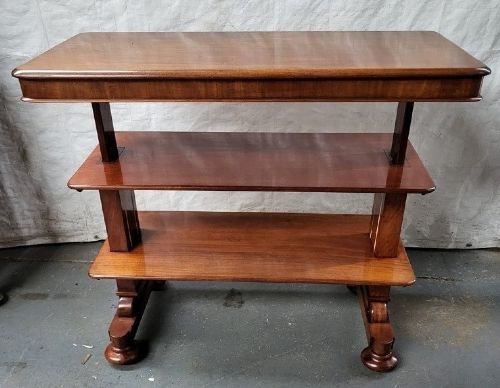


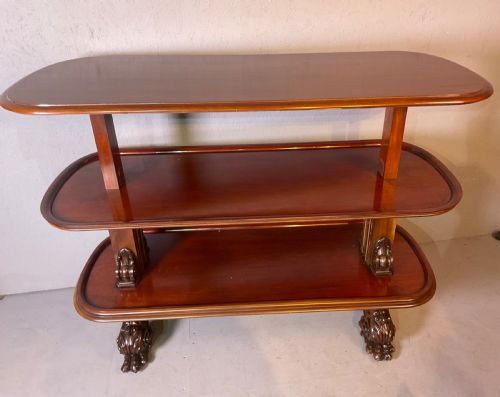


Mahogany Tiered Server
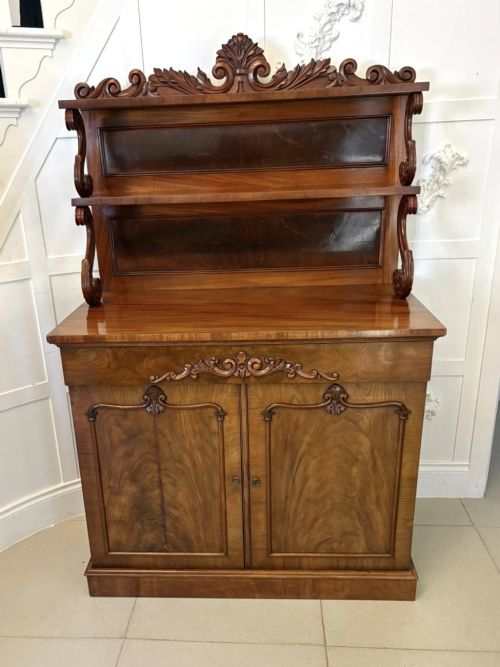
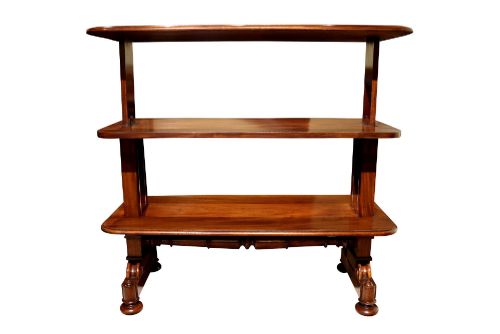
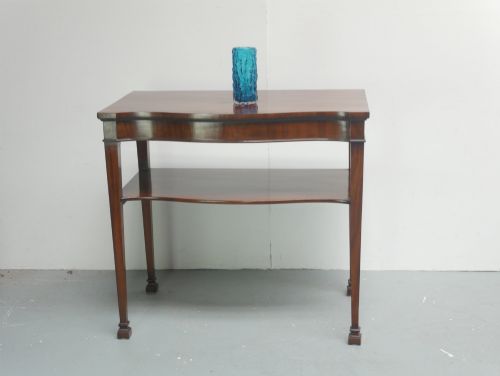
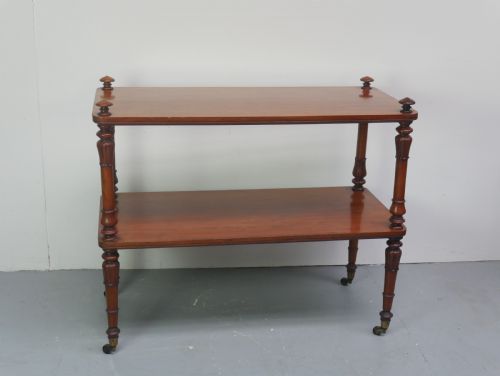
Mahogany tiered servers are practical multi-level wooden stands designed for dining rooms, most commonly appearing as traditional dumb waiters or tiered buffets from Georgian and Victorian periods.
Mahogany Tiered Server
When you search for a mahogany tiered server, you look at functional multi-level furniture intended for holding food, tableware, or drinks during meals. These pieces span several eras, crossing from the late eighteenth century into the Victorian period.
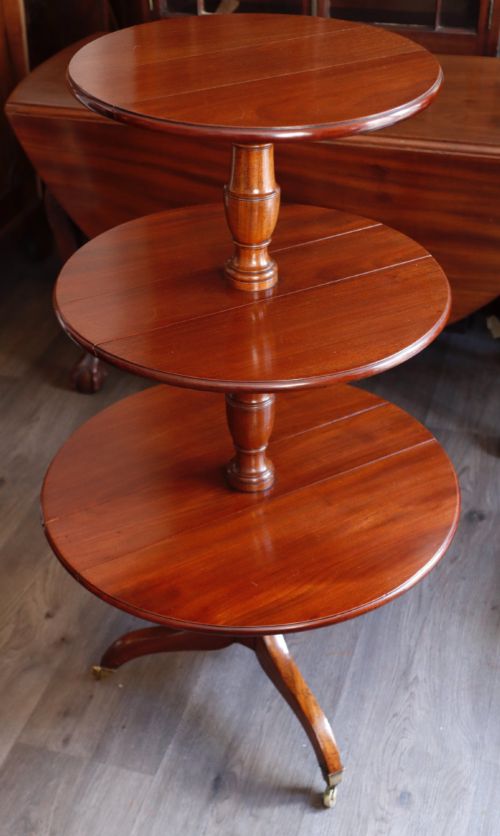
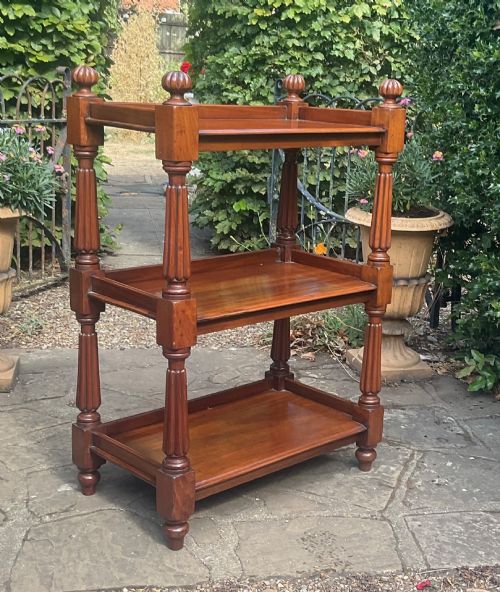
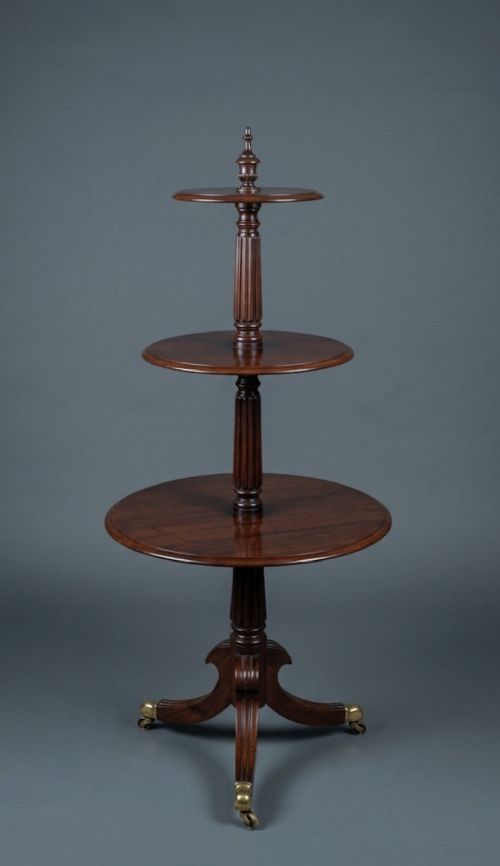
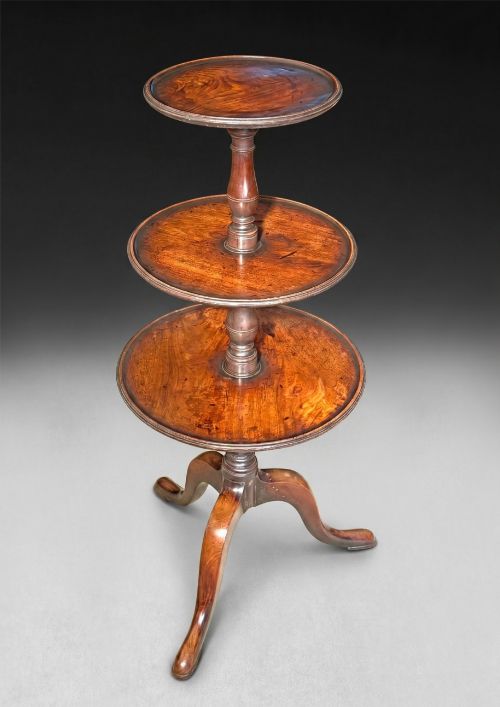
The version you are most likely to meet on this page is the classic dumb waiter or three-tier buffet, featuring graduated circular or rectangular shelves supported by a central column or upright framing.
Origins stretch across Georgian, Regency, and Victorian workshops, with forms that range from revolving tables on tripod bases to slim étagères and metamorphic serving tables.
How they were made
Cabinet makers utilised solid mahogany and flame mahogany veneer, often selecting timber with rich figuring for the tiered shelves and tops.
Structural elements frequently incorporated brass fittings, castors for mobility, and occasionally ceramic details or parcel gilt accents to finish the design.
Mahogany Tiered Server Retail Price Guide 2026
Typical asking prices for mahogany tiered server among the pieces listed under this phrase on Sellingantiques today, from the lower quarter to the upper quarter. They describe what is for sale here now, not the wider market.
Listings feature mahogany, brass, and ceramic materials spanning Georgian, Regency, and Victorian eras.
What varies in quality
The standard of the timber selection dictates much of the character, particularly where figured mahogany or flame veneer displays strong natural grain patterns across the tiers.
Construction details such as the turning of central columns, the stability of tripod bases, and the original quality of brass castors separate standard utility pieces from finer cabinet work.
Gillows of Lancaster and London
The Mahogany Tiered Server Glossary
- Dumb Waiter
- A freestanding piece of dining room furniture with multiple stacked tiers, designed to hold dishes without needing a human servant.
- Étagère
- A set of open shelves for displaying or holding small items, often used interchangeably with buffet or server in nineteenth-century contexts.
- Metamorphic
- Furniture engineered to transform or alter its shape and function, such as a serving piece that adjusts between configurations.
- Flame Mahogany Veneer
- A thin layer of timber sliced from the point where branches join the main tree, creating a distinctive flickering flame pattern.
- Tripod Base
- A three-legged support structure commonly found beneath circular revolving tiers on tables and dumb waiters.
Mahogany Tiered Server: Frequently Asked Questions
What is a tiered server used for?
These pieces were traditionally placed beside dining tables to hold extra plates, dishes, and bottles during meals. They allowed diners to help themselves without constant interruption from domestic staff.
Today, they function well in dining rooms or living spaces for displaying collections, holding drinks, or organising tableware.
How do I tell a Georgian tier from a Victorian one?
Georgian examples often lean towards restrained circular tiers on slender tripod bases with clean lines. They reflect the classical proportions popular in the eighteenth century.
Victorian pieces tend to be heavier, sometimes incorporating revolving mechanisms, brass castors, or more elaborate carving and shelf arrangements.
Are these servers sturdy enough for daily use?
Most pieces were built by skilled cabinet makers using dense mahogany, meaning they remain robust and functional. The central pillars and leg assemblies provide solid support for multiple tiers.
Care should be taken when moving larger three-tier units, especially those resting on original castors, to avoid straining the upright joints.
What is a metamorphic server?
A metamorphic server includes mechanical elements that allow the piece to change form or function. These clever designs adapted to different needs within the nineteenth-century dining room.
They represent a more inventive branch of cabinet making, prized for their engineering as well as their timber.