
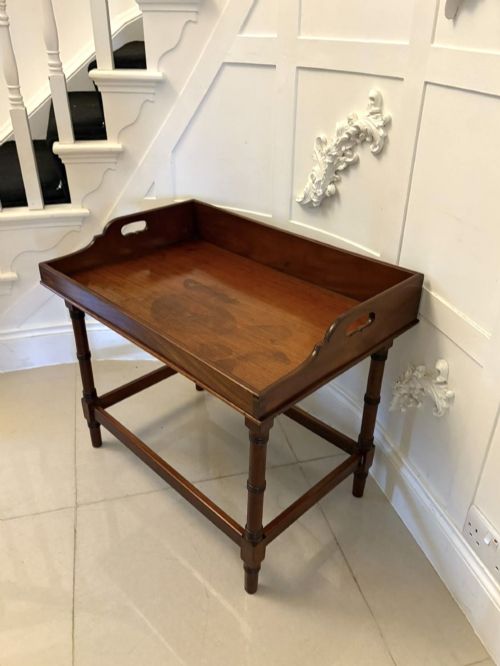
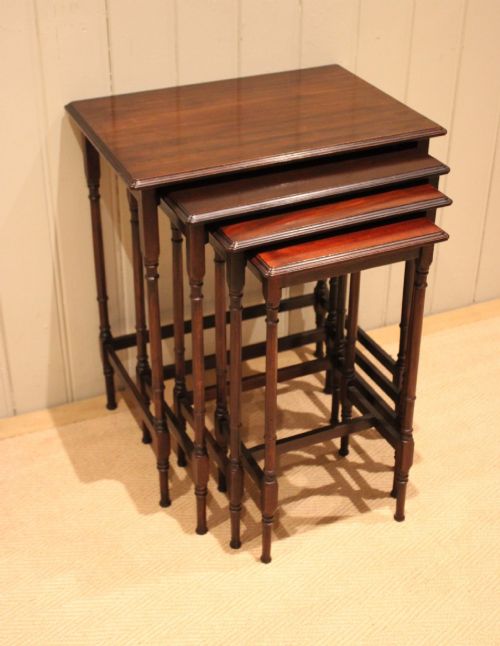
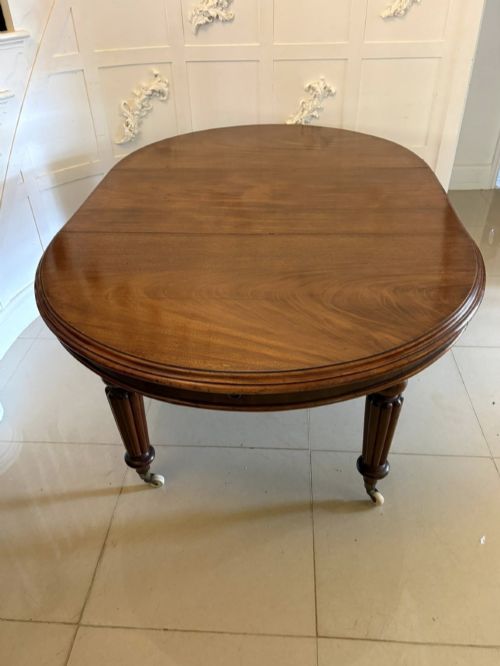
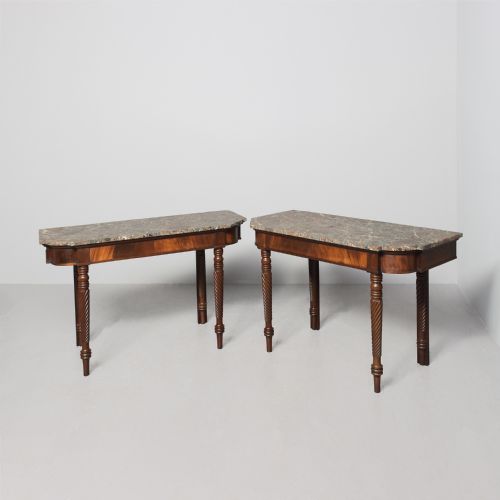
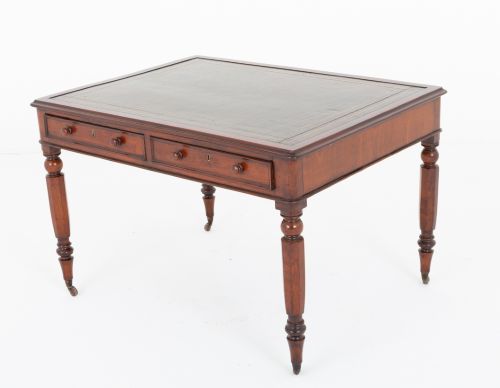


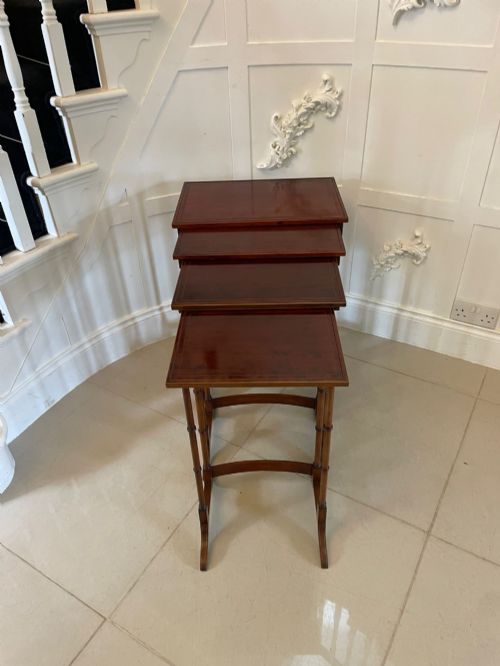
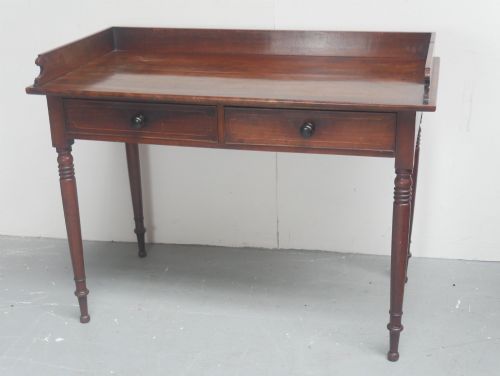
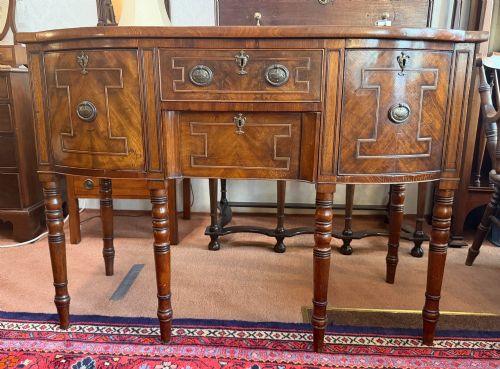
Mahogany Table Turned Legs
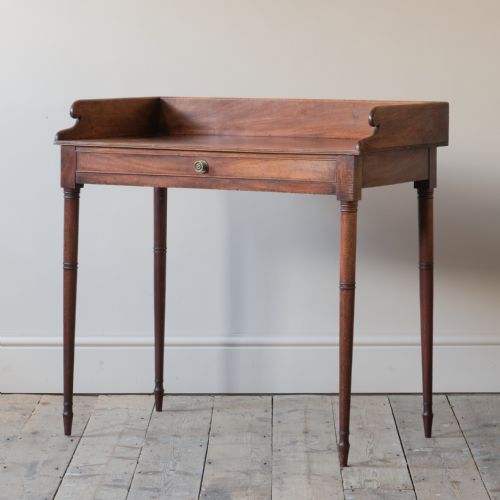
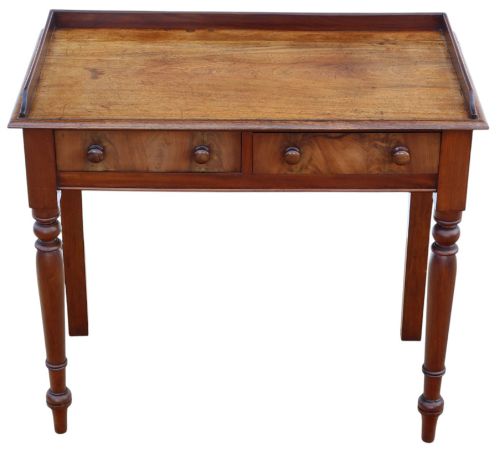
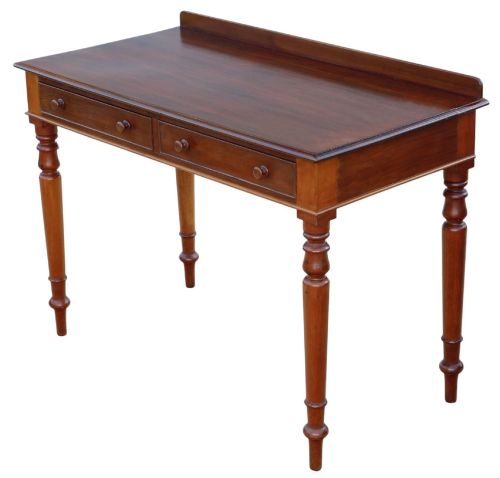
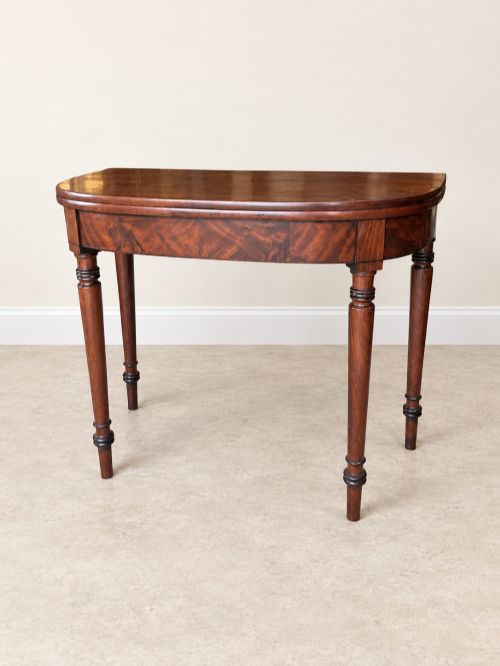
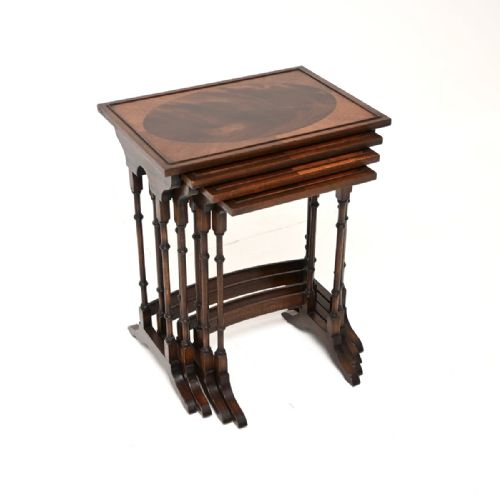
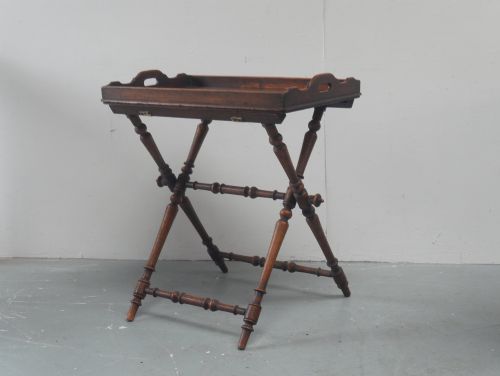
When you search for a mahogany table turned legs, you are looking at timber furniture united by lathe-formed supports.
Mahogany Table Turned Legs
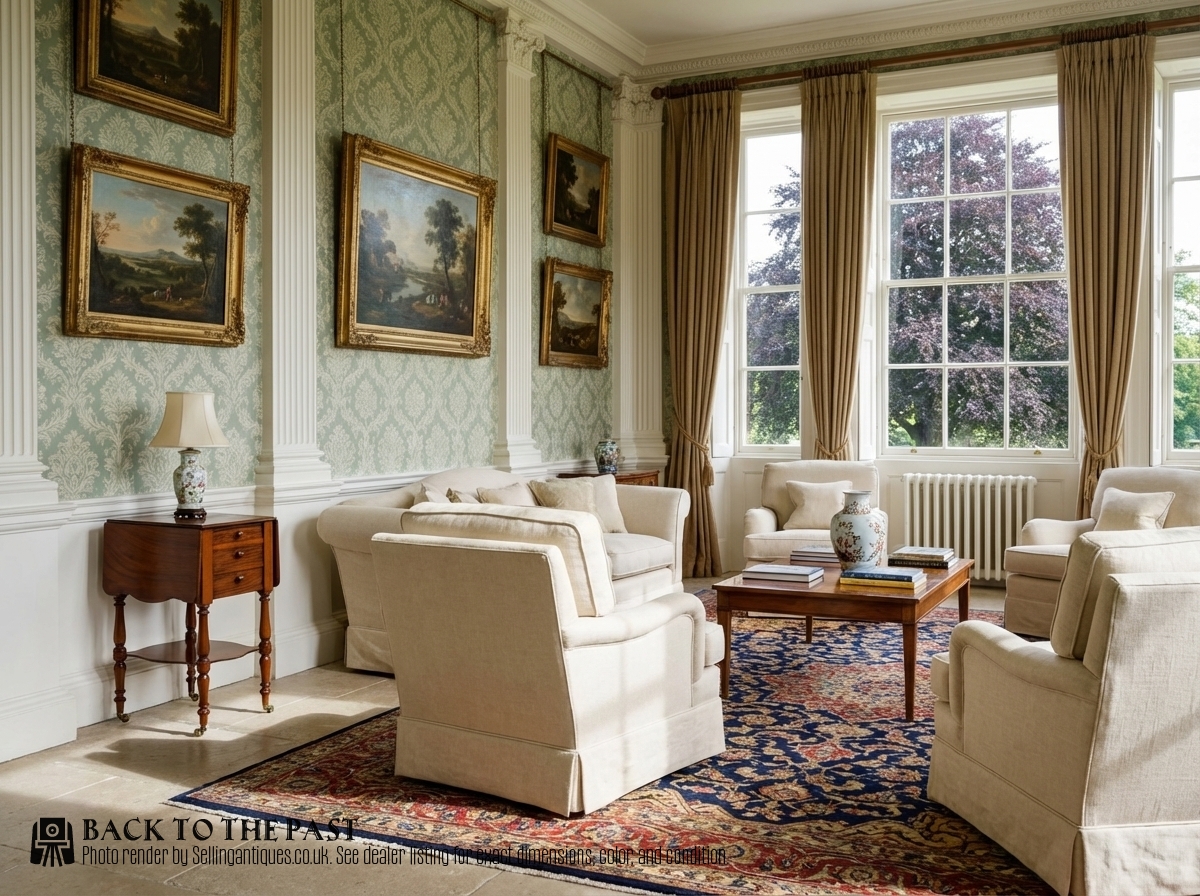
A mahogany table turned legs search covers an array of forms, from modest wine tables and occasional stands to large extending dining tables and writing desks. The listings span the Georgian, Regency, William IV, Victorian and Edwardian periods, demonstrating how the combination of dense timber and turned supports endured across different eras.
Side tables, Pembroke tables and breakfast tables dominate the selection, frequently featuring cylindrical or tapered uprights shaped on a lathe. These examples serve utilitarian functions in domestic spaces, functioning as lamp stands, writing surfaces or dining furniture.
The evidence shows considerable variety in scale, from small tripod wine tables up to six-foot and ten-seat dining tables. The presence of nests of tables and washstands alongside larger library desks indicates the broad domestic scope of turned leg mahogany furniture.
Materials and construction
Makers utilised solid mahogany and flame mahogany veneer applied to secondary woods like oak, pairing rich reddish-brown timber with brass castors, leather writing inserts and marble tops. The structural members are shaped using woodturning techniques on a lathe, producing cylindrical, reeded, fluted or ring-turned profiles.
Assembly relies on traditional joinery methods such as mortise and tenon frames, dovetailed drawer construction and screw fastenings on extending dining mechanisms. Tilt-top and fold-over mechanisms utilise clever hinged pivots and brass catches to allow surfaces to shift position.
Materials appearing alongside mahogany include brass, leather, ceramic inserts, oak, and marble.
What separates the tiers
Quality rests in the selection of the timber and the crispness of the lathe work, where richly figured flame veneers and deeply carved ring-turnings or reeding distinguish superior pieces from plain utilitarian stock. The proportion between the turned upright and the top determines the visual balance of the piece.
Integrity of construction defines the higher range, evident in original brass castors, unwarped rule joints on drop-leaf surfaces and smooth drawer actions with hand-cut dovetails. Pieces retaining original surface finishes and patination outrank examples with heavy modern interventions.
Heal and Son·James Mein of Kelso·Gillows
The Mahogany Table Turned Legs Glossary
- Flame mahogany veneer
- A decorative wood slice cut from the fork of a tree to create a fiery, flammiform grain pattern. This surface treatment appears frequently on grander drawers and table tops.
- Reeded
- A decorative moulding consisting of parallel convex strips resembling bundled rods. This technique often ornaments turned table legs.
- Tripod table
- A small freestanding table supported by three legs radiating from a central turned column. These forms are typically used as wine or lamp tables.
- Wind-out dining table
- An extending dining table operated by a mechanical crank mechanism that expands the frame to accept internal leaves. This design appears across Victorian examples.
- Sutherland table
- A narrow drop-leaf table with hinged flaps that drop nearly vertically on both sides. The legs incorporate a swinging gate-leg action to support the extended leaves.
Mahogany Table Turned Legs: Frequently Asked Questions
How do I date a mahogany table with turned legs?
Dating relies on observing structural characteristics, timber selection, and leg turning styles alongside any historical stamps or labels. Simpler, straight tapered turnings often point toward earlier Georgian or Regency eras, while heavier ring-turnings and robust pedestals frequently align with Victorian production.
Secondary woods and construction methods inside drawers provide additional clues to the era of manufacture. Examining whether screws, handmade dovetails, or machine joints were utilised helps narrow down the decade.
Were turned legs common on dining tables?
Turned legs appear frequently on dining tables across the Georgian, Regency and Victorian periods. They range from slender tapering uprights on Pembroke tables to heavy, reeded pillars supporting large wind-out extending tables.
Makers utilised this method to provide sturdy structural support while introducing decorative reeding, spiral twisting, or ring-turnings to match prevailing interior fashions.
What is a Pembroke table?
A Pembroke table is a small rectangular side or breakfast table featuring hinged drop leaves on two opposing sides. They often incorporate a single friverse drawer and are supported by four legs, which may be turned or tapered.
These versatile items were designed to stand against a wall when folded down and pulled out into the room when additional surface area was required for writing or breakfasting.
How should I care for mahogany timber surfaces?
Mahogany benefits from regular dusting with a soft, dry cloth to prevent particulate accumulation. Avoiding direct sunlight and maintaining stable room humidity protects the timber and any underlying veneer from splitting or fading.
Applying a quality traditional wax polish periodically helps nourish the wood and maintain a gentle sheen without building up heavy chemical layers.