



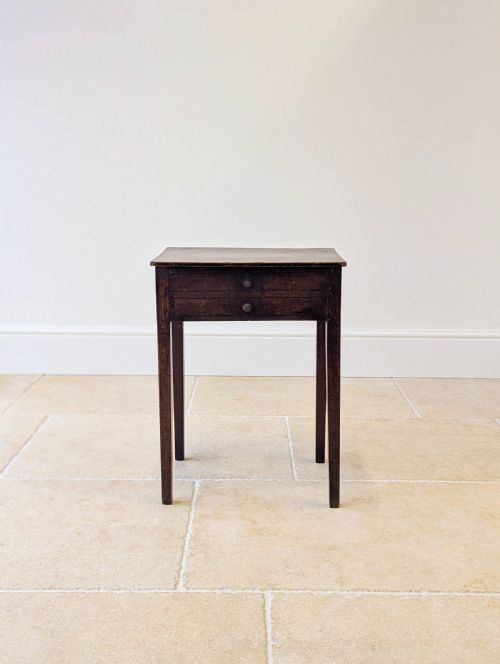
Antique Sewing Table Drawers
These antique sewing table drawers combine practical storage with refined domestic craft, offering fitted compartments and drop-leaf surfaces from the Georgian, Regency and Victorian periods.
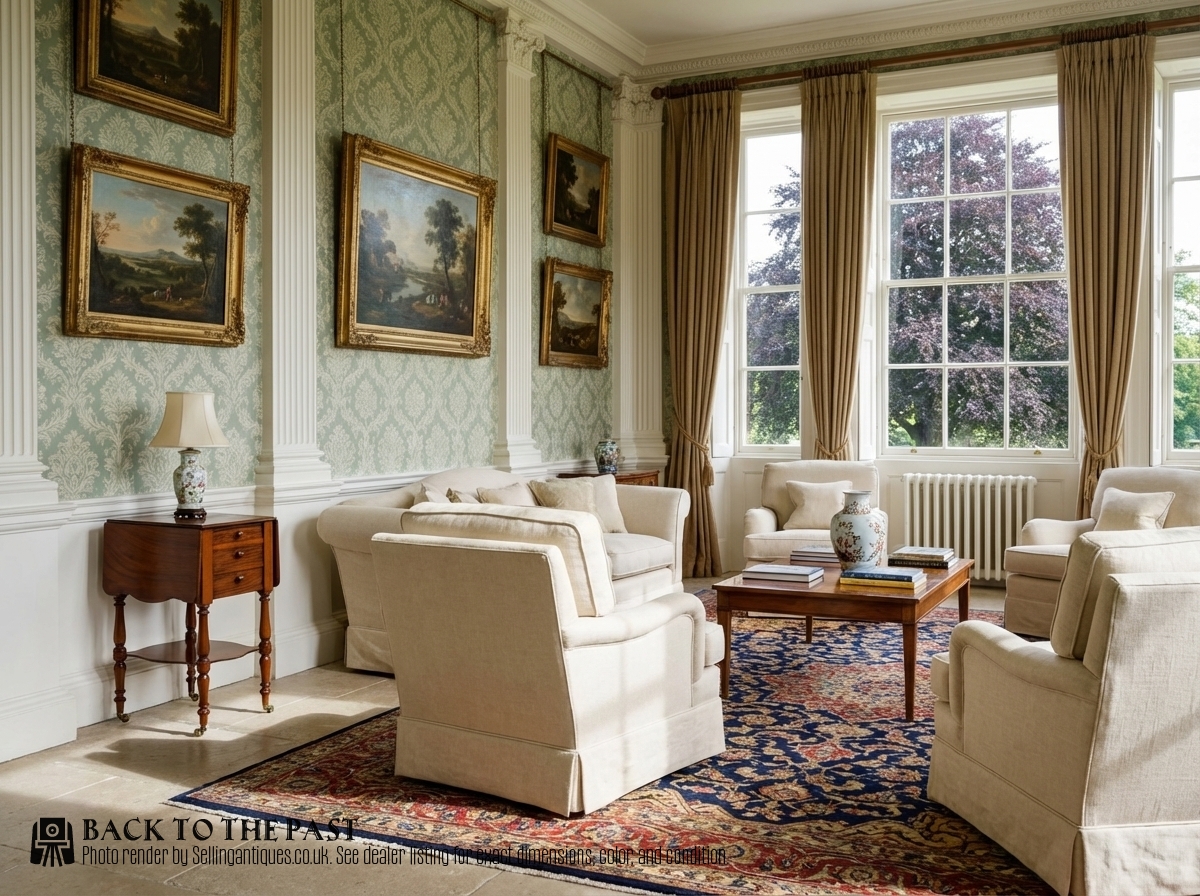
Antique Sewing Table Drawers
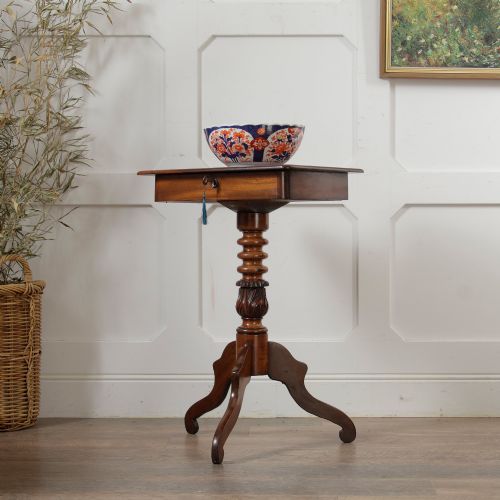
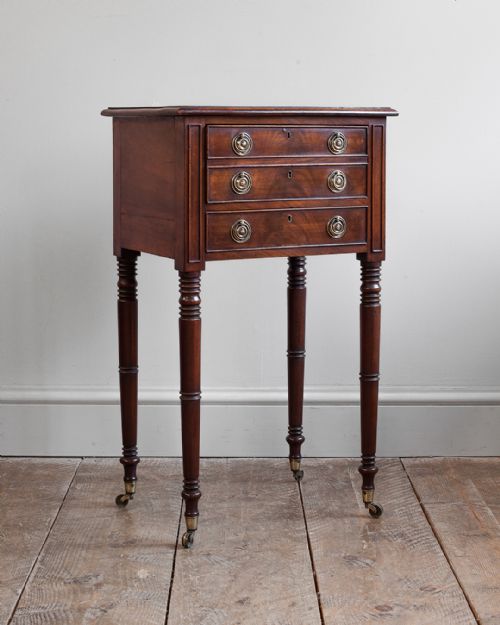
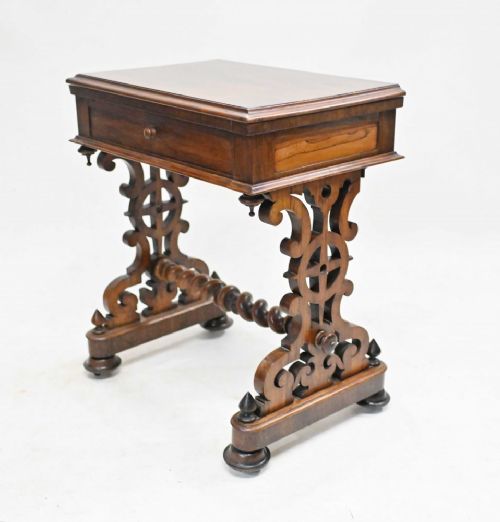
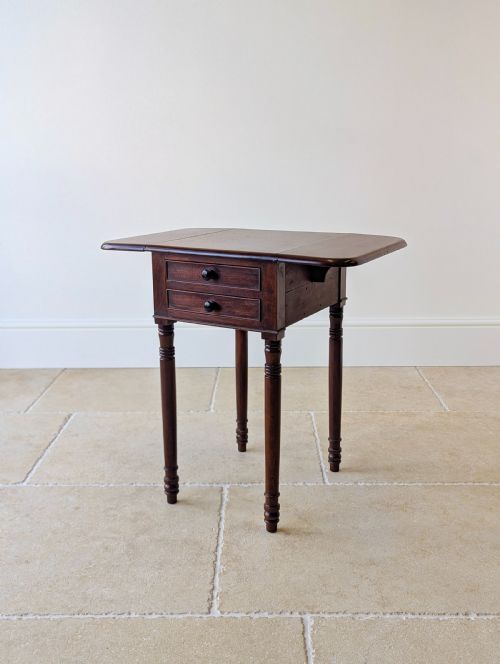
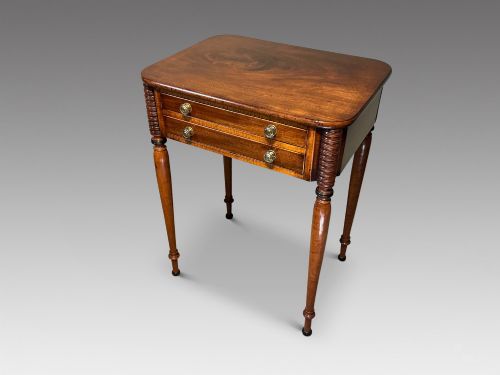
When you search for antique sewing table drawers, you encounter compact pieces designed primarily for needlework and domestic crafts. The selection spans the Georgian, Regency, William IV, Victorian and Edwardian eras, encompassing side tables, occasional tables and drop-leaf work tables.
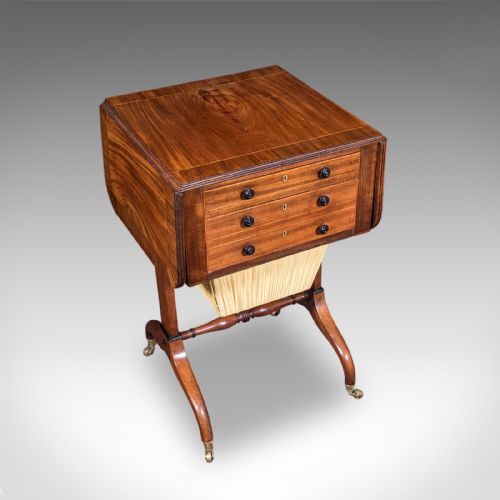
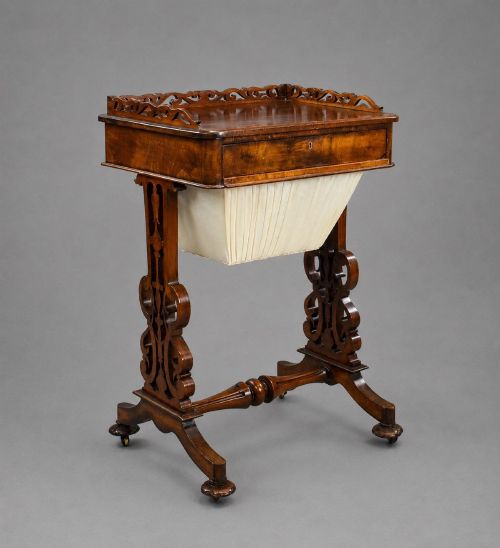
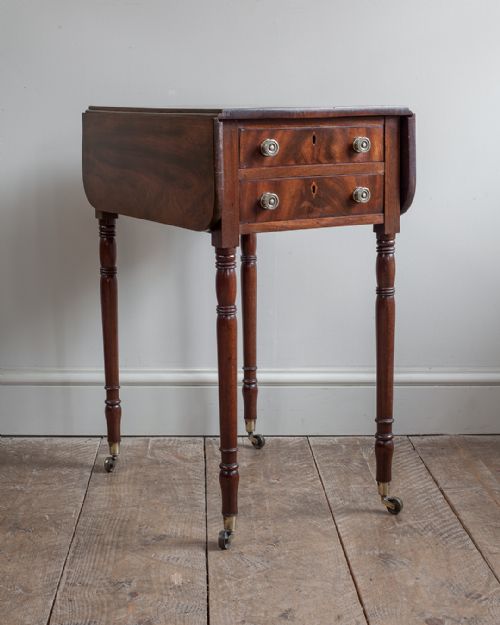
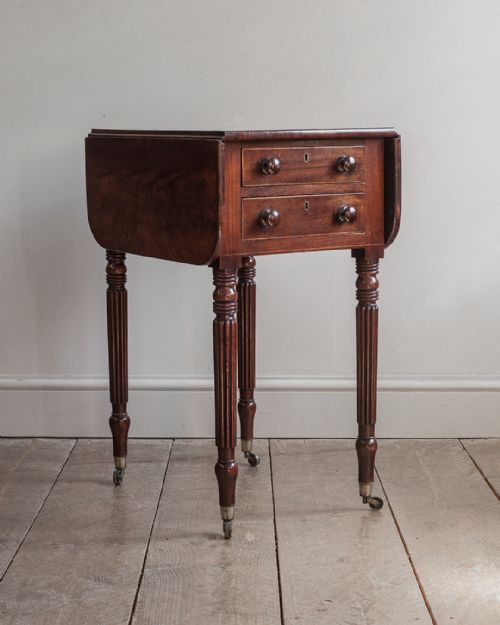
You are most likely to meet mahogany examples featuring fitted internal drawers, alongside pieces in walnut, burr walnut, rosewood and satinwood. Many incorporate drop leaves and hanging fabric bags or wooden compartments for threads and implements.
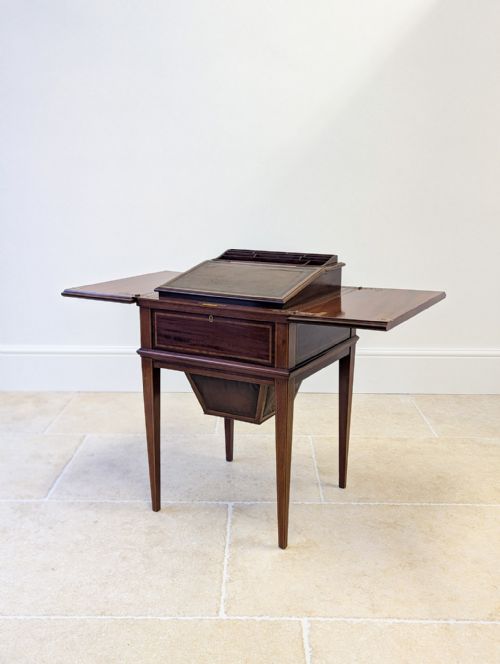
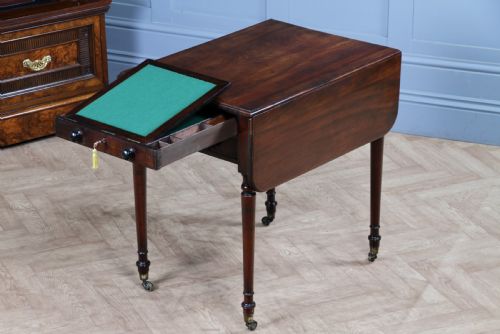
The assortment includes specialised forms such as Pembroke work tables, writing tables and games tables adapted for multiple domestic uses. Origins range from English workshops to Scandinavian and American makers working in classical revival styles.
Materials and Construction
Cabinetmakers utilised dense hardwoods like mahogany, rosewood and walnut, frequently selecting flame veneers, pollard oak or burr walnut for decorative surfaces. Solid timbers formed the structural frames, legs and drawer boxes, while secondary woods such as pine or oak appeared in concealed areas.
Joinery relied on precise dovetail construction for drawers and sturdy mortise and tenon joints for frames. Drop-leaf actions employed folding brackets or wooden rule joints, and turning, carving, brass mounts and inlay defined the decorative vocabulary of the period.
One late nineteenth century birch table arrived with its original contents still tucked inside the drawers.
Distinctions in Execution
Quality reveals itself in the selection of timber figures, such as the matched grain on a mahogany top or the rich depth of burr walnut veneers. Superior pieces display crisp carving, refined brass mounts and meticulous inlay rather than mechanical uniformity.
Internal organisation separates standard examples from exceptional ones, with finely divided cedar or mahogany compartments and intact silk or fabric sewing bags showing superior original craftsmanship. Structural integrity in the drop-leaf mechanisms and smooth drawer movement also indicate higher standards of workshop production.
Boothroyd Sons Rimmer Southport
The Antique Sewing Table Drawers Glossary
- Pembroke table
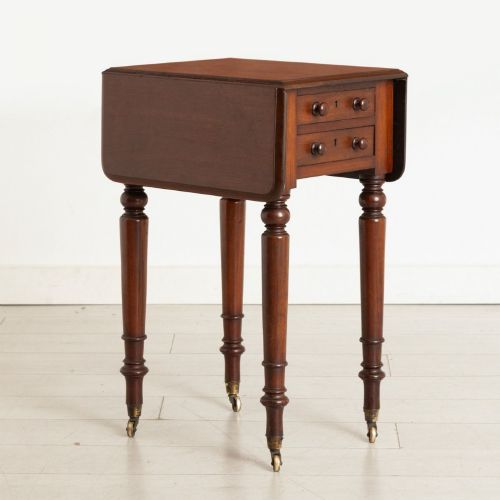
- A small occasional table featuring two hinged drop leaves on opposing sides. It usually incorporates one or two end drawers.
- Work table
- A specialised small table equipped with drawers and often a fabric bag underneath to hold sewing implements. These pieces gained popularity during the Georgian and Victorian eras.
- Drop leaf
- A hinged flap on a table top that can be raised to extend the surface area or lowered when space is constrained. It operates via swinging brackets or rule joints.
- Burr walnut
- Timber taken from the gnarled growth of a walnut tree, yielding complex, swirling grain patterns. Cabinetmakers prized it for high-status veneered surfaces.
- Secretaire
- A desk or table fitted with a pull-down writing flap or a drawer containing a writing surface and small pigeonholes. This multifunctional design often combined storage with correspondence.
Antique Sewing Table Drawers: Frequently Asked Questions
How do I date a sewing table?
Dating relies on timber choices, leg styles and construction methods visible in the frame and drawers. Georgian and Regency examples often show straight tapered legs or elegant pillar supports in mahogany, while Victorian pieces favour heavier turned pedestals in walnut or rosewood.
Secondary woods, brass hardware styles and the presence of hand-cut dovetails inside the drawers provide further chronological markers.
Were these tables only used for sewing?
While designed primarily for needlework and domestic crafts, their compact size and fitted drawers made them versatile for multiple uses. Many served as occasional tables, bedside stands or small writing desks.
Some specialised variants incorporated chess or backgammon boards into the top, while others included pull-out leather writing surfaces.
How do I care for a mahogany work table?
Maintain the timber by keeping the table away from direct sunlight and steady heat sources to prevent veneer lifting or wood splitting. Dust regularly with a dry cloth and occasionally feed the polished surface with traditional beeswax.
Protect the top from moisture by using coasters and avoid placing heavy objects on the drop leaves.