

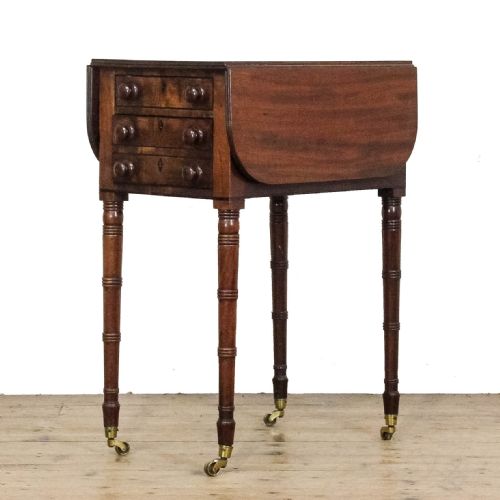
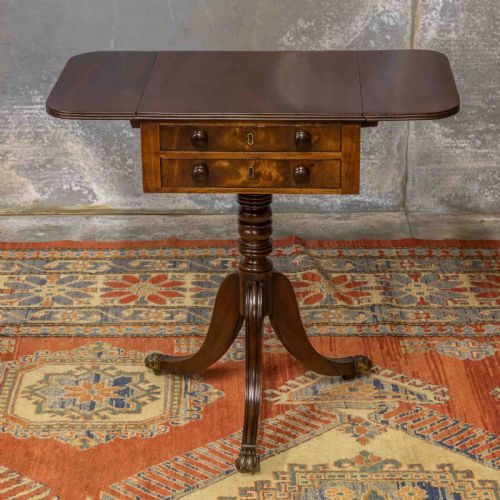


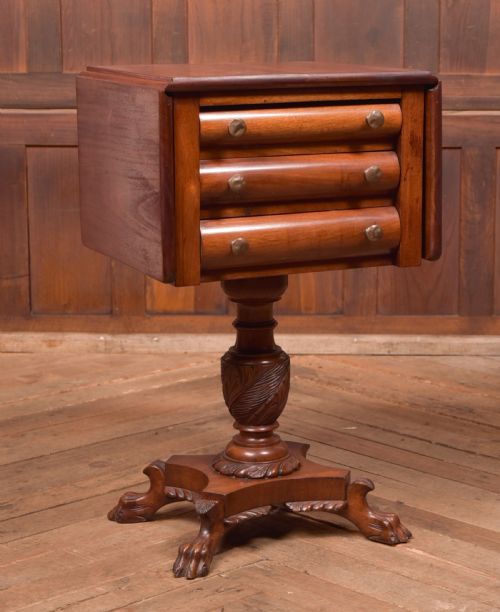


Antique Drop Leaf Worktable
These antique drop leaf worktable examples combine clever folding surfaces with fitted compartments for sewing and writing.
Antique Drop Leaf Worktable
An antique drop leaf worktable provides a compact surface that expands via folding flaps on the sides. These pieces serve multiple domestic functions, operating as sewing tables, games tables, and occasional lampstands.
The specimens seen here span the Georgian, Regency, William IV, and Victorian periods. Most examples date from the nineteenth century and employ mahogany or rosewood timbers.
Makers designed these versatile items for parlours and drawing rooms where space economy and utility mattered. The primary forms include pedestal bases and four-legged side tables fitted with internal storage compartments.
How they were made
Cabinetmakers utilised dense timbers like mahogany and rosewood to construct the frames and drop leaves. These woods provide the structural stability required for folding flaps and heavy pedestal supports.
Worktables integrate specialised functional elements such as fabric bags for sewing, leather writing inserts, and brass hardware. Skilled joinery ensures the drop leaves operate smoothly on hinges while supporting weight when raised.
Antique Drop Leaf Worktable Retail Price Guide 2026
Typical asking prices for drop leaf worktable among the pieces listed under this phrase on Sellingantiques today, from the lower quarter to the upper quarter. They describe what is for sale here now, not the wider market.
Listings feature mahogany and rosewood timbers paired with brass and leather elements across the nineteenth century.
What varies in quality
The refinement of the timber grain and the complexity of the pedestal carving distinguish exceptional pieces from standard workshop output. Superior examples display carefully matched veneers and robust internal joinery for the sewing compartments.
Hardware details, such as original brass fittings and castors, elevate the overall standard of a piece. The presence of multi-functional interiors, combining writing surfaces and games boards within a single drop leaf frame, indicates higher maker ambition.
Gillows
The Antique Drop Leaf Worktable Glossary
- Drop leaf
- A table with hinged flaps on either side that fold down to save space or lift up to enlarge the surface area. This mechanism defines the versatility of the furniture type.
- Pembroke table
- A small rectangular table featuring two hinged drop leaves on opposing sides. These tables often include a single drawer or dummy drawer.
- Pedestal table
- A table supported by a central pillar rising from a base with feet rather than four corner legs. This construction allows greater knee clearance.
- Worktable
- A small multi-purpose table designed for sewing, needlework, or writing, typically equipped with an integrated bag or internal compartments. They were popular in nineteenth-century domestic interiors.
- Veneer
- A thin layer of choice wood applied over a secondary timber base to create a decorative exterior surface. This technique maximises the visual impact of figured grain.
Antique Drop Leaf Worktable: Frequently Asked Questions
What is an antique drop leaf worktable?
An antique drop leaf worktable is a small nineteenth-century domestic furniture piece featuring folding side flaps and internal compartments for sewing or writing. Makers designed them for versatile use in principal reception rooms.
These tables combine the function of a desk or sewing stand with the space-saving practicality of drop leaves. Mahogany and rosewood are the predominant materials found across the styles of the period.
How were worktables used originally?
Originally, these tables served ladies of the household for needlework, embroidery, and correspondence. The fitted interiors kept threads, needles, and writing implements organised near seating areas.
Some variants incorporated chess or backgammon boards into the top surface, expanding their utility for evening entertainment. Drop leaves allowed the furniture to remain compact against a wall until needed.
How do I date a worktable?
Dating relies on stylistic markers from the Georgian, Regency, William IV, and Victorian periods. Regency and William IV pieces often feature bold pedestal bases and classical proportions, while Victorian examples show heavier proportions.
Timber choice also aids dating, as rich rosewood and figured mahogany dominate early nineteenth-century production. Examining the construction of the interior drawers and compartments provides further chronological context.
Where should I place a worktable today?
These compact tables fit well beside sofas or chairs as functional lampstands or occasional surfaces. The drop leaves permit adjustment to restricted spaces in modern rooms.
They also function effectively as small writing desks in bedrooms or hallways. The enclosed compartments remain useful for storing small household items out of sight.