




Mahogany Straight Front
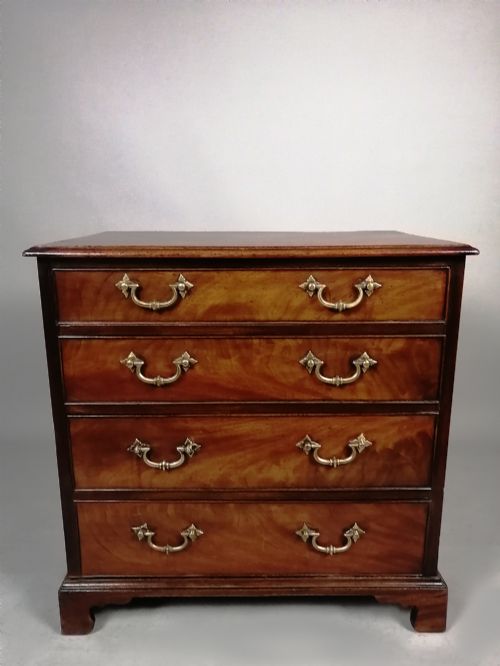
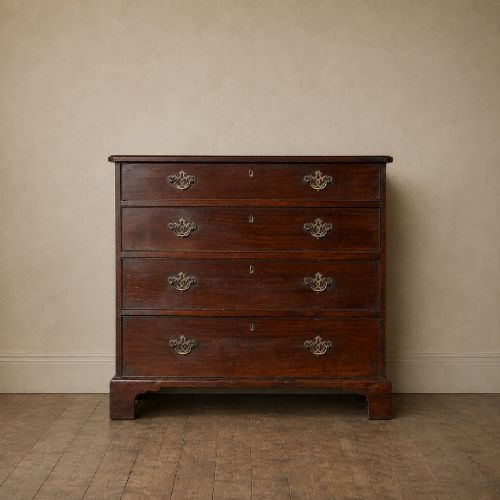
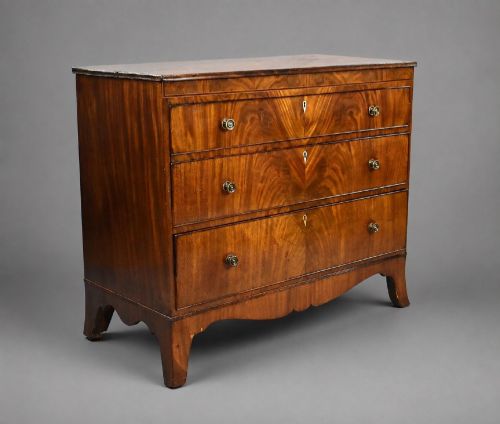
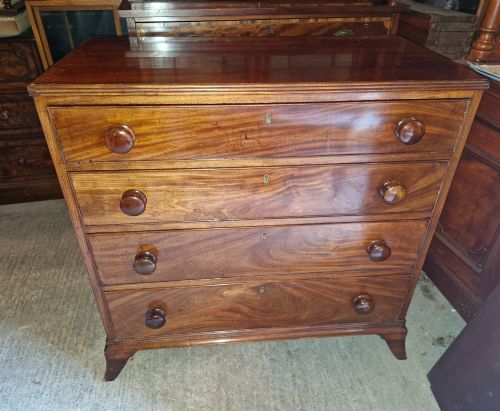
A mahogany straight front brings solid architectural presence and rich timber grain to a room, most often seen in Georgian and Victorian chests of drawers.
Mahogany Straight Front
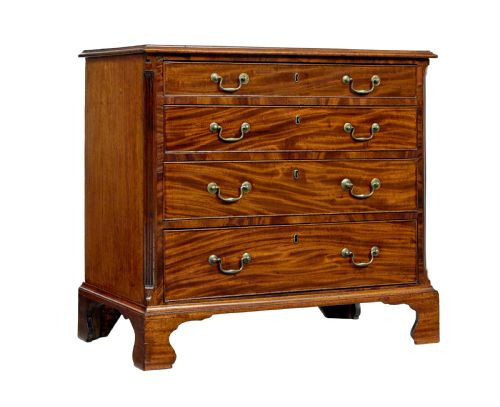
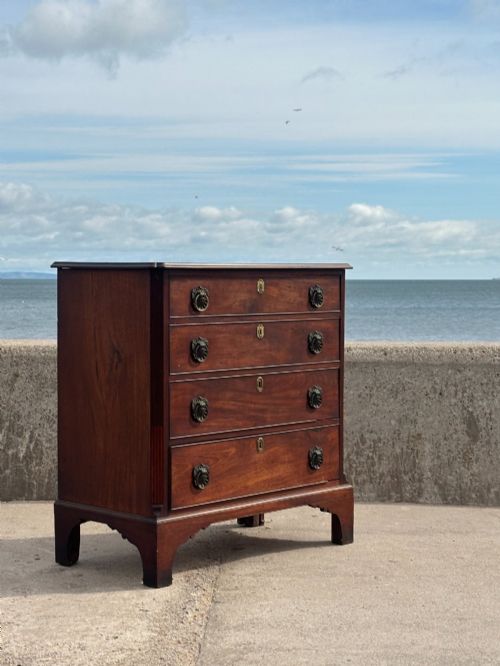
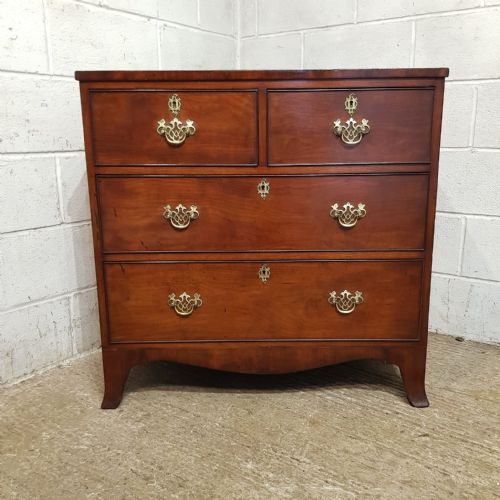
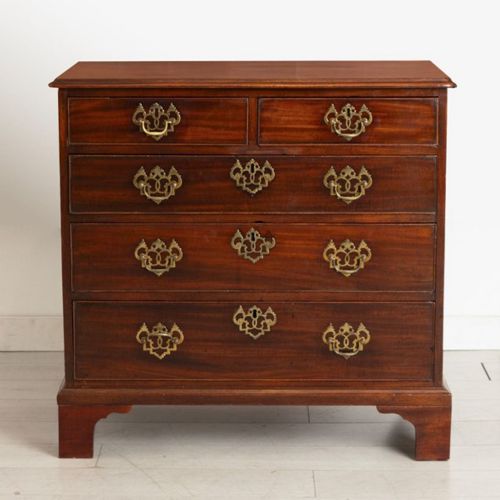
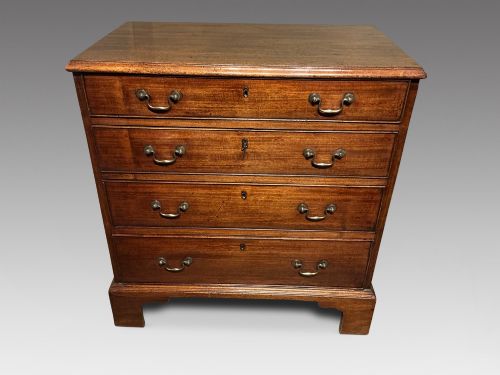
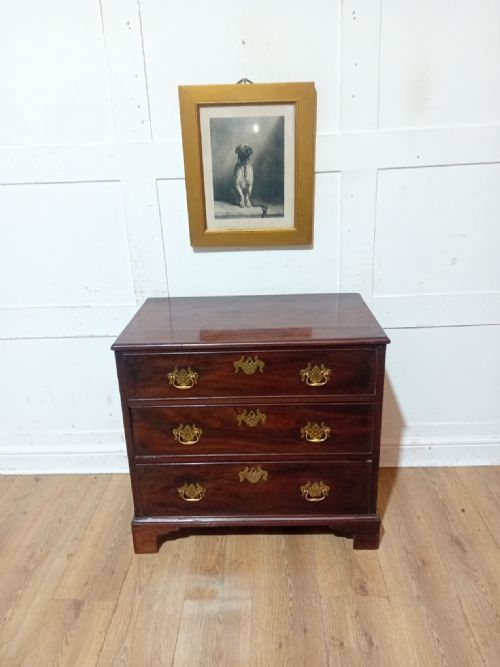
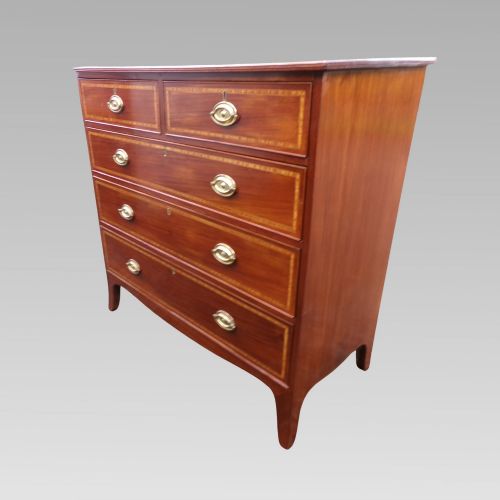
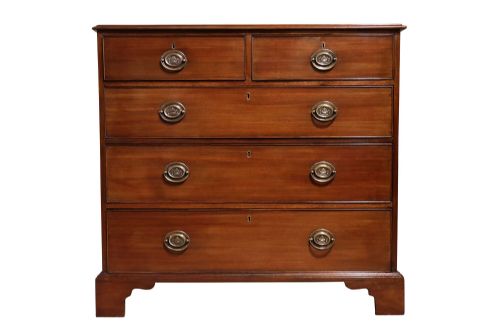
When you search for a mahogany straight front, you encounter case furniture designed with a flat, uncurved facade that emphasises the figured grain of the wood. The most common form on this page is the chest of drawers, spanning periods from the early eighteenth century through the Regency era and into the Victorian period.
These pieces range from compact bachelor chests equipped with brushing slides to tall proportions designed for maximum storage. Cabinetmakers built them primarily as bedroom or parlour furniture, relying on clean planar lines rather than the serpentine or bow fronts popular in parallel stylistic movements.
How they were made
Cabinetmakers constructed the carcase and drawer linings predominantly from solid oak or deal, applying dense mahogany veneers or working with solid Cuban mahogany boards. Secondary woods like boxwood, ebony, and satinwood appear as fine stringing and crossbanding on decorative inlaid examples.
Joinery relied on hand-cut dovetails for the drawer construction and sturdy framing to support the heavy timber. Brass handles, escutcheons, and ogee or bracket feet completed the structure, with secondary materials such as bone occasionally used in keyhole escutcheons.
Listings span the eighteenth, nineteenth, and early twentieth centuries, featuring materials such as brass, bone, ebony, and satinwood.
What varies in quality
The visual hierarchy of these pieces depends heavily on the choice of timber, with highly figured flame or curl mahogany commanding greater appreciation than plain stock. The crispness of inlaid satinwood banding and the retention of original brass hardware further distinguish finer examples from standard workshop output.
Structural integrity also separates the output, visible in the tightness of hand-cut dovetails and whether secondary timbers like oak remain intact within the drawer linings. Pieces retaining their original feet and sliding surfaces demonstrate superior craftsmanship compared to those altered or heavily restored over generations.
Mawer and Stephenson
The Mahogany Straight Front Glossary
- Brushing slide
- A pull-out shelf positioned above the top drawer, traditionally used for folding clothes or writing correspondence.
- Curl mahogany
- Timber featuring a distinctive feather-like flame pattern formed where branches join the main trunk.
- Crossbanding
- A decorative border of veneer laid perpendicularly to the surrounding grain to frame a drawer front or top.
- Ogee
- An S-shaped architectural moulding profile frequently seen on the feet and cornices of mid-eighteenth-century case pieces.
- Stringing
- Thin inlaid lines of contrasting light or dark wood used to outline panels and drawer edges.
Mahogany Straight Front: Frequently Asked Questions
What is a straight front chest?
A straight front chest is a drawer unit featuring a flat, uncurved facade that allows the natural grain of the timber to take visual precedence.
This planar design contrasts with serpentine or bow front alternatives, offering a clean silhouette suited to both traditional and contemporary interiors.
How do I spot an eighteenth century piece?
Eighteenth century pieces typically display hand-cut dovetails, solid oak drawer linings, and deep patination acquired over centuries of use.
Details like bracket feet, cockbeading around the drawers, and dense Cuban mahogany timber further signal early craftsmanship before mass production began.
Where should I place a sideboard?
Sideboards find a natural home in dining rooms or large hallways, providing surface space for serving and deep storage within the drawers.
Their elongated proportions and refined inlay work make them focal points that anchor a dining space while keeping tableware organised.
How do I care for mahogany furniture?
Mahogany furniture requires protection from direct sunlight and consistent indoor humidity to prevent the timber and veneer from splitting.
Applying natural beeswax periodically helps maintain the rich lustre of the grain without building up synthetic residues.