

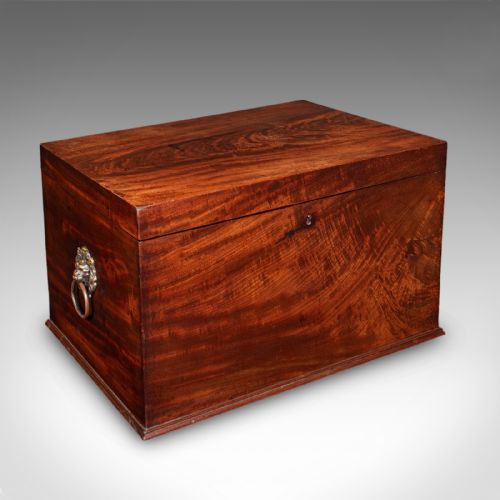
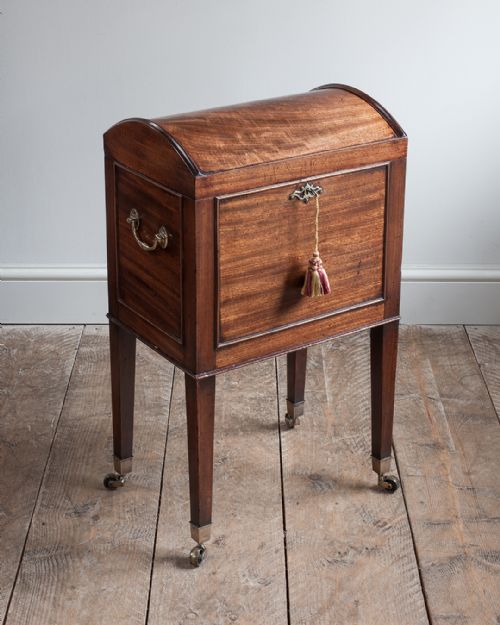


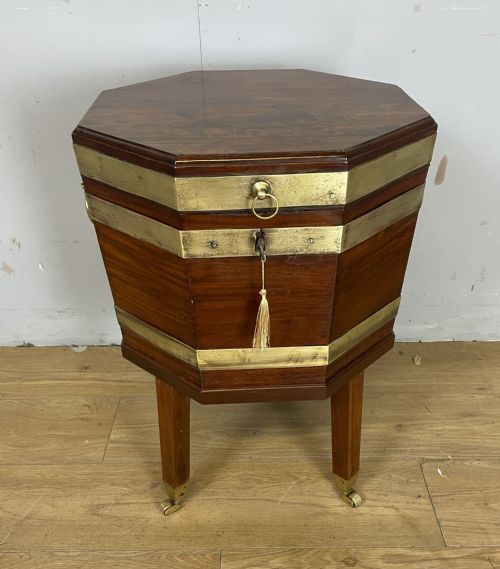

Mahogany Spirits Chest
These mahogany spirits chest pieces, taking forms from cellarettes to tantaluses, provide secure and elegant storage for decanters and bottles.
Mahogany Spirits Chest
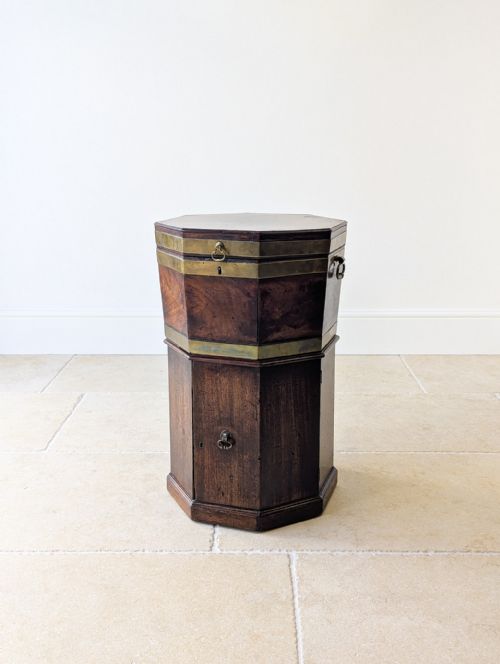
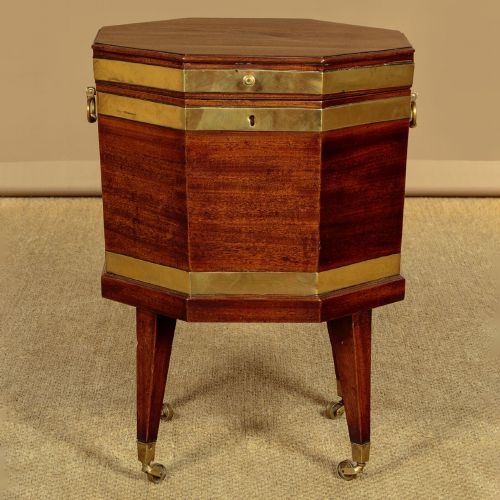
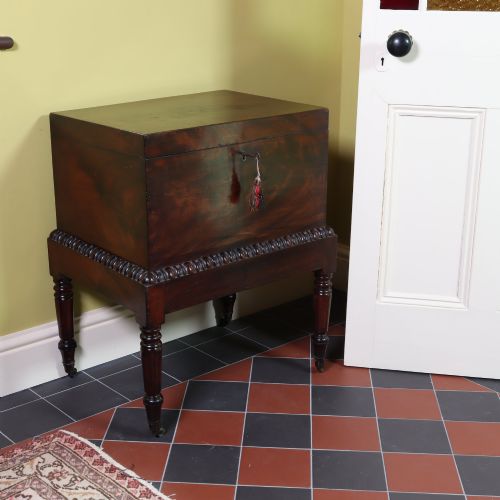
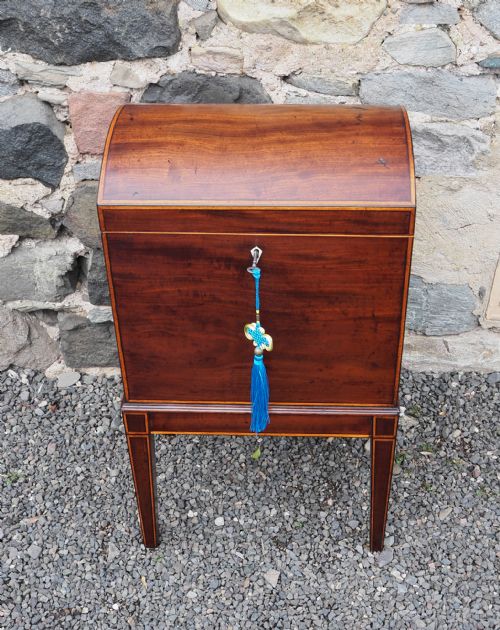
A mahogany spirits chest encompasses cellarettes, tantaluses, wine boxes, and cocktail cabinets designed to hold liquor securely. You will frequently encounter Georgian octagonal brass-bound cellarettes and nineteenth-century tantalus and games boxes on this page.
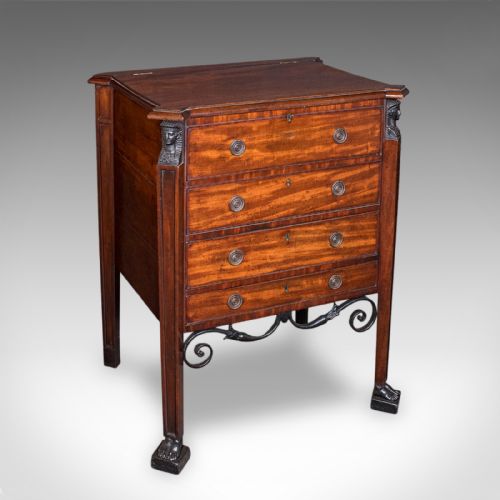
The selection ranges from eighteenth-century George III campaign sets to Edwardian inlaid wine coolers and Victorian Egyptian Revival cabinets. These pieces served to lock away precious spirits in country houses, officers' quarters, and formal dining rooms.
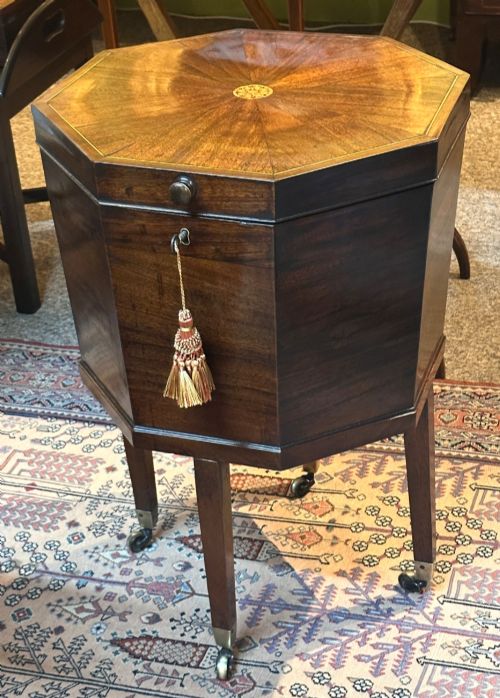
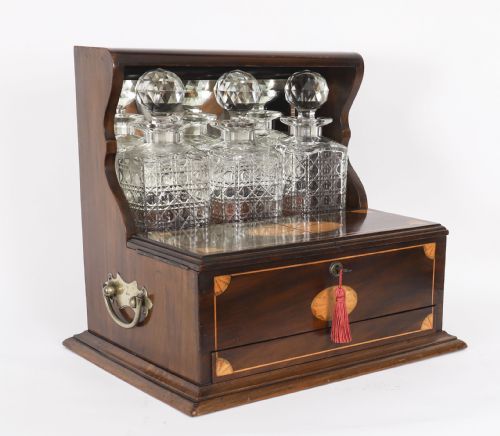
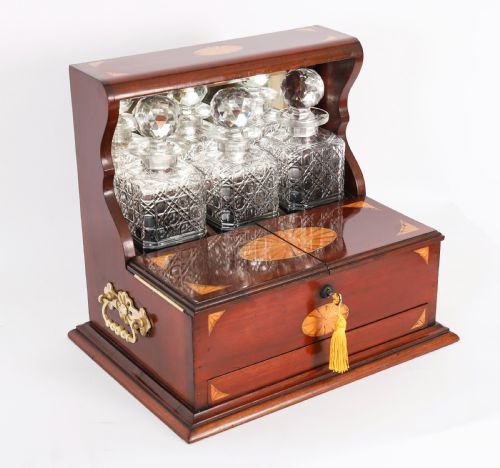
Formations include octagonal wine coolers, rectangular boxes, and combined games compendiums housing cut crystal decanters. Each variety reflects the prevailing social habits of entertaining and storing fine liquors across the Georgian, Regency, and Victorian eras.
What varies in quality
The choice of timber grain, particularly the depth of flame mahogany figure, distinguishes standard utility boxes from exceptional cabinet work. Precision in the boxwood and satinwood inlay indicates the skill of the workshop.
Original hardware, including heavy cast brass carrying handles, operational locks, and matching sets of cut crystal decanters, elevates the standing of a piece. The structural integrity of internal bottle dividers and lining materials further separates fine examples from ordinary ones.
Engineered with clever locking bars to frustrate thirsty guests, the tantalus takes its name from the mythological king condemned to eternal thirst.
Gillingtons
The Mahogany Spirits Chest Glossary
- Cellarette
- A lockable container designed to hold bottles or decanters of wine and spirits near the dining table. They frequently feature lead linings for chilling wine with ice.
- Tantalus
- A locking drink stand that displays decanters while preventing unauthorised access to the spirits within. A metal bar locks the stoppers in place until a key is turned.
- Flame mahogany
- Timber cut from the fork of the mahogany tree to produce a distinctive, flickering flame-like grain pattern. Cabinet makers reserved this veneer for primary visible surfaces.
- Campaign set
- Portable furniture built for travel, typically featuring fitted compartments and robust brass mounts for military officers or long journeys. These sets house decanters and glassware securely during transit.
- Games compendium
- A multi-functional box combining a spirits storage area with equipment for board games and card playing. Edwardian and nineteenth-century examples often integrate these pastimes into a single cabinet.
Mahogany Spirits Chest: Frequently Asked Questions
What is a spirits chest?
A spirits chest is a secure wooden box, cellarette, or cabinet designed to store decanters and bottles of liquor safely. They range from portable campaign sets to heavy dining room wine coolers.
Most examples feature internal dividers and locking mechanisms to protect valuable contents during the Georgian and Victorian periods.
How do I date a mahogany cellarette?
Dating relies on architectural styles, timber selection, and hardware construction methods visible on the piece. Georgian examples often display simple brass banding and octagonal forms, while Edwardian pieces incorporate extensive inlay.
Examine the construction of the interior compartments and the style of the brass handles to narrow down the manufacturing decade.
What is the difference between a cellarette and a tantalus?
A cellarette is a fully enclosed box or cooler that conceals the bottles inside a locked wooden container. A tantalus uses an open wooden or metal frame with a locking bar that traps the decanter stoppers.
Both items secure spirits, but the tantalus permits guests to view the crystal decanters while keeping the liquor inaccessible.
Did these chests always hold wine?
While many served as wine coolers or cellar boxes, they frequently held spirits, cordials, and portable glassware sets. Campaign sets specifically stored decanters of spirits for travelling officers and gentlemen.
Interior dividers were often custom-built to hold specific decanter shapes rather than standard wine bottles.