

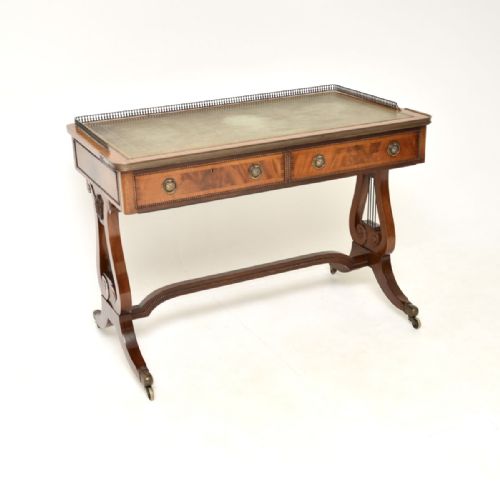
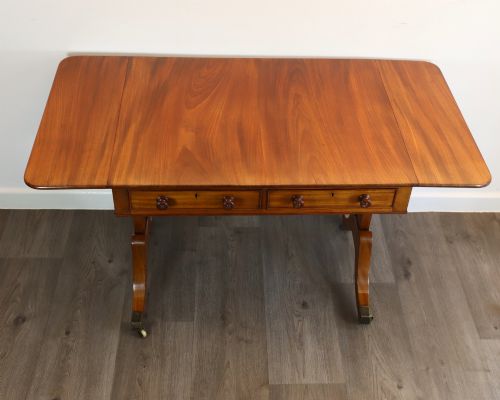
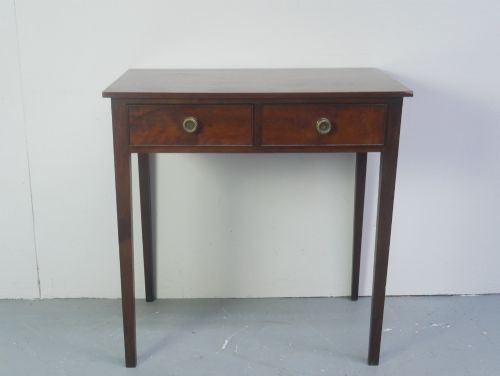
Mahogany Sofa Desk
A mahogany sofa desk brings dual-purpose writing space and refined period timber into the centre of a room.
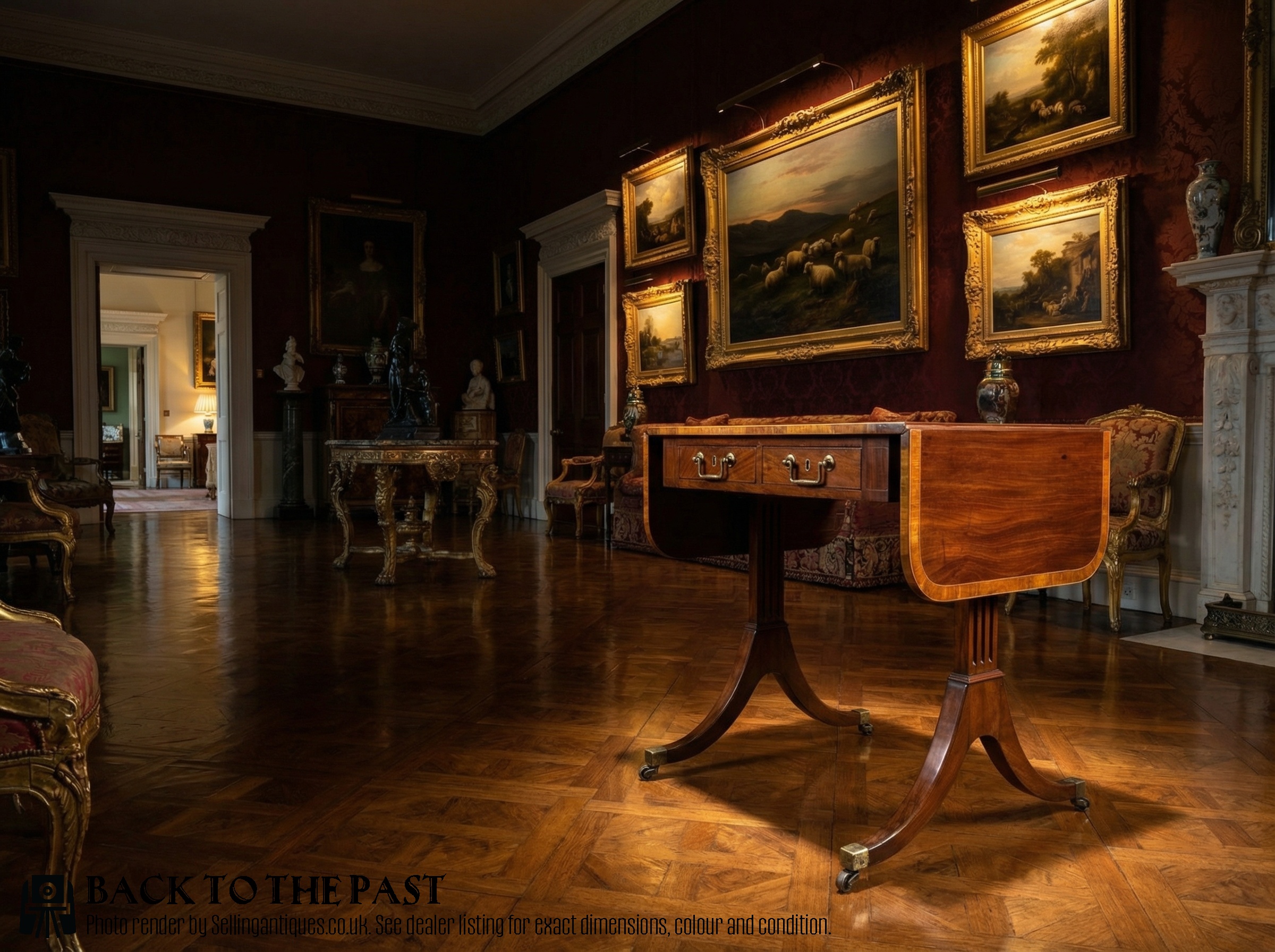
Mahogany Sofa Desk
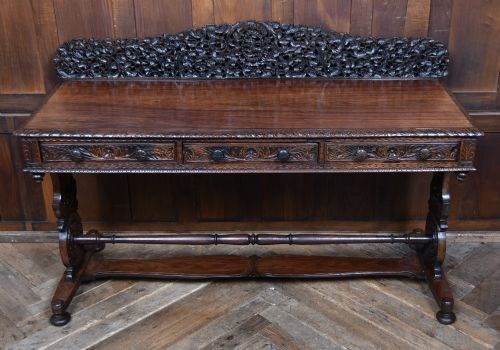
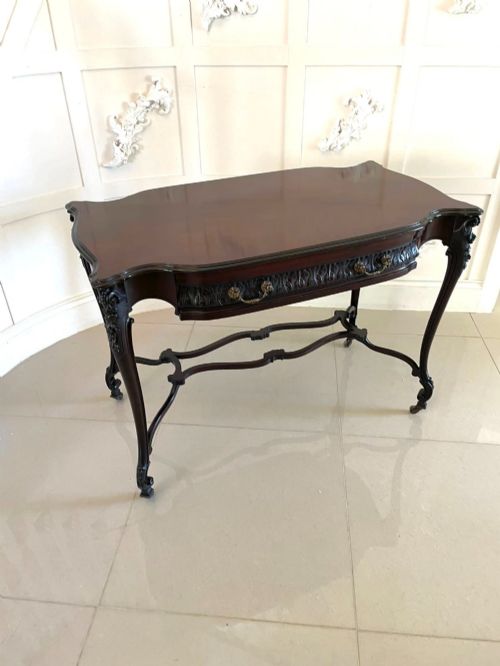
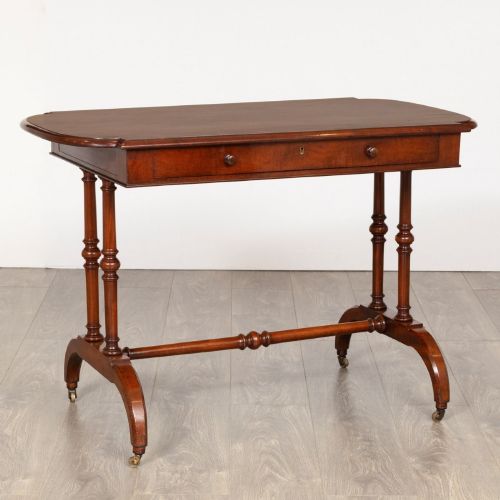
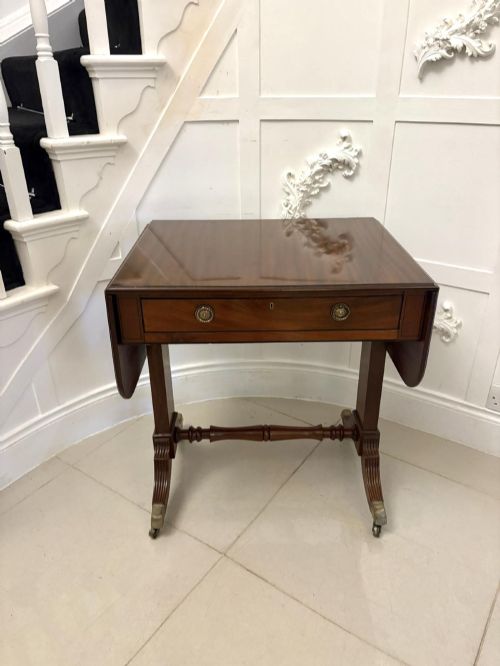
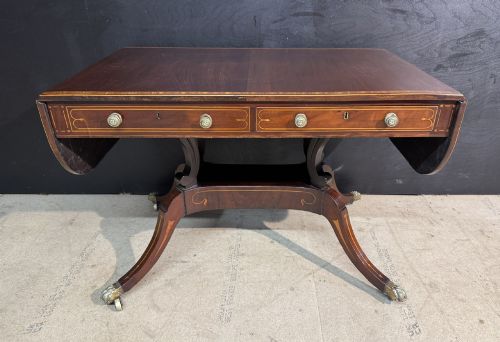
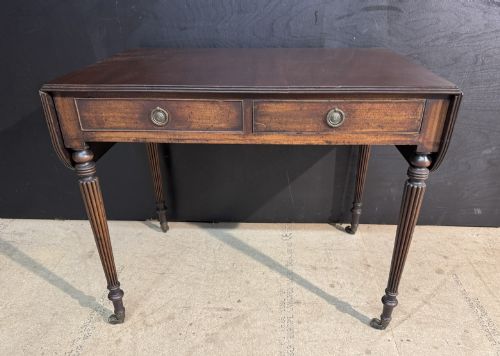
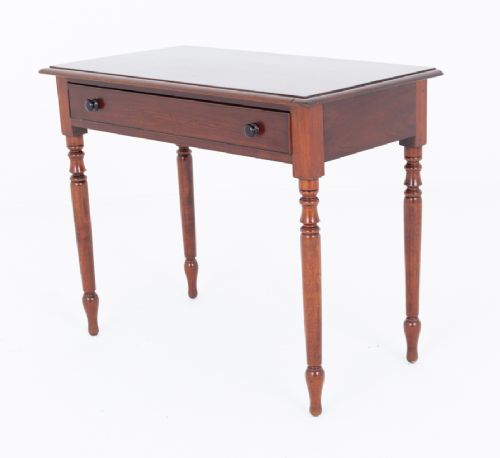
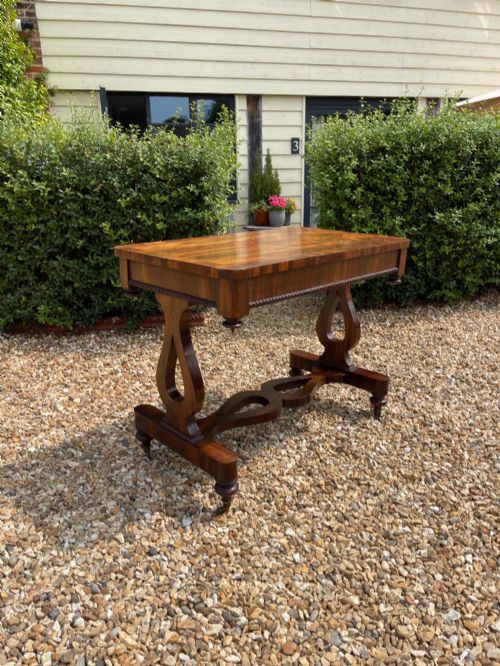
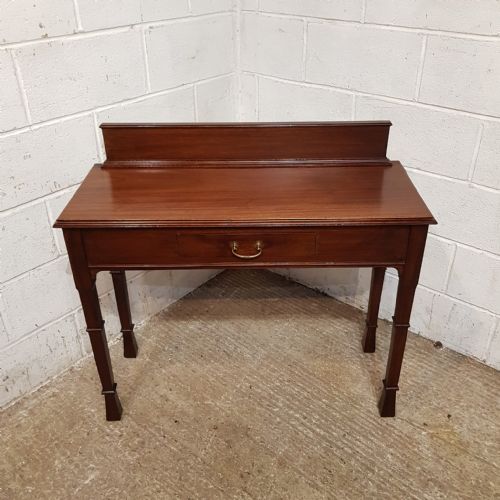
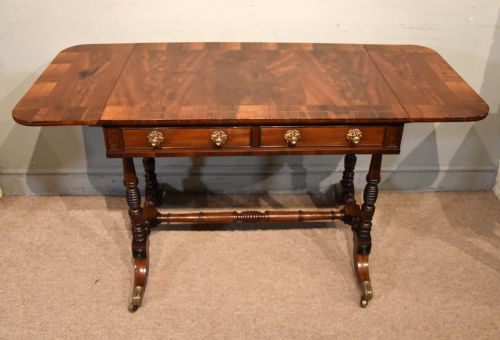
A mahogany sofa desk combines the proportions of a low writing table with the drop-leaf versatility of a traditional sofa table, emerging primarily from Georgian, Regency and Victorian workshops. These adaptable tables were designed to sit freestanding behind a sofa or within an open interior, offering drawers for correspondence and folding flaps to extend the surface.
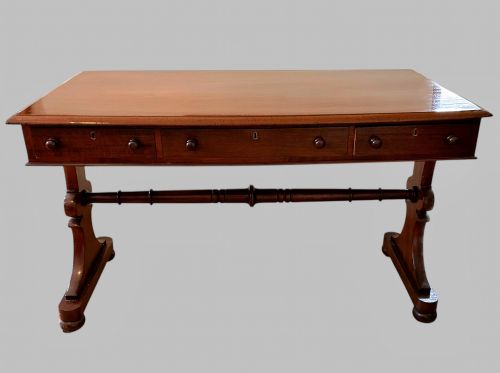
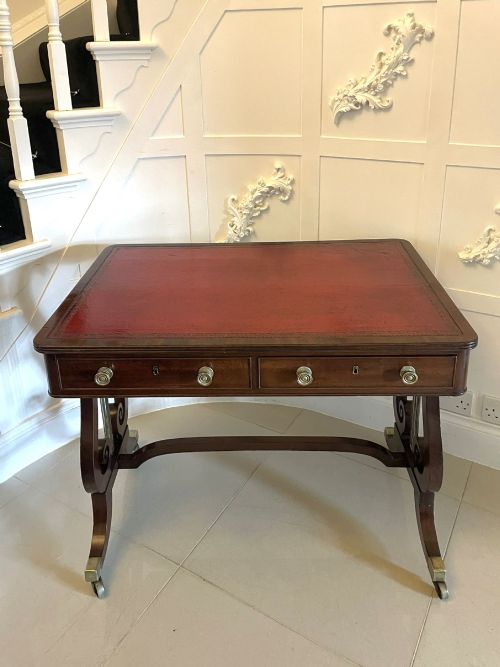
The pieces available span multiple periods from the eighteenth century through to Edwardian reproductions, with Regency examples demonstrating the classic twin-pillar or trestle supports. Side tables, library tables and writing tables frequently overlap with this category due to their shared dimensions and drawer configurations.
Materials and construction methods
Cabinet makers utilised dense solid mahogany alongside figured veneers, flame mahogany and rosewood, often pairing darker timbers with contrasting boxwood and satinwood inlay. Brass castors, drop handles and escutcheons completed the hardware.
Drop-leaf mechanisms relied on hinged rule joints that allowed the outer flaps to lower smoothly when not in use. Drawers were traditionally constructed with hand-cut dovetails and lined with secondary softwoods, designed to run smoothly within their carcases.
Wood inlay work across the recorded items frequently incorporates contrasting boxwood and satinwood geometric stringing.
Distinguishing quality factors
The choice of timber grain defines the visual impact, with highly figured flame mahogany and matched symmetrical veneers commanding greater presence than plain stock. Crispness in the inlaid banding and fine stringing separates standard commercial pieces from bespoke commissions.
Stability and proportion in the base architecture dictate durability, particularly where free-standing tables require robust stretcher frames or substantial pedestal supports to counter the weight of extended leaves.
Williams and Gibton·Jean-Joseph Chapuis·Andrew Thomson and Sons
The Mahogany Sofa Desk Glossary
- Sofa table
- A rectangular occasional table featuring drop leaves on either side and usually fitted with two small drawers, designed originally to stand directly in front of a sofa.
- Flame mahogany
- A decorative veneer cut from timber where the branch meets the trunk, producing a distinctive, fiery ripple pattern across the surface.
- Rule joint
- A specific rounded moulding joint used on drop-leaf tables that leaves a small, neat gap when the flap is raised.
- Pembroke table
- A small form of table with hinged leaves of narrower width, often incorporating a single drawer and slender tapered legs.
- Dovetail
- A traditional interlocking joint used in drawer construction, prized for its structural strength and resistance to pull forces.
Mahogany Sofa Desk: Frequently Asked Questions
Where should a sofa desk be placed?
These tables are traditionally finished on all sides so they can float in the middle of a room, often positioned directly behind a central sofa. They also function effectively against a wall or in a hallway as a compact writing surface.
Because the drop leaves adjust, you can fold one or both sides down to alter the footprint depending on the available floor space.
How do I care for a leather writing surface?
Many library and writing tables feature inset leather tops that require gentle maintenance using specialist wax balms rather than standard furniture polish. Keeping them away from direct sunlight preserves the original tone of the hide.
Avoid placing damp cups or uncovered inkwells directly onto the leather to prevent permanent staining of the surface.
How can I tell a Regency table from a Victorian one?
Regency pieces often display classical proportions with brass inlay, sabre legs, or pillar supports reflecting early nineteenth-century neoclassical tastes. The timber choice tends to feature bold flame mahogany veneers.
Victorian examples frequently incorporate heavier turned legs, deeper drawer configurations, and slightly darker, highly polished finishes typical of later industrial production.
Can these tables be used for daily computer work?
Their modest depth and historic drawer clearance mean modern desktop monitors may not fit comfortably, though they suit laptops and handwritten correspondence. Care must be taken not to overload the drop leaves, which are supported by pivoting wooden brackets rather than heavy steel frames.
Using a separate desk blotter protects the vintage timber and aged leather from daily wear.