

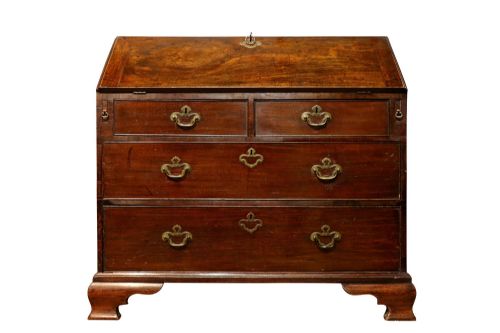


Mahogany Slant Top Desk
A mahogany slant top desk brings solid timber warmth and a fitted writing surface into any room.
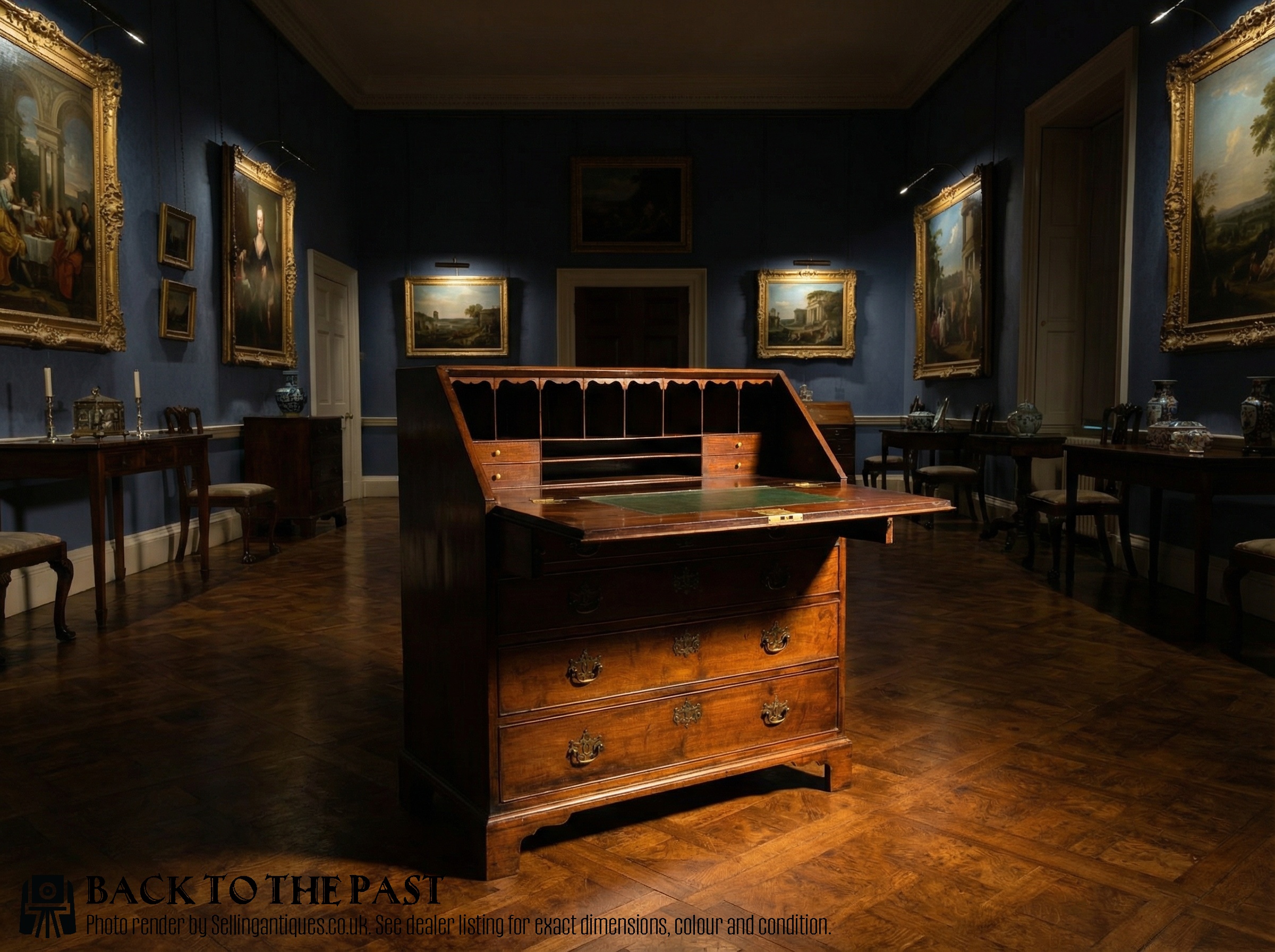
Mahogany Slant Top Desk
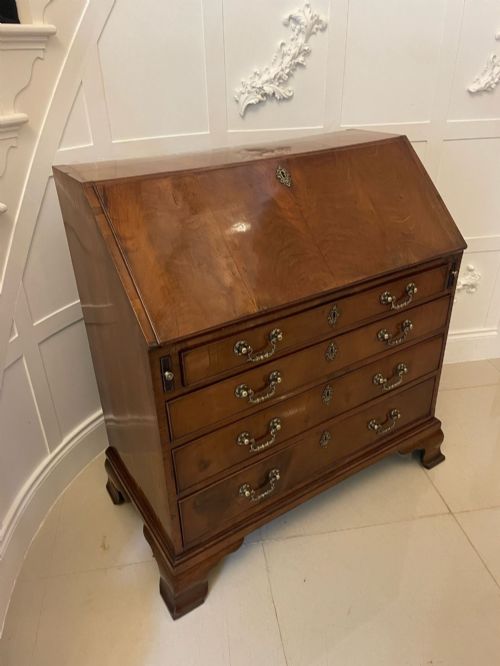
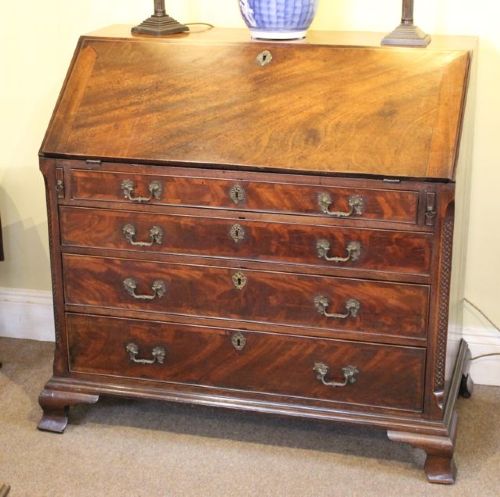
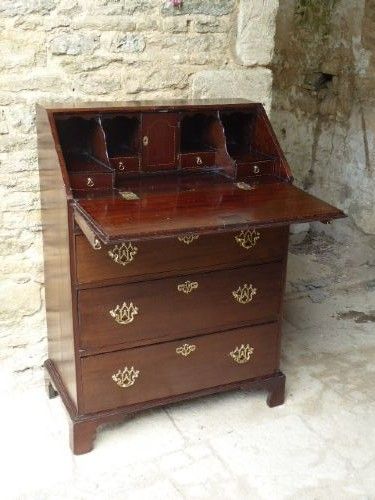
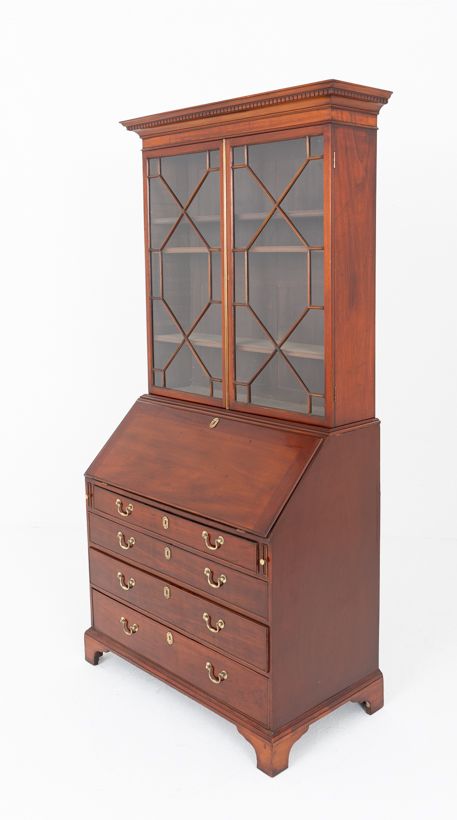
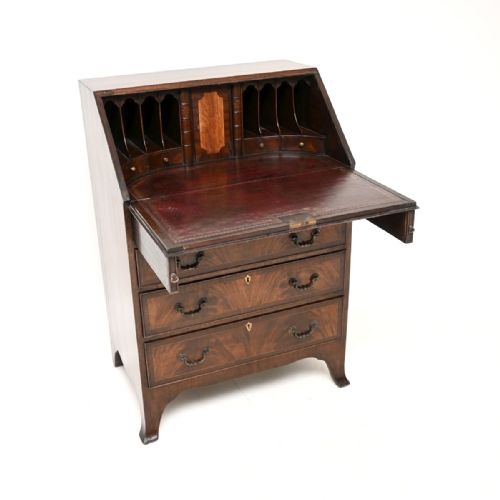
A mahogany slant top desk provides a private, enclosed workspace that drops open to reveal pigeonholes and small drawers. These pieces appear across Georgian, Victorian, Regency, and Edwardian periods, taking forms from compact bureaus to large bureau bookcases.
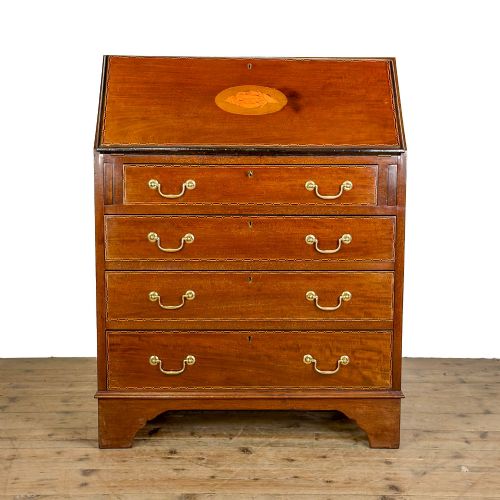
The version most commonly met on this page is the Georgian or 18th century bureau, alongside later Victorian and Edwardian examples. They combine practical storage with a sloping fall front that conceals correspondence and ledgers when closed.
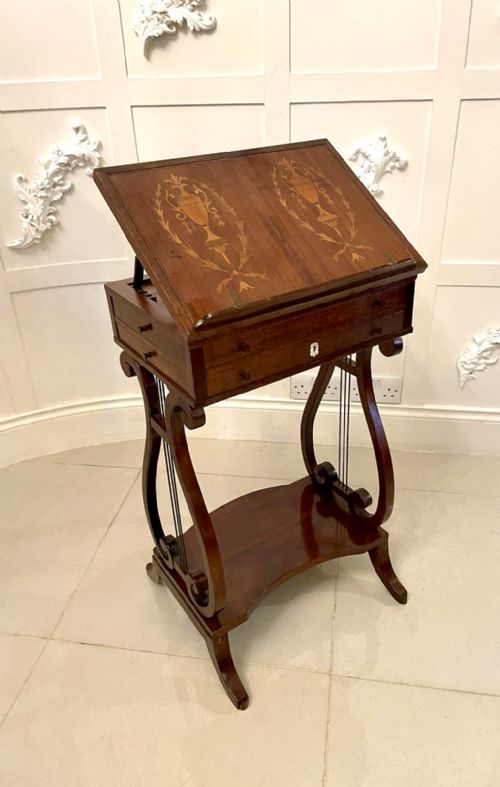
Makers designed these items for domestic studies, libraries, and parlours, utilising durable hardwoods. Variations range from simple small proportions to elaborate cabinetwork featuring satinwood inlay and glass panel doors.
Materials and construction methods
Cabinetmakers constructed these writing surfaces primarily from mahogany, often selecting timber with rich figure and warm colour. Secondary woods and structural elements incorporated oak and sometimes satinwood for contrast in interior compartments.
Metalwork played a functional and decorative role, utilising brass for handles, escutcheons, and occasional galleries. Leather inserts frequently lined the writing flaps of tables and davenports, providing a smooth surface for quill or pen.
Listings feature mahogany, oak, satinwood, brass, and glass across Georgian, Victorian, Regency, and Edwardian periods.
Markers of fine construction
The grade of timber selection dictates visual appeal, with superior examples displaying exceptional grain figure and depth of colour. Cabinetmakers achieved distinction through precise dovetailing in drawer construction and meticulous attention to internal stationery compartments.
Proportion and original hardware distinguish superior items from standard production. Pieces retaining their fitted pigeonholes, original keys, and unblemished brasses command greater appreciation among collectors.
Edwards & Roberts·Gillows
The Mahogany Slant Top Desk Glossary
- Bureau
- A writing cabinet featuring a sloping lid that opens to form a desk. It typically conceals a series of small drawers and pigeonholes inside.
- Davenport
- A compact pedestal desk with a sloping writing top, originating in the nineteenth century. It usually incorporates drawers opening to the side.
- Bureau bookcase
- A taller piece combining a slant top writing desk base with an upper shelving or cabinet section enclosed by doors. These often feature glass panels.
- Satinwood
- A pale, lustrous timber utilised for stringing and decorative inlay work on later furniture. It provides a bright contrast against darker mahogany surfaces.
- Escutcheon
- A protective brass plate surrounding a keyhole. It prevents the surrounding wood from sustaining damage during daily use.
Mahogany Slant Top Desk: Frequently Asked Questions
What is a slant top desk?
A slant top desk is a piece of furniture featuring an angled writing flap that drops down to create a horizontal work surface. When closed, the sloping lid conceals an interior arrangement of small drawers and letter compartments.
These pieces provide secure storage for papers while maintaining a tidy appearance in a room. They appear in various sizes, from small bedroom bureaus to large library bookcases.
How do I date a mahogany desk?
Dating a desk involves examining the construction methods, hardware, and stylistic details of the period. Georgian examples often display different proportions and drawer linings compared to later Victorian or Edwardian pieces.
Timber characteristics and secondary woods also provide clues to the era of manufacture. Consulting the specific period markers helps place the piece within its historical context.
Were these desks used for writing?
These desks served as the primary workstation for correspondence, bookkeeping, and record keeping in the home. The enclosed compartments kept stationery and ledgers organised between writing sessions.
The sloping lid allowed writers to draft documents comfortably, whether standing or seated on a matching chair.
How do I care for antique mahogany?
Maintaining antique mahogany requires keeping the timber away from direct sunlight and extreme temperature fluctuations. Regular dusting with a soft cloth preserves the polished surface without building up residue.
Applying occasional appropriate wax helps nourish the wood and maintain its natural lustre over time. Avoid placing hot or wet items directly on the writing surface.