





Mahogany Silver Table
When you search for a mahogany silver table, you are looking for an elegant display piece designed to hold tea service or presentation silver.
Mahogany Silver Table
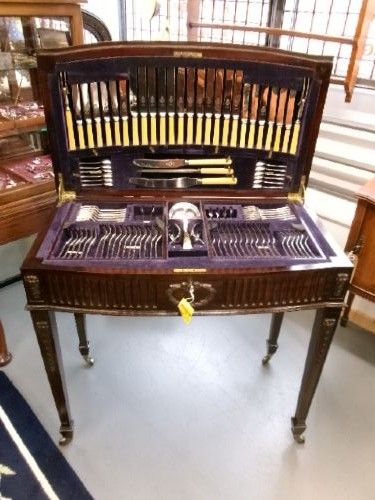
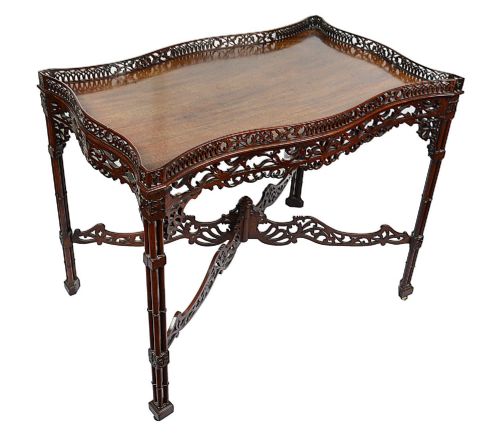
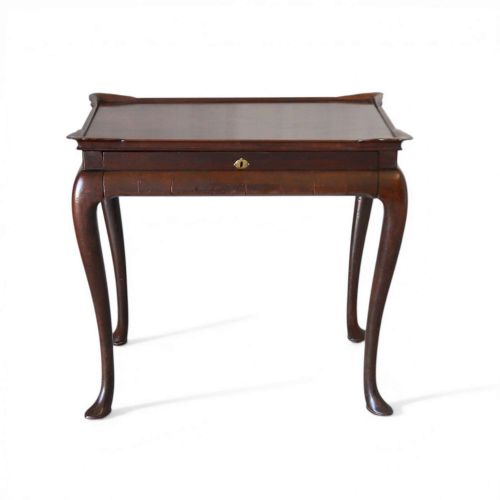
A mahogany silver table is a specialised form of display and service furniture originating primarily in the Georgian and Victorian periods. These pieces typically feature raised tray tops, fretted galleries, or glazed compartments intended to showcase silver items and porcelain safely.
On this page, you will most frequently meet examples dating from the 18th century through to the Chippendale revival of the early 20th century. The forms range from central standing tables with cabriole legs to more compact occasional and tray-top variants.
How They Were Made
Makers constructed these tables predominantly using solid and figured mahogany, frequently incorporating Cuban mahogany for denser grain and deeper colouration. Supporting elements often included brass handles, castors, and occasionally glass inserts or silvered metal details.
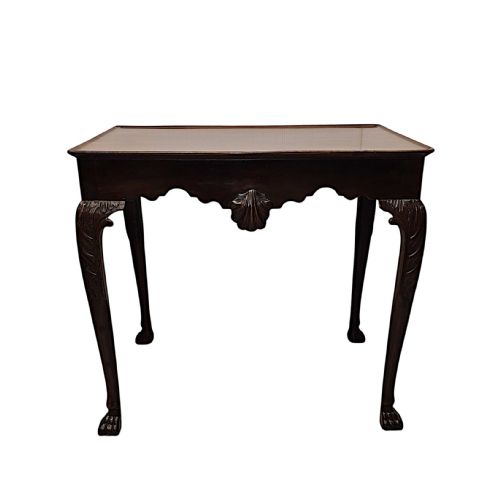
Joinery techniques relied heavily on traditional framing, mortise and tenon joints, and intricate hand-carved fretwork along the galleries and aprons. Cabriole legs terminating in pad, claw and ball, or trifid feet provided stable elevation for heavier presentation silver.
Mahogany Silver Table Retail Price Guide 2026
Typical asking prices for mahogany silver table among the pieces listed under this phrase on Sellingantiques today, from the lower quarter to the upper quarter. They describe what is for sale here now, not the wider market.
Some tables double as sneaky bedside storage, proving that even aristocrats hid their clutter.
What Varies in Quality
The degree of figuration in the timber and the crispness of the hand-carved fretwork distinguish superior examples from standard production. Tables possessing original surfaces, unbroken gallery piercings, and authentic period hardware command greater interest.
Proportion and structural integrity also dictate the standing of a piece, with finer items demonstrating balanced cabriole shaping and seamless integration of secondary woods.
William Gard·Mappin & Webb·Walker & Hall·Dent·Elkington & Co·Winterhalder & Hofmeier·Perigal·John & Thomas Settle·Howard & Sons·Whytock and Reid
The Mahogany Silver Table Glossary
- Tray top
- A tabletop featuring a raised edge or gallery designed to prevent items from sliding off during service. This edge is frequently shaped with pierced fretwork.
- Cabriole leg
- A furniture leg that curves outward at the knee and tapers inward toward the foot, mimicking animal limbs. It is commonly found on Georgian furniture.
- Fretwork
- Openwork ornamentation carved or pierced through thin wood to create geometric or scrolling patterns. It is heavily utilised on Chippendale revival pieces.
- Cuban mahogany
- A dense, dark variety of mahogany prized for its rich grain and heavy weight. Cabinetmakers utilised this timber extensively during the 18th century.
Mahogany Silver Table: Frequently Asked Questions
What was a mahogany silver table used for?
These tables served primarily for displaying household silver, tea services, and presentation pieces in reception rooms. Wealthy households utilised them during afternoon tea and formal gatherings.
They also functioned as side tables or console surfaces in hallways and drawing rooms. The raised galleries ensured that delicate silverware remained secure during use.
How can I tell an 18th-century table from a later revival piece?
Eighteenth-century examples typically display hand-cut joinery, timber shrinkage consistent with age, and secondary woods appropriate to the period. The patina develops deep warmth through centuries of waxing and handling.
Revival pieces from the 19th or 20th centuries often feature machine-assisted cuts, different internal timber choices, and standardised hardware fixings. Examining the underside and drawer linings usually reveals the manufacturing era.
Where should I place a silver table in my home?
A silver table suits reception rooms, hallways, or living spaces where it can function as an occasional surface or display stand. Placing it away from direct sunlight protects the polished mahogany finish from fading.
Many owners use the surface to display modern collections of silver, ceramics, or glass. The open framework allows the piece to occupy a room without appearing visually heavy.
What is the difference between a silver table and a side table?
A silver table specifically incorporates a raised gallery or tray top designed to retain small display objects and tea wares. Standard side tables generally feature flat, plain surfaces without protective borders.
Silver tables also lean heavily toward formal entertaining contexts, whereas side tables fulfilled general utility roles across various domestic rooms.