
Mahogany Side Table with Flaps
A mahogany side table with flaps offers clever folding surfaces for compact spaces, spanning Georgian, Regency, and Edwardian periods.
Mahogany Side Table with Flaps
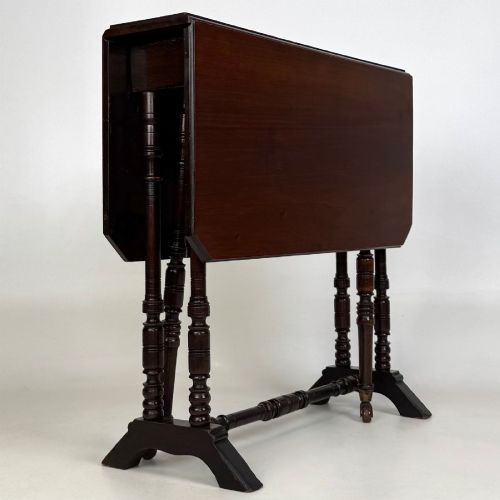
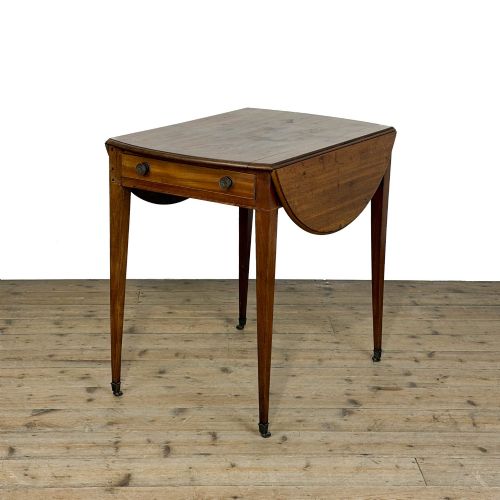
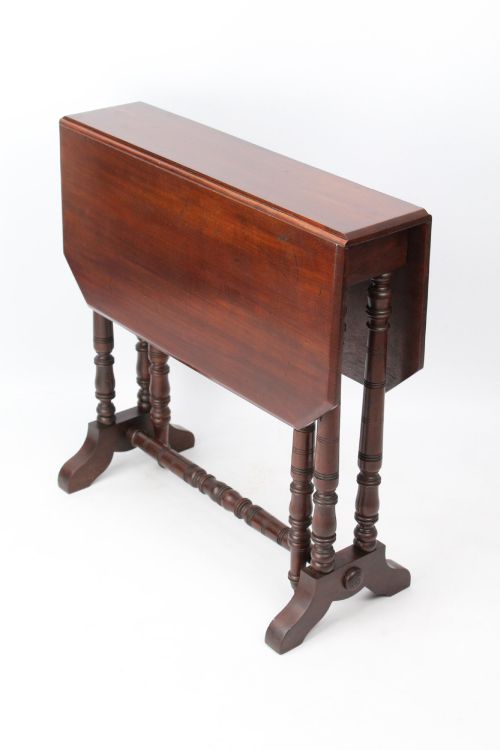
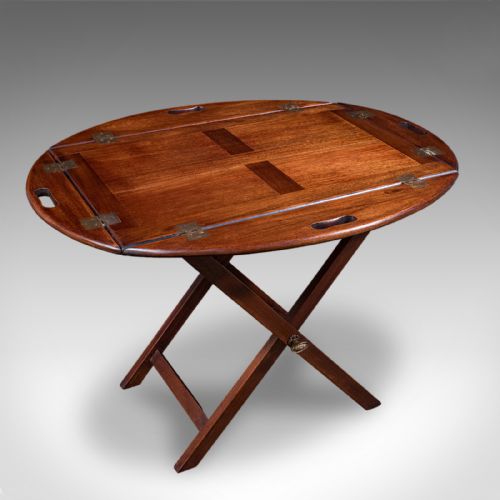
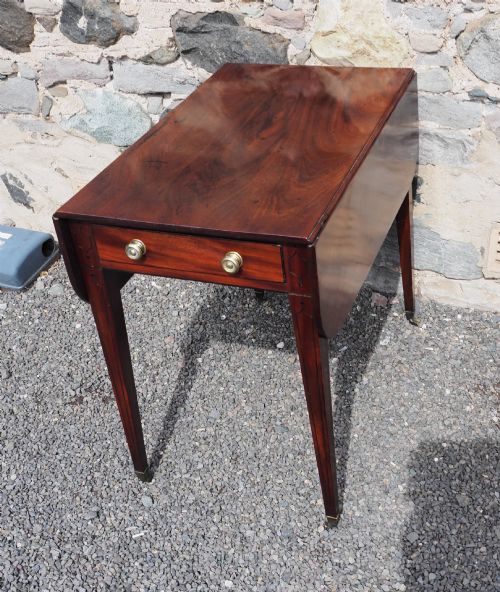
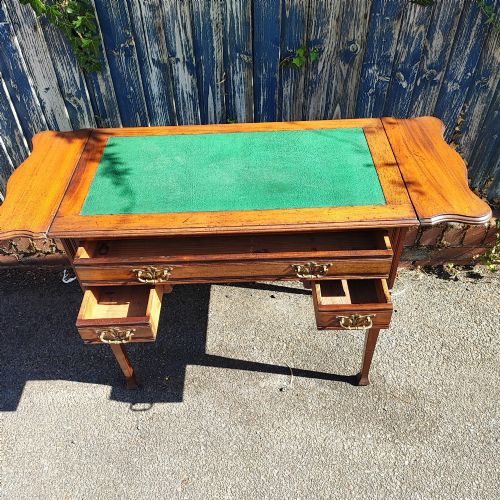
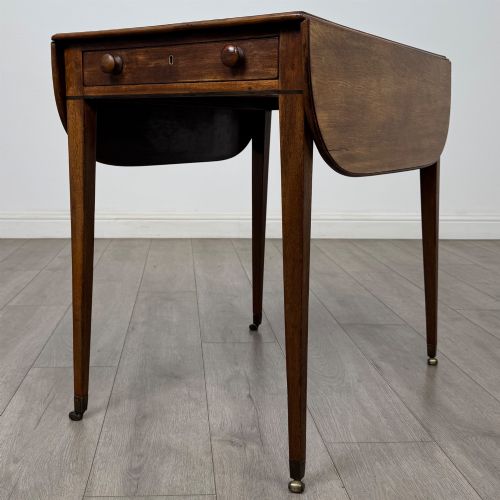
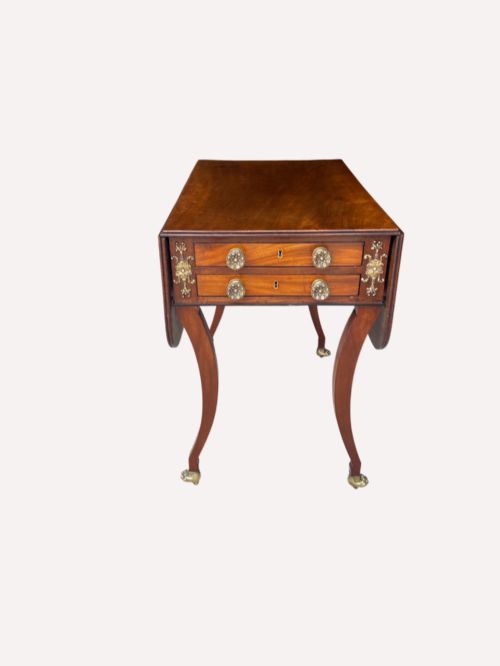
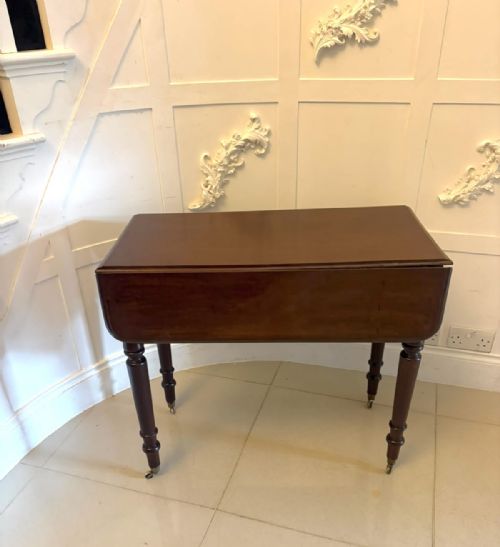
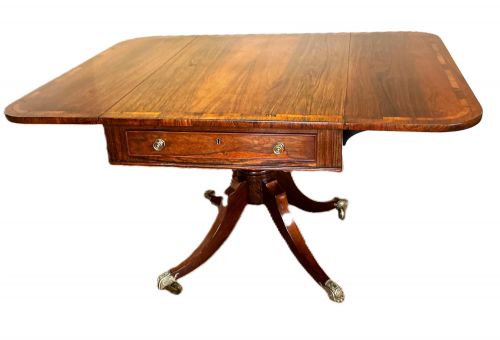
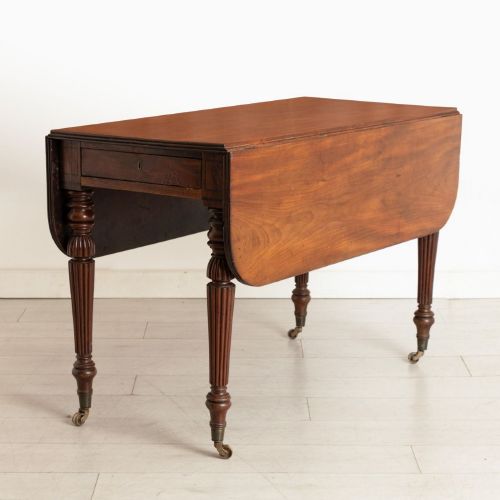
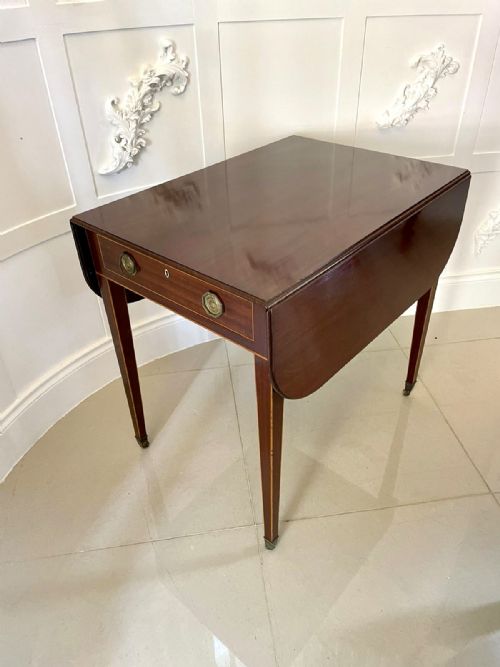
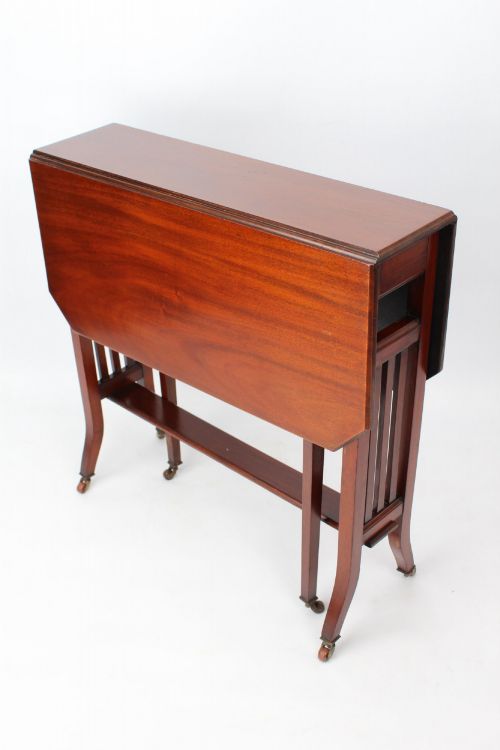
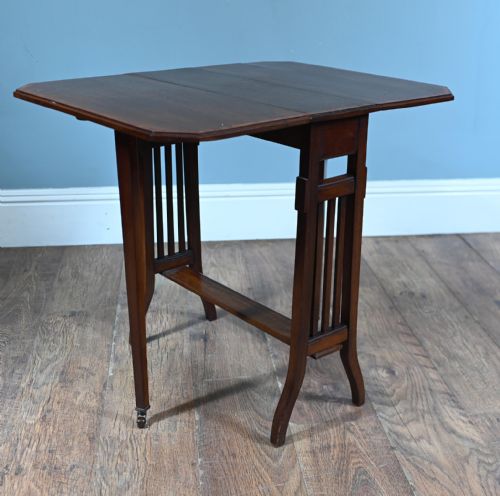
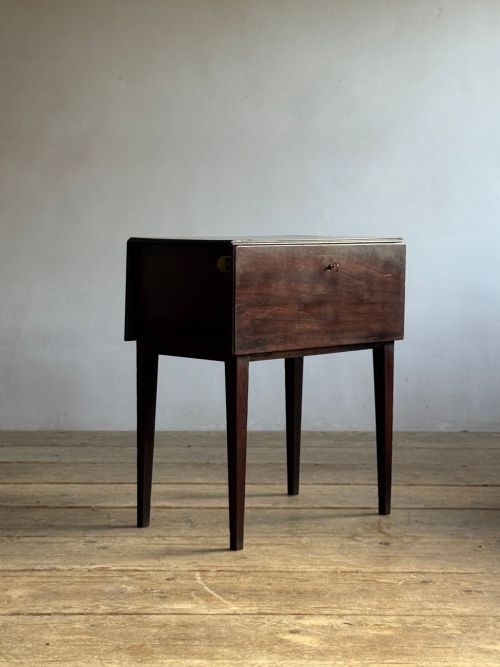
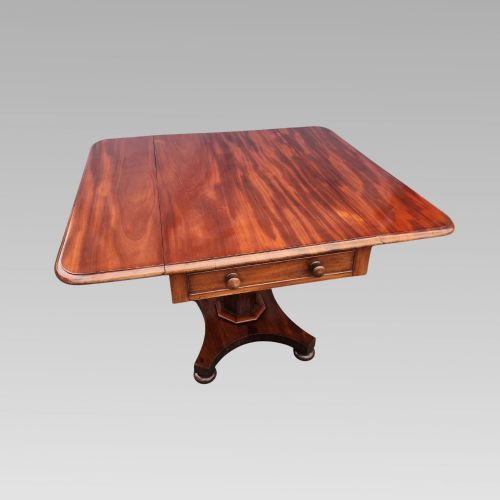
A mahogany side table with flaps is a versatile piece designed with drop sides, leaves, or folding sections that adapt surface area as needed. You encounter various forms here, including Pembroke tables, sofa tables, lamp tables, and occasional tables dating from the eighteenth century through to the Edwardian era.
The selection ranges from early Georgian and Regency iterations in rich Cuban mahogany to later Victorian, Edwardian, and revival examples. Pieces frequently incorporate single or double drawers, brass castors, and gateleg or pillar supports to manage the movable flaps.
How they were made
Cabinet makers utilised solid mahogany and Cuban mahogany, often selecting timber with distinct grain patterns for the tops and drop flaps. Secondary woods support internal drawer construction while brass hardware appears on castors, handles, and swing brackets.
Construction techniques include turned legs, carved cabriole legs with pad feet, cross-banding in contrasting timbers such as satinwood, and hinged flap mechanisms designed to support extended leaves securely.
Materials recorded across the inventory include solid mahogany, Cuban mahogany, satinwood inlay, brass castors, and leather.
What varies in quality
Quality separates by the choice of timber figure, such as richly figured Cuban mahogany, and the precision of cabinet work like cross-banding and inlay. The sophistication of the leg turning, carving, and the integration of original brass castors also mark out superior examples.
Proportion and structural integrity dictate the standing of a piece, with finer tables displaying seamless joins in the flap leaves and well-fitted drawer construction that functions smoothly over time.
Liberty & Co.
The Mahogany Side Table with Flaps Glossary
- Pembroke table
- A small occasional table featuring two hinged flaps on opposite sides and usually a drawer beneath the top.
- Sofa table
- A rectangular occasional table traditionally placed in front of a sofa, equipped with drop flaps at either end.
- Cuban mahogany
- A dense, heavy variety of mahogany sourced from the Caribbean, prized for its deep colour and rich figuring in eighteenth-century furniture.
- Cross-banding
- A decorative border of veneer laid with the grain running perpendicular to the main surface of the table top or flaps.
- Gateleg table
- A table with hinged legs that swing out like a gate to support folding flaps on either side.
Mahogany Side Table with Flaps: Frequently Asked Questions
What is a drop-flap table used for?
These tables served flexible domestic purposes, easily expanding for dining, writing, or serving tea and contracting to save floor space against a wall.
Their movable flaps allowed households to reconfigure rooms quickly throughout the Georgian, Regency, and Edwardian periods.
How do I identify a Georgian mahogany table?
Georgian pieces typically display dense Cuban mahogany, hand-cut joinery, and traditional details like pad feet or brass castors.
Later Victorian and Edwardian versions introduce lighter framing, satinwood cross-banding, and alternative leg turnings characteristic of their respective eras.
What distinguishes a Pembroke table from a sofa table?
Pembroke tables generally feature two opposing drop flaps on a smaller, square or rectangular frame often with a single end drawer.
Sofa tables are usually wider, longer, and designed with proportion in mind to sit comfortably behind or beside a couch.
Are these tables suitable for small rooms?
The folding flaps make these tables exceptionally practical for compact living areas, as they function fully while occupying minimal footprint.
Lowering one or both flaps transforms the piece from a central room table into a slim side console.