




Mahogany Serpentine Settee
A mahogany serpentine settee is a substantial seating piece defined by its undulating front rail and rich timber frame, built for formal drawing rooms.
Mahogany Serpentine Settee
A mahogany serpentine settee brings together fluid timber curves and deep upholstery, designed to anchor a traditional room with architectural presence. When searching for a mahogany serpentine settee, buyers encounter examples spanning the eighteenth century through to Edwardian revivals.
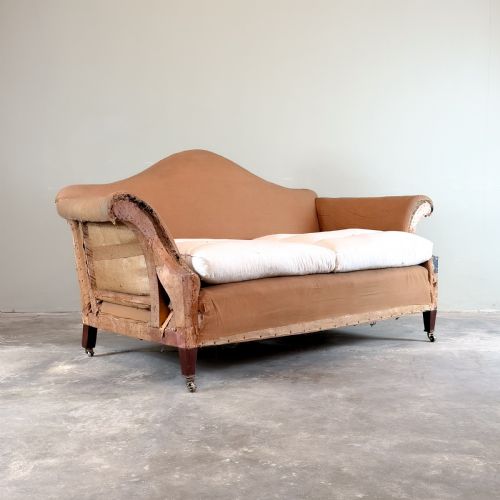
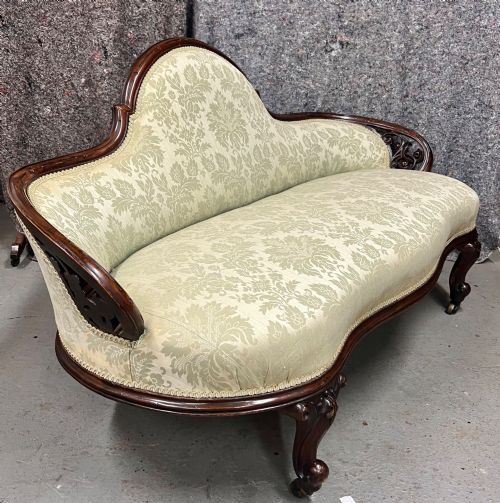
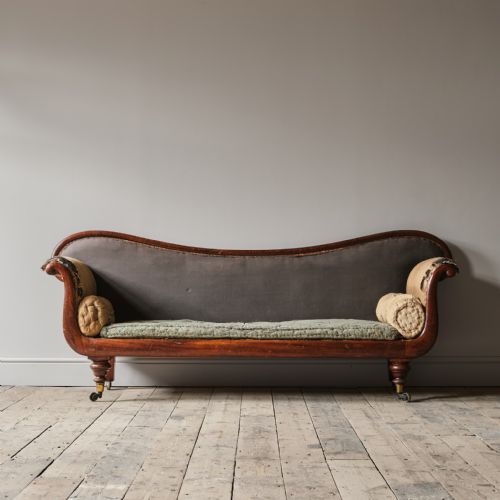
The selections on this page encompass George III originals alongside Victorian interpretations and Hepplewhite revivals. These seating pieces typically present camel backs or double-ended frames, supported on mahogany legs.
Origins range from eighteenth-century workshops to nineteenth-century country houses and early twentieth-century revivals. The forms adapt classical proportions for formal domestic interiors.
How they were made
Makers shaped solid mahogany for the structural frames, legs, and exposed showwood rails, utilising the dense grain to achieve sharp carved details. This timber provided the necessary strength to support expansive upholstered seat decks and sweeping camel backs.
Traditional stuffing materials including jute webbing, horsehair, and cotton provided the internal build for the sprung or webbed foundations. Final coverings relied on silk damask, velvet, cotton, or hand-dyed leather secured with brass tacks.
Listings span the 18th century, Georgian era, Victorian period, and Edwardian times, utilising mahogany, brass, damask, and velvet.
What varies in quality
Quality rests upon the crispness of the timber carving and the architectural harmony of the serpentine sweep across the front rail. Superior pieces display thoughtful proportions where the timber frame and the upholstery lines balance without visual heaviness.
The integrity of the original mahogany structure and the refinement of the leg joinery distinguish finer examples from standard production. Grain selection in the timber and the subtlety of the curves determine the standing of each piece.
The Mahogany Serpentine Settee Glossary
- Serpentine
- A furniture front or rail shaped with a central convex curve flanked by two concave sweeps. This profile creates a rhythmic, flowing line across the base of the seat.
- Camel back
- A high, undulating upholstered sofa back that rises in a gentle central arch resembling a camel's hump. It provides strong vertical emphasis in formal seating.
- Hepplewhite
- A late eighteenth-century classical furniture style characterised by elegance, slender tapering legs, and shield or camel backs. Pieces in this manner draw upon the design books associated with George Hepplewhite.
- Showwood
- The exposed polished timber frame of an upholstered seat, distinguishing it from pieces where fabric covers the entire structure. This allows the quality of the mahogany to remain visible.
- Double end
- A sofa design featuring scrolled or raised upholstered ends of equal height at both sides. This symmetrical configuration permits reclining from either direction.
Mahogany Serpentine Settee: Frequently Asked Questions
What periods do these settees come from?
The listings span the eighteenth century, the Georgian period, the Victorian era, and Edwardian revivals. Original eighteenth-century pieces sit alongside nineteenth-century interpretations and early twentieth-century examples.
Each period brings distinct stylistic nuances, from eighteenth-century proportions to Edwardian and Hepplewhite revival interpretations that replicate earlier classical designs.
How do I identify a George III style piece?
George III style settees typically feature camel backs, mahogany frames, and straight or cabriole legs influenced by Hepplewhite or Chippendale designs. The proportions aim for classical elegance and restraint.
Revival pieces made in the nineteenth or twentieth century often replicate these eighteenth-century outlines, utilising similar mahogany timbers and serpentine front rails.
What materials are used in the upholstery?
Traditional upholstery methods involve jute webbing, cotton, and horsehair beneath top coverings of damask, velvet, or hand-dyed leather. Some pieces retain historic fabric layers.
Exposed wooden frames are constructed from solid mahogany, occasionally accented with brass tacks securing the fabric borders.
How do I place a serpentine settee in a room?
These settees function effectively as focal points in formal drawing rooms, living spaces, or grand hallways. Their finished backs and carved showwood allow them to sit away from walls.
Pairing them with period chairs or placing them opposite a fireplace highlights the undulating serpentine front and the curved camel back silhouette.