




Antique Serpentine Settee
An antique serpentine settee brings undulating lines and generous seating to a room, offering both historic character and deep comfort.
Antique Serpentine Settee
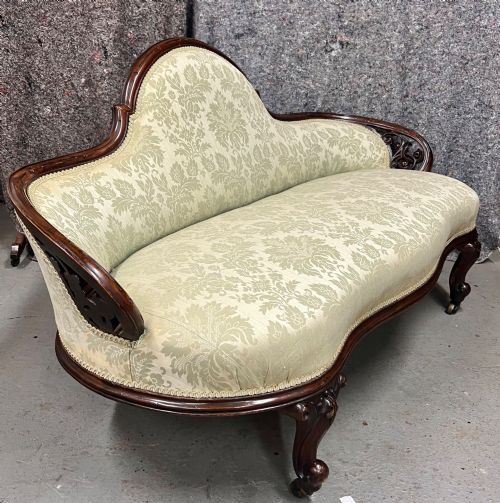
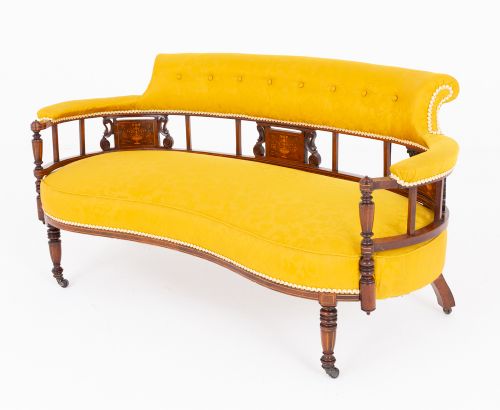
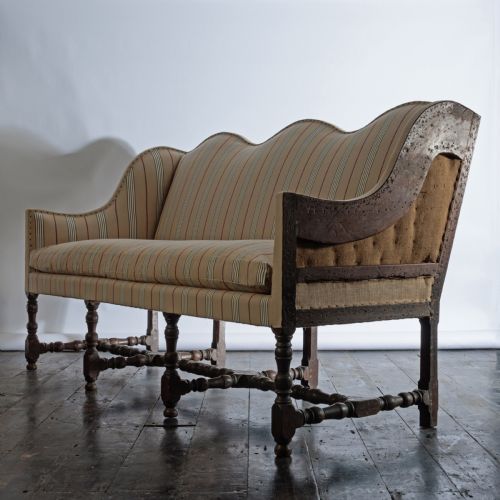
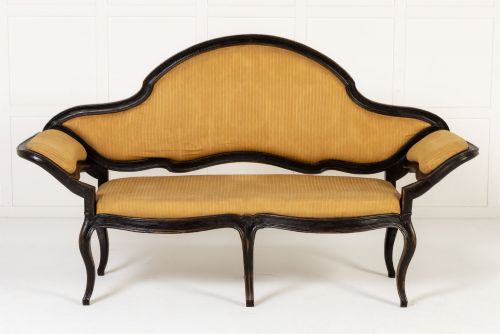
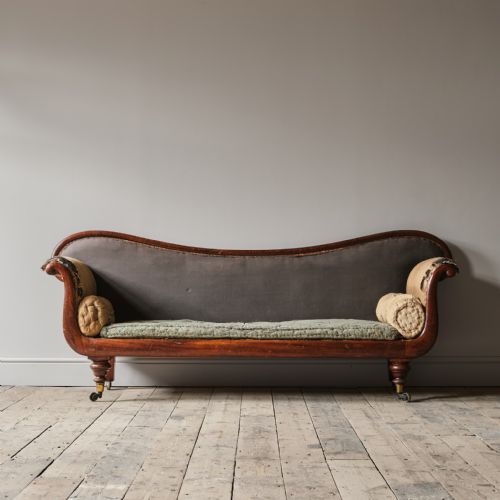
An antique serpentine settee is a large seating form characterised by its undulating front rail or back, which curves inward and outward in a gentle S-shape. Buyers search for these pieces to anchor a drawing room or study with a distinct period silhouette.
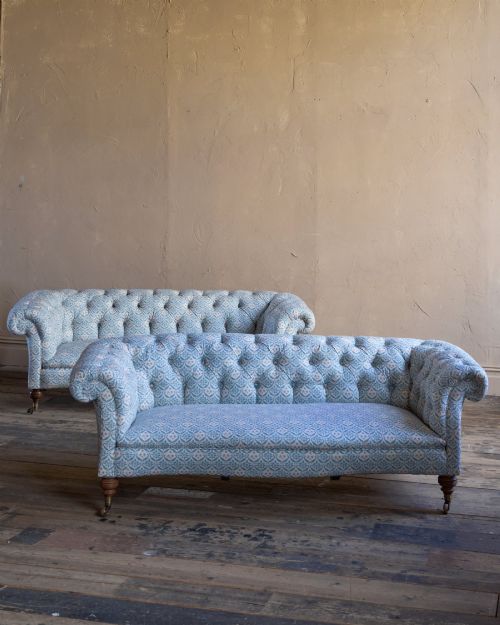
The versions most frequently met on this page span the eighteenth, nineteenth, and early twentieth centuries, encompassing Victorian, Edwardian, and George III styles. They appear in various formats, from mahogany-framed camel back designs to leather-upholstered Chesterfields and country house sofas.
How they were made
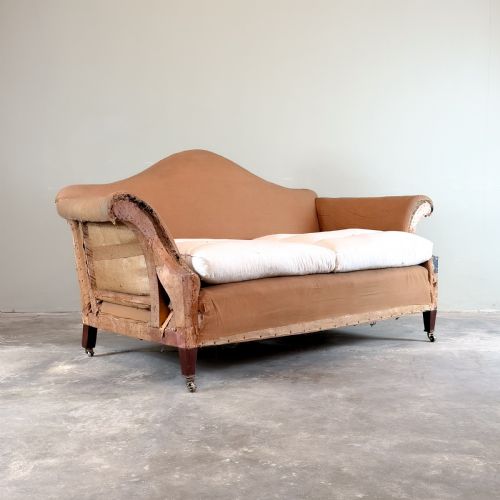
Makers shaped the distinctive frames of these settees from timbers such as mahogany, walnut, and rosewood, often employing skilled joinery to achieve the complex curved rails. Internal construction relied on traditional materials including cotton, jute, and brass tacks to secure the padding.
Upholstery techniques evolved across the periods represented, ranging from traditional stuffing covered in damask or plain fabric to deep buttoning on leather. Showwood frames exhibited hand-carved details, while structural integrity depended on robust wooden framing.
Listings feature settees spanning the seventeenth to the mid-twentieth century, constructed from mahogany, walnut, and rosewood.
What varies in quality
Quality in these settees rests upon the precision of the timber frame's serpentine curves and the crispness of any carved details. Pieces with well-proportioned camel backs and balanced structural lines demonstrate superior cabinet-making skill.
The integrity of the underlying upholstery build and the choice of covering materials further distinguish the tiers of craftsmanship. Finer examples maintain a taut, supportive silhouette that respects the historical style of the piece, whether Georgian or Victorian.
Howard and Sons
The Antique Serpentine Settee Glossary
- Serpentine
- A shape featuring a curved line that convexly bulges in the middle and concavely curves at the ends. This profile gives the characteristic undulating front edge seen on many period settees.
- Camel back
- A sofa back design with a continuous, graceful arch resembling a camel's hump. It is a defining feature of many eighteenth and nineteenth century seating forms.
- Showwood
- Furniture framing left visible around the upholstered portions of a seat. It highlights the polished grain of timbers like mahogany or walnut.
- Chesterfield
- A large upholstered sofa traditionally featuring deep buttoning and rolled arms of the same height. Nineteenth-century examples often utilise hand-dyed leather.
- Hepplewhite
- A neoclassical furniture style popular in the eighteenth century, known for delicate proportions and shield or camel-shaped chair and sofa backs.
Antique Serpentine Settee: Frequently Asked Questions
What is a serpentine settee?
A serpentine settee is an upholstered seating form defined by its undulating front rail or back. The curved profile flows inward and outward in a continuous line.
These pieces range from formal eighteenth-century camel back designs to nineteenth-century Victorian Chesterfields and country house sofas.
How do I date a settee?
Dating relies on observing the combination of timber, upholstery style, and overall frame proportions. Eighteenth-century models often display restrained lines, while Victorian iterations frequently feature heavier showwood frames or deep buttoning.
Reviewing the specific revival styles, such as Hepplewhite or Chinese Chippendale, also helps narrow down the period of manufacture.
Where should I place it?
These settees work well as focal points in large living rooms, drawing rooms, or spacious hallways. Their curved fronts and decorative backs allow them to sit comfortably away from walls.
Ensure the room has sufficient floor space to accommodate the sweeping proportions without crowding other furniture.
How do I care for the upholstery?
Care depends entirely on whether the piece is covered in fabric, damask, or leather. Regular gentle vacuuming helps remove dust from textile surfaces, while appropriate conditioners preserve leather finishes.
Keep the settee away from direct sunlight and strong heat sources to prevent the wood and covering materials from fading or drying out.