
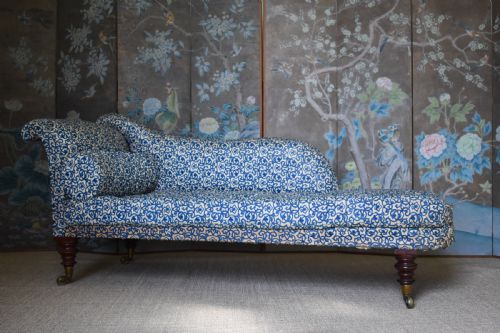


Mahogany Scroll Couch
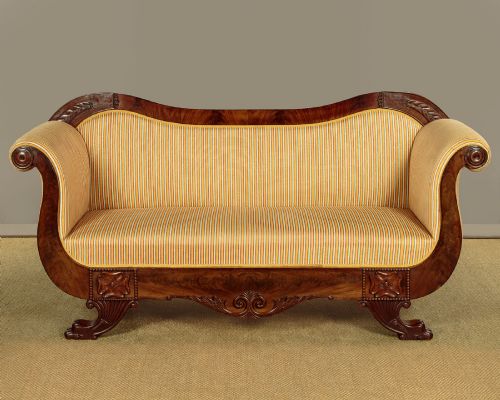
A mahogany scroll couch brings architectural curves and rich timber frames to a drawing room, offering an inviting place to recline.
Mahogany Scroll Couch
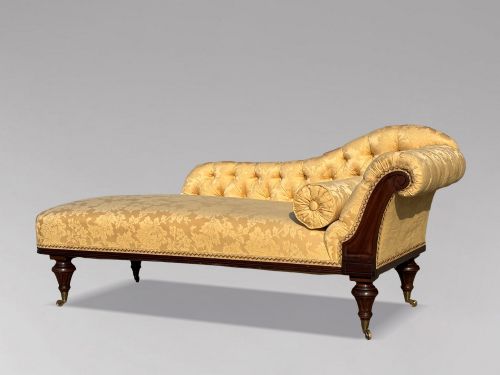
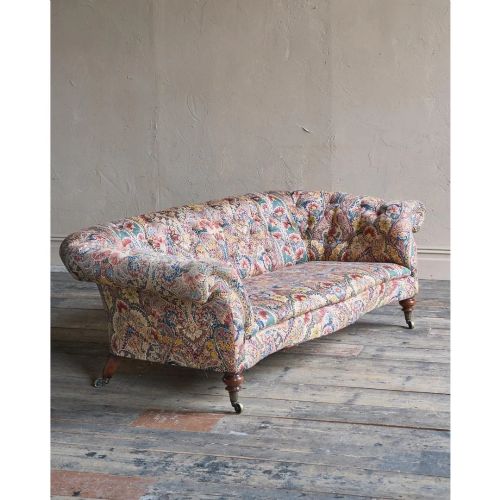
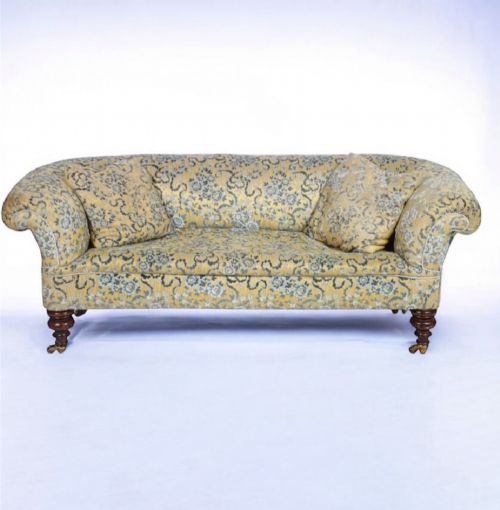
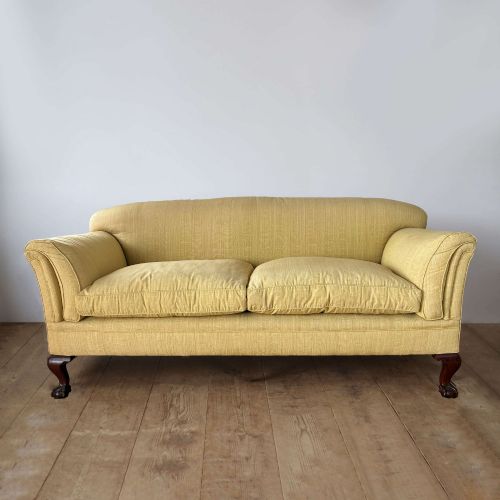
When searching for a mahogany scroll couch, you encounter nineteenth-century seating spanning the Regency, William IV, and Victorian periods. These pieces include scroll-end sofas, double-ended settees, and chaise longues designed for formal reception rooms.
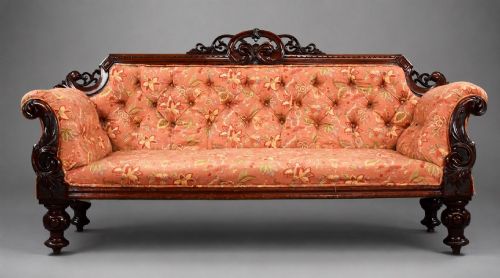
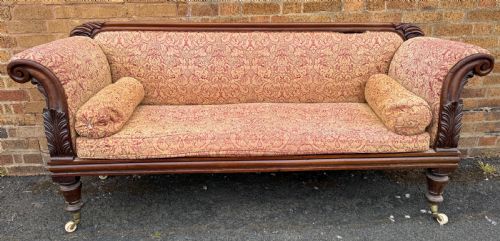
The form relies on sweeping wooden scroll arms and show-frames constructed from solid timber. Pieces range from grand four-seater settees to single-ended Récamier daybeds and country house sofas.
Regency and William IV examples dominate the selection, often displaying carved wooden frames and classic scroll profiles. Victorian iterations continue this lineage with heavily carved mahogany and upholstered show-frames.
How they were made
Maker construction relies on solid mahogany frameworks shaped to form sweeping scroll ends and structural supports. Brass inlay occasionally articulates the timber ground on early examples.
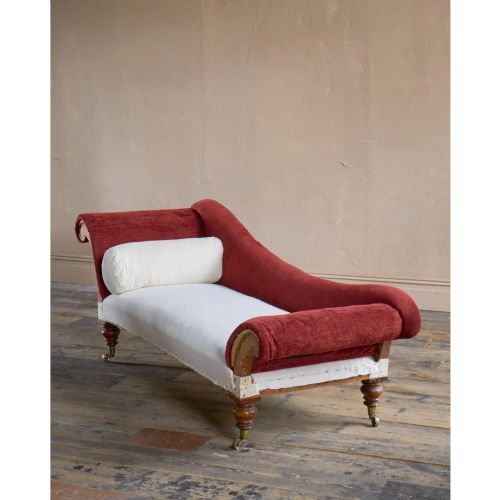
Traditional upholstery techniques build up the seat using hessian and stuffing beneath top covers of velvet, damask, or leather. Show-frames leave the polished wood grain exposed along the arms and rails.
Listings incorporate multiple periods, spanning Regency, William IV, and Victorian eras through to nineteen-hundred.
What varies in quality
The crispness of the timber carving and the architectural proportion of the scroll arms separate standard items from exceptional ones. Finer frames show deeper relief work and balanced symmetry across double scroll ends.
The integrity of the underlying timber and the treatment of the show-frame dictate the piece's longevity. Superior examples maintain uncompromised mahogany structures with minimal timber replacement.
Howard and Sons·Holland and Sons·Gillows
The Mahogany Scroll Couch Glossary
- Scroll end
- A sweeping, incurved wooden arm resembling a rolled scroll. This distinctive terminal defines the silhouette of nineteenth-century couches.
- Chaise longue
- An upholstered seating form combining a chair and a footstool for reclining. Evidence shows these often feature a single raised scroll end.
- Show-frame
- A wooden structural frame left visible around the upholstered portions of a settee or sofa. It highlights the polished mahogany grain.
- Récamier
- A type of daybed with two raised ends, named after Madame Récamier. It appears in William IV variations within the archive.
Mahogany Scroll Couch: Frequently Asked Questions
How do I identify a Regency scroll couch?
Regency models typically feature clean mahogany framing, sometimes accented with brass inlay, alongside taut scroll arms. The overall proportions tend to reflect classical restraint and neat joinery.
Later Victorian versions introduce heavier carvings and bulkier show-frames. Comparing the subtlety of the woodwork helps distinguish the earlier Regency period pieces.
What is the difference between a settee and a chaise longue?
A settee provides double-ended or symmetric seating intended for multiple occupants. It balances scroll arms at both sides for upright or slightly reclined sitting.
A chaise longue is built for a single person to recline with one elevated end. The asymmetric design prioritises full-length resting over conventional sofa seating.
How should I care for mahogany show-frames?
Keep the timber away from direct heat sources and strong sunlight to prevent the mahogany polish from drying out. Periodic dusting with a soft cloth maintains the natural lustre.
Aplying gentle furniture wax occasionally helps nourish the wood. Avoid silicone-based sprays that can penetrate older finishes.
Where were these couches originally placed?
These pieces occupied principal reception rooms, drawing rooms, and country house halls. Their finished backs allowed them to sit away from walls in large spaces.
They served both as formal seating for visitors and as comfortable daybeds for daytime resting. Their architectural presence anchored the decorative scheme of the room.