
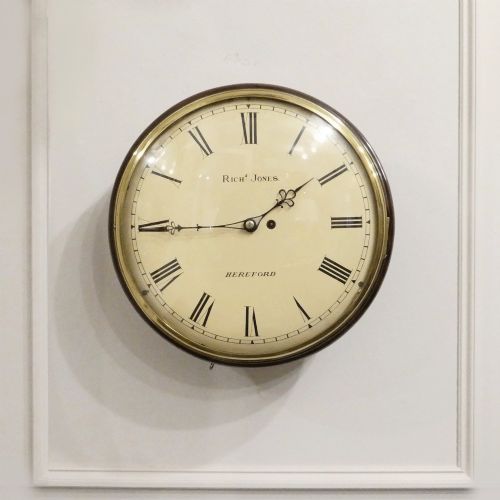
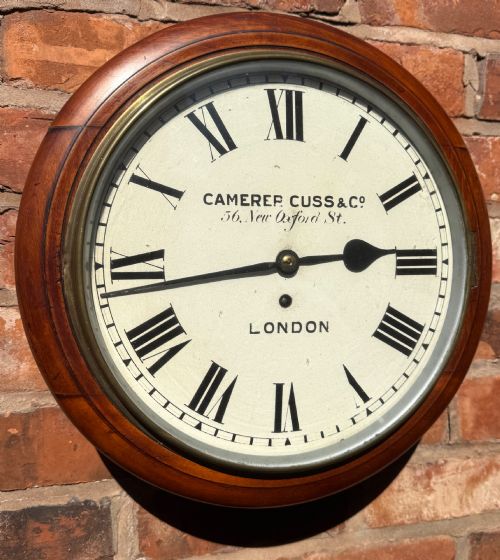
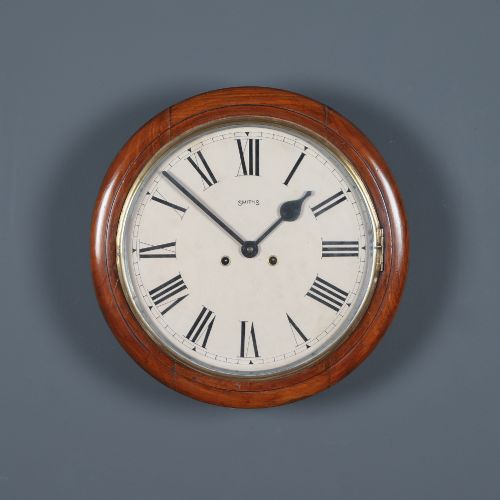
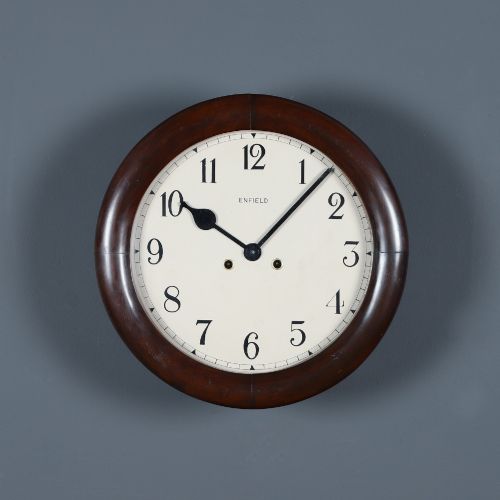
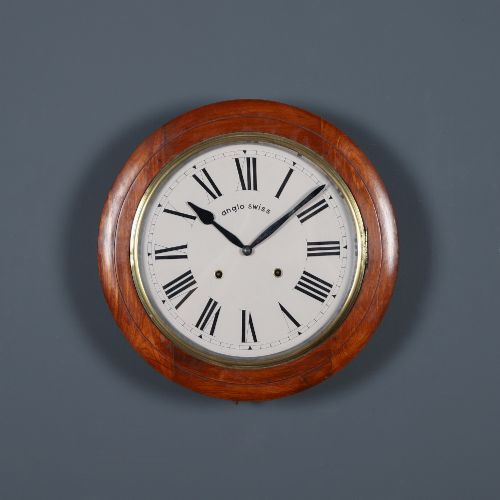
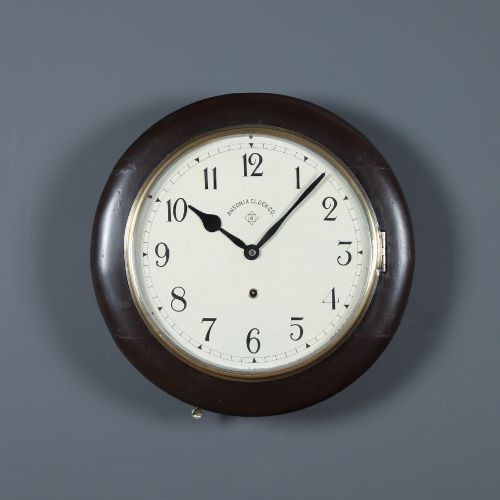
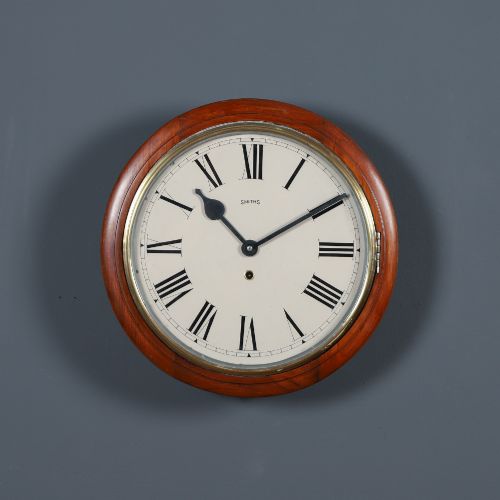
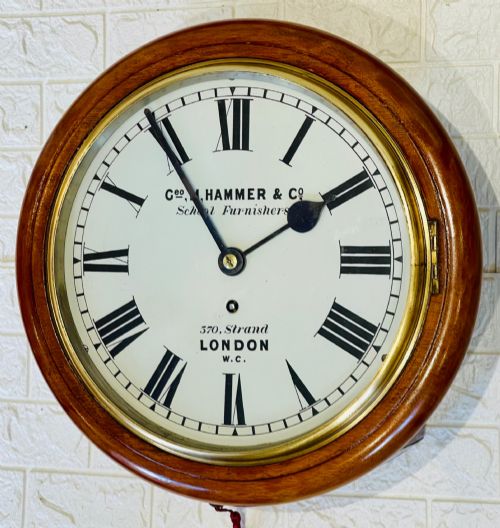
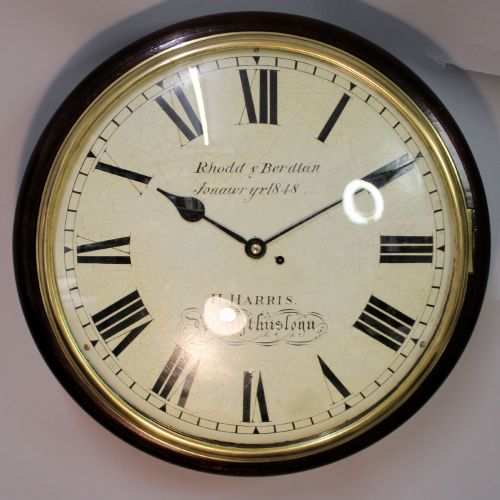
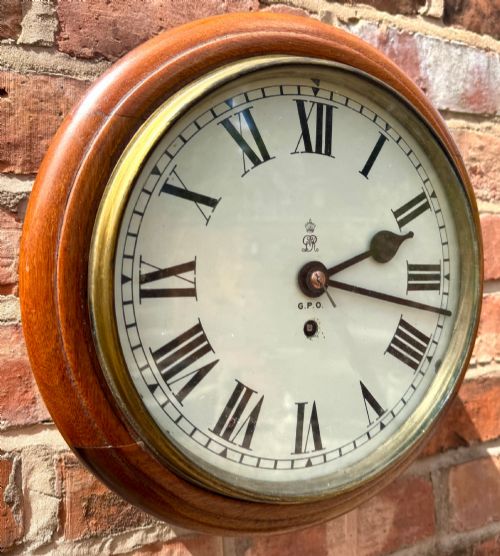
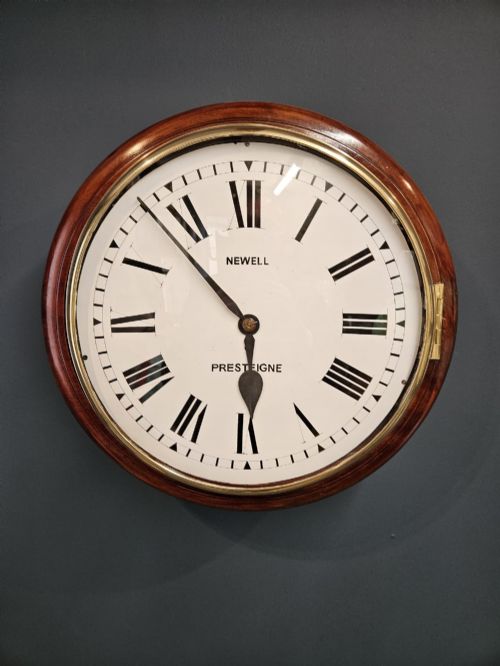
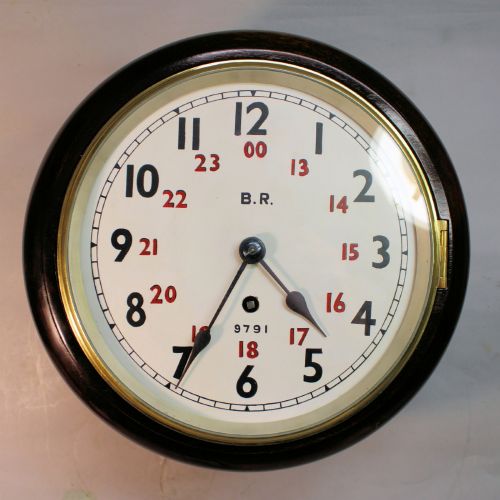
Mahogany School Clock
When you search for a mahogany school clock, you are looking at substantial wall timepieces designed for public and institutional spaces.
Mahogany School Clock
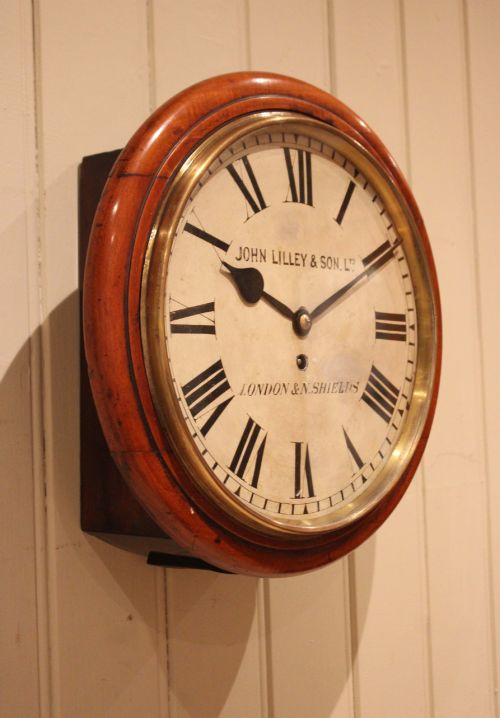
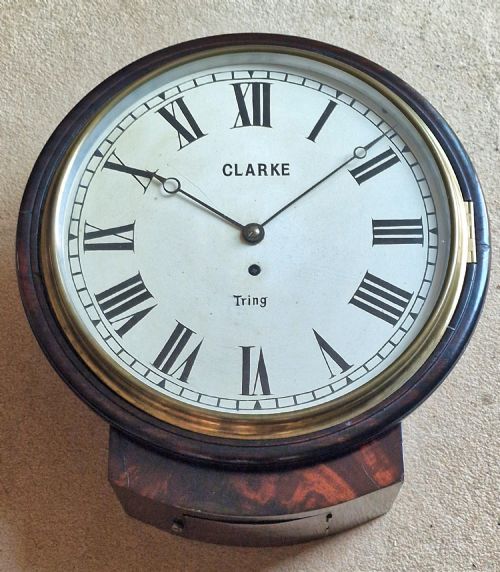
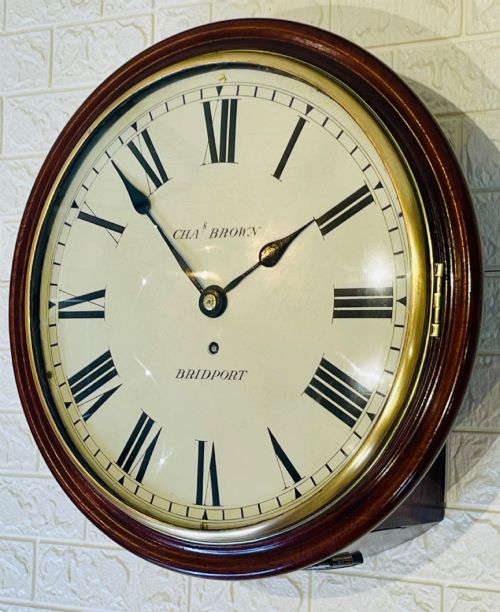
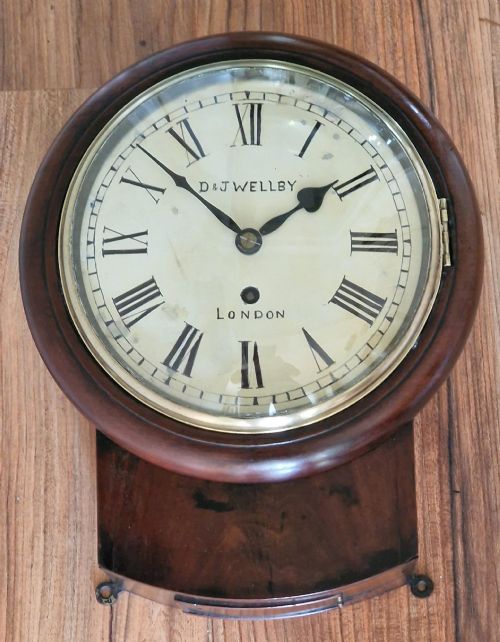
A mahogany school clock is a sturdy circular wall timepiece, often referred to as a dial clock, originally built for institutional, railway, and school environments. These pieces feature prominent round faces designed for clear legibility from a distance, housed in robust timber surrounds.
The versions you are most likely to encounter on this page span the Victorian and Georgian periods up to the interwar years, encompassing both simple timepieces and chiming variants. Many specimens carry utilitarian histories, having served in telegraph offices, railway stations, and municipal buildings.
Originating predominantly from British workshops and makers, these clocks combine functional design with domestic timber choices. They range from compact eight-inch dials suitable for smaller rooms to commanding twenty-inch variants intended for large public halls.
Timbers and Mechanical Movements
The structural housings are constructed from rich mahogany, frequently shaped into circular or drop-dial silhouettes with hinged side or bottom doors for access to the movement. These timber cases provide the necessary rigidity to protect the internal escapement from atmospheric changes.
Dials are fabricated from painted iron, metal, or enamel, protected by hinged brass bezels fitted with curved or flat glass covers. The visual contrast between the dark mahogany surround and the crisp white dial ensures immediate legibility.
Case materials recorded on this site combine solid mahogany surrounds with brass bezels, glass covers, and painted iron dials.
Evaluating Dial Clocks
Quality in a mahogany school clock resides in the integrity of the movement, particularly the complexity of the fusee mechanism and the precision of the plate work. Single or twin-fusee movements offer superior timekeeping control compared to simpler spring-driven alternatives.
The crispness of the dial markings and the original condition of the timber case heavily influence the standing of a piece. Examples bearing legible maker signatures on the dial face and stamped cabinet numbers hold greater historical interest.
Richard Jones of Hereford·Camerer Cuss and Co London·George Clarke Tring·Henry Harris Monythusloyn
The Mahogany School Clock Glossary
- Fusee
- A conical pulley used in clock movements to maintain an even pull on the gear train as the mainspring unwinds. This mechanical device ensures consistent power delivery for accurate timekeeping.
- Drop Dial
- A clock case featuring a circular upper dial section combined with a lower trunk or box that houses a swinging pendulum. This configuration accommodates the pendulum length while maintaining a compact wall profile.
- Chapter Ring
- The outer ring on a clock face that bears the hour numerals. In traditional dial clocks, these are painted or engraved directly onto the dial plate.
- Bezel
- The metal ring, usually made of brass, that holds the glass protecting the clock face. It typically opens on a hinge to allow hand-setting and regulation.
- Timepiece
- A clock that indicates the hours and minutes without a striking mechanism. Such movements focus purely on tracking time rather than sounding the hour.
Mahogany School Clock: Frequently Asked Questions
Where were these clocks originally hung?
These wall clocks were installed in high-traffic public spaces where precise timekeeping was essential for daily operations. Locations included railway platforms, classrooms, post offices, and military offices.
The large dial sizes and clear black numerals ensured that time could be read easily across a crowded room or large hall.
How do fusee movements operate?
A fusee movement uses a specialised conical pulley connected to the mainspring by a fine chain or cord. As the spring loses tension, the chain moves to a wider part of the cone to maintain steady power.
This clever mechanical arrangement prevents the loss of amplitude as the clock runs down between windings, ensuring reliable accuracy.
What is the difference between a timepiece and a striking clock?
A timepiece is strictly designed to show the hours and minutes without producing any audible sound on the hour. These simpler movements require less mechanical train work within the case.
Striking or chiming variants incorporate additional gear trains and hammers that hit a bell or gong to announce the passing hours.
How should I care for a wall dial clock?
Mount the clock securely to a solid wall surface using appropriate fixings that can support the considerable weight of the mahogany case and movement. Ensuring the clock hangs plumb is vital for the pendulum to beat evenly.
Regular winding using the correct key and periodic professional servicing will keep the mechanical components running smoothly for decades.