

Mahogany Plant Pedestal
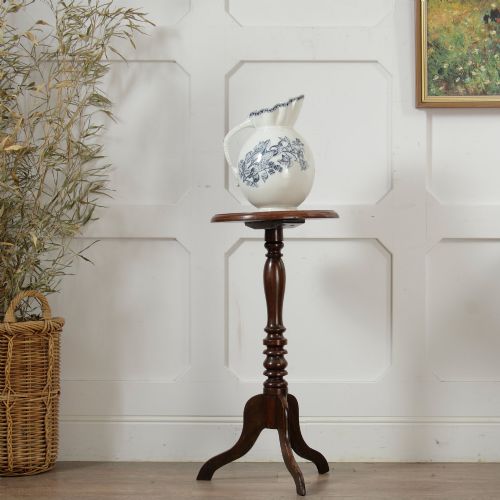
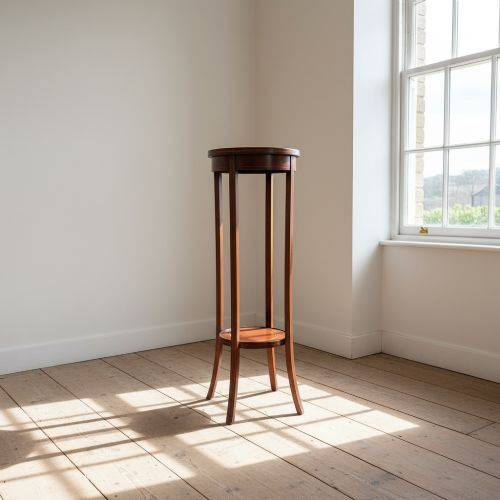
A mahogany plant pedestal holds your fern or lamp aloft, bringing timber grain and height into an empty corner.
Mahogany Plant Pedestal
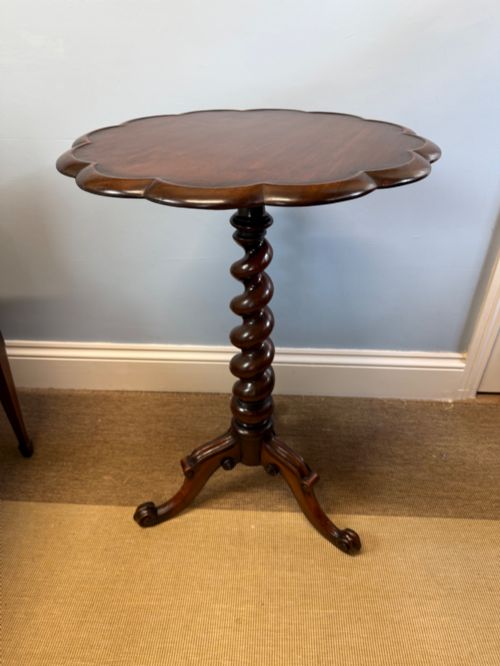
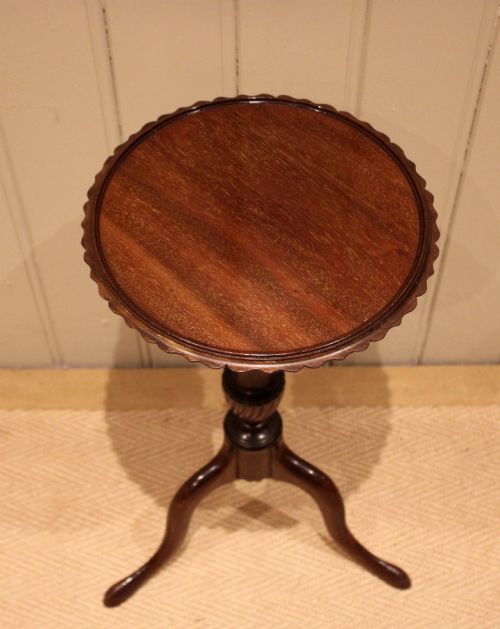
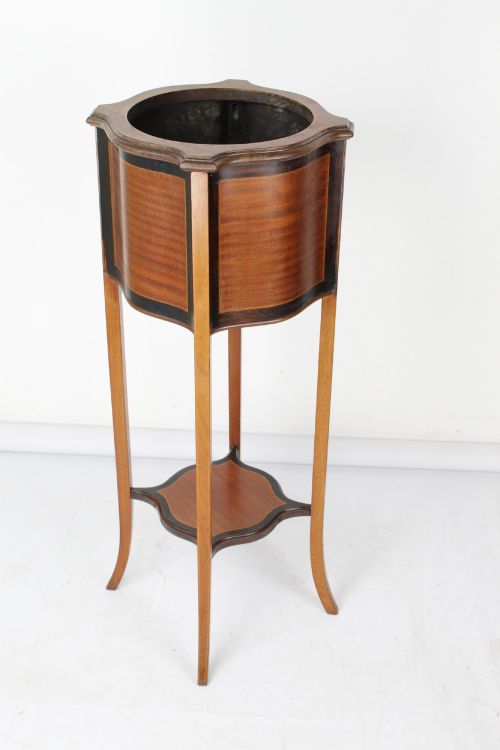
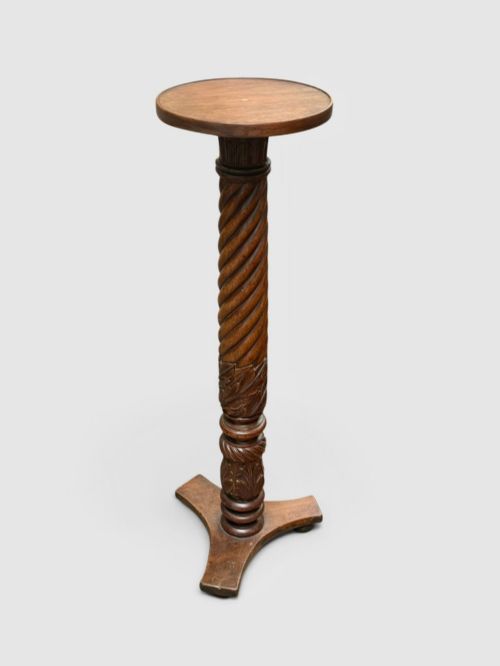
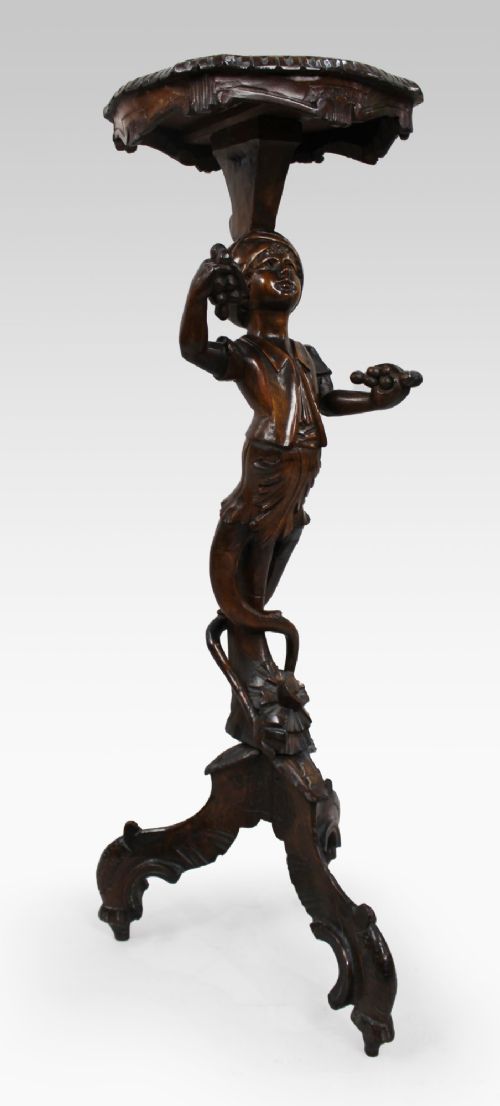
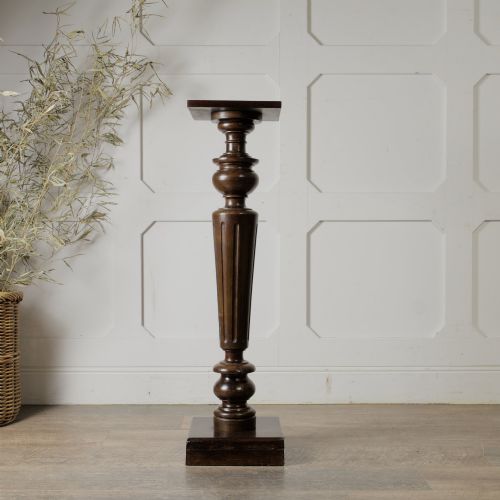
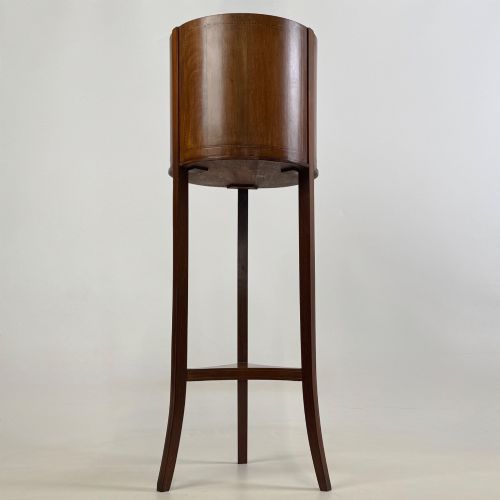
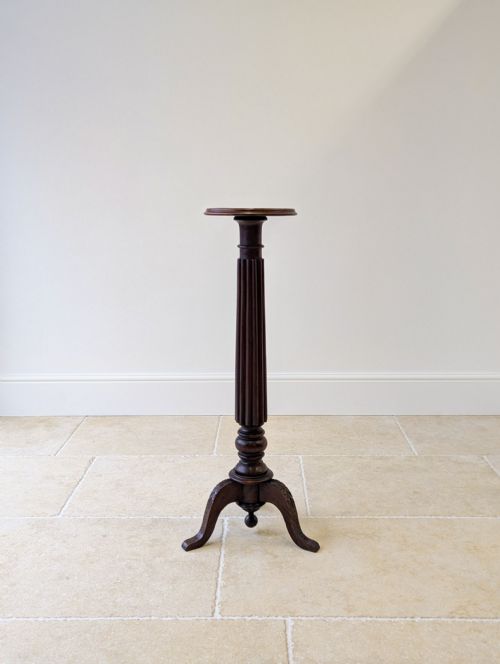
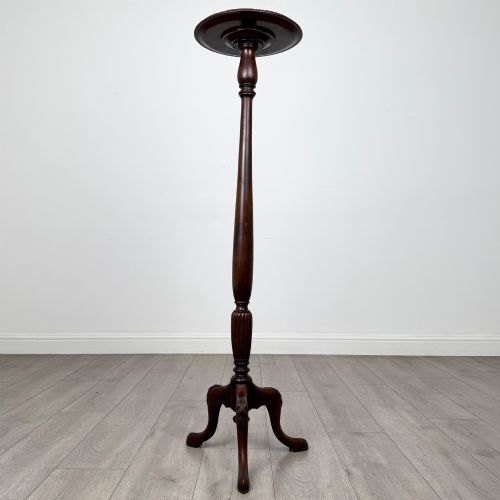
A mahogany plant pedestal is a tall, slender support designed to elevate urns, jardinières, and botanical specimens within a room. When you search for this phrase, you encounter forms ranging from simple turned columns to elaborate torcheres spanning the eighteenth, nineteenth, and early twentieth centuries.
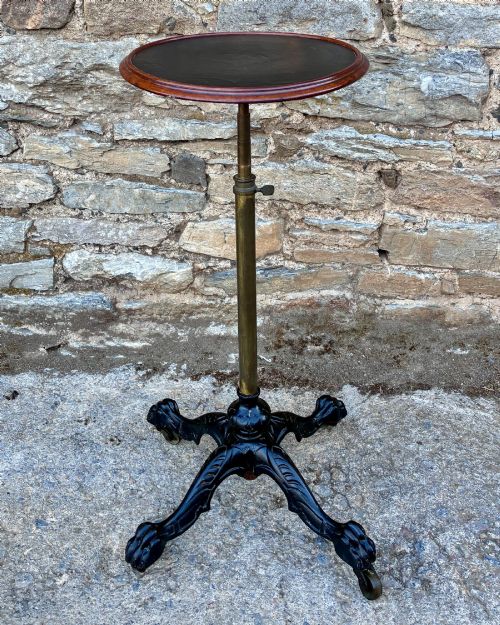
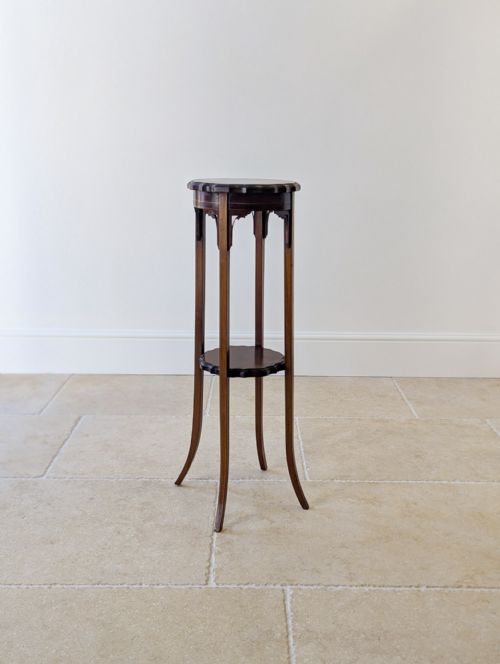
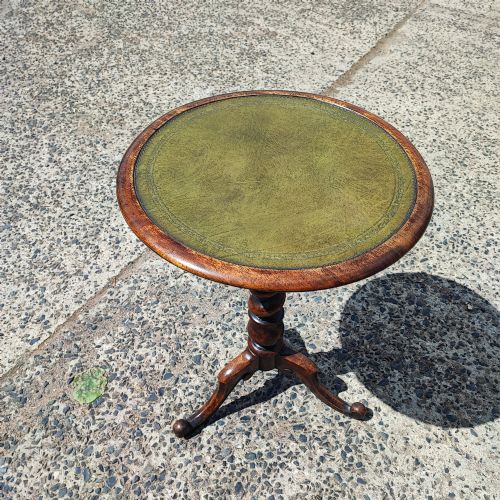
The specimens most frequently met on this page date from the Victorian and Edwardian eras, alongside Georgian revival pieces and occasional eighteenth-century originals. They manifest as plant stands, torcheres, and small lamp tables sharing a common vertical emphasis.
Many examples double as wine tables, display columns, or torchere candle stands, reflecting the versatile domestic roles these tall supports occupied across different historical periods.
How they were made
Cabinet makers utilised solid mahogany and hardwood substrates, frequently embellishing surfaces with satinwood inlay, brass mounts, and ormolu details. Tops occasionally incorporate inset marble slabs to resist water damage from potted plants.
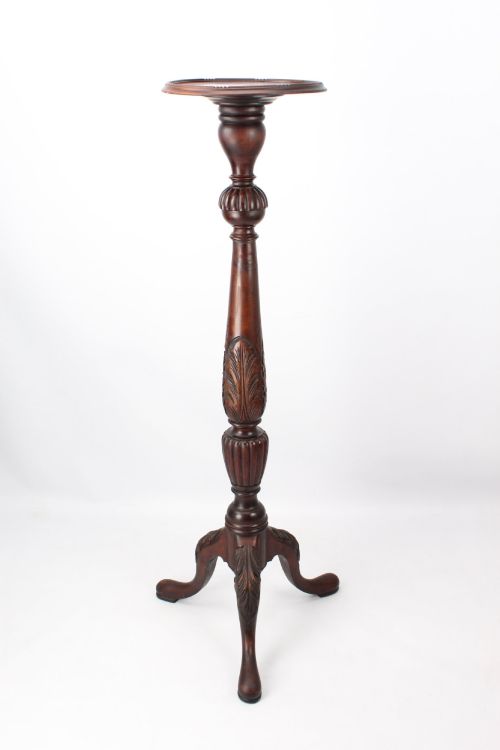
Construction techniques combine traditional turning on a lathe with hand-carved fluting, reeding, and figural details. Tripod bases and heavy weighted plinths ensure stability for tall, narrow shafts supporting heavy botanical arrangements.
Mahogany Plant Pedestal Retail Price Guide 2026
Typical asking prices for mahogany plant pedestal among the pieces listed under this phrase on Sellingantiques today, from the lower quarter to the upper quarter. They describe what is for sale here now, not the wider market.
Some nineteenth-century makers engineered these tall stands so convincingly that guests routinely tried to light candles on tables meant for ferns.
What varies in quality
Quality rests in the crispness of hand-carving, the selection of figured mahogany timber, and the structural integrity of joints connecting slender shafts to their bases. Superior examples exhibit deliberate proportion, balanced weight distribution, and refined secondary woods.
Subtle details such as finely chased brass mounts, precise satinwood stringing, and undamaged marble inserts elevate a standard utilitarian stand into a piece of fine cabinet work.
Druce & Co London·François Linke·George Smith·Thomas Hope
The Mahogany Plant Pedestal Glossary
- Torchere
- A tall ornamental stand originally designed to carry a torch or candle, later adapted to hold lamps and plants. These slender pieces dominate the tall display category.
- Jardiniere
- An ornamental pot or stand for plants and flowers. Pieces built for this purpose often feature lined wells or flat tops suited to damp containers.
- Ormolu
- Gilded bronze used for decorative mounts and accents on furniture. It adds bright metallic contrast to dark mahogany surfaces.
- Satinwood inlay
- Contrasting light timber set into the mahogany surface in decorative patterns. This technique defines many Edwardian pieces.
- Plinth
- The heavy base supporting a column or pedestal. A well-designed plinth prevents tall stands from tipping under uneven loads.
Mahogany Plant Pedestal: Frequently Asked Questions
How do I style a plant pedestal at home?
Place your pedestal in an empty corner or beside a seating group to introduce vertical height and organic form to a room.
Pair the stand with a trailing houseplant, a heavy ceramic urn, or a reading lamp to let the timber base anchor the display.
Can these stands support heavy pots safely?
Most solid mahogany pedestals and heavy marble-topped columns provide a stable platform for substantial botanical displays and indoor plants.
Check that the tripod base or weighted plinth sits flat and secure on your flooring before placing heavy items on top.
How do I tell a Victorian stand from a Georgian one?
Georgian pieces generally show restraint in carving and rely on rich timber grain and precise proportions. Victorian examples often display heavier ornamentation, elaborate turned columns, and revival styles.
Look closely at the secondary woods and construction marks to help clarify the period of manufacture.