


Mahogany Piano Chair
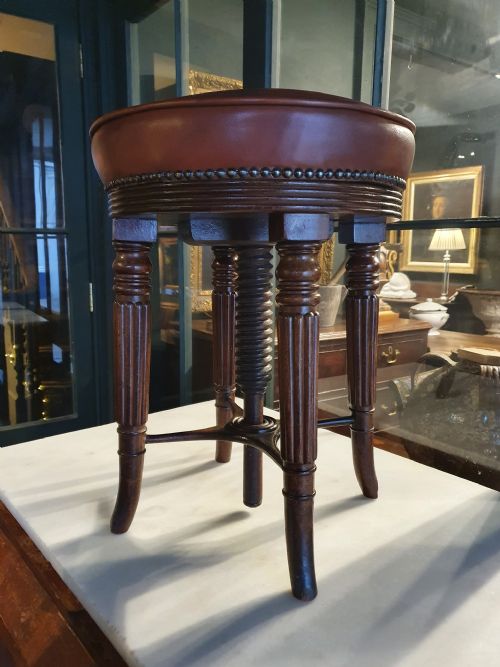
A mahogany piano chair offers the practical comfort and mechanical ingenuity required for the instrument, combining rich timber with revolving seats and adjustable heights.
Mahogany Piano Chair
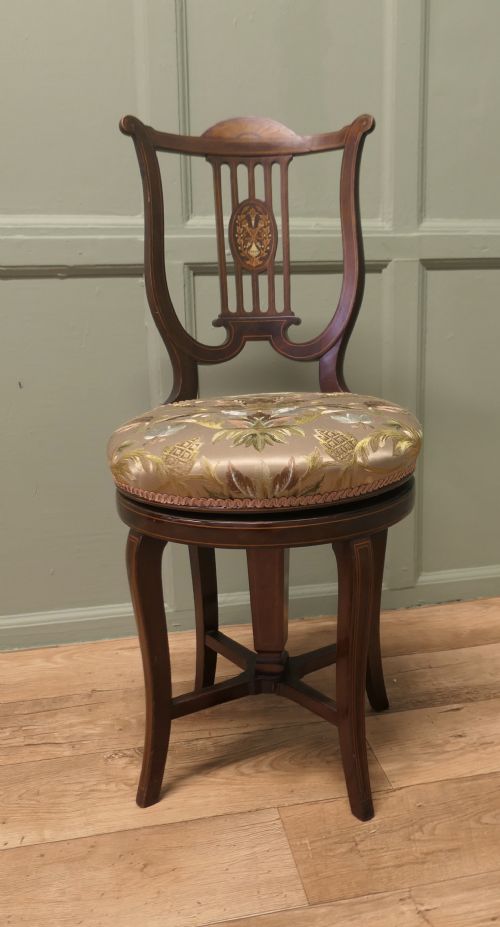
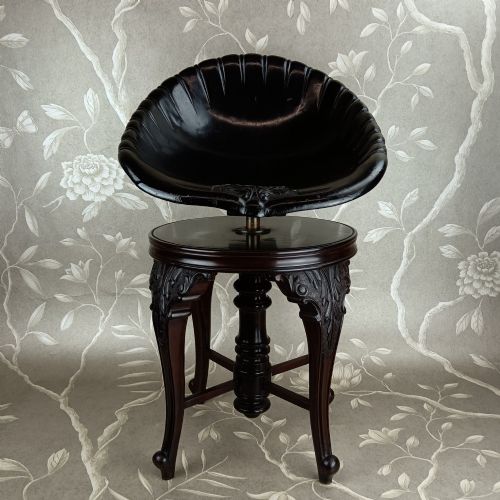
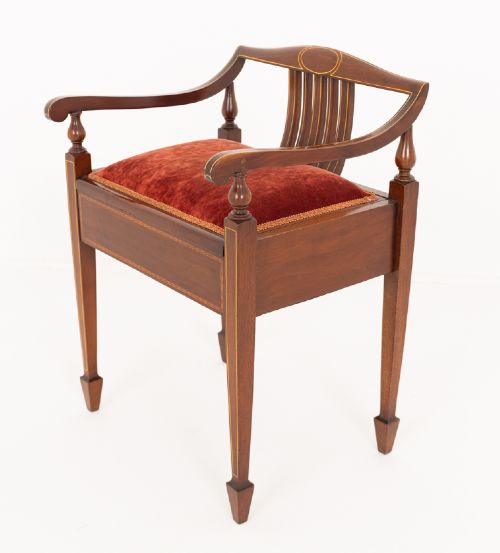
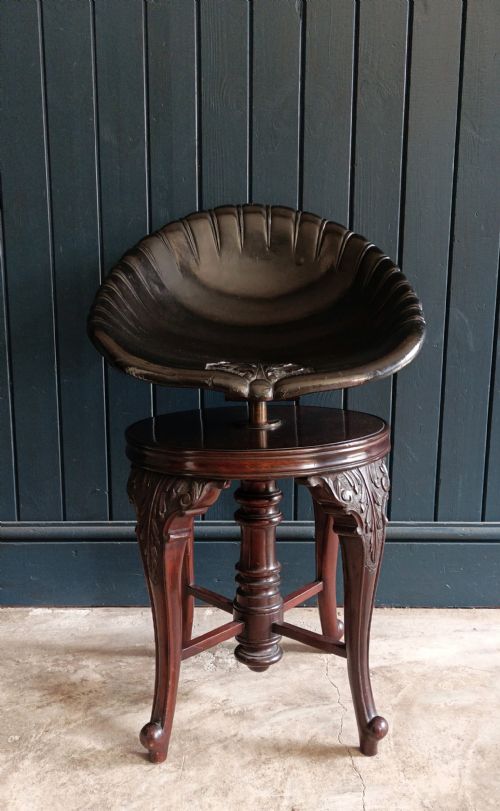
A mahogany piano chair is a specialised seat designed for musicians, appearing in forms such as piano stools, music chairs, and revolving stools across the nineteenth and early twentieth centuries. These pieces emerge in styles ranging from Regency and William IV to Victorian, Edwardian, and Sheraton Revival, alongside more unusual expressions like Victorian Grotto Revival and papier-mâché hybrids.
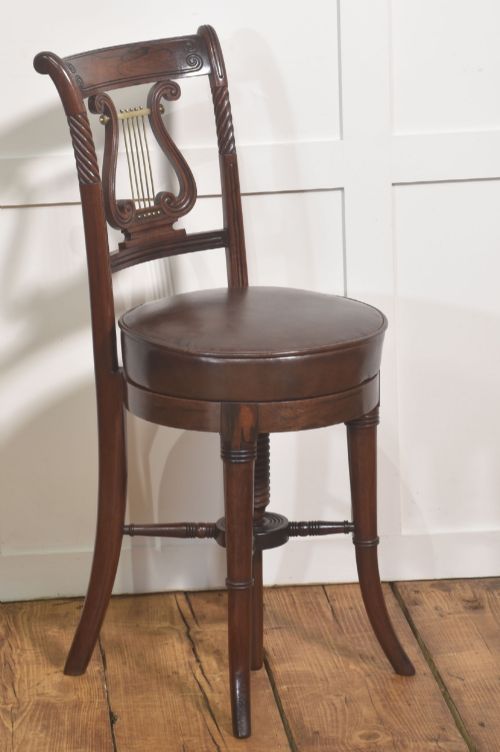
The buyer meets versions spanning simple square tops, lyre-backed harpist chairs, and swivel-top adjustable seats that serve equally well as dressing chairs or desk chairs. Origins stretch from British workshops of the Georgian era through to early twentieth-century Canadian production, maintaining a focus on utility at the keyboard.
How they were made
Cabinet makers utilise solid and veneered mahogany as the primary structural timber, shaping frames through traditional joinery and turning. Brass components appear in mechanical adjustment screws, castors, and inlay, providing both structural reinforcement and decorative contrast.
Seats incorporate upholstery layers finished in velvet, fabric, or leather, while specialised decorative pieces combine mahogany frames with papier-mâché surfaces.
Musicians enjoyed the luxury of spinning in circles long before office workers invented swivel chairs.
What varies in quality
The sophistication of the mechanical adjustment mechanism dictates much of the distinction between standard production and superior examples. Smooth movement in revolving swivel tops and reliable rise and fall screws reflect meticulous engineering by skilled makers.
Carving depth, timber selection, and the integration of brass inlay or complex backrest designs such as lyre forms separate ordinary seating from pieces produced by prominent firms.
Jennens and Bettridge·Gillows·James Shoolbred
The Mahogany Piano Chair Glossary
- Revolving
- Turning freely on a central axis. This mechanism allows the pianist to pivot easily between the keyboard and sheet music storage.
- Adjustable
- Capable of changing height or position. A threaded screw mechanism typically raises or lowers the seat platform.
- Lyre back
- A chair back shaped in the outline of a musical instrument. This classical motif appears frequently on nineteenth-century music seating.
- Papier-mâché
- A composite material made of paper pulp and binding agent. Jennens and Bettridge utilised this technique alongside mahogany for decorative music stools.
Mahogany Piano Chair: Frequently Asked Questions
How do adjustable piano chairs work?
Most examples employ a threaded wooden or metal screw concealed beneath the seat platform. Turning the top rotates the screw to raise or lower the sitting height.
Simpler models lock into position with pins or levers, while later Edwardian designs adopt modern swivel and rise mechanisms.
Can I use a music chair at a desk?
Many period music chairs function effectively as desk chairs or dressing chairs because of their compact proportions and comfortable upholstered seats. The revolving action and adjustable height offer similar ergonomics to modern office seating.
Victorian and Regency examples frequently cross between piano stools and desk seating in historical interiors.
What is a lyre back chair?
A lyre back chair incorporates an openwork splat shaped like the ancient Greek stringed instrument. This design motif symbolised the musical purpose of the seat.
Cabinet makers applied this decoration particularly to harpist and piano chairs during the Regency and Victorian periods.
How do I date a mahogany piano stool?
Dating relies upon stylistic markers, construction techniques, and turning details characteristic of specific design periods. Regency pieces show classical restraint and brass inlay, while Victorian examples often feature heavier carved details or papier-mâché elements.
Edwardian and later pieces display lighter proportions and Sheraton Revival influences.