


Vintage Leather Vanity Stool
These vintage leather vanity stool designs combine practical seating with period craftsmanship, offering a functional piece for dressing tables and bedrooms.
Vintage Leather Vanity Stool
A vintage leather vanity stool provides compact seating designed primarily for use at a dressing table, piano, or bedroom desk. These pieces serve both a decorative and a utilitarian function within domestic spaces.
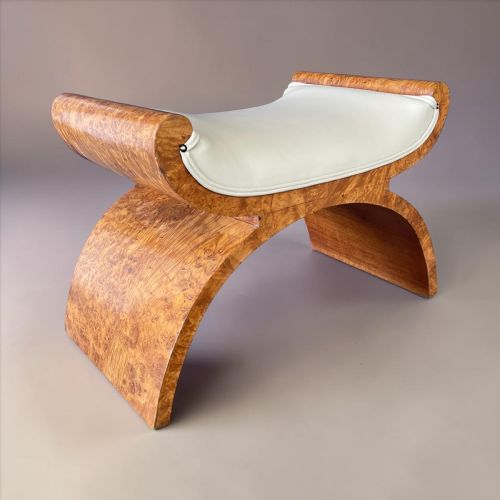
Buyers encountering this selection will find forms ranging from 19th Century mahogany examples to Art Deco pieces from 1930. The assortment spans multiple eras including Edwardian and Regency styles.
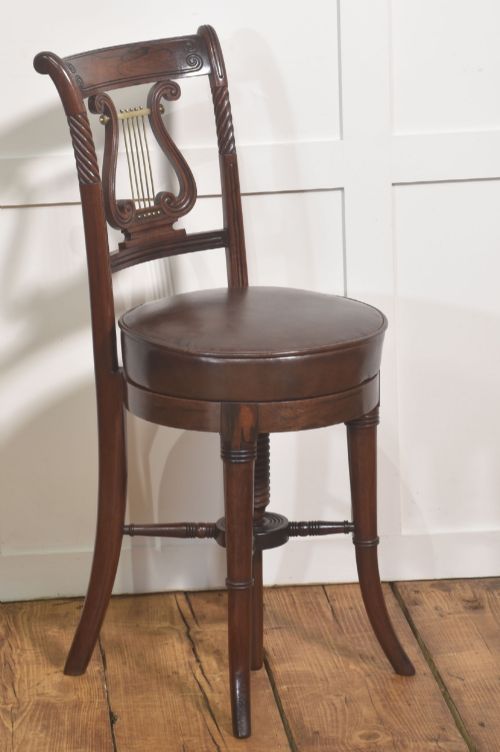
Object variations include dressing table chairs, piano stools, ottomans, and rectangular footstools. Many incorporate leather upholstery paired with wooden frames.
Materials and construction methods
Makers utilised a variety of timbers for the frames, predominantly mahogany, walnut, burr walnut, birds eye maple, and yew wood. These woods provided durable structural integrity alongside rich grain patterns.
Upholstery centres on leather, including tan leather and cream leather variations. Metal and brass elements frequently appear on adjustable mechanisms, castors, or decorative mounts.
Listings feature items spanning the 19th Century, Edwardian era, Regency period, and 1930 Art Deco movement.
Judging quality and execution
Superior examples demonstrate refined timber selection, such as burr walnut or birds eye maple, combined with precise joinery. The choice of primary wood heavily influences the visual weight of the piece.
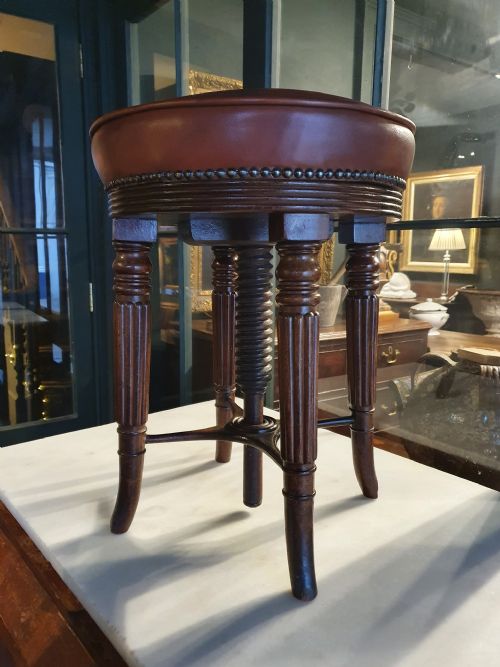
The integration of functional elements, such as revolving seats or adjustable heights, distinguishes higher grade pieces from standard domestic seating. Upholstery finish and leather selection further delineate the tier of craftsmanship.
Harry and Lou Epstein
The Vintage Leather Vanity Stool Glossary
- Art Deco
- A design style prominent around 1930 characterised by sleek geometric forms and modern materials. Pieces from this period often utilise exotic veneers like birds eye maple.
- Birds Eye Maple
- Afigured timber showing small circular knots resembling birds' eyes. It provides a highly decorative surface on Art Deco furniture.
- Regency
- A British architectural and decorative style spanning the early 19th century. Furniture from this era draws heavily on classical Greco-Roman motifs.
- Burr Walnut
- A specialised wood cut from the burl growth of a walnut tree. It yields intricate, swirling grain patterns prized in high-end cabinet making.
- Piano Stool
- A seat specifically designed for use at a piano, frequently featuring an adjustable height mechanism or a revolving top.
Vintage Leather Vanity Stool: Frequently Asked Questions
What is a vintage leather vanity stool used for?
These pieces function primarily as seating at dressing tables, desks, or pianos within bedrooms and dressing rooms. Their compact size allows them to tuck neatly beneath furniture when not in use.
They also serve as occasional footstools or ottomans in living spaces, depending on the specific height and shape of the frame.
How do I identify an Art Deco stool?
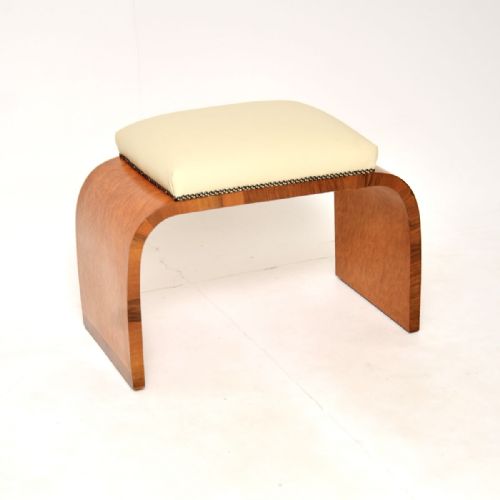
Art Deco stools, typically dating around 1930, feature streamlined silhouettes and distinctive veneers like birds eye maple or walnut. They often display geometric simplicity rather than the ornate carving seen in earlier Victorian pieces.
The use of cream or contrasting leather upholstery alongside these specific woods points directly to this 20th-century design movement.
What woods were used for these stools?
Framing materials vary across the centuries, with 19th Century and Edwardian examples commonly constructed from solid mahogany, yew wood, or walnut. Finer decorative pieces utilise burr walnut or birds eye maple veneers.
Brass hardware and metal components frequently supplement the wooden structures, particularly on adjustable or revolving models.
How do I distinguish Regency from Edwardian pieces?
Regency and Georgian pieces often display classical influences with substantial mahogany frames and sometimes revolving mechanisms. They reflect the formal design sensibilities of the early 19th century.
Edwardian pieces, dating from the early 20th century, tend to feature lighter proportions and straightforward tan leather upholstery tailored for comfortable domestic use.