




Brass Studded Leather Stool
A brass studded leather stool brings tactile warmth and period character to a room, offering sturdy seating or a resting place for feet.
Brass Studded Leather Stool
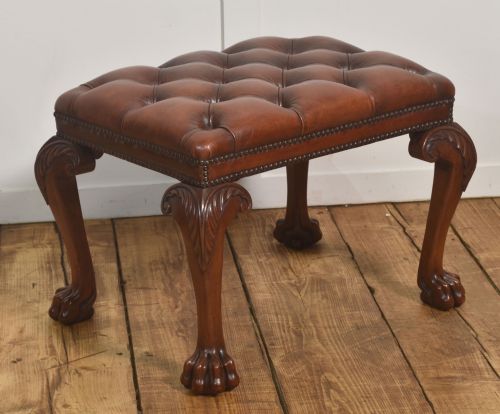
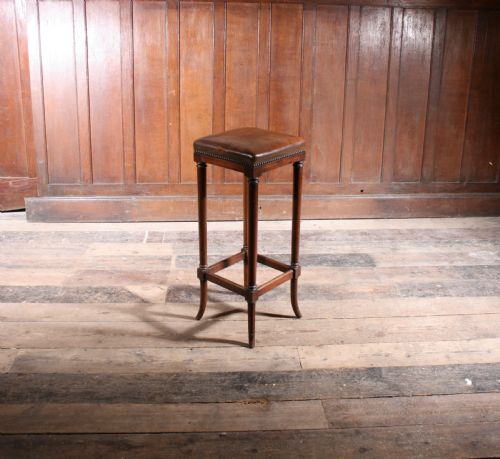
A brass studded leather stool spans forms from low footstools and dressing seats to long benches and tall bar designs. These pieces serve practical purposes in domestic spaces while displaying distinct historical cabinetry.
The selections encountered here mostly date across the nineteenth century, the Edwardian era, and the Regency period. Timber frames and leather upholstery define the category, united by the characteristic row of brass studs.
Makers utilised various hardwoods for the frames, creating shapes that range from plain square footstools to buttoned long benches and box ottomans. The style leans towards traditional English forms, drawing on Chippendale, George III, and William IV influences.
How they were made
Makers constructed the structural frames from dense timbers such as mahogany, oak, rosewood, walnut, and yew wood. These woods provided the necessary load-bearing strength for frequent sitting and foot resting.
Upholsterers stretched leather tightly over padded seat foundations, securing the material along the edges with individual brass tacks or studs. This method kept the leather taut while introducing a decorative metallic border to the design.
Listings feature timber frames in mahogany, oak, rosewood, walnut, and yew wood, paired with various leather upholstery styles.
What varies in quality
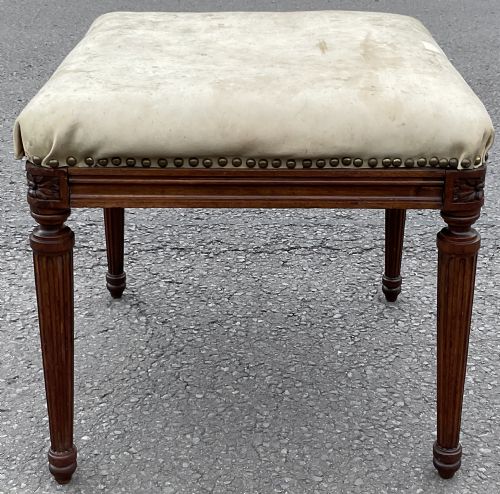
The refinement of the timber frame sets the baseline for quality, distinguishing simple turned legs from intricately carved cabriole or fluted supports. Dense woods like rosewood and mahogany indicate higher-tier commissions.
The handling of the leather upholstery and the regularity of the brass studding reveal the skill of the original maker. Tight buttoning and well-fitted hide demonstrate superior craftsmanship compared to plain stretched surfaces.
The Brass Studded Leather Stool Glossary
- Cabriole leg
- A furniture leg that curves outward at the knee and tapers inward to an ankle, often ending in a pad or claw foot. This design became popular during the eighteenth century and re-emerged in later revival periods.
- Buttoned
- An upholstery technique where depressions are formed in the leather by pulling twine through the padding and securing it with buttons. This secures the internal stuffing and creates a textured surface.
- Box ottoman
- A seated furniture form featuring a hinged or lift-off top that opens to reveal internal storage space. These pieces combine seating utility with hidden compartment storage.
- Fluted leg
- A column support carved with parallel vertical grooves running down the length of the wood. This classical decorative detail appears frequently on Regency and neoclassical furniture frames.
Brass Studded Leather Stool: Frequently Asked Questions
How do I date a brass studded leather stool?
Dating relies on identifying the underlying timber species, the turning or carving style of the legs, and the general upholstery construction. Nineteenth-century examples often feature mahogany or rosewood frames, while Edwardian pieces typically utilise lighter oak.
Comparing the specific woodwork details against established design periods helps narrow down the decade of manufacture. The presence of patent mechanisms or specific brass stud patterns also aids in chronological placement.
Were these stools used as footstools or seating?
Historical evidence shows these pieces served multiple functions depending on their height and proportions. Lower examples worked well as footstools or ottomans, while taller variations functioned as dressing stools or hall seats.
Longer benches and box ottomans provided versatile seating options in reception rooms and bedrooms alike. Their robust timber construction ensured they could withstand regular daily use.
How should I care for antique leather upholstery?
Maintaining antique leather involves keeping the hide clean and preventing it from drying out over time. Gentle dusting with a dry cloth removes surface debris without harming the material.
Applying suitable leather conditioners periodically helps preserve flexibility in older hides. Avoiding direct sunlight and intense heat sources protects both the leather and the underlying timber frame.
What timber types are most common?
Mahogany appears most frequently across these listings, alongside rosewood, oak, walnut, and yew wood. Cabinetmakers favoured these hardwoods for their structural integrity and polished finish.
Different periods favoured different woods, with rosewood and mahogany dominating Regency and Victorian pieces. Oak and softer hardwoods often appear in later Edwardian examples.