


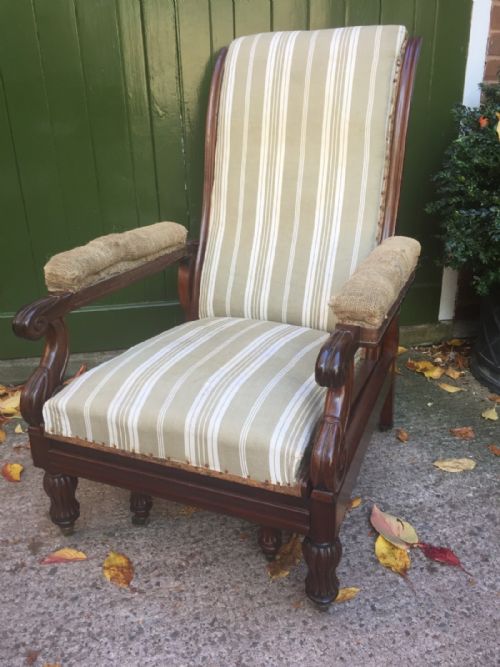

Georgian Adjustable Chair
A georgian adjustable chair offers practical mechanics wrapped in period timber, giving you versatile seating built to last.
Georgian Adjustable Chair
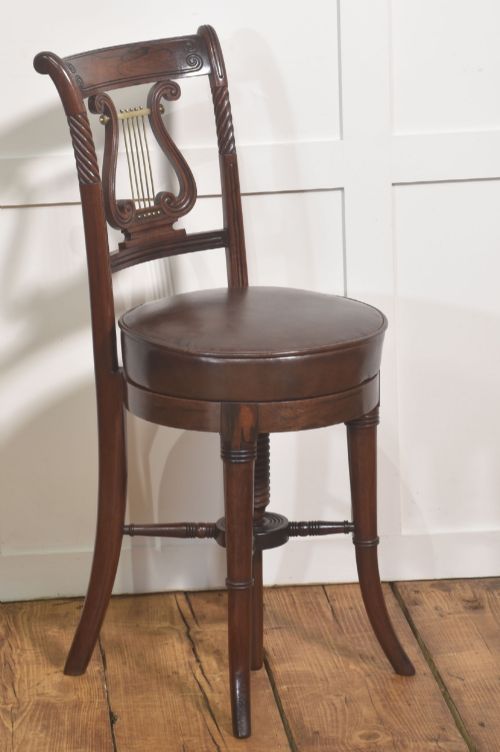
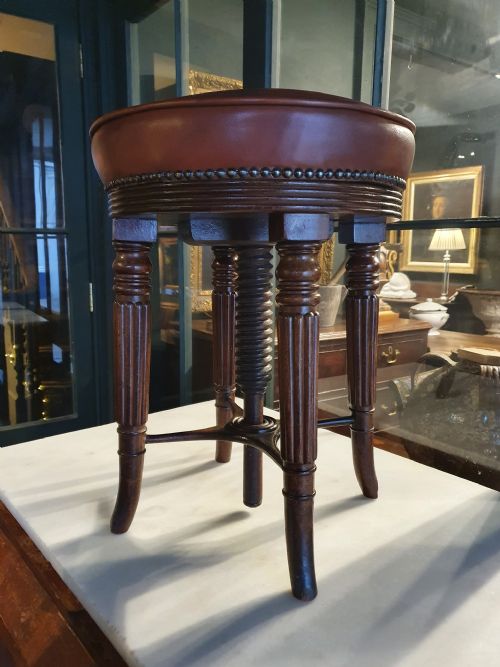
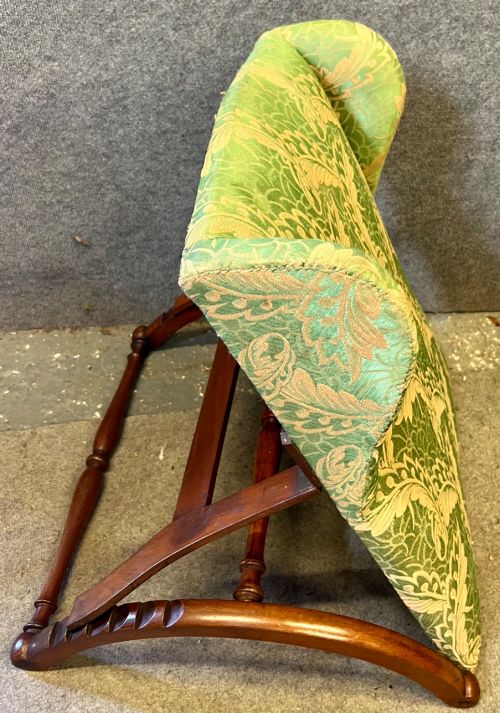
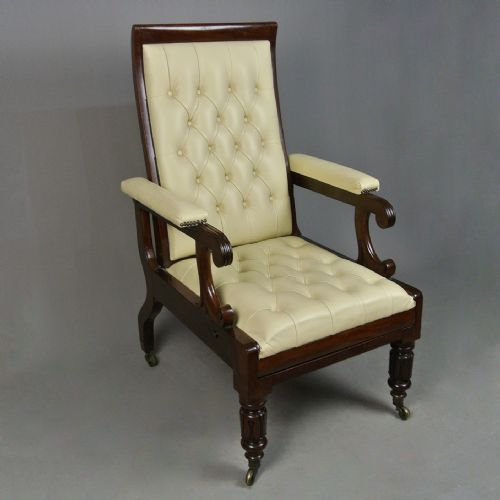
A georgian adjustable chair combines period cabinet-making with mechanical movement, designed for specific daily tasks like playing music or dressing. The pieces available span armchairs, piano stools, and dressing chairs from the Regency, George III, and William IV eras.
Mahogany forms the primary timber across the selection, complemented by rosewood, oak, elm, and satinwood. These seating forms rely on revolving tops, reclining mechanisms, and adjustable backrests or height controls to achieve their utility.
Materials and construction
Makers shaped solid mahogany, rosewood, and oak into frames, incorporating brass fittings for the revolving or reclining mechanisms. Iron components support the adjustable height functions found on piano stools and music chairs.
Upholstery relies on traditional stuffing materials such as horsehair, finished with leather, fabric, or hessian coverings. Timber surfaces display fine joinery, occasionally enhanced with brass inlay.
Victorian pianists clearly spun around with considerable enthusiasm, given the robust iron and brass swivel screws engineered into surviving music stools.
Judging quality in adjustable seating
Quality rests on the sophistication of the mechanism and the integrity of the timber frame. Pieces bearing attribution to known makers like Gillows or referencing patent designs by Robert Daws demonstrate superior execution in both mechanics and cabinet-making.
The refinement of the brass hardware and the crispness of the wood carving distinguish higher-grade examples. Durability in the moving parts ensures the chair retains its original function.
Gillows·Robert Daws
The Georgian Adjustable Chair Glossary
- Revolving
- A seat mechanism that rotates fully on a central axis, commonly found on music and piano stools. This allows the sitter to turn easily without moving the base.
- Reclining
- An adjustable backrest or frame that tilts backward for comfort, often operated via patent mechanical systems. These designs appeared in library armchairs and campaign seating.
- Campaign
- Portable furniture designed for travel, featuring robust construction and often incorporating folding or adjustable elements. These pieces utilised durable timbers and brass reinforcement.
- Patent
- A legally protected mechanical invention registered by a maker, such as the designs by Robert Daws. Such pieces indicate documented innovation in adjustable seating.
Georgian Adjustable Chair: Frequently Asked Questions
How do these adjustable chairs work?
The mechanics rely on internal brass screws, pivots, or ratchets enclosed within the timber framework. Turning the seat or adjusting the backrest alters the height or recline angle.
These systems allowed Victorian and Georgian sitters to customize their posture for music practice, reading, or grooming.
Were these chairs used for dining?
No, these forms were built for specific tasks like playing the piano, reading in the library, or dressing at a table. Their mechanical parts made them heavier and less suited for standard dining use.
Dining chairs required simple, static frames rather than the revolving or reclining functions seen here.
How do I spot a patent design?
Patent designs often feature stamped maker marks, brass plaques, or distinct mechanical levers associated with inventors like Robert Daws. The engineering in these pieces tends to be more complex than standard models.
Documentation or characteristic hardware usually confirms the patent origin.
What woods were used for these chairs?
Mahogany served as the predominant timber, offering strength and stability for moving parts. Cabinet-makers also utilised rosewood, oak, elm, and satinwood depending on the period and status of the piece.
Brass and iron provided the necessary metalwork for the functional joints.