


Vintage Adjustable Piano Stool
A vintage adjustable piano stool is a mechanical seat for musicians, offering height adjustment to suit players at the keyboard.
Vintage Adjustable Piano Stool
A vintage adjustable piano stool is designed for the keyboard player, providing a secure and adaptable seat for practice or performance. When searching for a vintage adjustable piano stool, buyers encounter numerous Victorian examples alongside pieces spanning the Georgian, Regency, and early twentieth century periods.
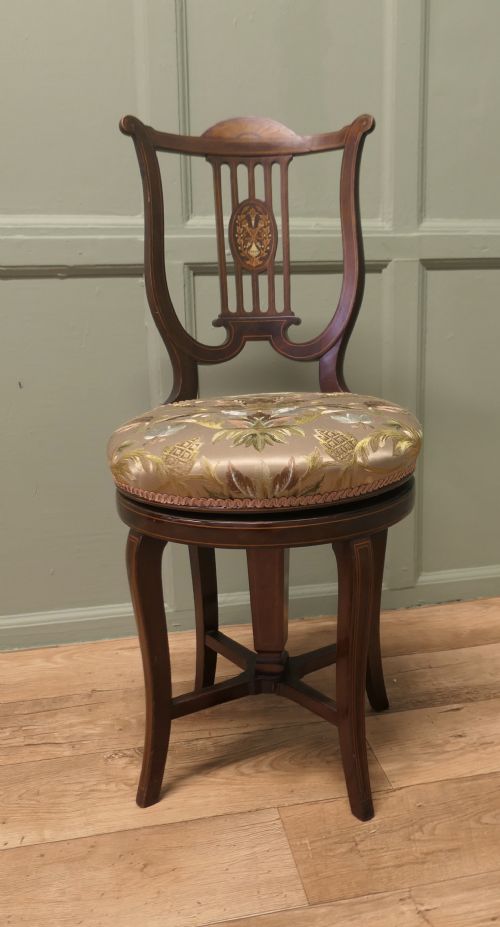
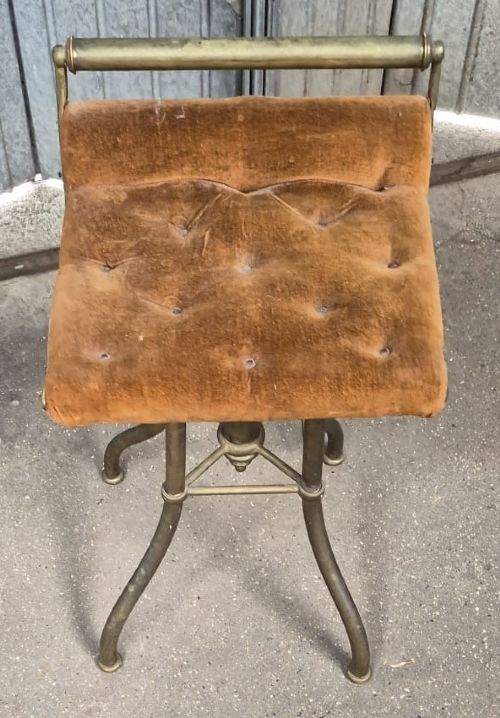
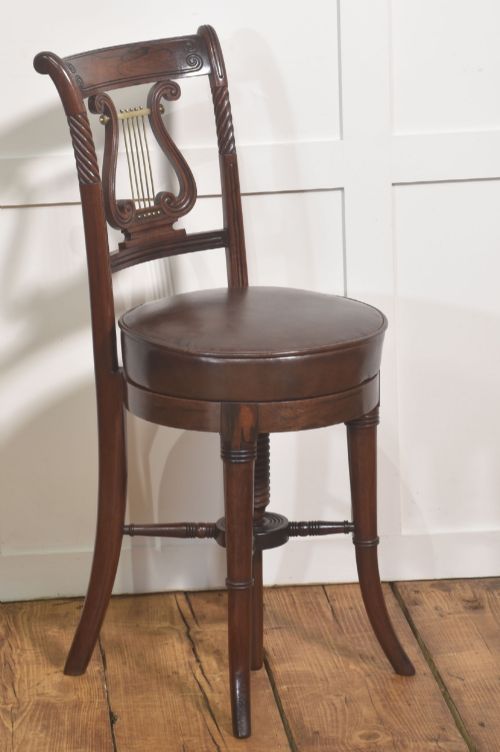
The selection ranges from revolving music chairs and lyre back harpist seats to industrial cast iron designs and swivel stools. Woods such as mahogany, walnut, and rosewood dominate the listings, frequently paired with velvet, leather, or fabric upholstery.
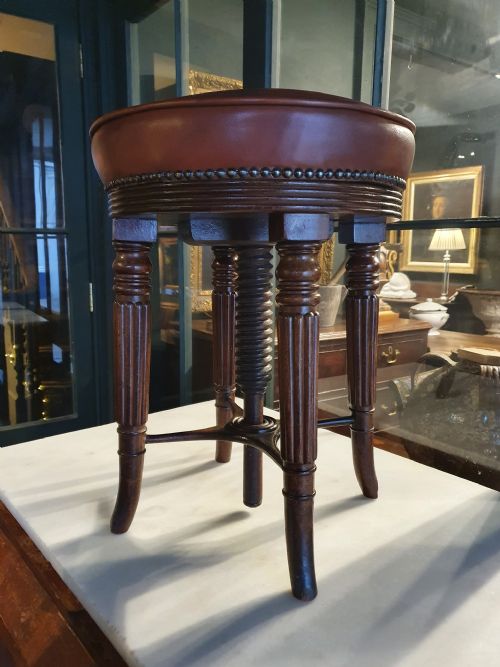
Forms vary from simple circular tops to ornate carved walnut frames and revolving screw mechanisms. Buyers select these pieces for their mechanical function and period character, fitting them beside both historic and modern instruments.
Evaluating craftsmanship and condition
The precision of the mechanical screw action distinguishes finer examples from simpler swivel designs. Smooth movement without excessive play in the spindle indicates superior workshop execution.
Selection of timber grain and the crispness of hand-carved details separate standard production from exceptional pieces. Original upholstery materials and intact brass fittings contribute further to the integrity of an antique stool.
Musicians once relied on a sturdy turn of the seat to get the right height before hitting the keys.
Gillows·James Shoolbred
The Vintage Adjustable Piano Stool Glossary
- Revolving
- A seat mechanism that turns fully around on a central threaded spindle to raise or lower the height. This movement allows the musician to adjust their seating position quickly.
- Lyre back
- A chair back shaped in the form of a classical stringed musical instrument. This motif frequently appears on music chairs and stools from the nineteenth century.
- Ebonised
- Wood finished with a dark coating to imitate expensive ebony. Makers utilised this technique on nineteenth century fancy furniture.
- Patent
- A design protected by official registration of a mechanical improvement. These pieces often feature specific mechanisms for height adjustment or swivelling.
Vintage Adjustable Piano Stool: Frequently Asked Questions
How do I adjust the height on these piano stools?
Most models operate via a central screw mechanism hidden beneath the upholstered top. Turning the seat clockwise or anticlockwise raises or lowers the height.
Industrial or swivel variants may use different locking levers or simple threaded shafts to achieve the same functional adjustment.
Were these stools only used for pianos?
While primarily designed for keyboard players, many pieces served harpists and cellists who required stable yet manoeuvrable seating. Some examples double as dressing table chairs.
The inclusion of specialised backs, such as lyre designs or open frames, catered specifically to musicians needing arm clearance.
How can I identify a Victorian piano stool?
Victorian examples often display dense timbers like rosewood or walnut paired with heavy turned legs and carved decoration. The mechanical components typically utilise cast iron or brass.
Stylistic cues range from ornate mid-century carvings to late Victorian industrial cast iron bases and revolving wooden tops.
Can I use a vintage piano stool with a modern piano?
These historical seats function effectively with modern instruments, providing the correct ergonomic height required for playing. Their compact dimensions suit contemporary room layouts.
Selecting a piece matching existing wood tones helps integrate the antique stool into a modern music room.