


Mahogany Office Desk Chair
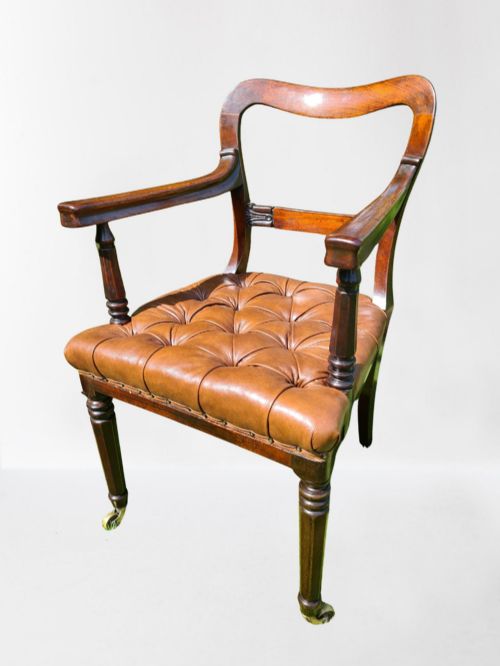
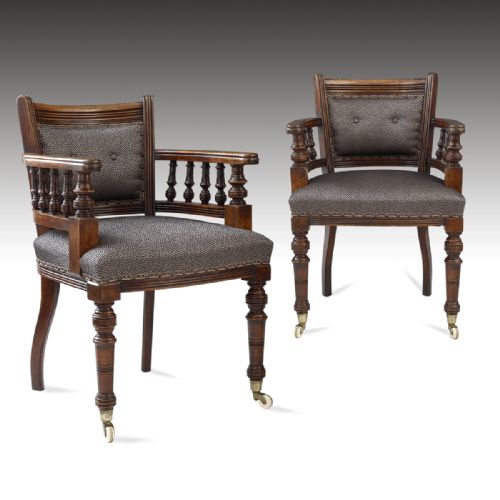
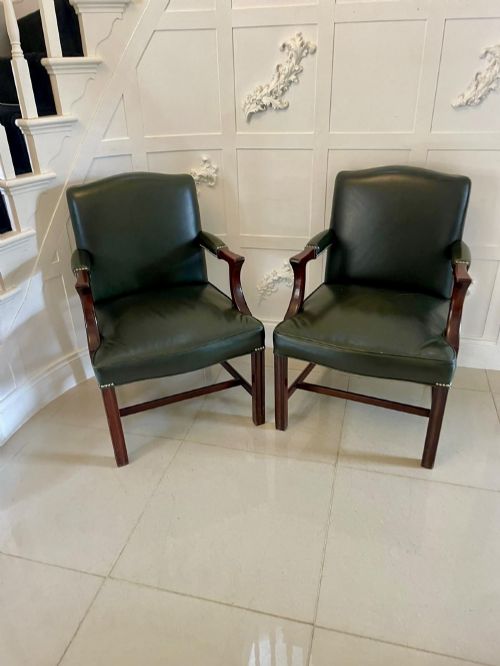
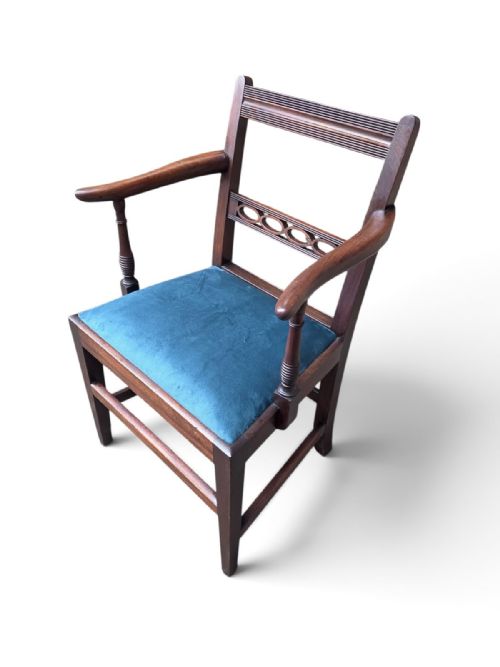
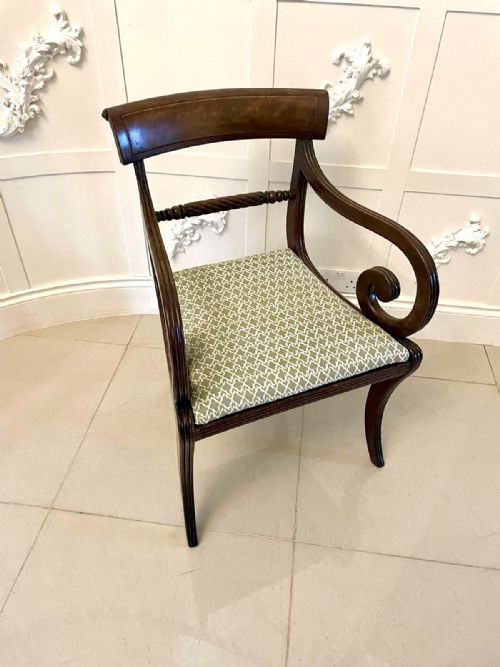
When you choose a mahogany office desk chair, you select a sturdy seat built for daily work during the Victorian, Edwardian or Georgian eras.
Mahogany Office Desk Chair
A mahogany office desk chair serves as a practical seat for daily work, combining functional design with period craftsmanship. Buyers searching this phrase meet variations spanning the Georgian, Victorian and Edwardian periods.
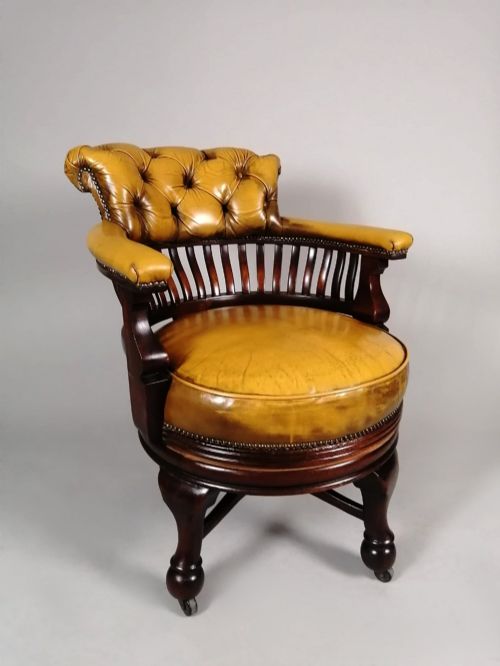
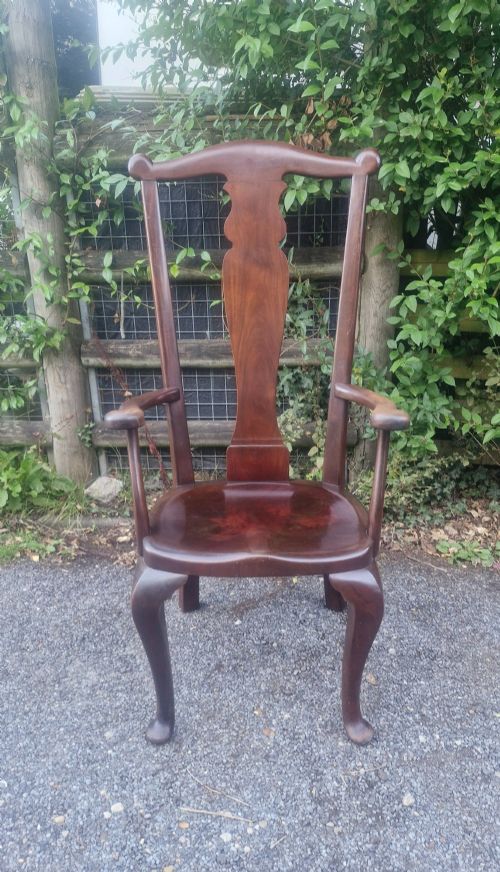
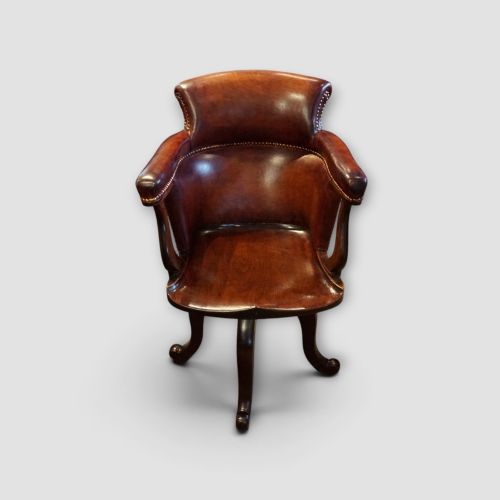
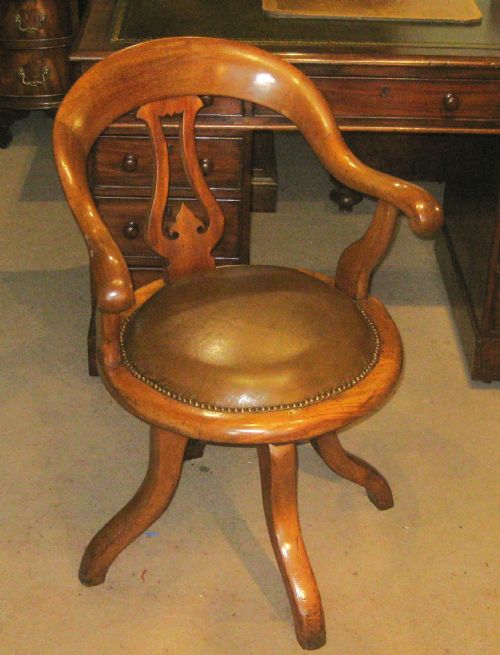
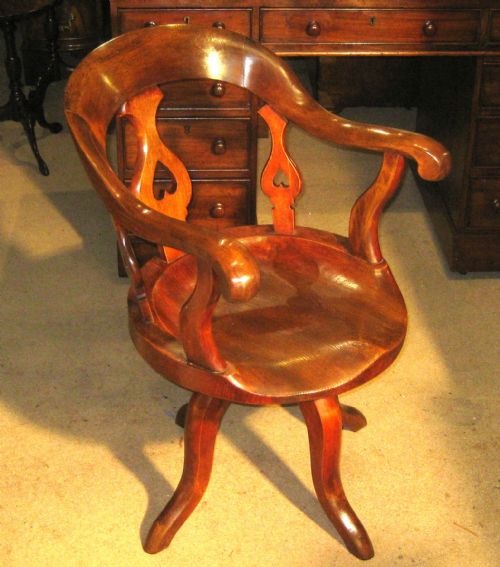
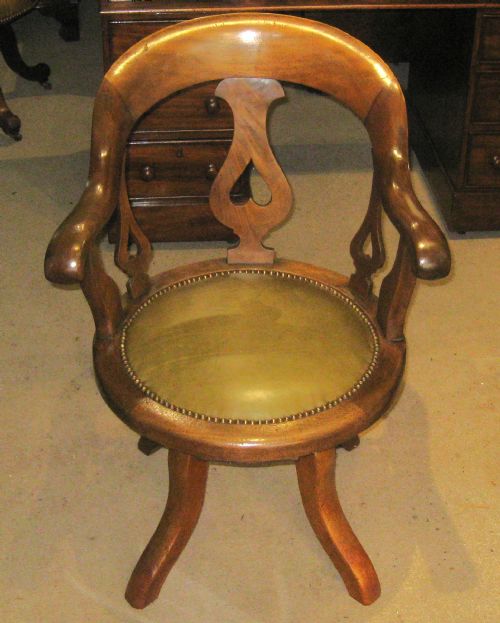
The selection ranges from revolving captain chairs with mechanical swivels to solid armchairs and library seats. Most examples found on this page date from the nineteenth century, reflecting robust office requirements of that era.
How They Were Made
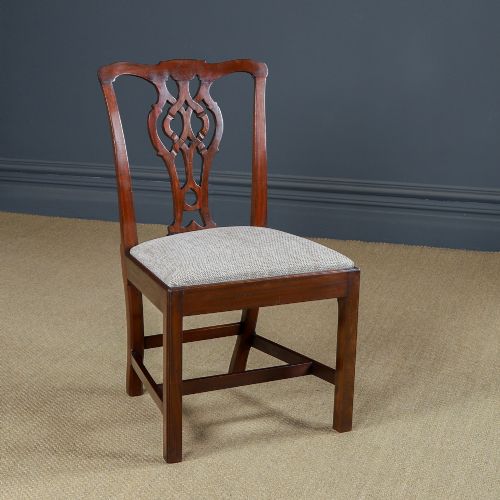
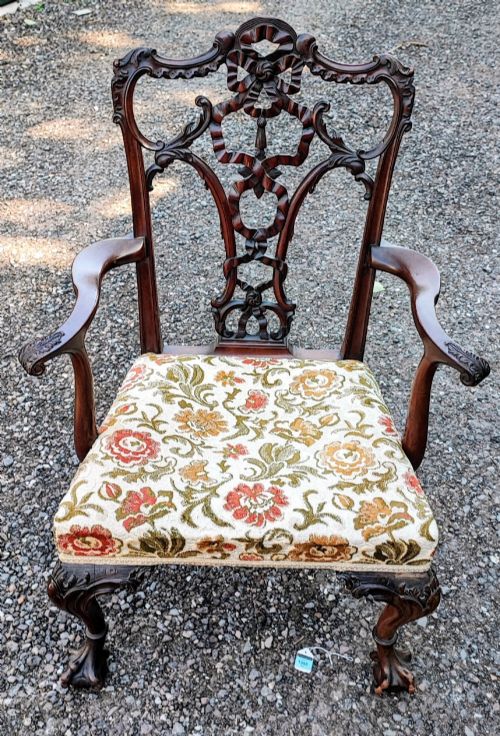
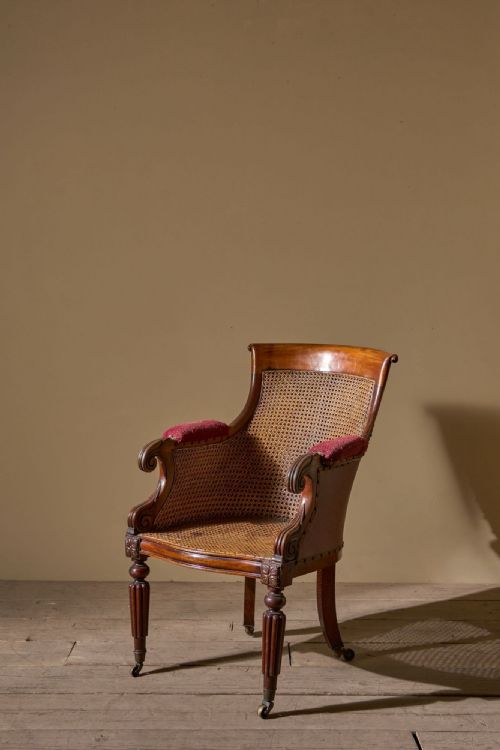
Cabinetmakers constructed these frames primarily from solid mahogany, often utilising turned wooden spindles, curved armrests and carved details like spider web backs. Leather, fabric, velvet and cane provide the upholstery and seat panels across different models.
Revolving variants incorporate iron and brass swivel mechanisms beneath the timber frame to allow movement. Metal hardware and castors support the mobility of heavier executive and library chairs.
Certain captain's chairs retain hidden ink stains inside their wooden arm recesses from busy clerks.
What Varies In Quality
The standard of carving and timber selection dictates the distinction between standard commercial seating and exceptional cabinetwork. Richness of grain, such as golden mahogany varieties, paired with deep relief carving elevates certain examples.
Original mechanics on revolving models, intact leather hides with period tooling and sturdy frame joints determine the integrity of a piece. Subtle details in the joinery separate utilitarian workshop output from refined library furniture.
CV Smith·Morris And Co·Gillows
The Mahogany Office Desk Chair Glossary
- Mahogany
- A durable, dense tropical hardwood imported for fine furniture production. It takes a deep polish and resists warping over decades of use.
- Captain's chair
- A sturdy revolving or fixed armchair featuring a rounded enclosing back rail above spindle supports. These seats originated for shipboard and office use.
- Revolving mechanism
- The iron or brass swivel assembly fitted beneath the seat frame. It permits rotation and height adjustment on nineteenth-century office models.
- Bar back
- A chair design featuring a horizontal wooden slat across the upper backrest. This structural element provides lumbar support while maintaining a clean profile.
Mahogany Office Desk Chair: Frequently Asked Questions
Are these chairs comfortable for daily work?
Many models offer deep seats, supportive curved armrests and ergonomic adjustments like swivelling mechanisms designed for long hours at a desk.
Original padding uses horsehair or springs, which provides a firmer sit than modern synthetic foam.
How do I identify a Victorian desk chair?
Victorian examples frequently display darker timber tones, robust turning, and leather upholstery secured with brass studs. They often include revolving swivel bases.
Look for construction methods typical of the nineteenth century, including hand-cut dovetails and heavy timber frames.
Can I use an antique office chair with a modern desk?
These chairs fit well beneath standard modern tables, provided you check the clearance height for the armrests. Many nineteenth-century models feature lower seat heights than contemporary office seating.
Revolving versions offer easier movement and positioning in modern workspaces.
What is the difference between a library chair and a desk chair?
Library chairs often feature broader proportions, cane or upholstered seats, and heavier frames intended for reading and relaxation. Desk chairs prioritize mobility, upright posture and swivelling bases for working.
Both types utilise mahogany and share stylistic details depending on their period of manufacture.