
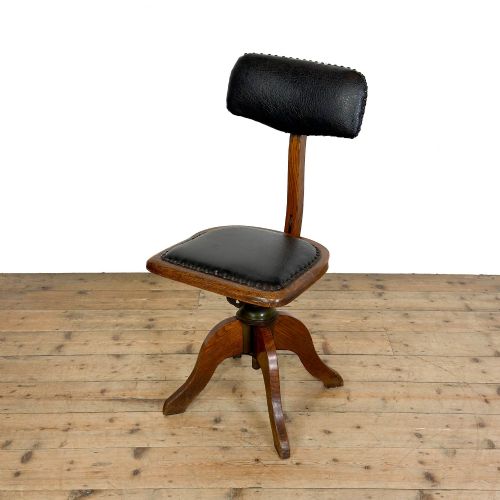
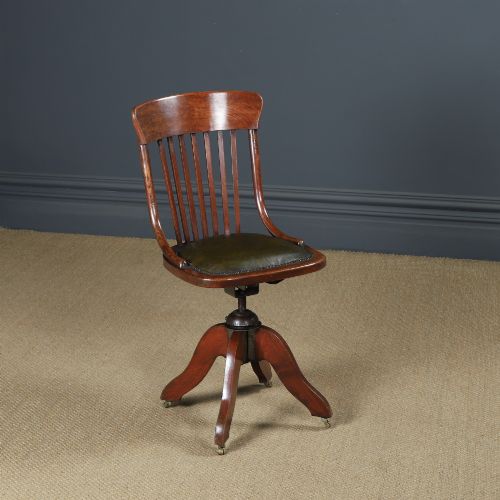
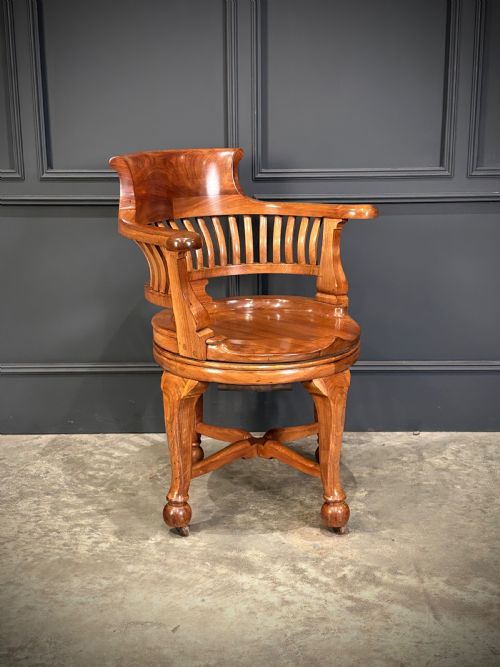
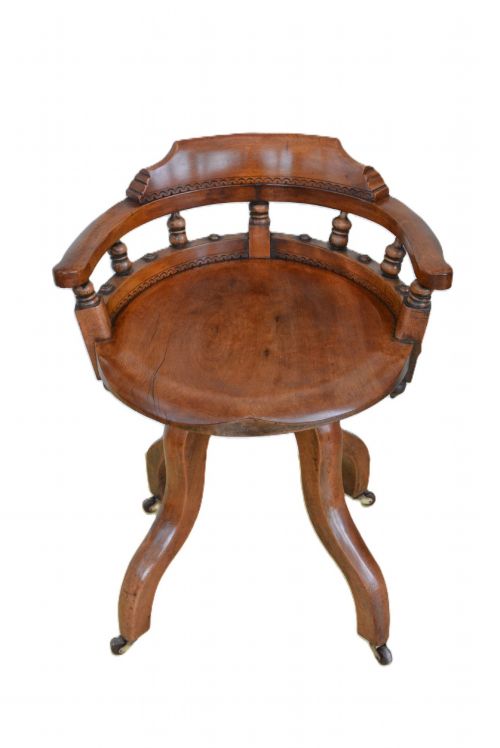
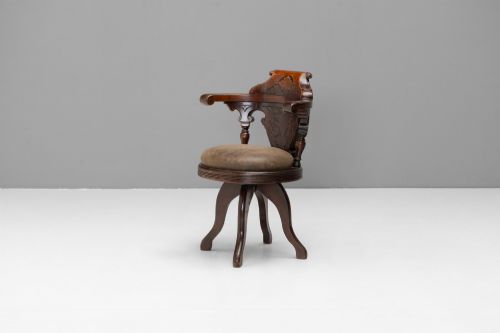


Wooden Revolving Chair
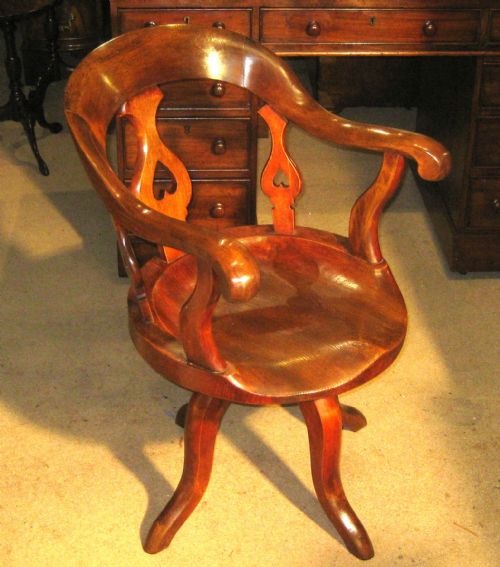
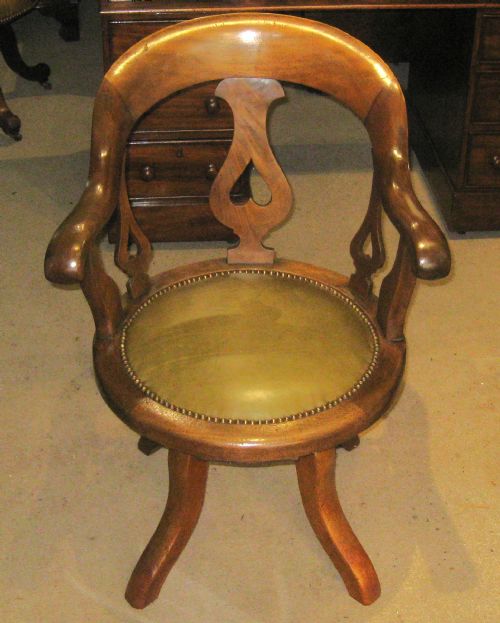
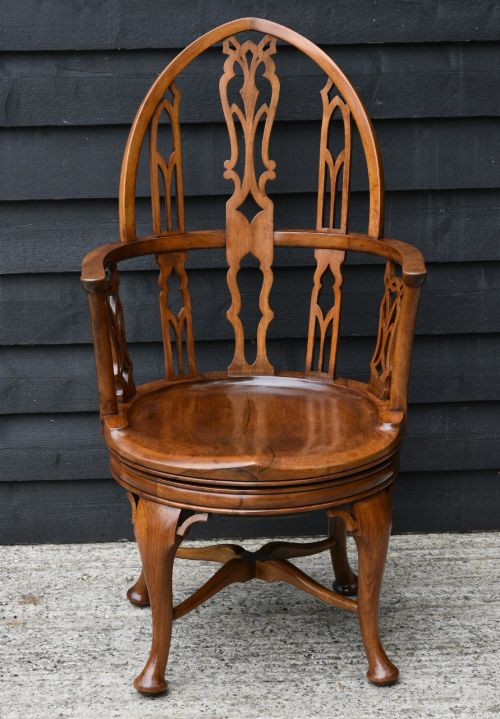
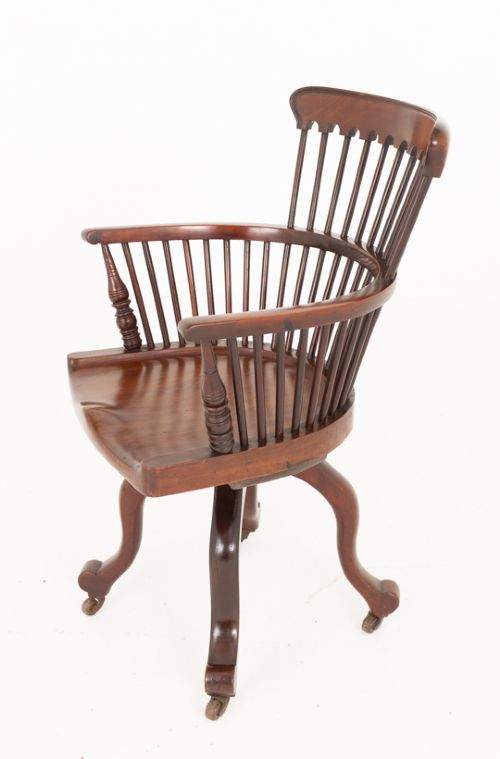
A wooden revolving chair brings kinetic comfort to the desk, marrying traditional cabinetmaking with mechanical swivel action.
Wooden Revolving Chair
A wooden revolving chair is primarily found in forms designed for offices, desks, and pianos, spanning periods from the Victorian era through the Edwardian period and into the early twentieth century. Buyers seeking this phrase encounter sturdy desk chairs, office armchairs, piano stools, and music chairs built to turn and adjust.
The materials and styles range from solid mahogany and walnut to oak, ash, and beech, incorporating aesthetic movement details, gothic revival elements, and arts and crafts design. These seating pieces combine functional height adjustment and swivelling mechanisms with traditional timber frames.
Most examples originate from the late nineteenth century and the early decades of the twentieth century, reflecting the rise of dedicated office and study furniture. The selection balances standard desk chairs with specialist piano stools and ships chairs.
How they were made
Makers constructed these chairs using dense hardwoods like mahogany, walnut, oak, ash, and beech, often shaped into bentwood components or heavily carved frames. Timber selection provided the structural strength required to support central swivel mechanisms and repeated turning.
Mechanisms combined cast iron, iron, and brass components to enable swivelling, tilting, and rise and fall height adjustment. Leather upholstery appeared frequently on desk chairs and office seats, secured with traditional tacking to padded seats and backs.
Listings feature mahogany, oak, walnut, ash, and beech, paired with iron, brass, and leather across Victorian and Edwardian periods.
What varies in quality
Quality rests in the sophistication of the timber turning, the weight and durability of the iron or brass swivel mechanism, and the integrity of the joinery. Superior examples demonstrate refined carving, well-chosen mahogany or walnut grain, and smooth, stable rotation without excessive play in the spindle.
Upholstery finish and leather selection distinguish standard utility seating from finer library and office armchairs. The robustness of the underframe and the precise fit of the rise and fall mechanism separate everyday workshop output from master cabinetmaker production.
Gillows·Kendrick & Jefferson·Shoolbred·Edward William Godwin
The Wooden Revolving Chair Glossary
- Revolving chair
- A seat fitted with a central pivot mechanism allowing it to turn through a full circle. This design supports ease of movement at a desk or table.
- Swivel and tilt
- A mechanical function permitting the seat to rotate and lean backward against tension. This mechanism usually relies on iron and brass components beneath the wooden seat.
- Rise and fall
- An adjustable height mechanism operated by a threaded spindle or screw action. It allows the seat level to move up or down.
- Bentwood
- Timber shaped into curved forms through the application of steam and pressure. This technique creates resilient, flowing structural lines without heavy joints.
- Aesthetic Movement
- A late nineteenth-century design style emphasising visual beauty over narrative content. Pieces in this style often feature simplified forms and refined artistic details.
Wooden Revolving Chair: Frequently Asked Questions
What is a wooden revolving chair?
A wooden revolving chair is a movable seat featuring a central pivot that allows the occupant to turn around while seated at a desk, piano, or table. These pieces combine traditional cabinet timber construction with mechanical turning hardware.
Most examples date from the Victorian and Edwardian eras, serving practical functions in studies, offices, and music rooms. They range from simple piano stools to heavy office armchairs.
How do I date a revolving desk chair?
Dating relies on examining the timber species, the style of the carving, and the engineering of the swivel mechanism beneath the seat. Victorian pieces often use solid mahogany or walnut with dense carving, while Edwardian and later pieces frequently employ oak or beech.
Patent dates on iron hardware and construction methods also help establish the manufacturing period. Arts and crafts or aesthetic movement details point towards specific late nineteenth-century stylistic windows.
Were these chairs used only in offices?
While many served as desk or office chairs, a significant portion were built as music chairs, piano stools, or dressing table seats. Ships chairs and library armchairs also utilised the revolving mechanism for convenience in restricted spaces.
Different room requirements influenced the height and upholstery style of each piece. Adjustable piano stools, for instance, catered to musicians requiring specific seating elevations.
What woods were used for these chairs?
Makers predominantly selected durable hardwoods capable of withstanding the stress of swivelling and daily shifting. Mahogany and walnut appear frequently in finer desk chairs and music stools.
Oak, ash, and beech are also common, particularly in arts and crafts, institutional, and early twentieth-century office seating. These timbers provided both structural rigidity and attractive grain patterns.