
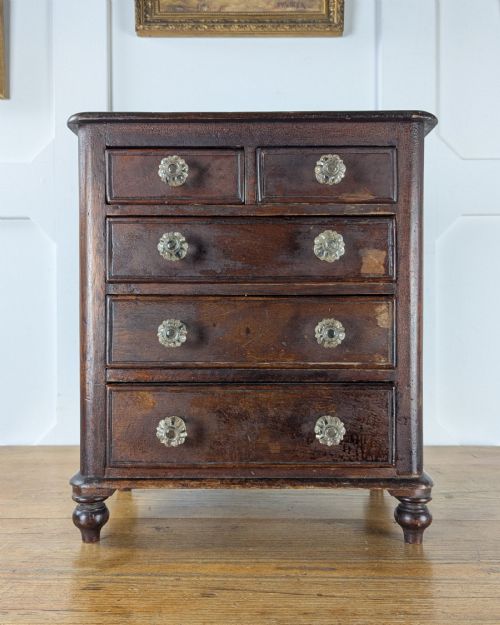
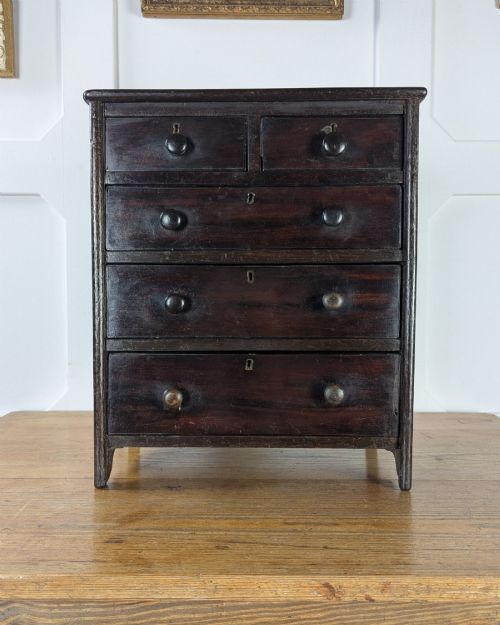
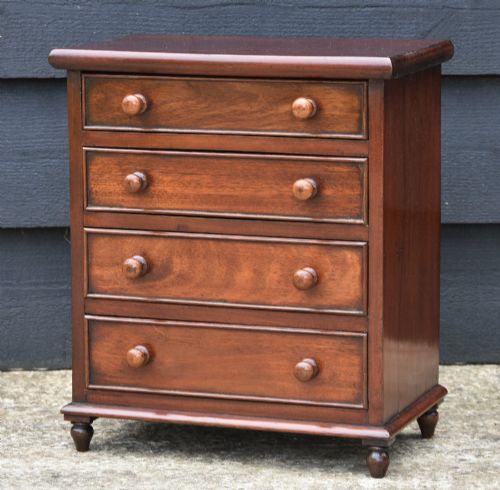

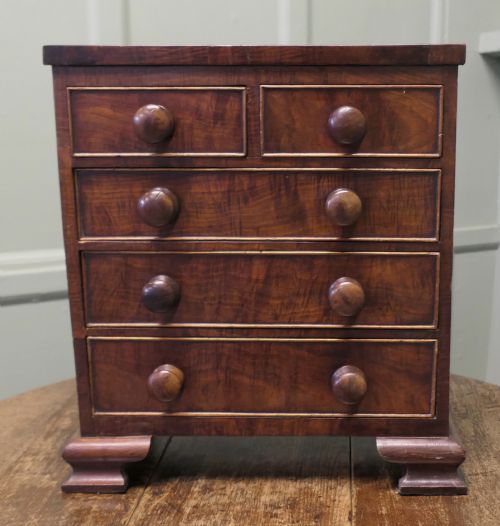

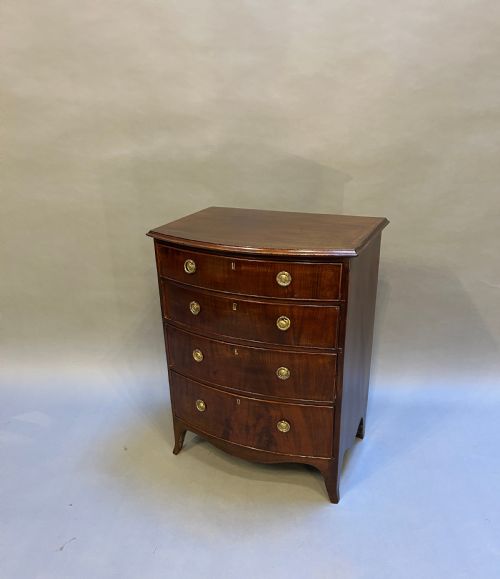


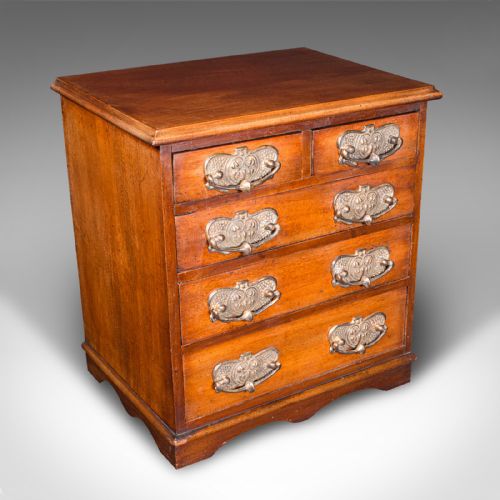

Mahogany Mini Chest
A mahogany mini chest is a small-scale piece of furniture offering multiple drawers for storage.
Mahogany Mini Chest
A mahogany mini chest brings standard cabinet forms down to a fraction of normal size, spanning periods from the eighteenth century through to the Edwardian era. The most common version met here is a miniature chest of drawers originating in the Georgian or Victorian periods.
Makers produced these smaller items as apprentice pieces, salesman samples, or desktop specimen cases for collectors. Alongside standard drawer configurations, variations include bowfront chests, fall front desks, tea caddies, and collectors cabinets.
The form exists to display cabinet-making skill or to serve functional desktop storage needs for jewellery and small items. Examples range from simple three-drawer boxes to detailed miniature chests on turned feet and campaign style cabinets.
How they were made
Cabinet-makers built these pieces using solid mahogany and mahogany veneers over secondary woods, often incorporating boxwood stringing or wood inlay for surface decoration. Drawer construction typically relied on hand-cut dovetail joints, reflecting full-scale furniture techniques of the eighteenth and nineteenth centuries.
Hardware played a functional and decorative role, featuring brass drop handles, keyplates, and escutcheons fixed to the drawer fronts. Turnings appeared on feet and column details, while interior surfaces were sometimes lined for storage of jewellery or specimens.
Listings feature mahogany mini chests across Georgian, Victorian, and Edwardian periods, utilising brass handles and wood inlay.
What varies in quality
The standard of a mahogany mini chest depends on the precision of the miniature joinery and the selection of timber figures. Superior examples show careful matching of mahogany grain across the drawer fronts and crisp execution of dovetails and mouldings.
Proportion and detail separate basic workshop items from finer creations. Pieces with original brass hardware, well-turned feet, and a developed surface patina demonstrate greater cabinet-making ambition.
The Mahogany Mini Chest Glossary
- Apprentice piece
- A small-scale furniture item made by a trainee to demonstrate proficiency to a guild or master. These objects display full cabinet-making techniques in miniature.
- Bowfront
- A curved convex front profile popular on Georgian and Regency chests. This shape requires advanced woodworking skill to fit drawers accurately.
- Specimen case
- A cabinet or chest designed to hold natural history samples, coins, or small collectables. They feature multiple shallow drawers.
- Dovetail
- An interlocking joint used in drawer construction. Hand-cut dovetails indicate traditional period craftsmanship.
- Patina
- The surface sheen and colour developed by wood over decades of handling and ageing. A desirable patina shows genuine age.
Mahogany Mini Chest: Frequently Asked Questions
How were apprentice pieces used?
Apprentice pieces were created by woodworkers learning their trade to prove their capability to master craftsmen.
Once completed, the miniature furniture often remained in workshops or passed into domestic use as decorative desktop storage.
How do I date a miniature chest?
Dating relies on observing construction methods, timber choices, handle styles, and overall stylistic period traits.
Georgian examples typically show straight lines or bowfronts with fine mahogany, while Victorian versions often feature turned feet, ogee mouldings, or campaign styling.
Where should I place one at home?
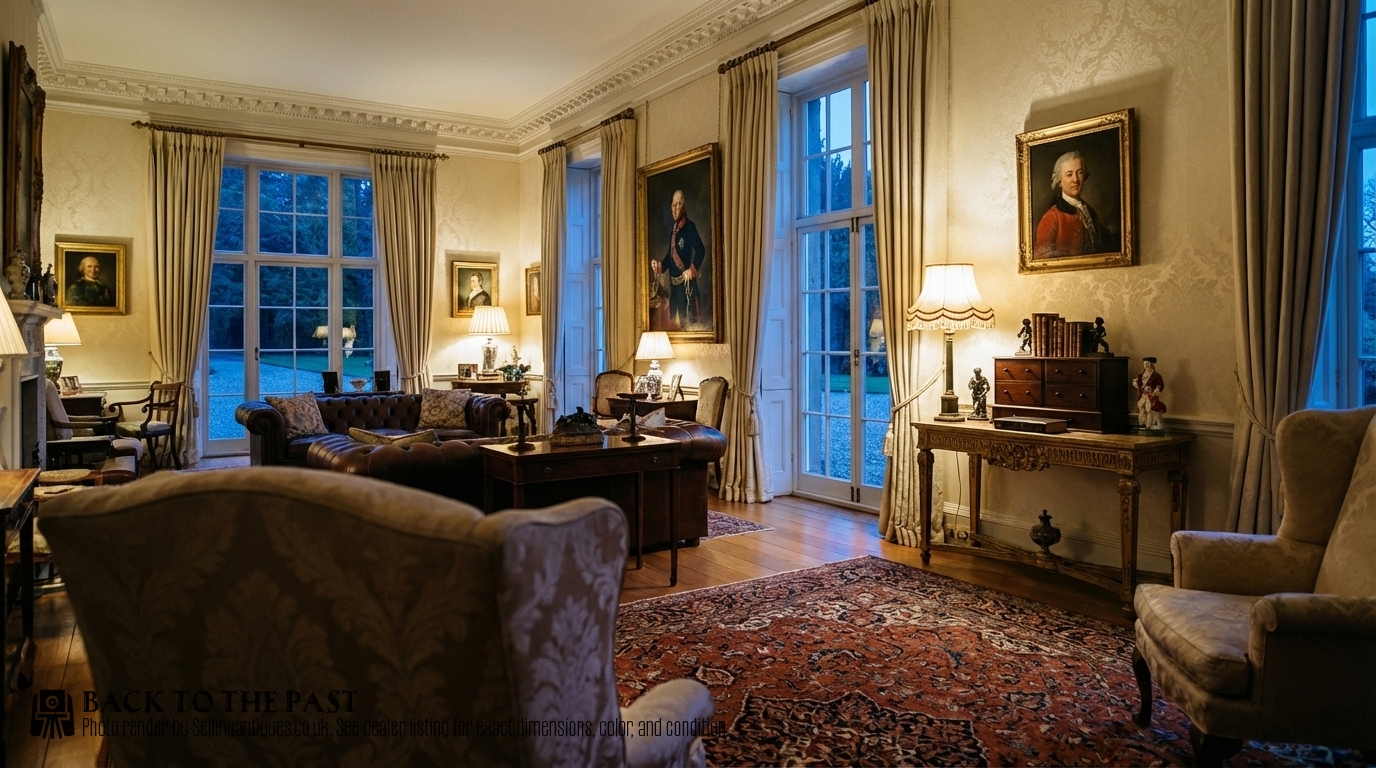
These compact chests suit placement on desks, side tables, or chests of drawers where space is limited.
They function well for holding small personal items such as jewellery, keys, or stationery while adding period character to a room.