


Mahogany Mantelpiece
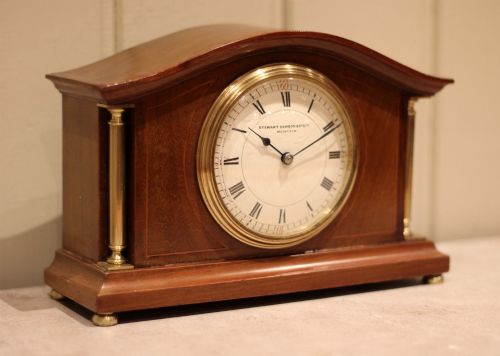
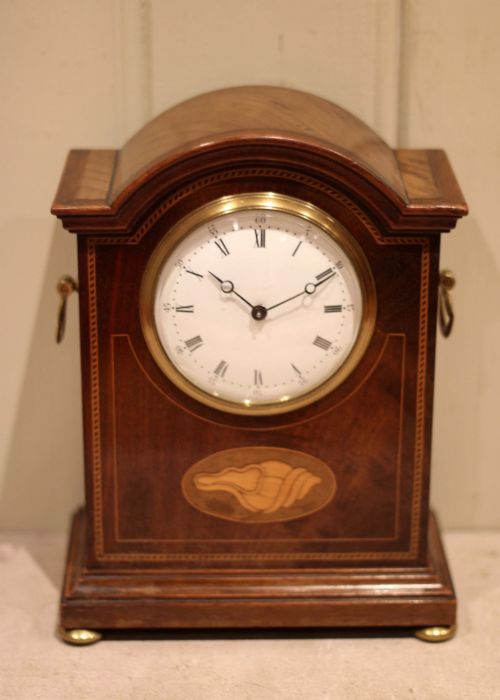
A mahogany mantelpiece brings rich timber grain and period presence to a room, whether through a carved fireplace surround or a precision clock.
Mahogany Mantelpiece
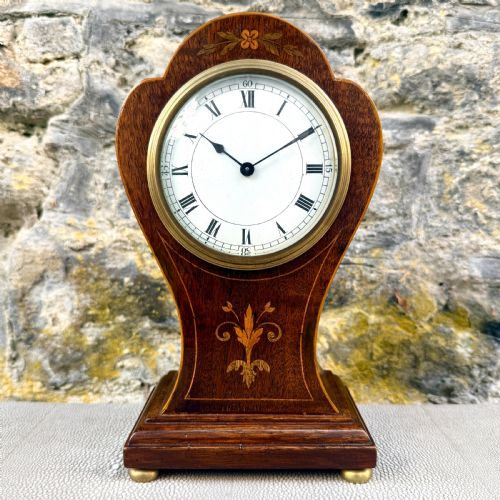
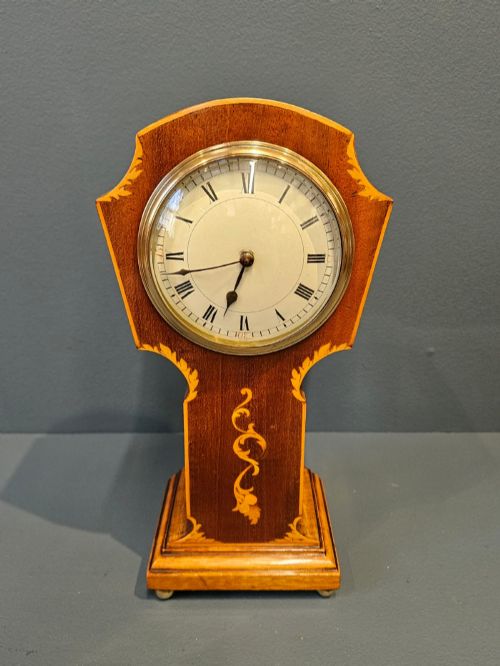
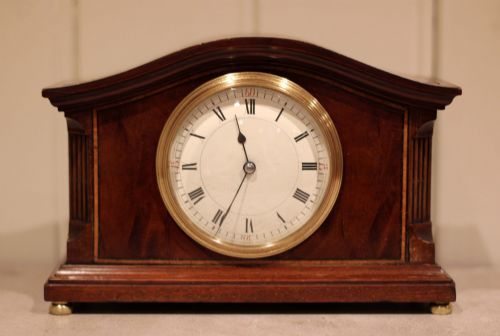
When searching for a mahogany mantelpiece, you encounter two distinct forms: architectural fireplace surrounds designed for the hearth and tabletop mantel clocks that anchor a room. The selections span compact Edwardian timepieces and substantial Victorian chimney pieces.
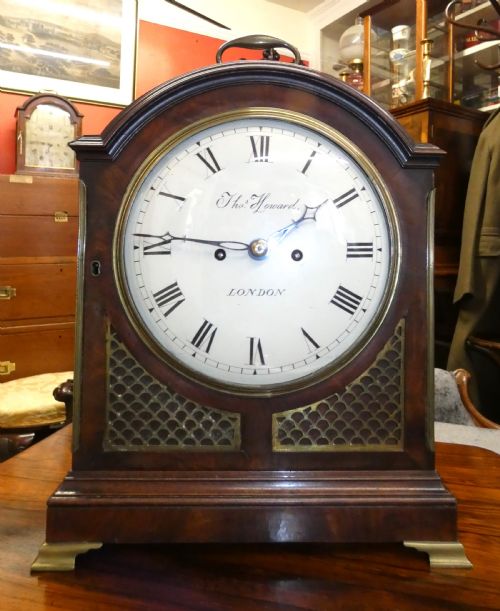
The objects originate from various periods including the Regency, Victorian, and Edwardian eras, reflecting the evolving domestic tastes of British interiors. Mantel clocks and bracket clocks dominate the listings alongside architectural surrounds.
Every piece utilises timber as its primary structure, often shaped into lancet tops, arched cases, or grand architectural surrounds with detailed carvings. These items served both practical timekeeping and decorative architectural roles in period homes.
How they were made
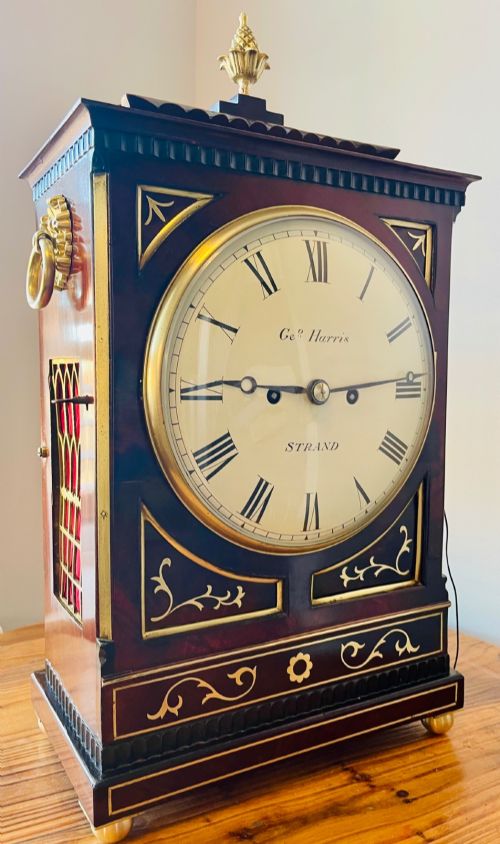
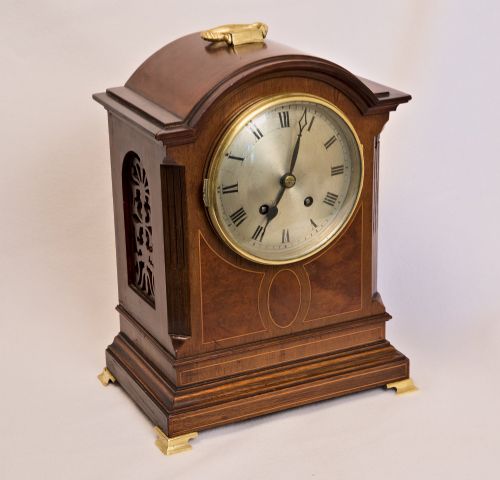
Cabinetmakers constructed these pieces using solid mahogany and mahogany veneers, frequently incorporating satinwood, boxwood, and ebony stringing for contrast and geometric inlay. Brass and enamel details appear alongside silvered dials in the clock examples.
Movements within the clocks rely on fusee mechanisms and striking gear, housed securely within precision-joined wooden cases. Architectural surrounds demonstrate hand-carving techniques applied to large timbers to achieve structured classical profiles.
The object forms span mantel clocks, bracket clocks, timepieces, fireplace surrounds, and overmantel mirrors.
What varies in quality
The refinement of the cabinetwork and the crispness of any inlay or hand-carving dictate the standing of an individual piece. Finer examples display meticulous matching of wood grain and delicate stringing rather than heavy or plain surfaces.
Mechanical integrity and signed movements by known makers elevate the status of the clocks within this category. The depth of the mahogany patination and the original state of brass fittings further distinguish standard items from exceptional ones.
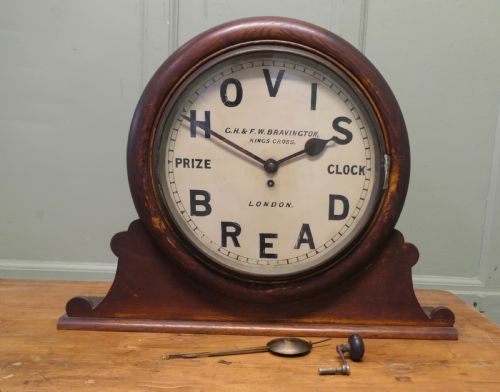
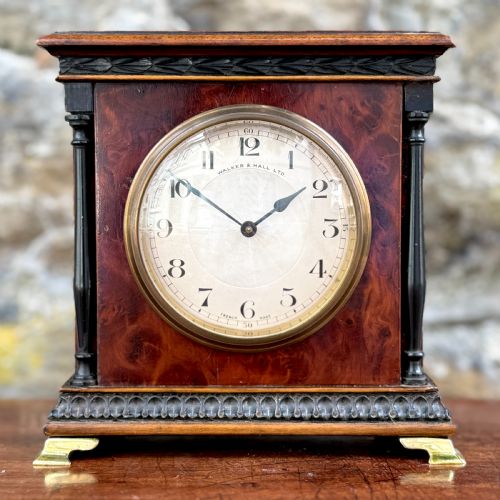
G.H & F.W Bravington London·Walker and Hall·L Vick of Stroud·W Burton·Perigal of London·Winterhalder and Hofmeier·Maple of London·Ganthony of London·Adams of Lombard Street·Leith of London·Christie of Perth·Fatton Eleve de Breguet London
The Mahogany Mantelpiece Glossary
- Fusee
- A conical pulley used in clockmaking to maintain even power from the mainspring as it unwinds. This mechanism ensures accurate timekeeping across the duration of the wind.
- Bracket clock
- A portable clock originally designed to sit on a wall bracket or table. These spring-driven pieces often feature fine wooden cases with carrying handles.
- Overmantel mirror
- A large looking glass designed to hang directly above a mantelpiece or fireplace. They frequently mirror the architectural style of the surrounding timber frame.
- Chimneypiece
- An elaborate architectural frame surrounding a fireplace opening. These installations include significant wooden surrounds and mantel shelves.
- Lancet top
- A clock case shaped with a pointed arch resembling a Gothic lancet window. This architectural silhouette gained popularity during the Regency and Edwardian periods.
Mahogany Mantelpiece: Frequently Asked Questions
How do I identify an Edwardian mahogany clock?
Edwardian clocks often feature inlaid satinwood or boxwood details contrasting against the dark mahogany body. The styling leans towards lighter domestic proportions compared to heavier Victorian designs.
Look for labels or signatures on the dial or movement backplate to confirm the period of production. Lancet tops and arched cases are common silhouettes from this era.
What is a fusee movement?
A fusee movement uses a conical gear attached to a cord or chain to regulate the pull of the mainspring. This clever engineering compensates for the weakening spring tension as the clock runs down.
Clocks with fusee movements generally offer superior timekeeping reliability. You will often find them in finer Regency and Victorian bracket clocks.
How were fireplace surrounds used?
Architectural surrounds were installed directly against chimney breasts to frame the fireplace opening and provide a display shelf above. They anchored the focal point of a formal room.
Hand-carved wooden details and heavy mahogany structures gave these surrounds a commanding presence. They reflected the architectural fashion of the Victorian and Edwardian periods.
Are bracket clocks meant to be moved?
Bracket clocks earned their name from the wall brackets they originally rested upon, though many were placed directly on tables or mantelpieces. Their portable nature allowed owners to transport them between rooms.
Sturdy brass carrying handles on top of the wooden cases facilitated this movement. Securing the pendulum is necessary before transporting any mechanical clock.