
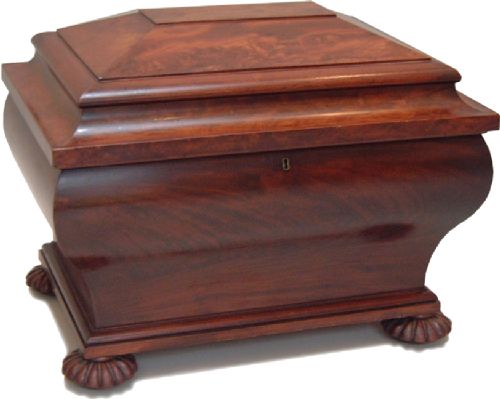
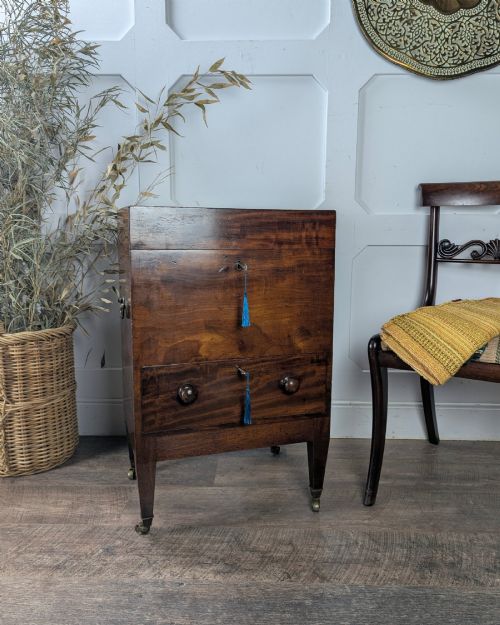
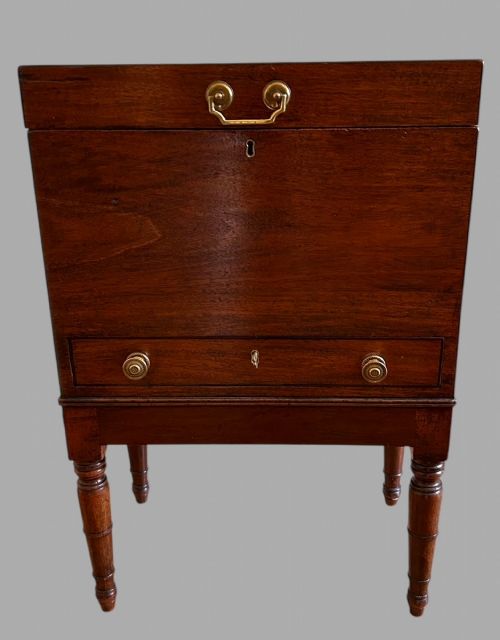
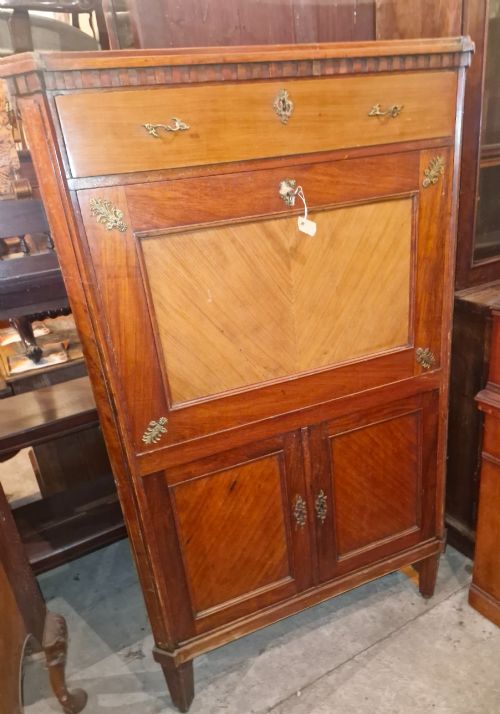
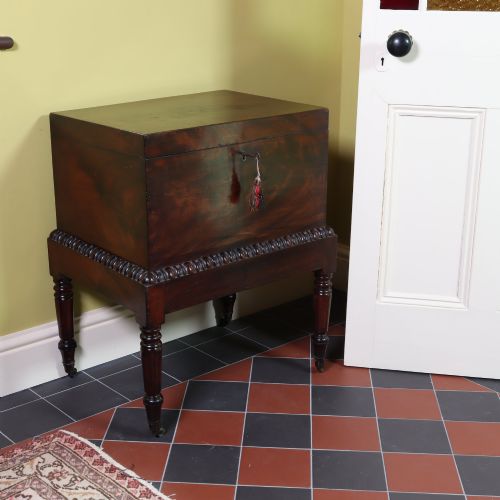


Mahogany Liquor Chest
Mahogany liquor chest describes robust wooden storage boxes designed for bottles and decanters during the Georgian and Regency eras.

Mahogany Liquor Chest
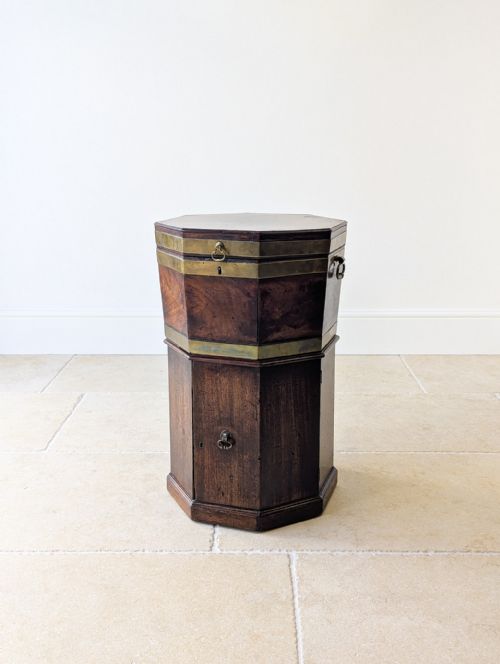
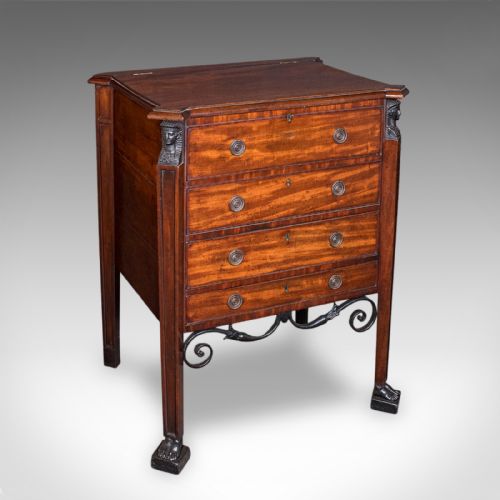
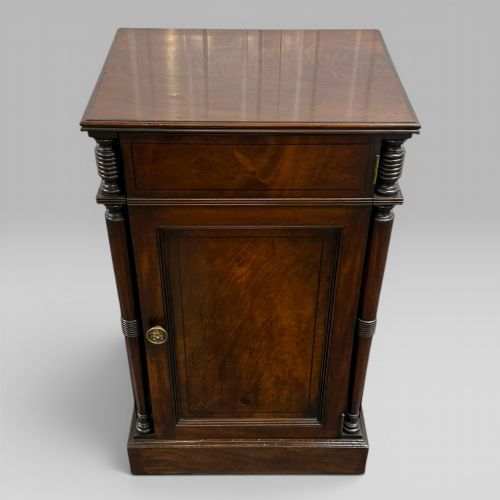
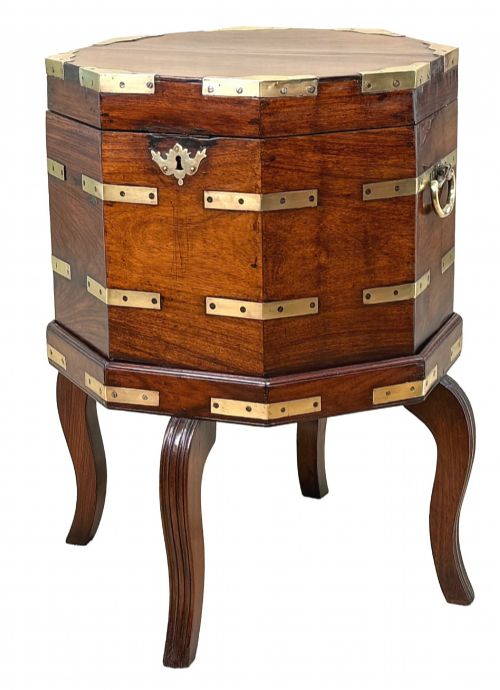
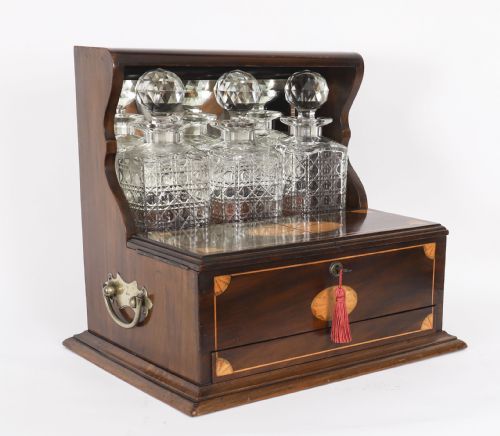
A mahogany liquor chest represents a distinct category of antique furniture intended for holding wine and spirits securely. When exploring mahogany liquor chest examples, buyers encounter cellarettes, wine coolers, decanter boxes, and tantalus sets spanning the eighteenth and nineteenth centuries.
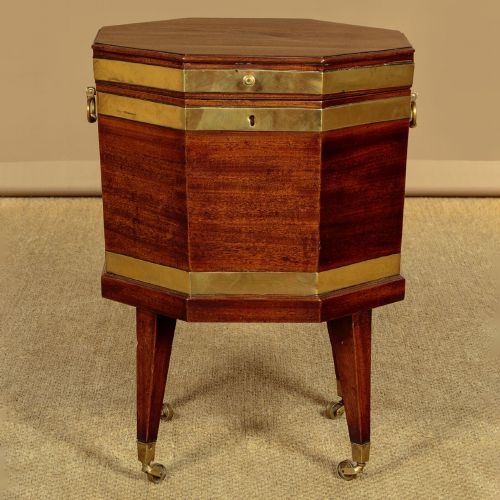
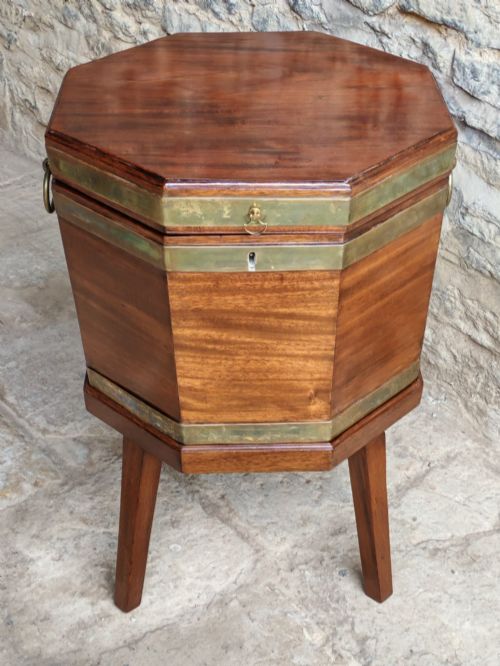
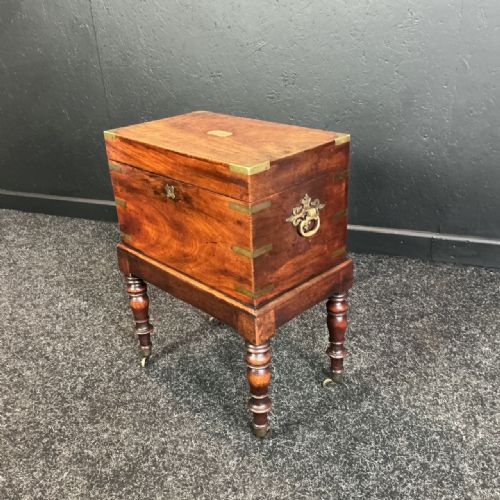
The most common formats on this page include octagonal, sarcophagus, and box cellarettes originating from the Georgian and Regency periods. These pieces range from simple tabletop wine boxes to large floor-standing pedestals lined for bottle storage.
Makers utilised various regional variations, producing British designs alongside Anglo-Indian padouk pieces and Irish hunting day cellarettes. Architectural styles stretch from George III through to Edwardian interpretations and later revivals.
Materials and construction methods
Cabinet makers constructed these pieces primarily from solid mahogany and flame mahogany, often incorporating contrasting boxwood inlay and satinwood details. Structural elements frequently feature robust brass bindings, metal handles, and ormolu mounts.
Internal layouts required precise carpentry to accommodate fragile glass decanters and heavy wine bottles safely. Artisans fitted interiors with specialised partitions, lead linings, and sometimes complex locking mechanisms to protect valuable contents.
Some Victorian chests included secret compartments specifically designed to hide private spirit bottles from prying guests.
Determinants of craftsmanship and standard
The choice of timber heavily influences the distinction between standard items and exceptional pieces, with striking flame mahogany grain and meticulous satinwood or boxwood inlay commanding greater attention. The precision of the brass binding and the integration of quality ormolu mounts reveal the maker's original investment in materials.
Internal sophistication also separates the range, where intact original glass decanters, custom bottle dividers, and sophisticated locking systems elevate a piece. Attribution to known workshops adds a layer of historical pedigree that distinguishes standard vernacular boxes from masterworks.
Gillows·Gillingtons·Freemans of Norwich
The Mahogany Liquor Chest Glossary
- Cellarette
- A lockable container used for storing wine and spirits within dining rooms before bottles were kept on the table. They frequently sit on low stands or incorporate internal dividers.
- Tantalus
- A locked wooden frame displaying decanters with their stoppers secured, preventing guests from pouring drinks without a key. They gained popularity during the nineteenth century.
- Sarcophagus
- A monumental chest shape featuring a tapered body and flat lid, heavily favoured during the Regency period for large wine coolers. This architectural form mimics ancient stone tombs.
- Padouk
- A dense tropical timber resembling mahogany, utilised in Anglo-Indian furniture production. It offers a rich reddish hue and exceptional durability.
- Ormolu
- Gilded bronze mounts applied to furniture for decorative effect during the Georgian era. These metal ornaments enhance the visual rhythm of the piece.
Mahogany Liquor Chest: Frequently Asked Questions
What is a mahogany liquor chest?
A mahogany liquor chest is a historic storage box designed to hold wine bottles, spirits, and decanters safely in a dining room.
These pieces range from small tabletop boxes to large floor-standing cellarettes featuring fitted internal compartments.
How were cellarettes used historically?
Servants kept wine locked inside these chests during meals to control consumption and protect expensive vintages.
The containers often featured lead linings so ice could be added to chill the bottles before serving.
How do I identify a Regency period piece?
Regency chests frequently exhibit architectural sarcophagus forms, bold mahogany grains, and classical brass paw feet or ring handles.
They reflect a shift toward heavier, more monumental furniture designs influenced by antiquity.
Where should I place a liquor chest at home?
These chests work well as standalone side tables in a living room, study, or traditional dining space.
Their sturdy flat tops allow them to function as display surfaces for modern glassware or decorative items.