
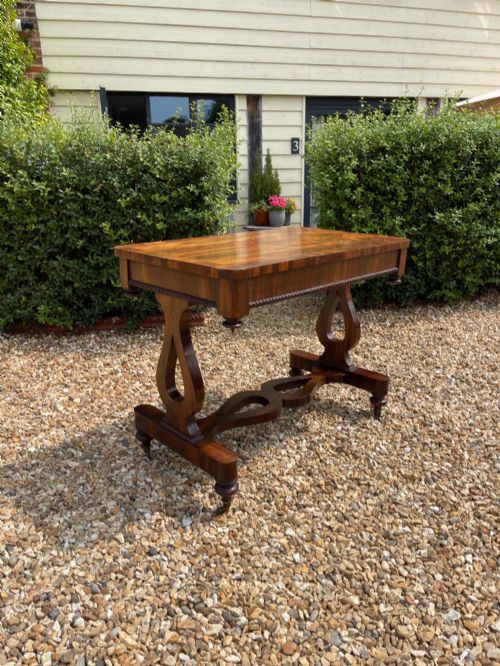


Mahogany Library Side Table
A mahogany library side table brings architectural timber and practical writing surfaces into a room, offering sturdy elegance for daily use.
Mahogany Library Side Table
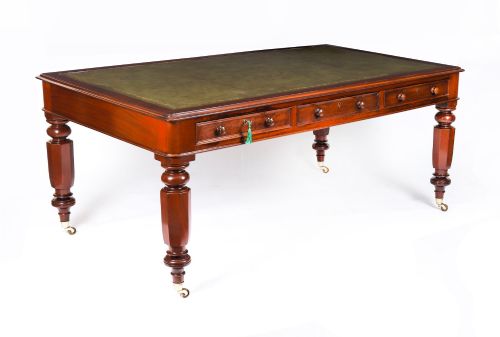
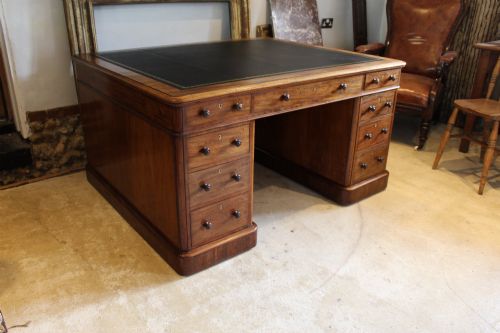
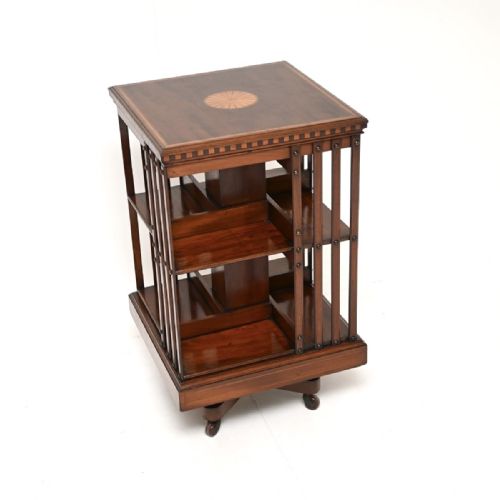
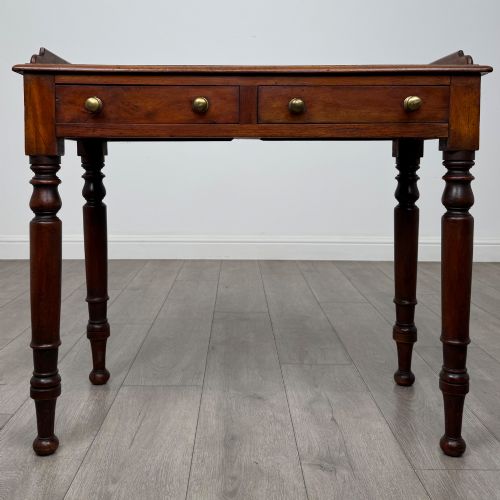
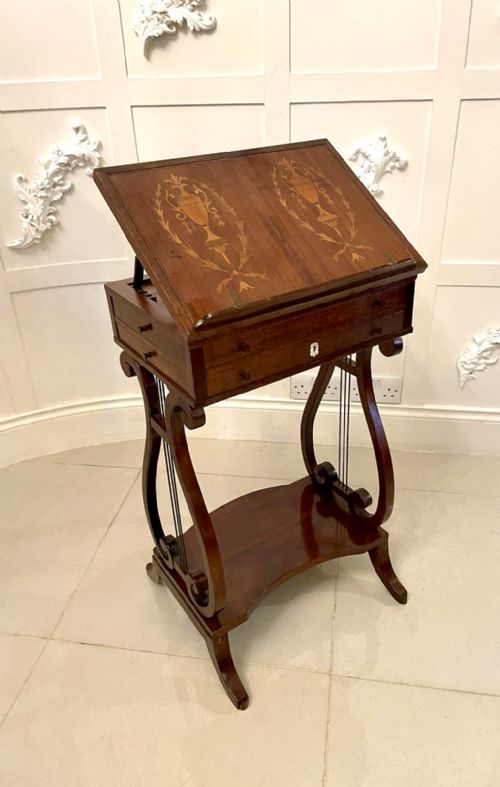
When you search for a mahogany library side table, you encounter workspace furniture designed for study and reference in nineteenth-century domestic interiors. These pieces range from compact writing tables and sofa tables to double-sided partners desks and revolving bookcases.
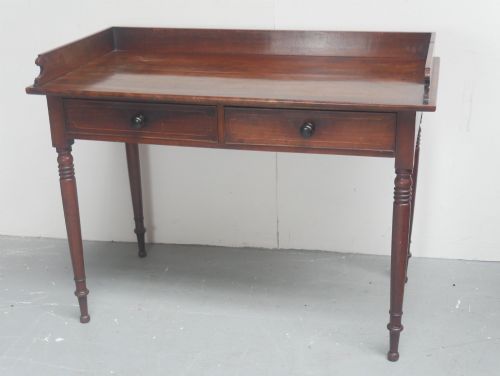
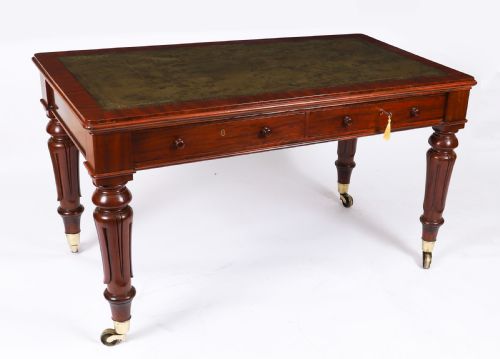
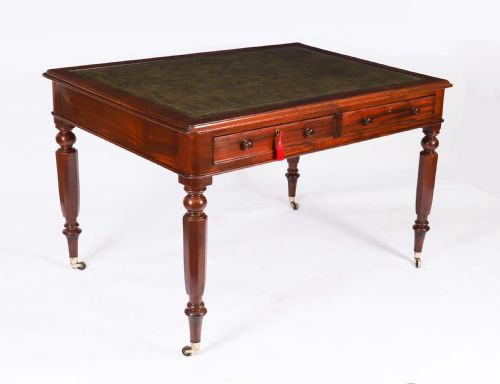
The version you most frequently meet on this page belongs to the Victorian and Regency periods, constructed with rectangular tops and functional drawers. Many examples incorporate leather inserts to provide a durable writing surface.
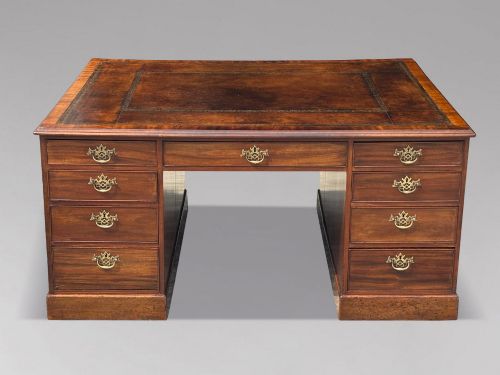
Makers adapted these forms for different spaces, producing pedestal desks for large studies and smaller reading tables or drop-leaf sofa tables for sitting rooms. The proportions remain grounded and practical, intended to anchor a room rather than crowd it.
Materials and construction
Cabinetmakers utilised solid timber and veneers, selecting rich flame mahogany and plain mahogany for structural durability and visual depth. Secondary woods provided internal framing for drawers, while rosewood and satinwood appeared as contrasting crossbanding or stringing.
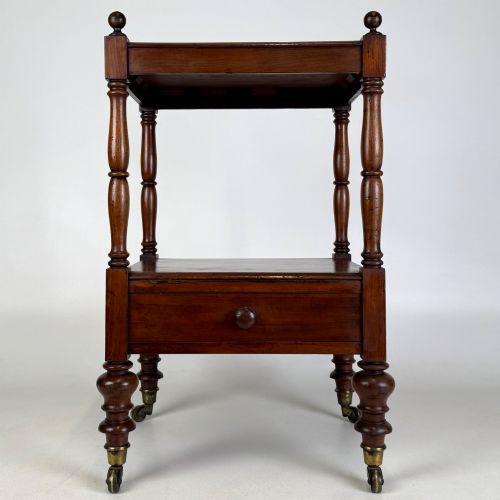
Metal components served both structural and decorative roles, with brass castors allowing heavy tables to move across floorboards and ormolu mounts adding formal detail. Leather inserts, often tooled with gold, were glued directly into recessed wooden top sections to create smooth writing surfaces.
Some nineteenth-century tables include hidden compartments designed to keep private correspondence safe from wandering eyes.
What separates the best pieces
The depth of grain figure in the timber dictates much of the visual success, with highly figured flame mahogany demanding superior selection from the cabinetmaker. Subtlety in inlay, such as fine satinwood banding or precise brass stringing, separates standard production from finer workshop output.
Structural integrity reveals itself in the movement of drawers and the seamless joining of drop leaves or pedestals. Pieces that retain original brass hardware and well-preserved tooled leather tops maintain a greater degree of historical integrity.
Charles Andrea Nosotti·Jean-Joseph Chapuis
The Mahogany Library Side Table Glossary
- Flame mahogany
- A veneer cut from the fork of the mahogany tree to produce a distinctive, flame-like grain pattern. This timber was prized for principal surfaces on drawers and table tops.
- Partners desk
- A large double-sided desk designed for two people to work opposite one another, typically featuring drawers on both longitudinal faces. These tables often served in libraries and administrative offices.
- Sofa table
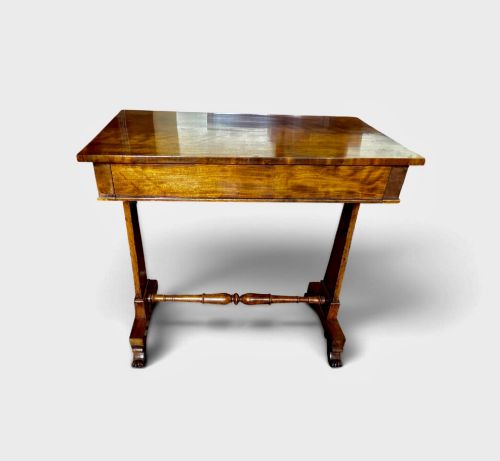
- A rectangular occasional table with drop leaves on either short end, traditionally placed in front of or beside a sofa. They frequently incorporate paired pedestal supports and stretcher rails.
- Ormolu
- Gilded bronze used for decorative mounts and furniture fittings during the eighteenth and nineteenth centuries. It adds metallic contrast to dark timber surfaces.
- Drum table
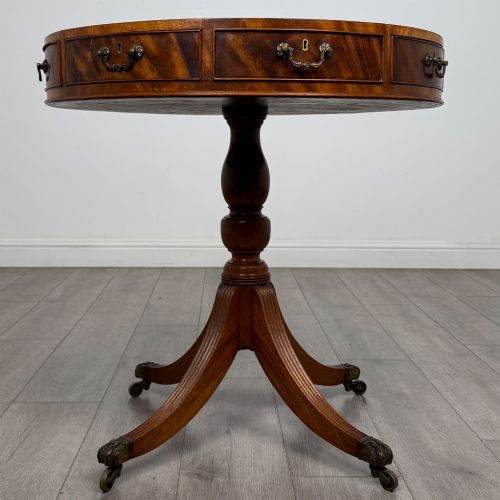
- A circular library table containing a frieze of drawers around the entire circumference, often revolving on a central pillar and tripod base.
Mahogany Library Side Table: Frequently Asked Questions
Can I use a library table as a desk?
These pieces were built precisely for writing and administrative work, making them well-suited for modern study use. Their sturdy frames and spacious tops accommodate daily writing and computing tasks.
Many examples feature built-in drawers which provide convenient storage for stationery and documents. Their double-sided or freestanding nature also allows them to sit centrally within a room rather than against a wall.
How do I identify a Regency period table?
Regency pieces often display classical architectural influences, drawing inspiration from ancient Roman and Greek design. Look for restrained proportions, sabre legs, and brass inlay.
Timber choice during this era tended towards dark, dense mahogany, sometimes accented with ebonised details. Ormolu mounts and brass paw castors also appear frequently on tables from this timeframe.
What is the difference between a side table and a library table?
Library tables were traditionally designed as substantial, freestanding pieces intended for the centre of a room or study. They frequently include functional drawers and leather writing surfaces.
Side tables generally occupied a more peripheral position against walls or hallways and often lacked the depth required for extensive writing. However, nineteenth-century cabinetmakers blurred these distinctions, creating versatile pieces that functioned in both capacities.
How should I care for a leather table top?
Leather surfaces benefit from occasional gentle cleaning with a slightly damp cloth followed by a neutral leather cream. Avoid harsh chemical cleaners that can strip the original tooling and dry out the hide.
Keeping the table away from direct sunlight and heat sources prevents the leather from cracking and fading. Preserving the surface maintains the contrast between the dark timber frame and the central writing area.