
Edwardian Rotating Table
An edwardian rotating table delivers functional elegance, turning smoothly to keep books, games and dining essentials within arm's reach.
Edwardian Rotating Table
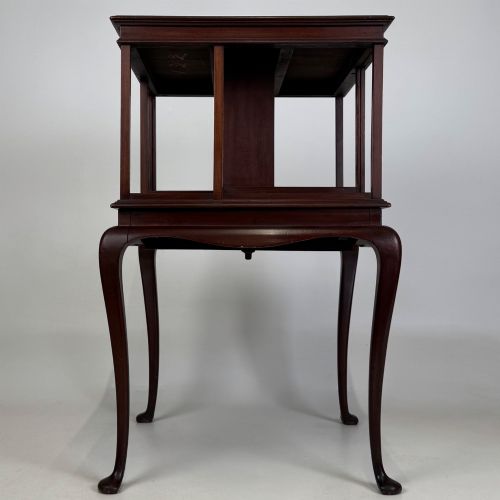
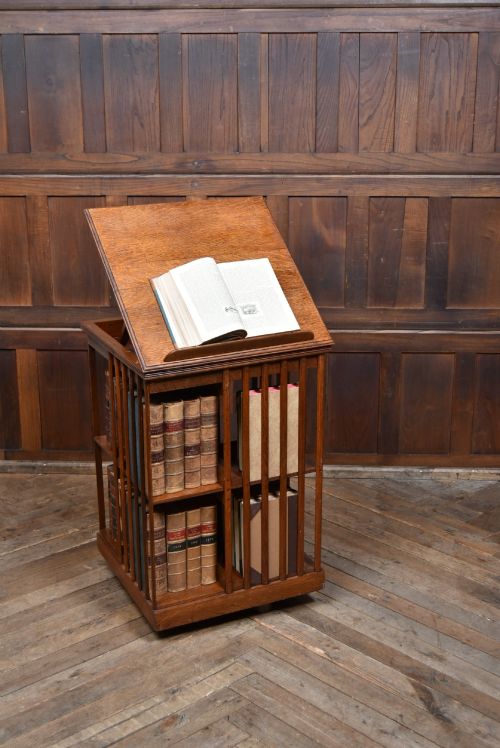
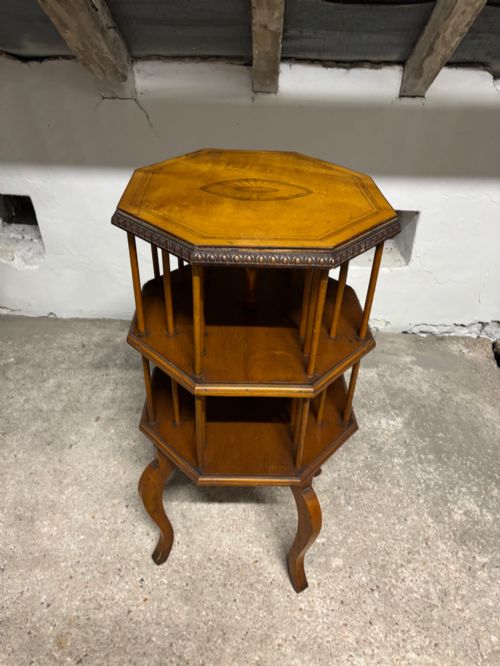
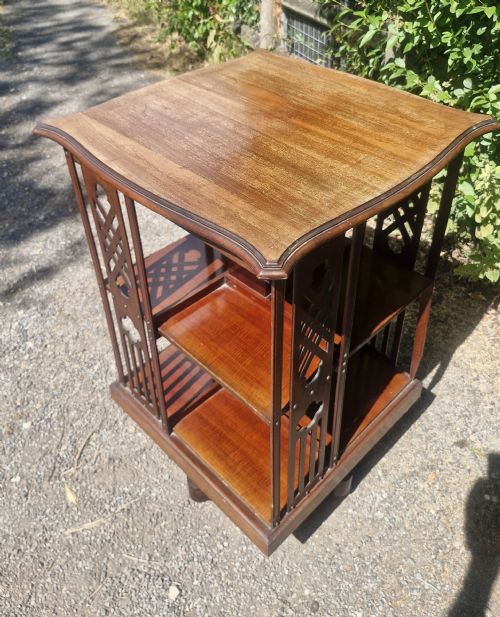
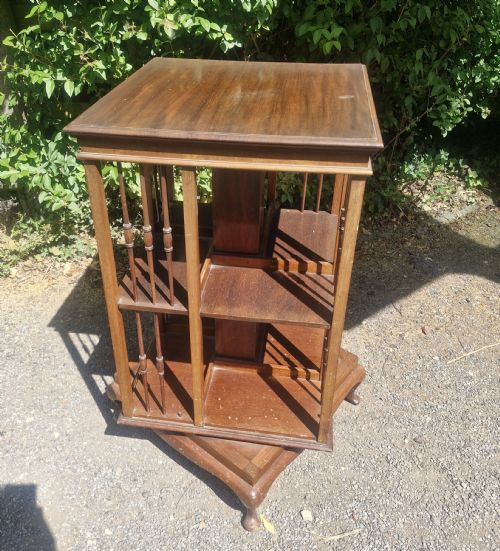
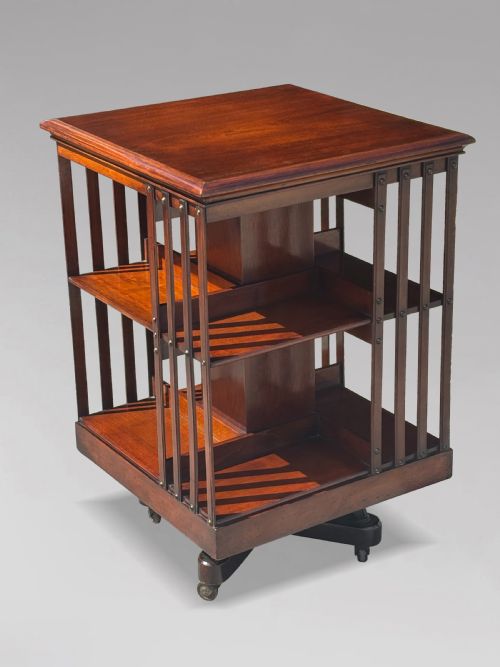
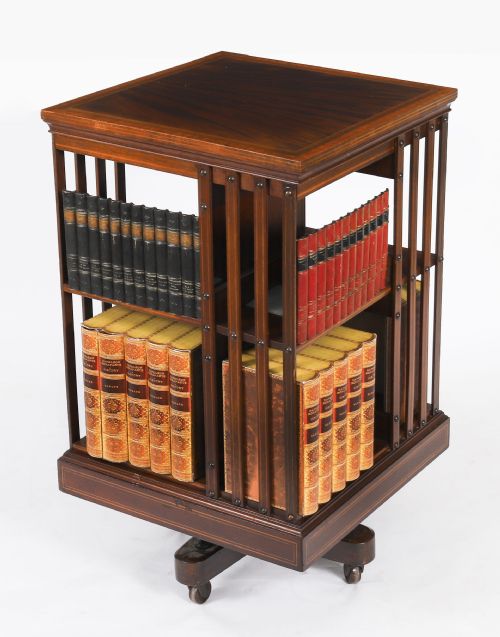
When searching for an edwardian rotating table, buyers encounter a selection dominated by revolving bookcases alongside card tables, lazy susans and desk accessories. These pieces span the Edwardian period, late Victorian era and early twentieth century, reflecting the period taste for clever domestic engineering.
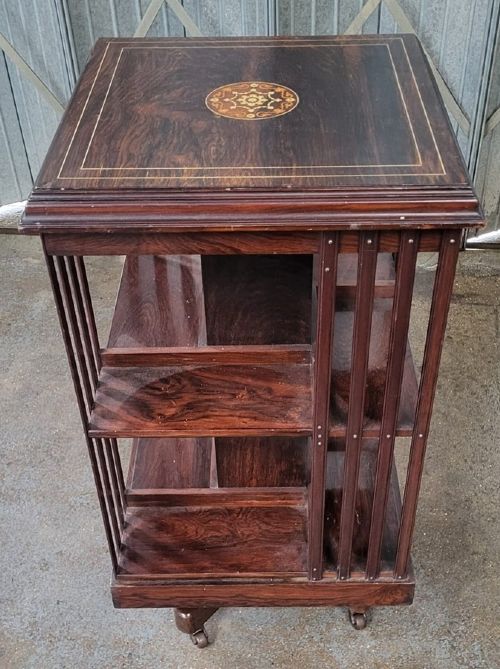
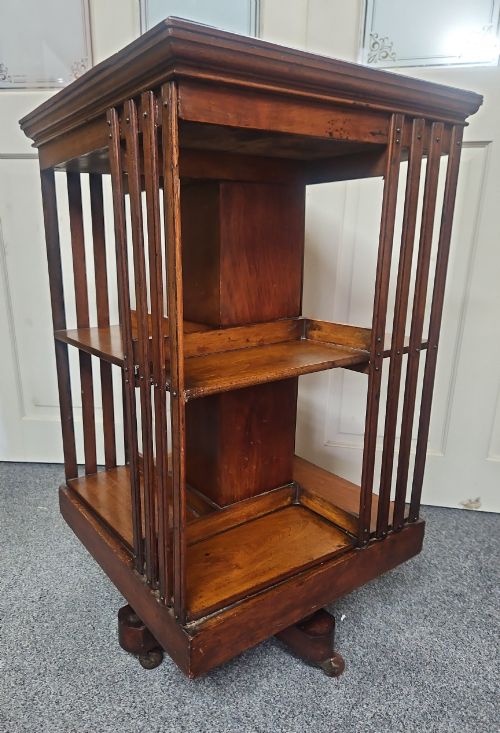
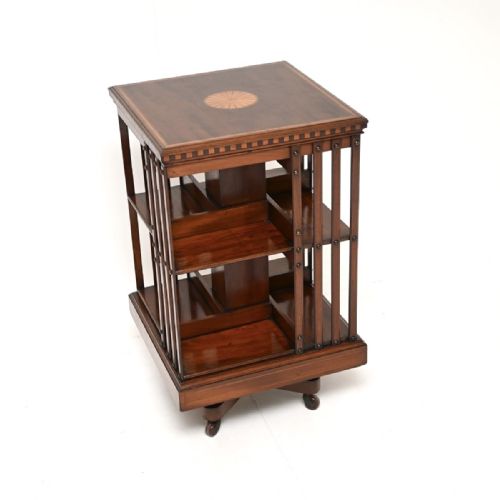
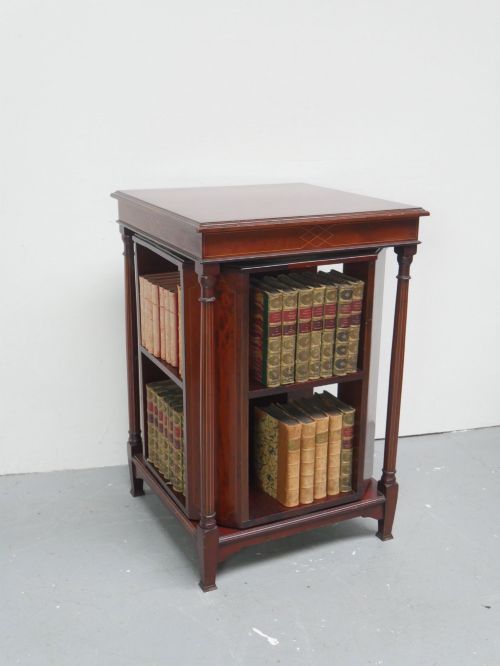
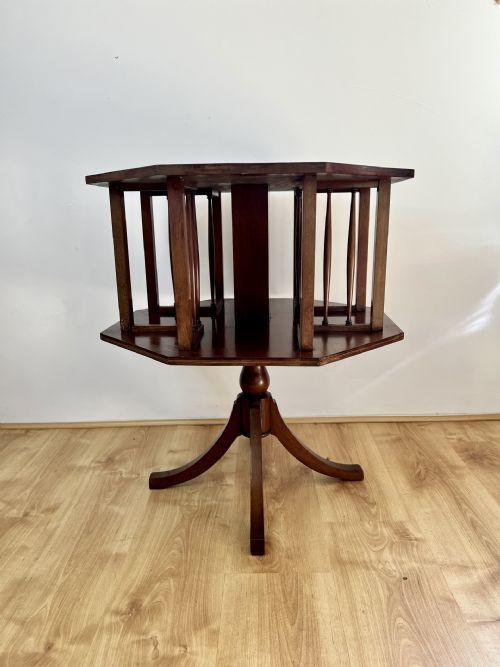
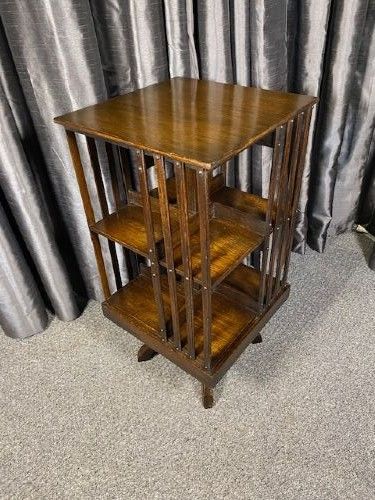
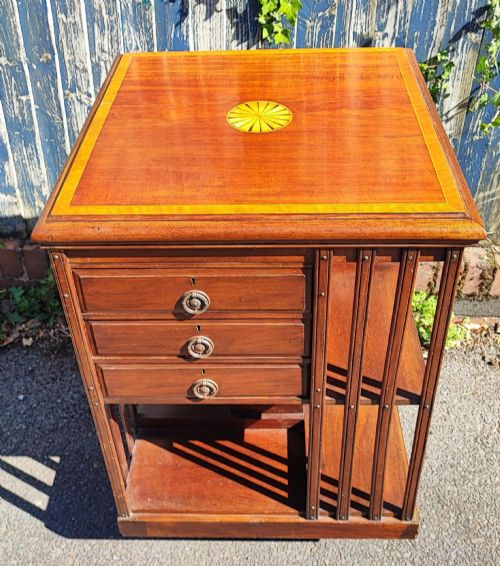
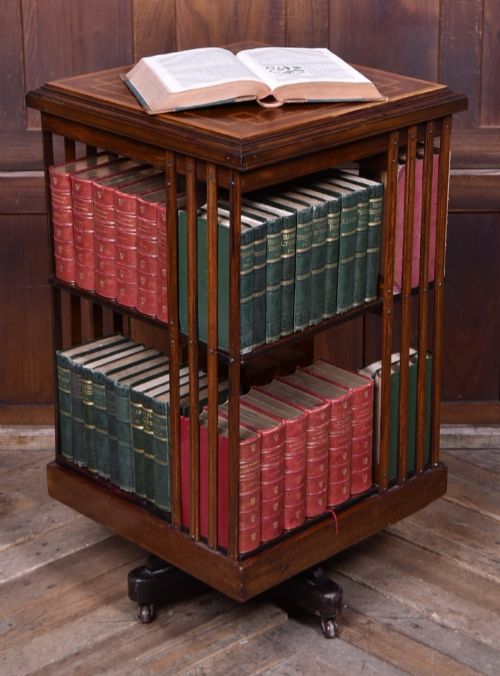
The most common form on this page is the freestanding revolving bookcase in mahogany, often inlaid with satinwood or rosewood. Tabletop versions and revolving book mills also appear frequently, alongside occasional oak examples influenced by the Arts and Crafts movement or Art Nouveau styling.
Originating in English workshops, these rotating pieces served libraries, studies and drawing rooms where quick access to volumes or serving items was desired. The turning mechanism allows multiple users to browse a collection from a single seated position without disturbing the surrounding room layout.
Distinguishing quality variations
The standard of timber selection and complexity of inlay largely separate standard examples from finer commissions. Pieces featuring figured flame mahogany and crisp satinwood crossbanding sit at the higher end of the range compared to plain domestic timbers.
Engineering of the internal revolving pivot determines mechanical longevity and ease of motion. Heavier cast brass mechanisms provide smoother, more durable rotation than simpler iron alternatives, while tight joinery ensures the tiers remain stable during use.
Listings feature mahogany predominantly, alongside oak, walnut, satinwood, and brass hardware components.
The Edwardian Rotating Table Glossary
- Revolving bookcase
- A freestanding or tabletop tier of shelves mounted on a concealed central pivot allowing it to spin. This design lets users access books from all four sides.
- Satinwood inlay
- A decorative technique inserting contrasting light yellow timber into darker woods like mahogany. It creates intricate geometric or floral borders along shelf edges.
- Lazy Susan
- A rotating tray placed on a table or serving surface to pass dishes easily. Edwardian examples often feature turned mahogany or polished oak.
- Envelope card table
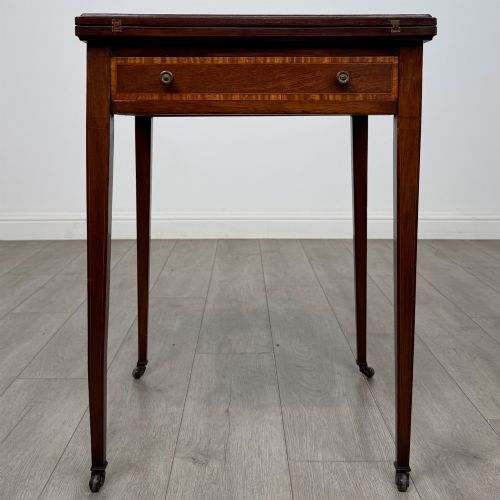
- A folding table with a pivoting top that opens like an envelope to reveal a baize-lined playing surface. They frequently incorporate small corner drawers for counters.
- Sheraton Revival
- A late nineteenth and early twentieth century style emulating the neoclassical designs of Thomas Sheraton. Pieces typically feature delicate proportions, tapered legs and fine inlay.
Edwardian Rotating Table: Frequently Asked Questions
How do these tables rotate?
Rotation relies on a concealed internal bearing mechanism or central iron pivot housed between the base and the upper tiers. This allows the heavy wooden shelves to spin freely with minimal friction.
Most mechanisms use ball bearings or a steel spindle to distribute weight evenly and prevent the structure from wobbling during use.
Where were these pieces used?
These rotating items populated Edwardian libraries, studies, drawing rooms and dining spaces where convenience and space-saving were valued. Bookcases sat beside armchairs for quick reading access, while lazy susans served family dining.
Tabletop versions accommodated smaller writing desks or side tables, keeping reference volumes or writing materials organised within easy reach.
How do I care for mahogany wood?
Regular dusting with a soft, dry cloth prevents particle buildup on polished mahogany surfaces. Avoid placing wooden furniture in direct sunlight or near heat sources to prevent the timber from drying and splitting.
Applying a traditional beeswax polish occasionally nourishes the grain and maintains the natural lustre without building up heavy synthetic residue.
Are these pieces purely decorative?
These items were designed for daily domestic utility, engineered to hold heavy volumes, card games or serving dishes. Their robust construction ensures they remain fully functional for modern use.
Collectors and homeowners utilise them today as practical storage solutions that add period character to contemporary living spaces.