
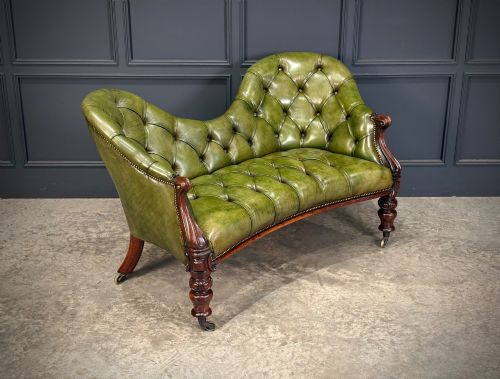


Mahogany Leather Settee
A mahogany leather settee brings undeniable gravitas to a room, offering substantial timber framing paired with durable, supple hide upholstery.
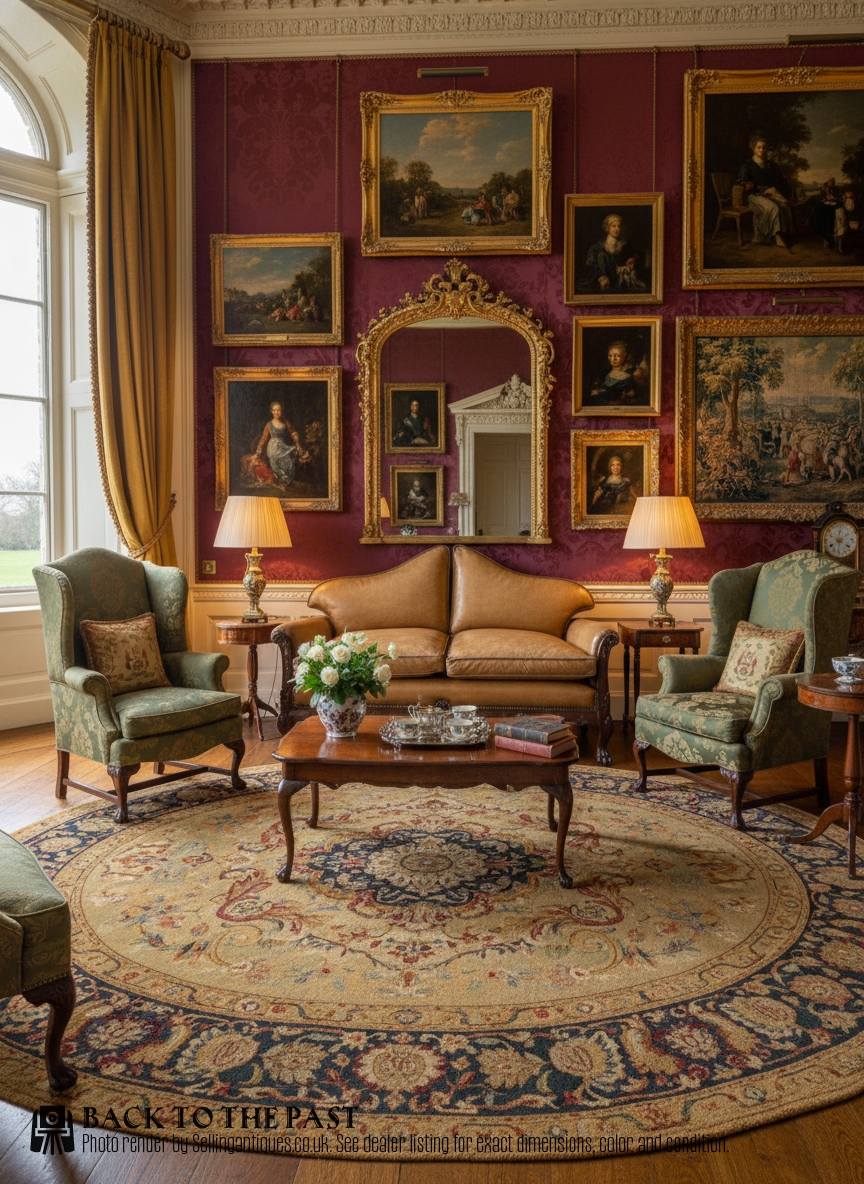
Mahogany Leather Settee
When searching for a mahogany leather settee, buyers encounter substantial seating pieces dating primarily from the nineteenth century, including Regency, Victorian, and William IV eras. These pieces typically combine rich mahogany frames with various tones of brown or green leather upholstery, spanning forms such as Chesterfields, double-ended couches, and scroll-end settees.
The version most commonly met on this page is the nineteenth-century Chesterfield or double-ended couch, often featuring button-backed or hand-dyed leather upholstery. Frames range from carved Regency designs with herms statues to understated Victorian and English Country House styles constructed from solid mahogany and hardwood.
Object designations across the listings include sofas, settees, lounge suites, and chair-back settees, reflecting the diverse terminology used for these large seating arrangements. Originating largely within British cabinet-making traditions, these settees serve as both functional furniture and historical anchor points in traditional interiors.
What varies in quality
The distinction between a standard piece and a superior example lies in the depth of timber carving and the architectural ambition of the mahogany frame. Pieces bearing attribution to notable makers or exhibiting intricate details like carved herms statues represent the higher tier of craftsmanship.
Leather quality and finishing also dictate standard, with hand-dyed surfaces and deep buttoning showing greater artisanal engagement than uniform modern replacements. The integrity of the original wood grain and the crispness of nineteenth-century joinery separate ordinary utilitarian seating from exceptional examples.
Some nineteenth-century settees doubled as metamorphic beds, proving that Victorian innovation occasionally favoured a quick afternoon nap over formal posture.
Hampton & Sons of Pall Mall·Maple and Co·Gillows of Lancaster
The Mahogany Leather Settee Glossary
- Chesterfield
- A large upholstered sofa traditionally characterised by deep buttoning and rolled arms of the same height. This form remains a staple of nineteenth-century seating design.
- Double-ended couch
- A couch style featuring matching scrolled or raised ends, allowing a user to recline comfortably from either direction. These pieces frequently showcase visible mahogany frames.
- Herms
- A carved sculptural pillar tapering toward the base, often incorporated into the arm supports or framing of Regency settees. They add a neoclassical architectural element to the woodwork.
- Button-back
- An upholstery method where depressions are formed in the leather by pulling tufting threads through to the frame, secured with deep folds. This technique provides both structural tension and distinctive visual texture.
Mahogany Leather Settee: Frequently Asked Questions
How do I date a mahogany leather settee?
Dating relies on observing stylistic markers such as Regency carved scroll arms, Victorian buttoned upholstery, or William IV architectural proportions. Timber choice and joinery techniques further clarify the manufacturing period.
Comparing existing examples against documented pieces from firms like Gillows or Maple and Co helps narrow the timeframe. Examining the wear patterns on the mahogany and the ageing of the leather provides additional context.
Are these settees comfortable for daily use?
Nineteenth-century settees were built with substantial internal springing and padding designed for formal or domestic lounging. Their ergonomic design reflects the seating preferences of the Victorian and Regency periods.
While some restored pieces feature renewed padding, the firmness often differs from modern foam furniture. They offer robust support suitable for everyday living spaces.
How should I care for antique leather?
Antique leather benefits from regular dusting and the application of appropriate conservation leather balms to prevent drying. Avoiding direct sunlight and excessive heat preserves the hand-dyed finish.
Gentle cleaning maintains the natural patina accumulated over the nineteenth century. Harsh chemical detergents should be avoided entirely to protect the hide.