
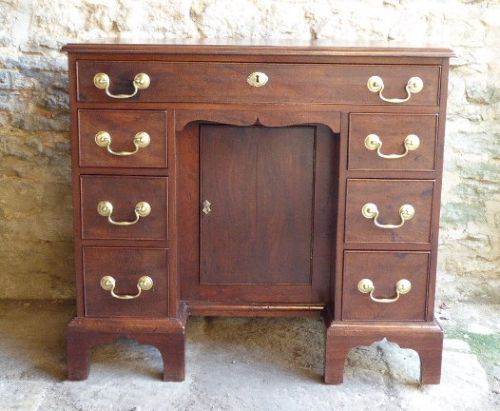
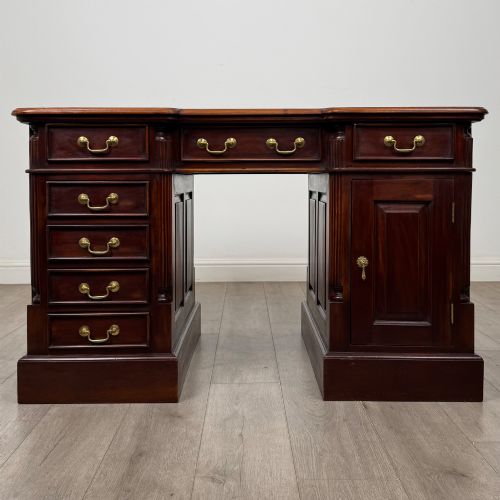
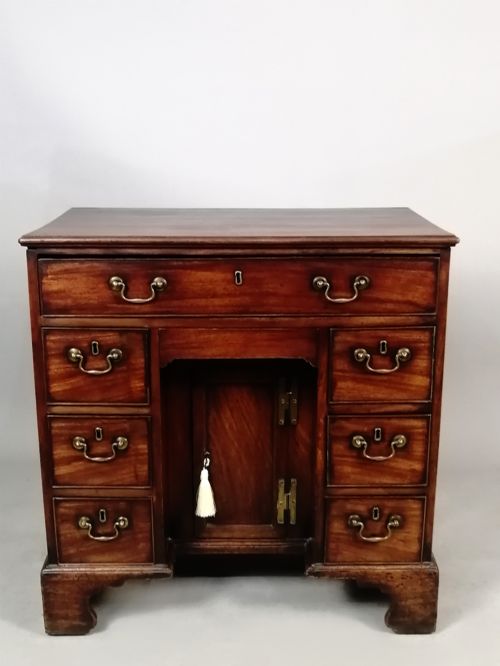
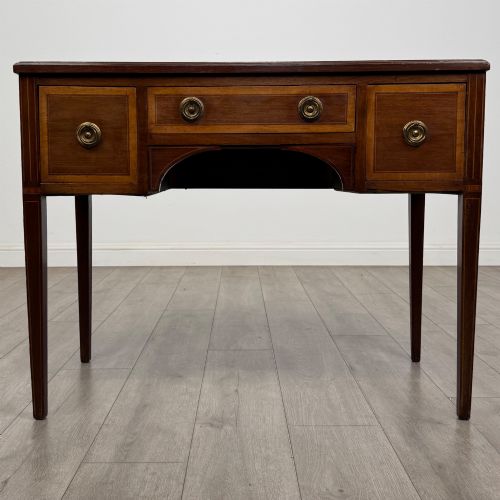


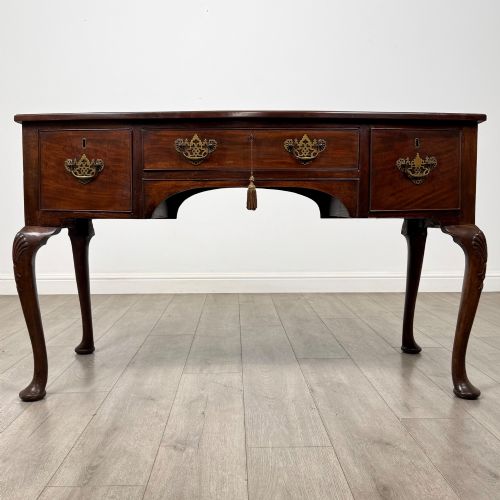
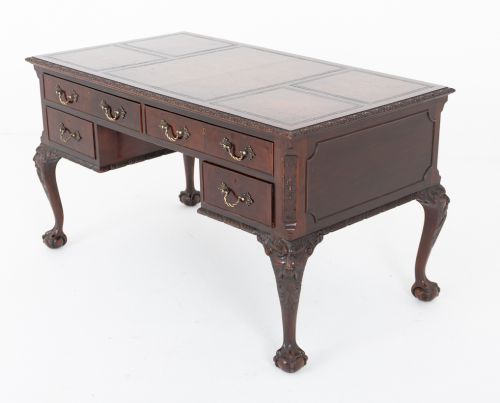
Mahogany Kneehole Table
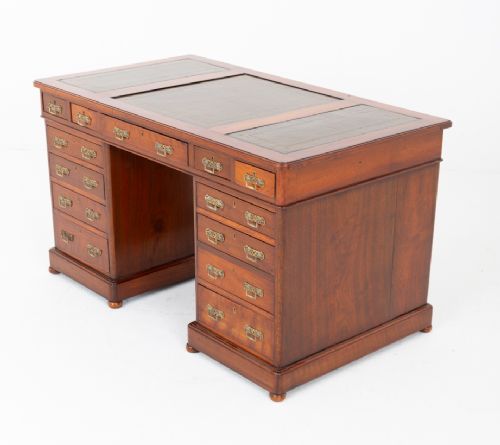
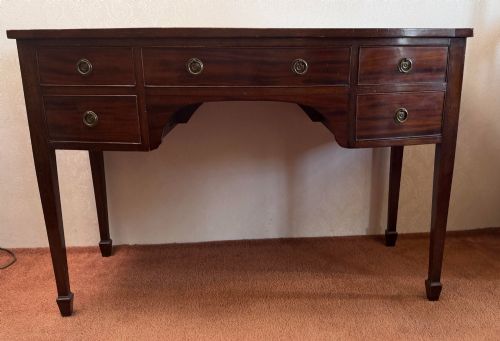
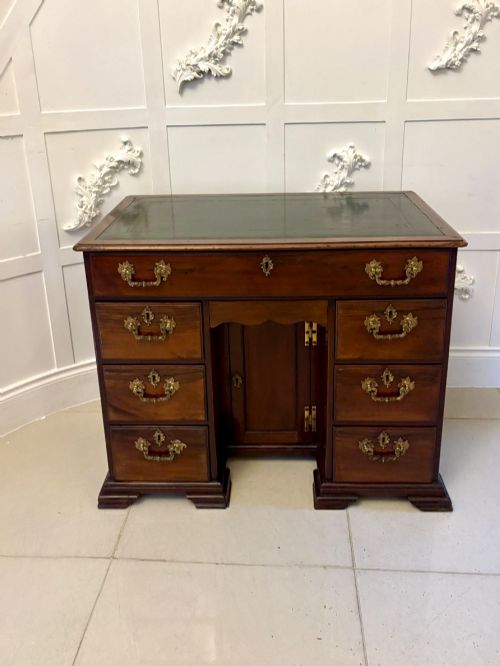
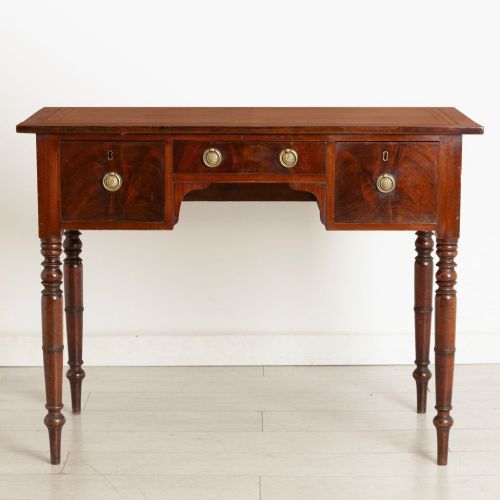
A mahogany kneehole table offers a compact writing or dressing surface with deep pedestals flanking a central recess.
Mahogany Kneehole Table
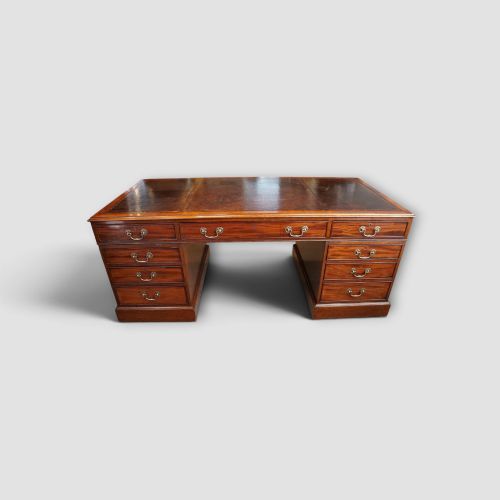
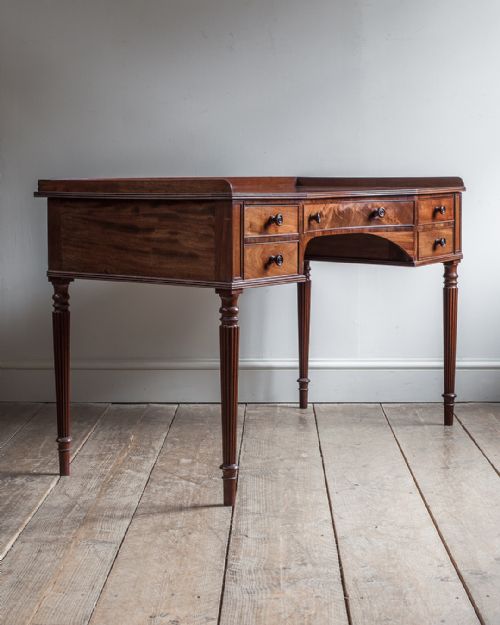
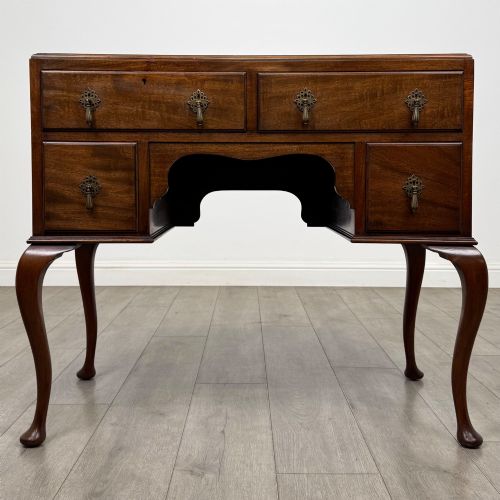
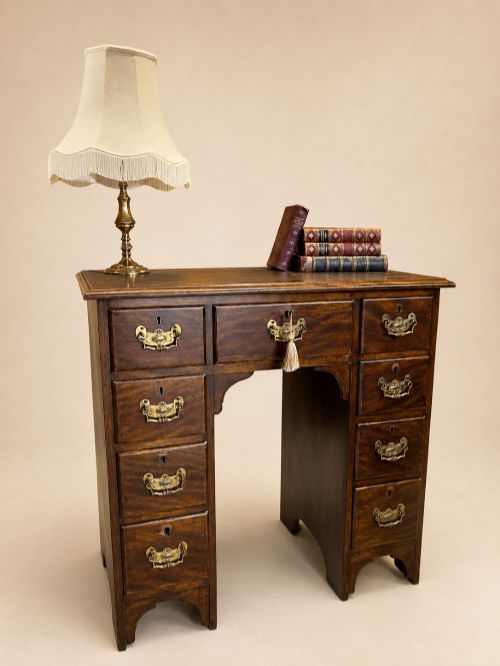
A mahogany kneehole table bridges the gap between a desk and a dressing table, designed with a central recessed space flanked by banks of smaller drawers. This grouping spans pieces from the 18th century, Georgian and Regency periods through to the Victorian and Edwardian eras.
The versions most commonly met include compact Georgian examples with multiple small drawers and later Victorian or Edwardian interpretations designed for writing or dressing. These forms adapt easily to domestic use as side tables or writing desks.
Materials and Construction
Makers utilised solid timber alongside flame mahogany veneer to achieve rich surface grain, often accented with satinwood, boxwood or purpleheart banding and inlay. Brass handles and leather writing inserts frequently complete the construction of the better examples.
Joinery techniques relied on dovetailed drawer construction and sturdy framing to support the pedestals, while secondary timbers were used for internal drawer linings and carcases.
Secret central compartments hidden within the kneehole recess rewarded the curious owner with discreet storage for valuables.
Distinction in Craft
Quality reveals itself in the choice of timber figure, such as the depth of flame mahogany veneer, and the precision of inlaid banding in boxwood or satinwood. Superior execution extends to crisp mouldings and well-figured drawer fronts.
The retention of original brass hardware and fitted leather surfaces elevates the standing of a piece, while heavier or more robust architectural proportions distinguish grander pedestal writing tables from simpler side tables.
Trollope & sons·Holland & Sons·Betty Joel·T. Willson
The Mahogany Kneehole Table Glossary
- Kneehole
- A recessed space beneath the central part of a desk or table designed to accommodate the sitter's legs. This configuration allows for flanking banks of drawers on either side.
- Flame mahogany
- A veneer cut from timber where the branches join the main trunk, producing a rippling, flame-like pattern. It was favoured by cabinetmakers for principal display surfaces.
- Pedestal
- A structural support beneath a desk containing one or multiple vertical tiers of drawers. Pedestals provide both stability and substantial storage capacity.
- Lowboy
- A small table with drawers, generally standing on relatively tall legs, often serving as a dressing or side table. These pieces share similar proportions to early kneehole variants.
- Banding
- A narrow strip of contrasting wood veneer inlaid around the edges of drawer fronts or tabletops. Cabinetmakers used satinwood, boxwood or purpleheart to create this decorative border.
Mahogany Kneehole Table: Frequently Asked Questions
What is a kneehole table used for?
These pieces function primarily as writing desks or dressing tables, providing a central leg space with flanking drawer storage.
Their compact proportions also suit use as side tables or console surfaces in reception rooms and hallways.
Are these tables suitable for modern writing desks?
Many examples provide adequate surface area and drawer space for contemporary stationery and writing tasks.
Buyers should check the internal kneehole clearance height to ensure comfortable leg room when seated with a modern chair.
What is the difference between a desk and a dressing table?
Tables designed for dressing frequently incorporate compartments or associated mirrors, whereas writing versions often feature leather-lined tops.
In practice, historical forms often overlapped in utility, with many pieces serving both functions over their lifetime.