
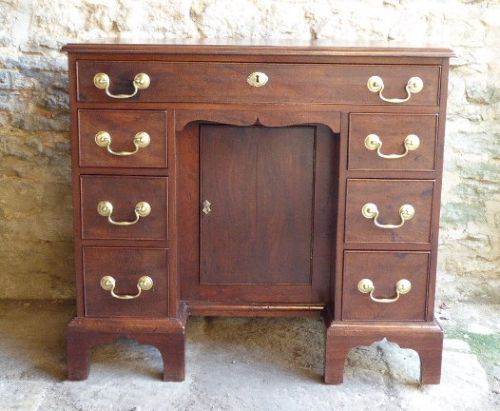
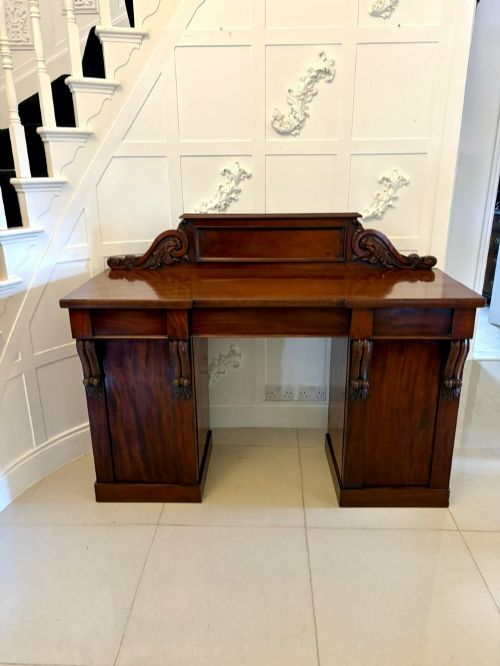
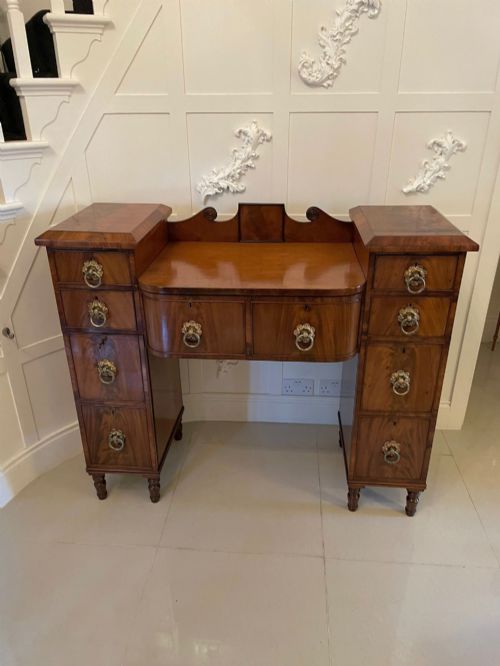
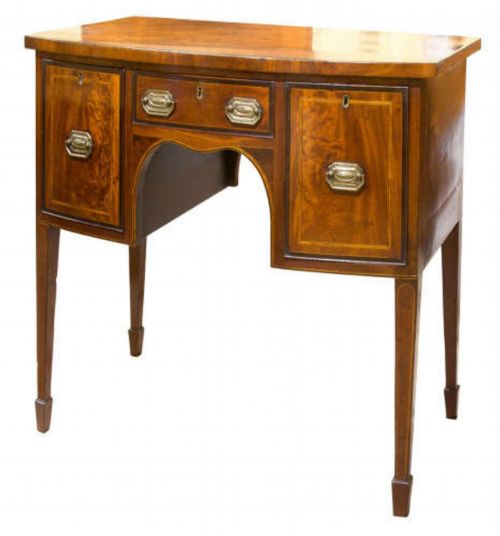
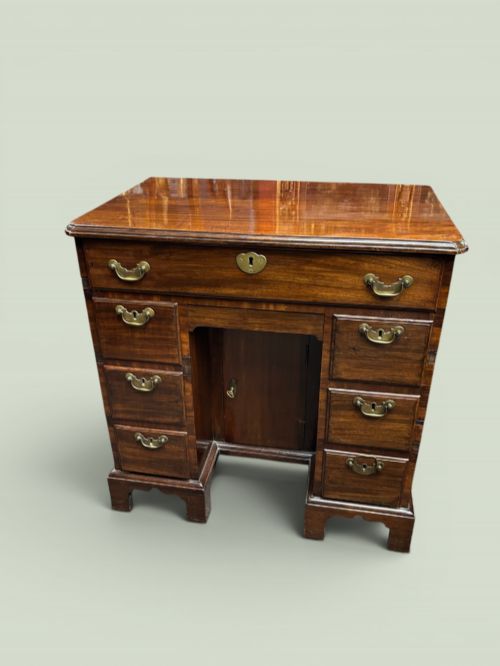
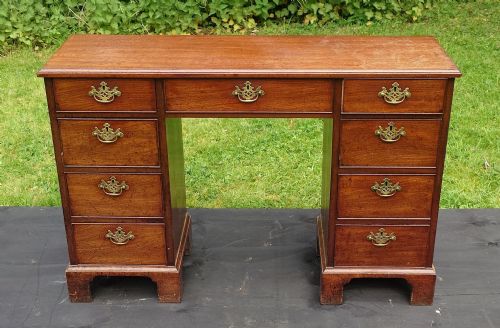
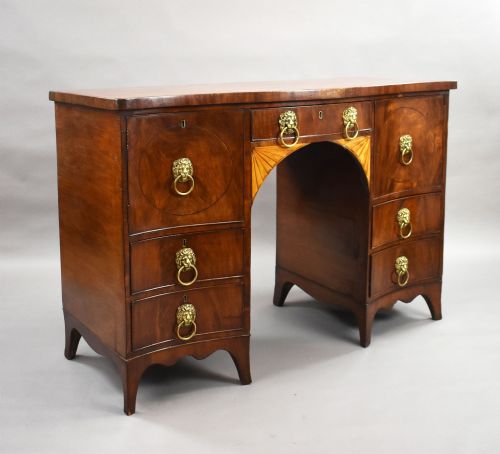
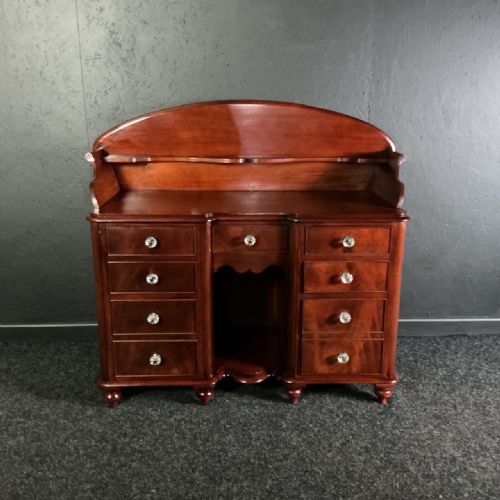


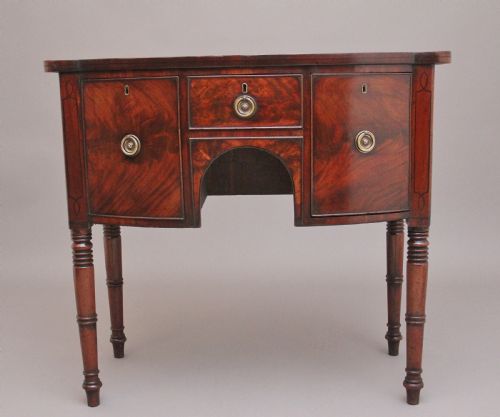


Mahogany Kneehole Sideboard
A mahogany kneehole sideboard brings timber richness and clever compartment planning together into a compact footprint suited to formal dining rooms.
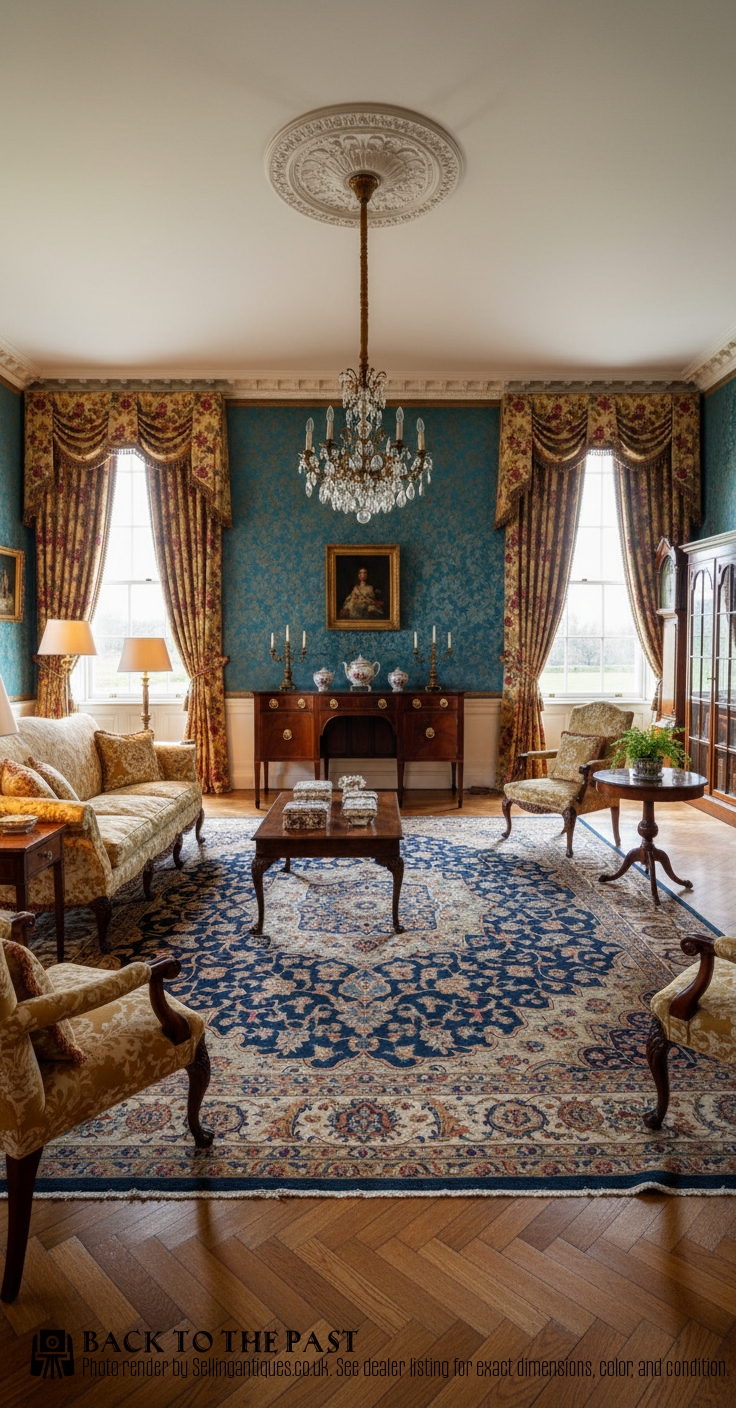
Mahogany Kneehole Sideboard
A mahogany kneehole sideboard serves as a practical surface with integrated central recessed space, appearing frequently in Georgian, Regency, and Victorian iterations across these records.
Buyers encounter bow-fronted designs alongside serpentine profiles and straight elevations, reflecting the shifting tastes of cabinetmakers from the eighteenth century into the Edwardian era.
Many examples double as desks or writing tables, combining cupboards and drawers around a central leg space in forms designated variously as sideboards, desks, and dressing tables.
Materials and construction
Makers utilised solid timber and figured veneers, selecting flame mahogany to create lively grain patterns across drawer fronts and cupboard doors.
Detailing relied on contrasting stringing and banding in boxwood, satinwood, and purpleheart, framed by brass handles and escutcheons.
Surrounds sometimes incorporated three-quarter galleries or raised upstands, while internal construction accommodated slides, drawers, and compartmented storage.
Materials recorded include solid mahogany, flame mahogany veneers, purpleheart, satinwood, boxwood, brass, and glass.
Design integrity and timber choice
Quality rests on the selection of timber figures, where matched flame mahogany veneers and thoughtful wood inlay distinguish finer pieces from plain stock.
Proportion governs the architectural success of the form, particularly in narrow or miniature formats where drawer alignment and leg placement must remain balanced.
Original hardware and crisp execution of bowed or serpentine curves separate standard workshop production from accomplished cabinet work.
John Gregory London
The Mahogany Kneehole Sideboard Glossary
- Kneehole
- A recessed central space beneath a desk or sideboard designed to accommodate the user's legs while seated or standing.
- Bow-front
- A convex curved cabinet front that swells outward in the centre, common in Georgian and Regency dining furniture.
- Serpentine
- A shaped furniture front featuring a convex centre flanked by concave curves, requiring advanced woodworking skill.
- Stringing
- Thin inlaid lines of contrasting timber used to outline drawers, borders, and tabletops.
- Upstand
- A raised barrier along the rear edge of a top surface to prevent items from sliding off.
Mahogany Kneehole Sideboard: Frequently Asked Questions
How do I use a kneehole sideboard?
These pieces function traditionally as serving consoles in dining rooms, offering surface space for dishes and internal storage for linens or cutlery.
The central recess also allows the furniture to double as a writing desk or dressing table when paired with a low chair.
What is the difference between Georgian and Regency styles?
Georgian pieces often display restrained classical proportions, straight or bow fronts, and subtle mahogany graining.
Regency examples tend toward bolder architectural influences, sometimes incorporating richer brass mounts and more dramatic veneer selections.
Are these pieces suitable for small rooms?
Many surviving examples feature narrow depths and compact bow fronts designed specifically to fit restricted hallway or dining room spaces without dominating the floor plan.
Their multi-drawer layouts provide substantial storage capacity despite the modest footprint.
How do I identify wood inlay?
Wood inlay involves fitting contrasting timbers like boxwood, satinwood, or purpleheart into recessed channels cut directly into the mahogany surface.
This technique creates crisp decorative borders around drawers and tabletops rather than sitting as a painted or applied layer.