

Mahogany Hall Cabinet
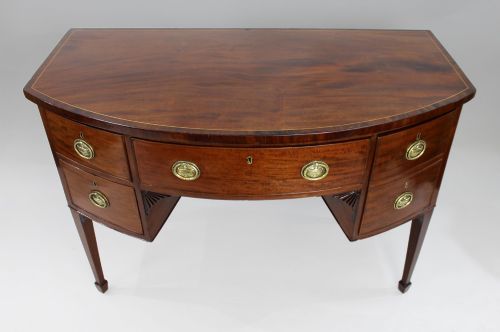
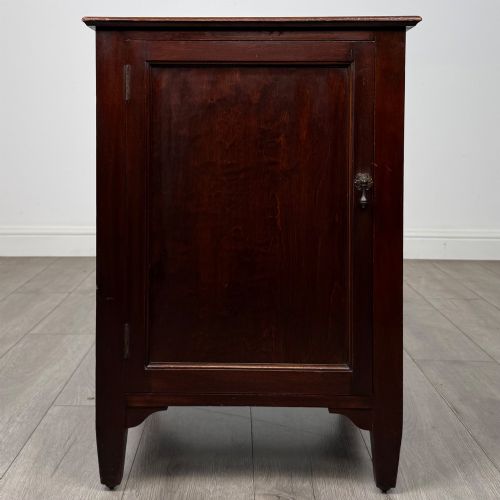
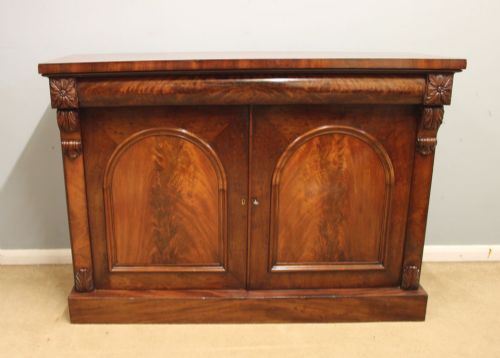
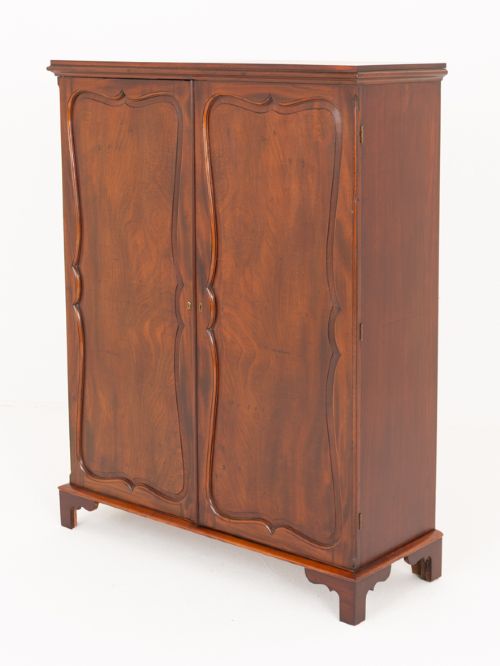
A mahogany hall cabinet organises an entrance with timber built to endure, pairing practical storage with the presence of Georgian, Regency, Victorian, and Edwardian design.
Mahogany Hall Cabinet
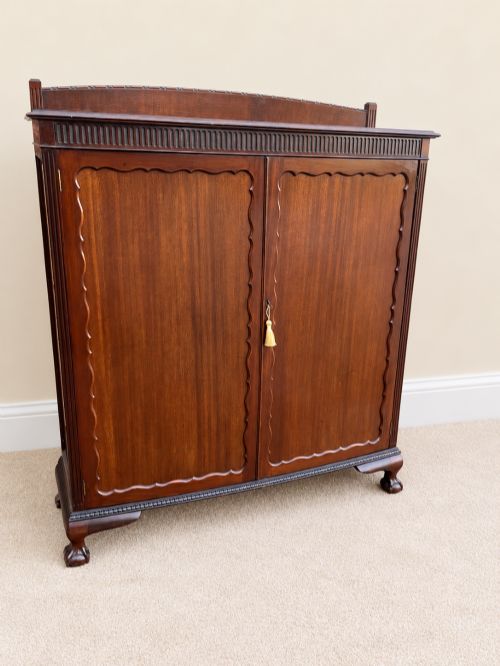
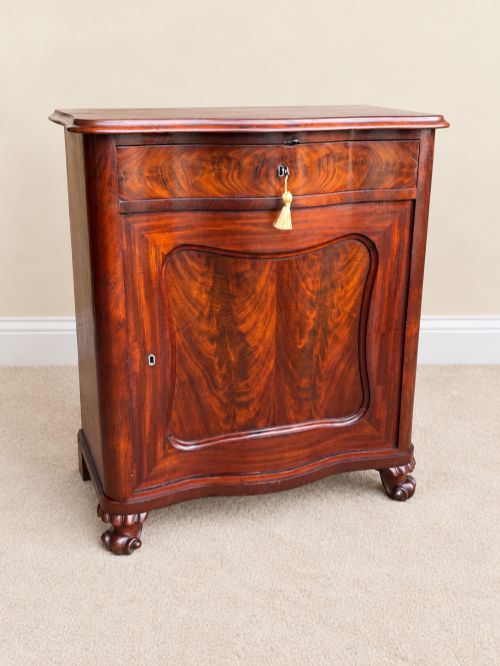
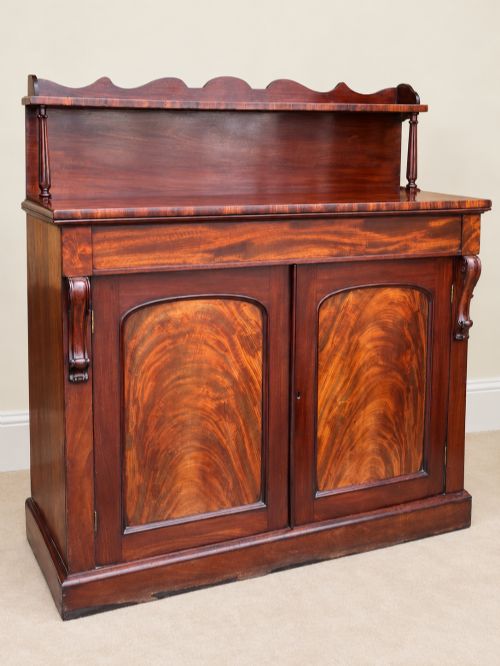
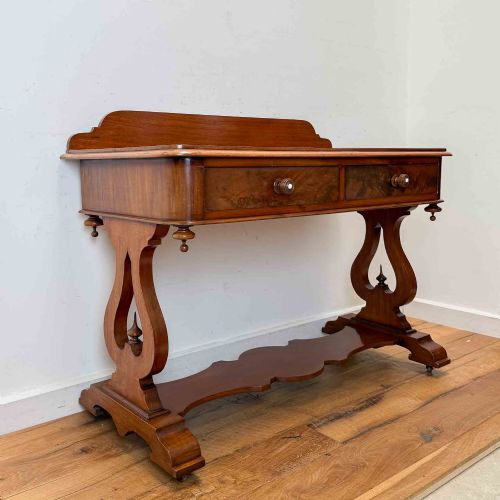
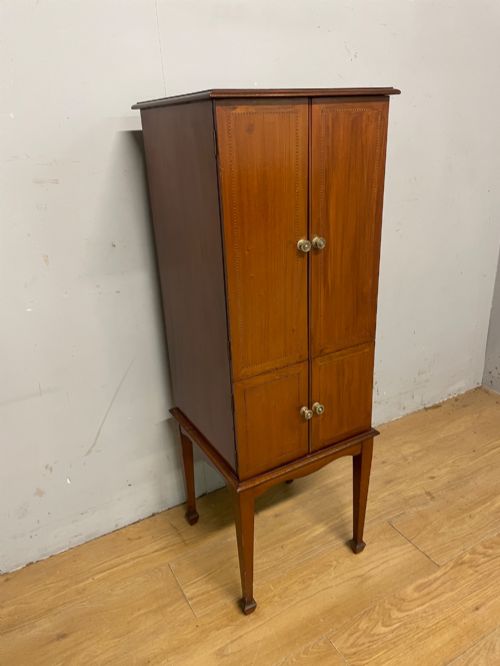
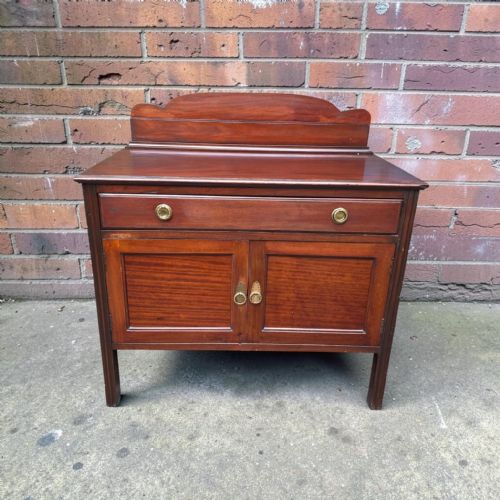
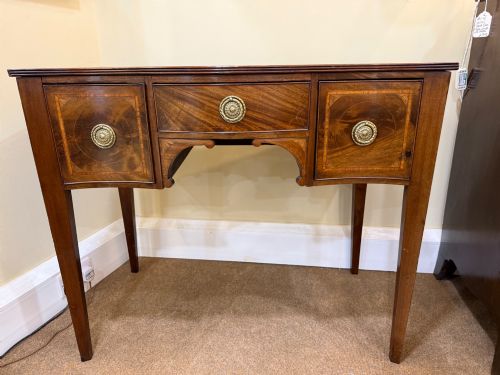
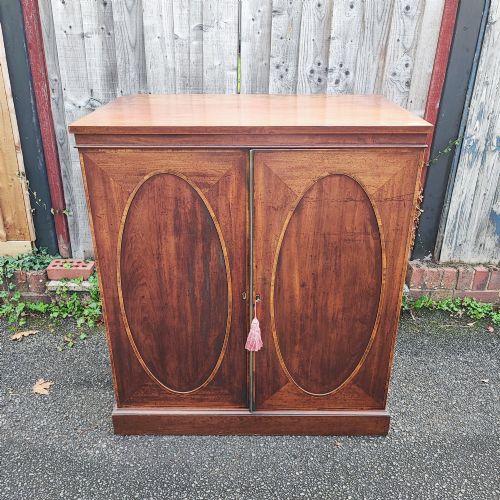
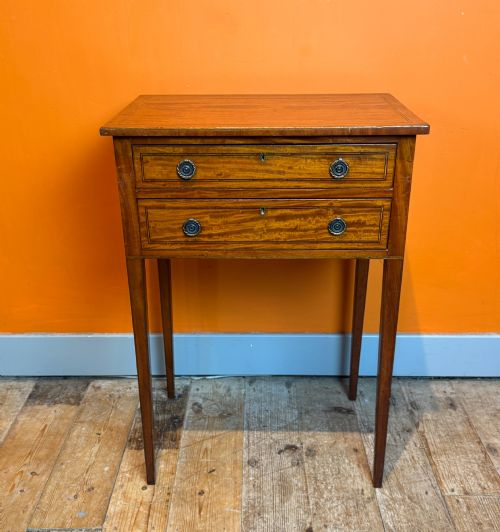
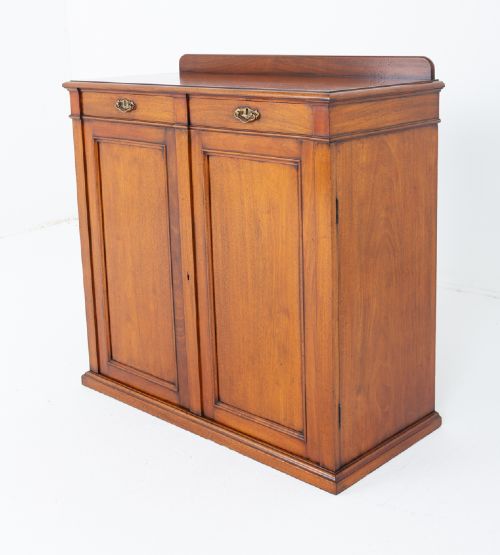
When you search for a mahogany hall cabinet, you look at case furniture designed to stand in corridors and entrances, holding papers, keys, and domestic items while setting the tone of a room. The items on this page span several centuries and styles, drawing from Georgian, Regency, Victorian, and Edwardian periods.
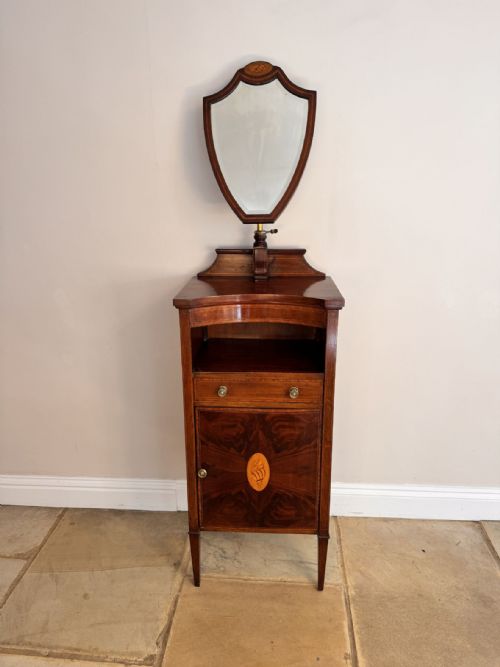
The forms vary widely across the inventory, ranging from narrow sideboards and side cabinets to music cabinets, washstands, and low cupboards. Many pieces combine display shelves or wall hanging compartments with enclosed lower storage.
Edwardian and Victorian examples frequently feature inlaid details and compact proportions suited to smaller spaces, while Georgian and Regency pieces rely on architectural lines and figured timber grains.
Materials and construction
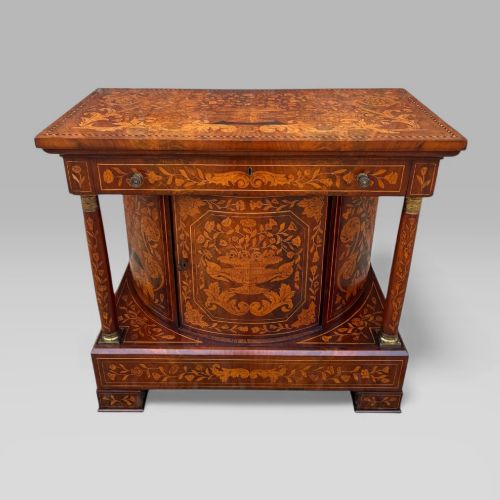
Cabinet makers built these pieces using solid mahogany alongside flame mahogany veneer, often enhanced by decorative stringing in satinwood, boxwood, and fruitwood marquetry. Structural supports and secondary elements incorporate brass hardware, glass panels, and fossil marble tops.
Joinery methods reflect the period of origin, employing traditional frame and panel construction for doors and dovetailed joints for drawers. Surface finishes rely on hand-polished shellac or wax to highlight the natural figure of the wood.
Mahogany Hall Cabinet Retail Price Guide 2026
Typical asking prices for mahogany hall cabinet among the pieces listed under this phrase on Sellingantiques today, from the lower quarter to the upper quarter. They describe what is for sale here now, not the wider market.
Several items double as domestic post boxes and shaving mirrors, proving that even a hallway tidy needed a morning routine.
What separates the grades
Quality rests in the selection of the timber and the precision of the cabinet work. Pieces fashioned from highly figured flame mahogany or finished with crisp fruitwood and boxwood marquetry demonstrate a higher tier of craftsmanship than plain structural boards.
The integrity of the original hardware, such as brass escutcheons and working locks, alongside tight joints and unwarped doors, distinguishes finer examples from utilitarian storage.
Denby and Spinks·J A Mein Edinburgh·Walker and Hall Sheffield·S Hall and Sons
The Mahogany Hall Cabinet Glossary
- Marquetry
- Decorative patterns formed by fitting together thin veneers of various woods.
- Chiffonier
- A compact sideboard featuring enclosed lower cupboards and often a small shelf tier above.
- Bowfront
- A curved cabinet front that swells outward in the centre.
- Frieze
- The horizontal band running directly beneath the top surface of a cabinet.
- Escutcheon
- A protective plate surrounding a keyhole, frequently cast in brass.
Mahogany Hall Cabinet: Frequently Asked Questions
What is a mahogany hall cabinet used for?
These cabinets served to store everyday items near the entrance of a home, keeping hallways tidy.
They held letters, keys, and smaller garments, combining surface display space with concealed storage.
How do I identify a Georgian piece?
Georgian pieces rely on proportion, solid mahogany construction, and understated architectural moulding.
They generally pre-date the heavier ornamentation found in later Victorian and Edwardian catalogued items.
Where should I place it?
A hall cabinet fits well in narrow corridors, entryways, or reception rooms where floor space is limited.
Its shallow depth allows it to sit against a wall without obstructing movement through the doorway.
Are these cabinets made of solid wood?
Many items feature solid mahogany frames, while larger surfaces often utilise flame mahogany veneer over secondary timbers.
Inlay work incorporates contrasting species such as boxwood and satinwood.