





Mahogany Glass Frame
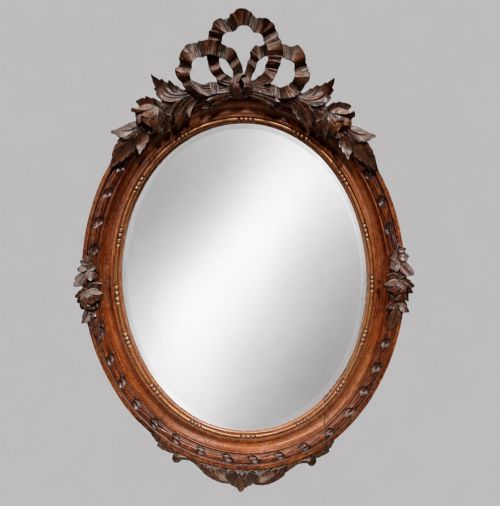
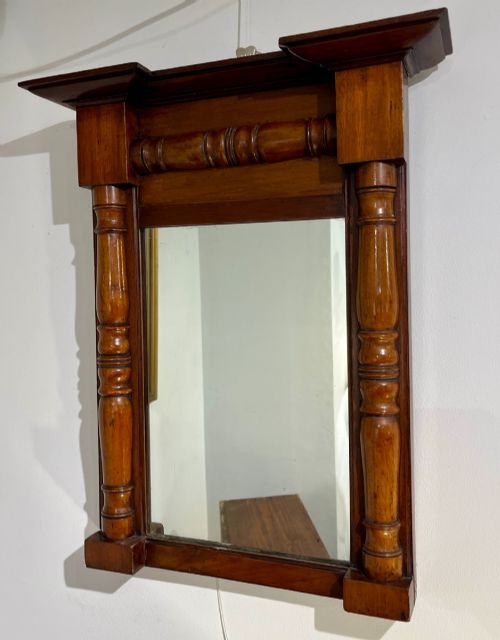
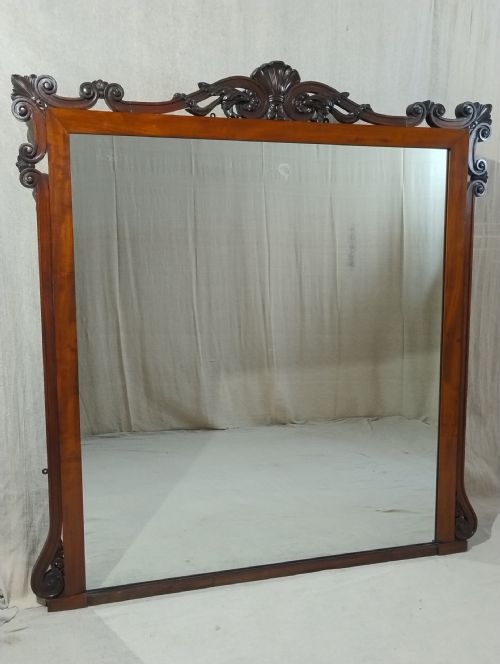
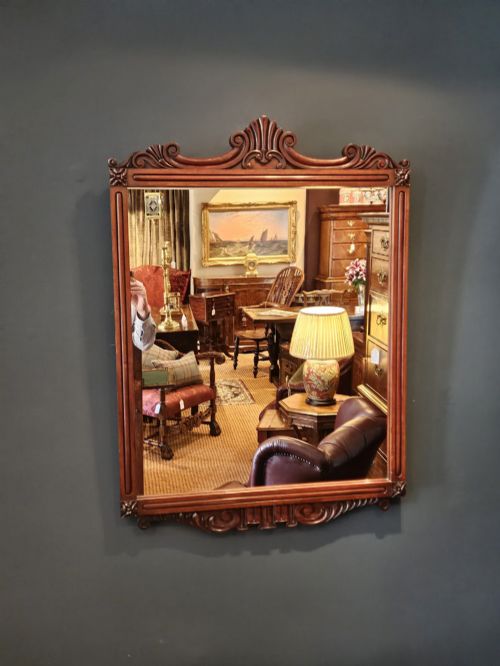
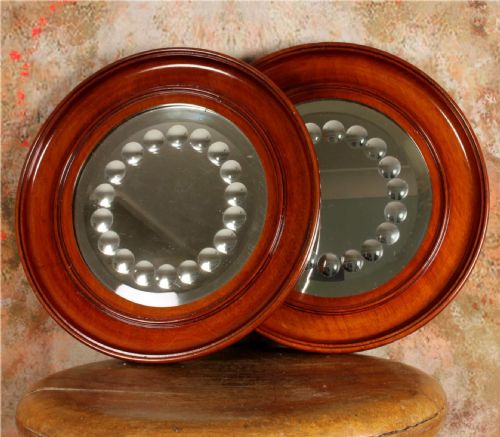
Mahogany glass frame pieces bring warm timber tones and clear reflection into a room, spanning wall mirrors, dressing glasses, and framed textiles.
Mahogany Glass Frame
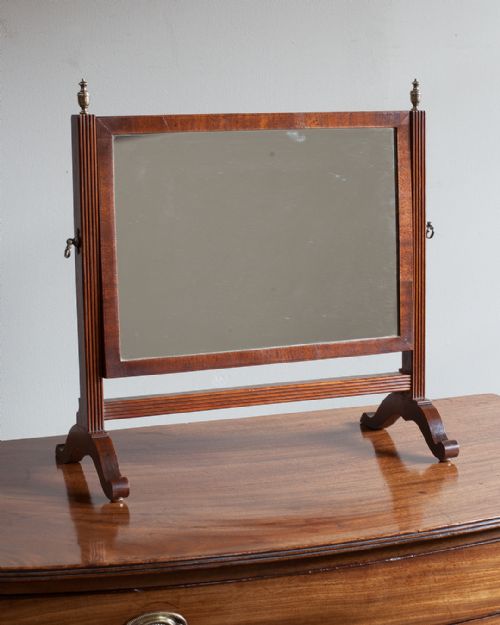
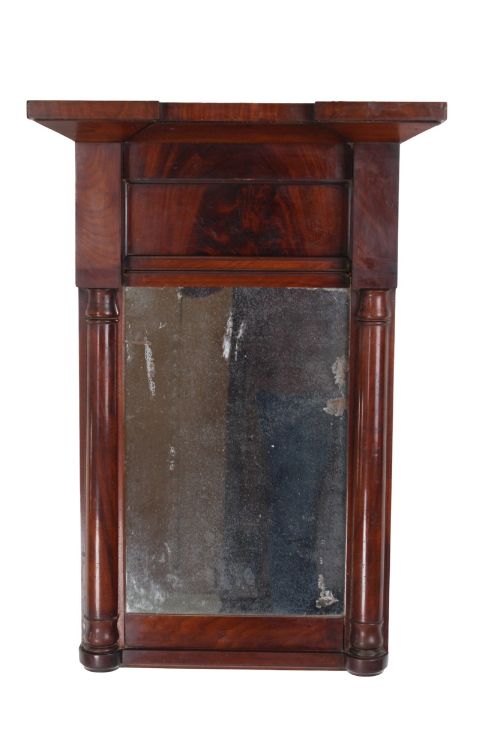
A mahogany glass frame is an architectural or decorative surround built to hold mirror glass, paintings, or textiles, appearing frequently across this selection in forms ranging from compact swing mirrors to large overmantels. These pieces bridge utilitarian function and cabinet-making skill, serving domestic spaces from Georgian parlours to Edwardian hallways.
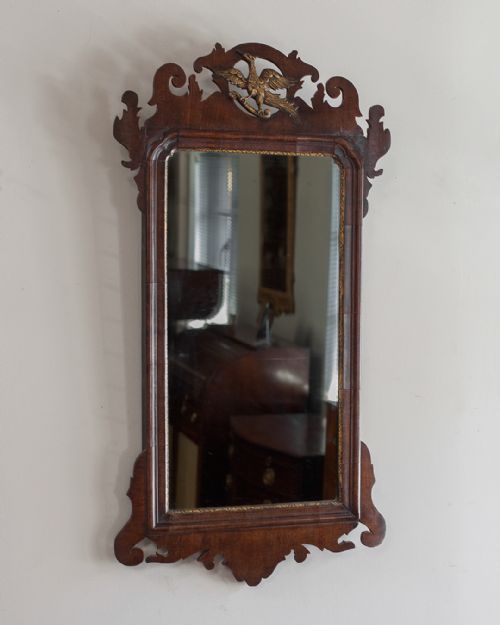
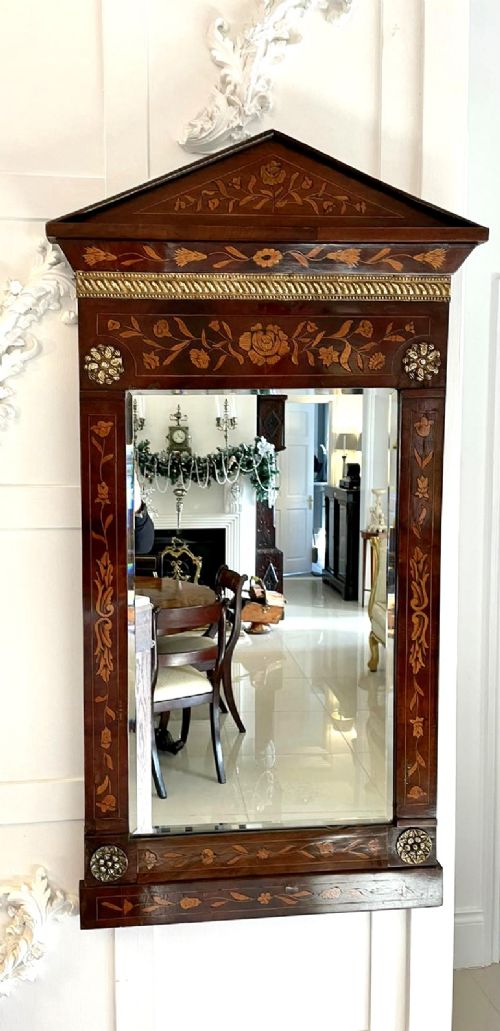
The versions most commonly met on this page date from the 18th century through to the early 20th century, encompassing Georgian fret styles, Regency swing mirrors, and Edwardian inlaid designs. They appear both as wall-hanging items and freestanding dressing pieces.
Beyond standard wall mirrors, the category encompasses specialised items such as cheval mirrors, pier glasses, and framed works preserved under glass, demonstrating the versatility of mahogany framing in historical interiors.
How they were made
Makers constructed these frames using dense tropical hardwood, frequently combining solid mahogany with veneers to achieve figured grain patterns across flat and curved surfaces. Secondary framing often incorporated pine or hardwood substrates to support the weight of heavy glass plates.
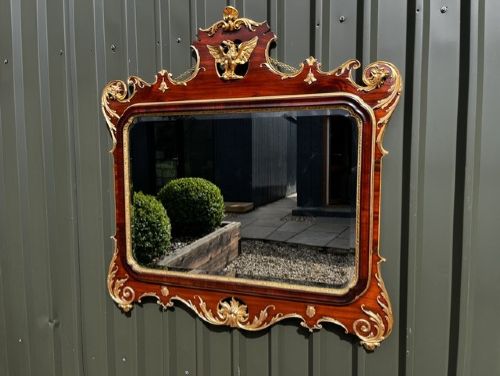
Surface enrichment relied on techniques such as fret-sawing, parcel-gilding, and delicate wood inlay or marquetry, particularly in Georgian and Edwardian examples. Brass fixtures, including swing arms, candle sconces, and hanging loops, were integrated into the construction of dressing and pier mirrors.
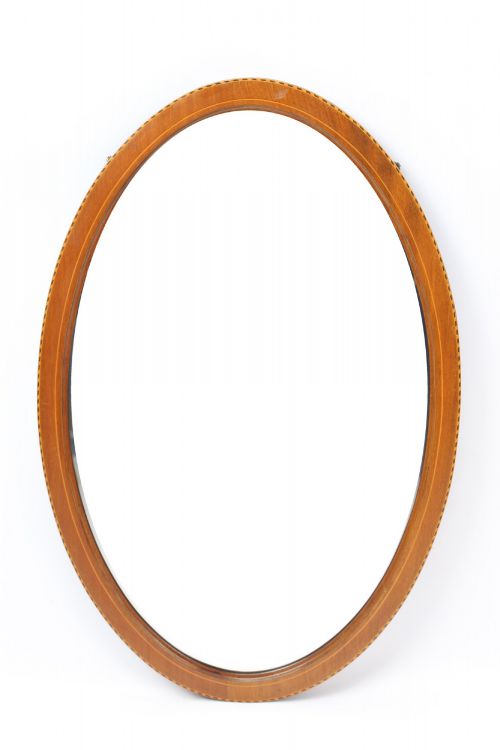
Listings for mahogany glass frames span multiple eras, showing particular strength in 18th-century Georgian designs, Victorian wall mirrors, and Edwardian inlaid oval forms.
What varies in quality
The standard of a mahogany glass frame rests upon the selection of the timber and the crispness of its carved or inlaid details. Fretwork that retains sharp, clean edges without splintering indicates superior cabinet work.
Construction methods also dictate grade, where pegged mortise and tenon joints in the wooden frame provide enduring stability compared to simpler butt joints. The depth of the mahogany colour, achieved through natural ageing and finishing rather than heavy modern stain, marks the finer pieces.
William Kent
The Mahogany Glass Frame Glossary
- Fret mirror
- A wall mirror featuring a flat wooden frame cut with decorative scrollwork and pierced patterns using a fretsaw. These were popular in 18th-century homes.
- Pier mirror
- A tall, narrow mirror specifically designed to hang on the wall space between windows, often placed above a pier table. They reflect ambient light into darker corners of a room.
- Cheval mirror
- A freestanding full-length mirror suspended on a vertical frame with pivoting side pins, allowing the glass to tilt. The name derives from the French word for horse.
- Parcel-gilt
- A decorative treatment where specific carved or raised portions of a wooden frame are selectively covered in gold leaf. This technique highlights particular mouldings against the dark mahogany background.
- Overmantel mirror
- A wide mirror intended to be hung directly above a fireplace mantelpiece. They often mirror the proportions of the hearth below.
Mahogany Glass Frame: Frequently Asked Questions
How do I date a mahogany glass frame?
Dating relies on examining the construction methods, backboards, and secondary timbers used in the frame. Georgian pieces often feature hand-cut joinery and old mirror plates with subtle distortion, while Edwardian examples show machine-cut elements and crisper internal veneers.
Style also offers clear clues, as the fretwork of the 18th century differs significantly from the inlaid Edwardian ovals or the heavy proportions of Victorian overmantels.
Where should I hang an overmantel mirror?
An overmantel mirror is traditionally placed directly above a fireplace mantelpiece to anchor the room's focal point. Ensure the wall fixings are secured into solid studs or masonry to support the substantial weight of the timber and glass.
Spacing matters too; leave a modest gap between the top of the mantel shelf and the bottom edge of the frame to maintain balanced proportions.
Can dressing mirrors stand on any table?
Tabletop dressing mirrors require a surface deep and sturdy enough to support the extended feet or base platform. Georgian and Regency swing mirrors were specifically proportioned to sit atop matching serpentine or bow-front dressing chests.
Check the pivot mechanism before placing one on a high piece of furniture to ensure the glass stays angled securely without slipping.