





Arched Mahogany Vanity Mirror
An arched mahogany vanity mirror brings warmth and functional elegance to a dressing space, offering a classic form that reflects both period craftsmanship and enduring utility.
Arched Mahogany Vanity Mirror
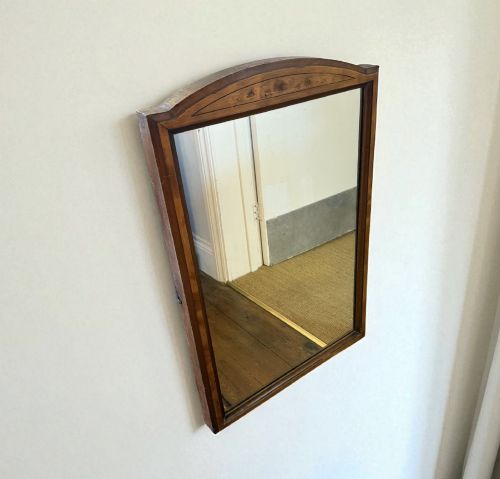
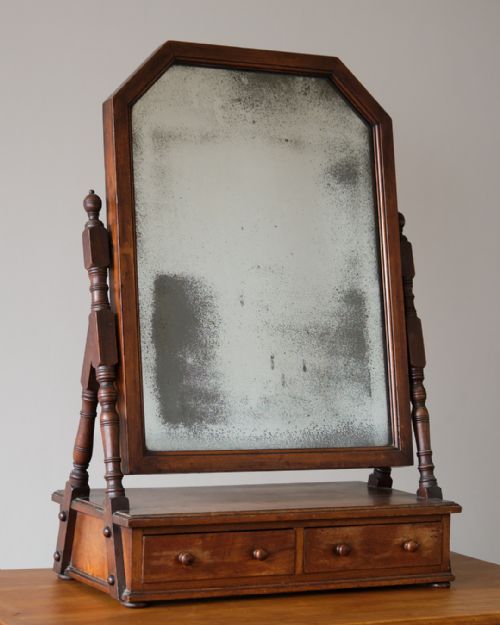
An arched mahogany vanity mirror is a dressing mirror designed to sit atop a table or chest, characterised by its rounded or arched top frame. These pieces span the nineteenth century and the Edwardian era, taking the form of swing mirrors supported on upright standards or incorporating small drawers beneath.
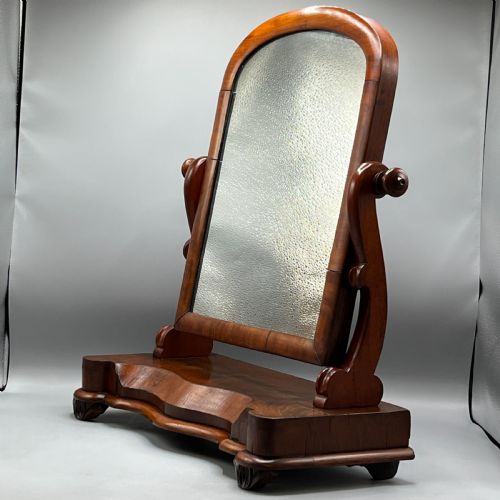
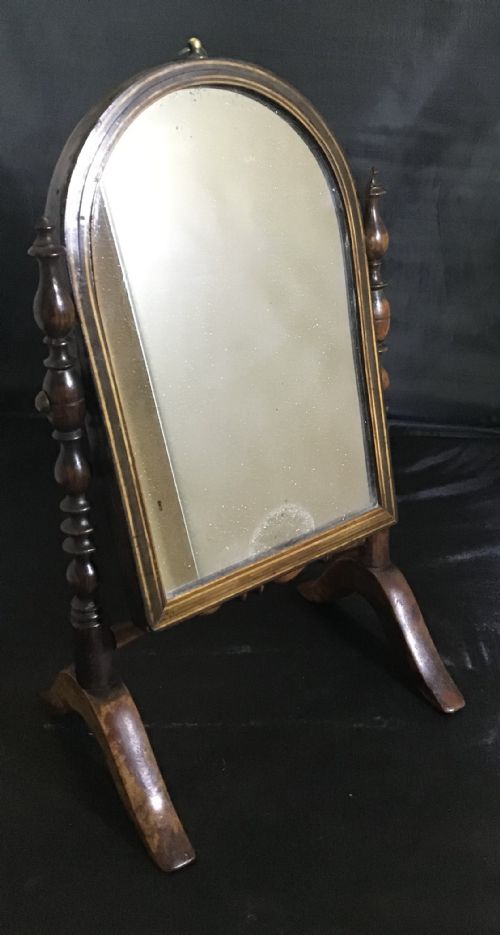
Buyers will encounter various incarnations, from simple nineteenth-century swing glasses to elaborate serpentine-fronted flame mahogany designs and travelling toilet mirrors. Each version offers a distinct interpretation of the arched form using rich mahogany grains.
How they were made
Cabinetmakers utilised solid mahogany and veneer, frequently selecting flame mahogany to create striking grain patterns across the mirror frame and base. Construction often involved careful joinery for the upright supports and the integration of delicate boxwood and satinwood stringing or inlay.
Brass fittings and ormolu mounts secure the swing mechanism, allowing the glass to tilt while adding metallic contrast to the dark wood. The mirrors themselves consist of period glass held within rebated frames, sometimes backed with leather on portable or travelling variants.
Arched Mahogany Vanity Mirror Retail Price Guide 2026
Typical asking prices for arched mahogany vanity mirror among the pieces listed under this phrase on Sellingantiques today, from the lower quarter to the upper quarter. They describe what is for sale here now, not the wider market.
Travelling toilet mirrors let Regency-era travellers check their cravats on the move.
What varies in quality
Quality rests in the selection of the timber and the precision of the cabinetwork, particularly in how the mahogany veneer is matched across the curved arch. Superior examples display rich flame figuring and subtle wood inlay that complement rather than overwhelm the architectural sweep of the frame.
The integrity of the swing mechanism and the retention of original brass hardware heavily influence the character of the piece. Well-balanced supports and refined proportions separate standard utility mirrors from more ambitious decorative examples.
Heal & Sons
The Arched Mahogany Vanity Mirror Glossary
- Flame mahogany
- A veneer cut from the fork of the mahogany tree to produce a dramatic, feather-like flame pattern. This decorative figuring was favoured for grander nineteenth-century furniture.
- Swing mirror
- A glass mounted on pivots between two upright posts, allowing the angle of reflection to be adjusted. It forms the central component of a dressing table mirror.
- Ormolu
- Gilt bronze ornamentation applied to furniture frames and mounts. It provides a bright metallic accent against dark woods like mahogany.
- Serpentine front
- A furniture front curved in a wave shape with a convex centre flanked by concave sides. This profile requires skilled carpentry to execute cleanly.
- Marquetry
- Decorative patterns formed by inserting pieces of contrasting wood into a veneer. Dutch examples often display floral or pictorial motifs.
Arched Mahogany Vanity Mirror: Frequently Asked Questions
How do I date an arched mahogany vanity mirror?
Dating relies on observing the construction methods, the framing style, and the secondary woods used in the base or drawers. Nineteenth-century pieces often display hand-cut dovetails and distinct timber patination.
Specific stylistic markers, such as French Empire or Victorian Gothic Revival details, further anchor the piece to a particular decade or era.
Were these mirrors meant to be wall-mounted?
Most pieces designed with an arched mahogany frame function as dressing table mirrors intended to sit on top of a surface rather than hang on a wall. Their weighted bases and pivot stands keep them stable during use.
Some variants include small drawers within the base for storing personal items, confirming their tabletop purpose.
How do I care for nineteenth-century mahogany furniture?
Maintain the wood by keeping the mirror away from direct sunlight and steady heat sources to prevent the mahogany and its veneer from drying out. Dust regularly with a soft, dry cloth.
Avoid modern chemical polishes that can build up a residue and dull the natural warmth of the grain over time.
What is flame mahogany?
Flame mahogany refers to a distinctive veneer figure created by slicing through the branch junctions of the tree. The resulting grain resembles flickering flames across the surface.
Cabinetmakers reserved this prized material for the most prominent parts of the mirror frame to catch the light.