


Mahogany Glass Display Box
A mahogany glass display box offers a clever way to showcase small treasures, combining rich timber frames with clear panels for visibility.
Mahogany Glass Display Box
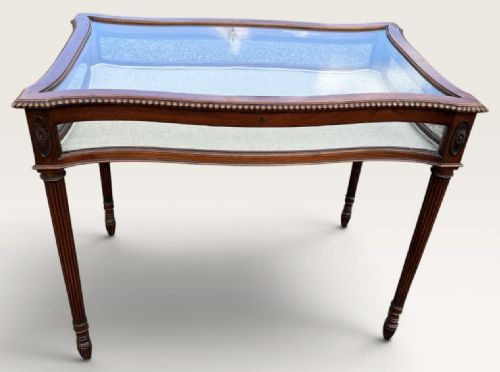
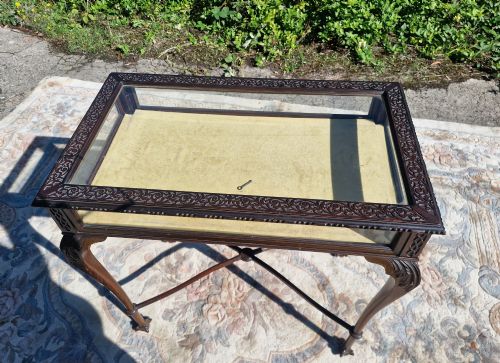
When you search for a mahogany glass display box, you encounter pieces designed to exhibit valuables, curiosities and commercial goods, with table forms appearing most frequently on this page. These items span periods from the nineteenth century through the Edwardian era and into the nineteen-twenties, incorporating both domestic bijouterie furniture and commercial shop counters.
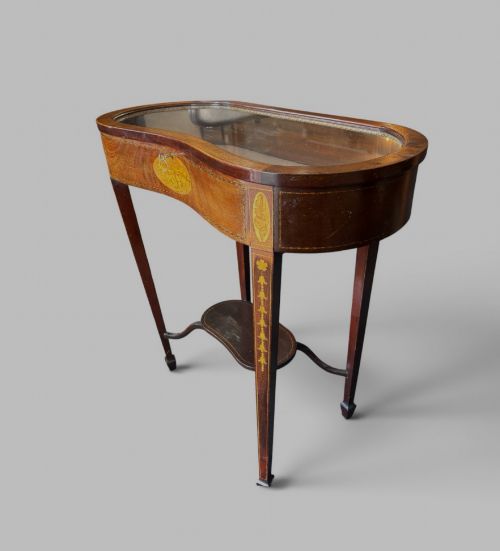
Domestic examples often take the form of bijouterie tables with glazed tops and lined interiors intended for jewellery and small collectables. Commercial variations include countertop cabinets and shop display cases originally utilised by confectioners and apothecaries.
The origins of these pieces range from British workshops to French ateliers, showing various regional styling influences such as Louis XVI and French Rococo Revival alongside standard domestic production.
What varies in quality
The standard of craftsmanship shows in the precision of the timber joinery, the subtlety of any satinwood inlay, and the complexity of the overall silhouette, such as serpentine or kidney-shaped framing. Elaborate decorative additions like brass mounts, marquetry, and ormolu embellishments distinguish more ambitious items from plain commercial counters.
The choice of interior lining materials and the quality of the glass panels further separate standard utility cases from refined domestic bijouterie tables intended for wealthy drawing rooms.
Materials recorded across these objects feature mahogany, glass, brass, velvet, satinwood, and ormolu.
Ermen & Roby·Cadbury's·Venus Pencil
The Mahogany Glass Display Box Glossary
- Bijouterie table
- A glass-topped display table specifically designed for holding small valuable items, medals or jewellery. These tables usually feature a hinged lid and a fabric-lined interior tray.
- Vitrine
- An enclosed glass cabinet used for displaying porcelain, curiosities or decorative objects. The term often describes freestanding or table-top glass cases with wooden frames.
- Ormolu
- Gilded bronze ornamentation applied to furniture and decorative objects. This technique was frequently utilised on nineteenth-century French furniture to highlight corners and framing edges.
- Marquetry
- Decorative veneer work arranged in pictorial or geometric patterns using various coloured woods. It appears on the tabletops and aprons of Edwardian display furniture.
- Serpentine shape
- A curved furniture outline that undulates outward and inward in a wave-like form. This contour requires skilled woodworking to achieve along the edges of display tables.
Mahogany Glass Display Box: Frequently Asked Questions
What is a bijouterie table used for?
A bijouterie table was traditionally placed in a drawing room to exhibit small personal possessions like pocket watches, rings, and portrait miniatures beneath a clear glass top.
The lined interior protected these delicate items from dust while allowing guests to inspect them easily during social gatherings.
How do I date an Edwardian display table?
Edwardian pieces often feature light satinwood inlay, crisp mahogany grain, and neoclassical revival motifs that reflect the taste of the early twentieth century.
Construction details, such as machine-made screws or specific hinge types, can also help narrow down the manufacture date to the decades around nineteen hundred.
Where were shop counter cabinets used?
Shop counter cabinets were utilised in Victorian and early twentieth-century retail environments, including sweet shops, chemists, and stationers, to display goods directly to customers.
These commercial cases were designed to sit atop counters, tempting buyers with items like chocolates, sewing cottons, and pencils.
What is the difference between a vitrine and a display case?
A vitrine typically refers to an upright glass cabinet with shelves, whereas a display case often describes a flat or table-top enclosure.
Both serve the primary function of visibility and protection, but their physical forms suit different types of interior spaces and objects.