
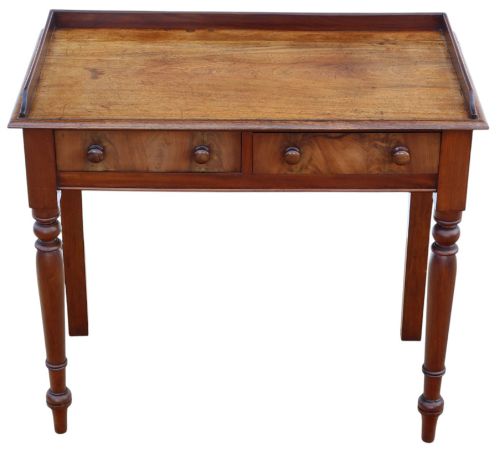
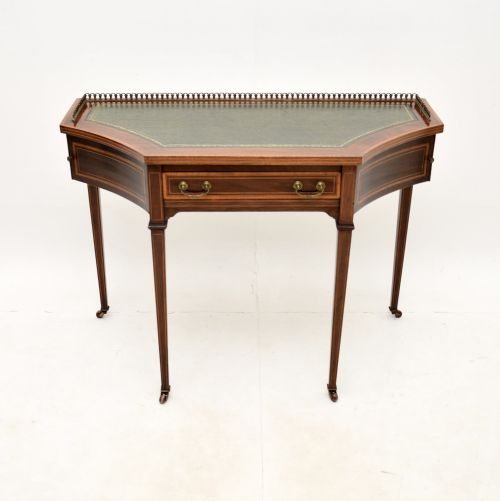
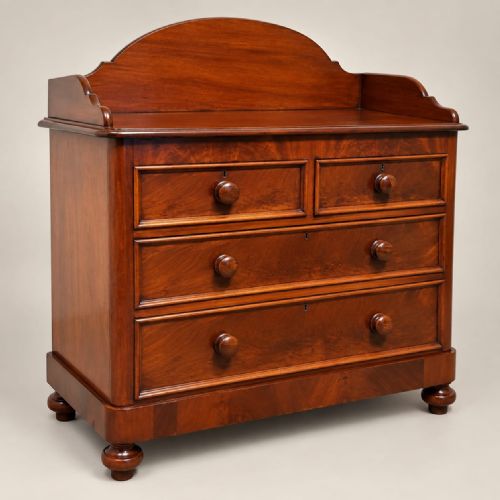

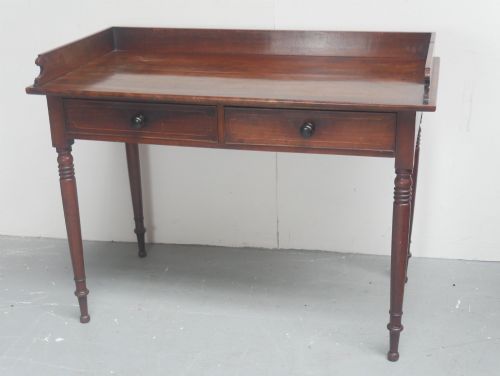
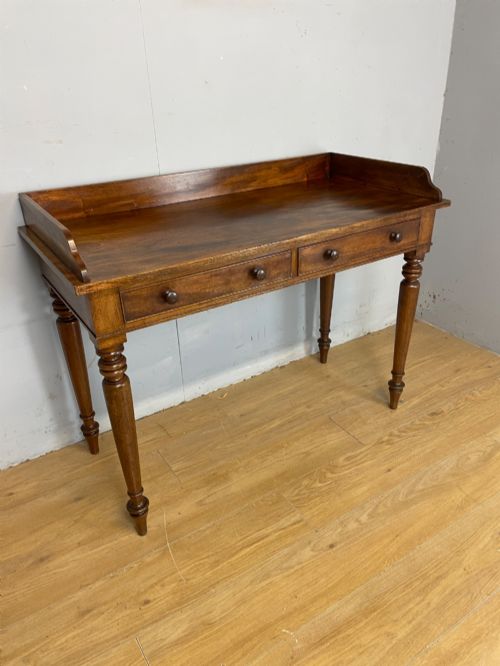
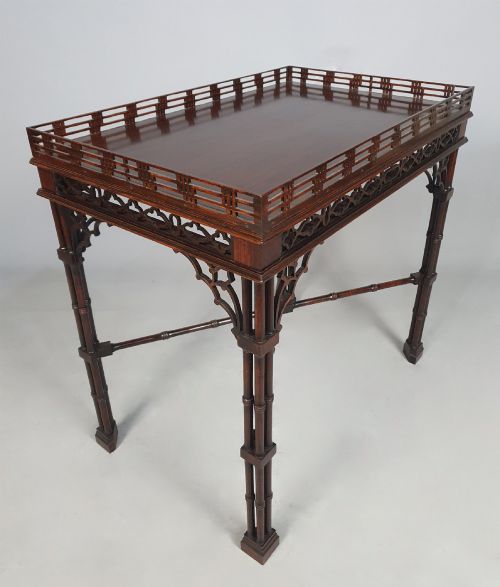
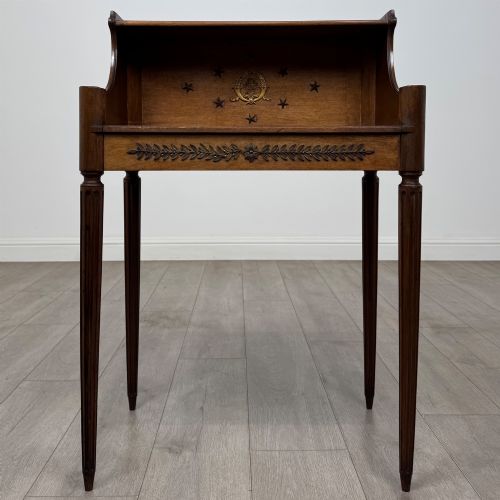
Mahogany Gallery Table
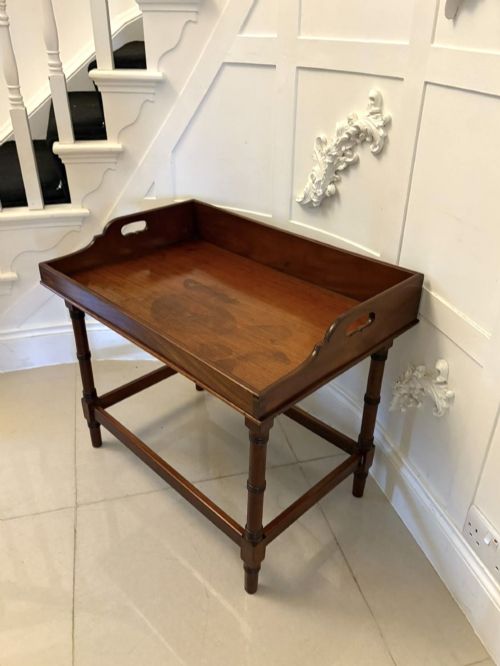
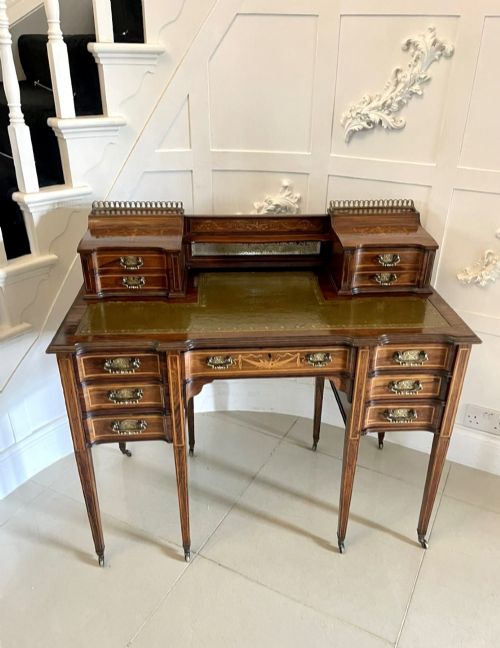
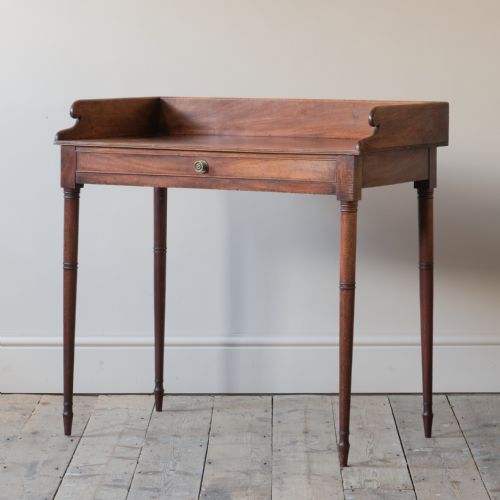
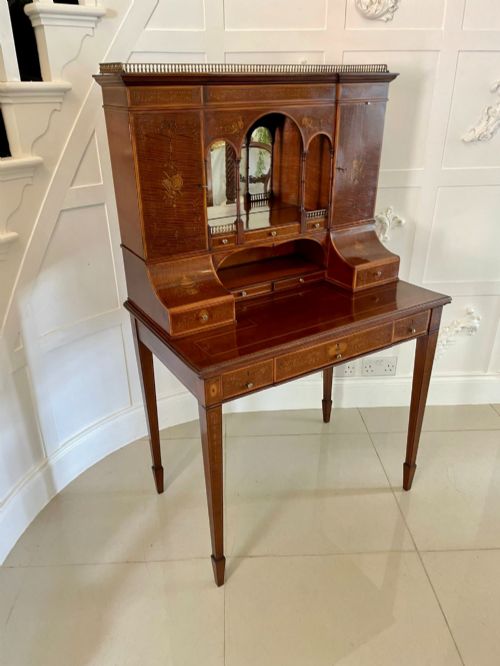
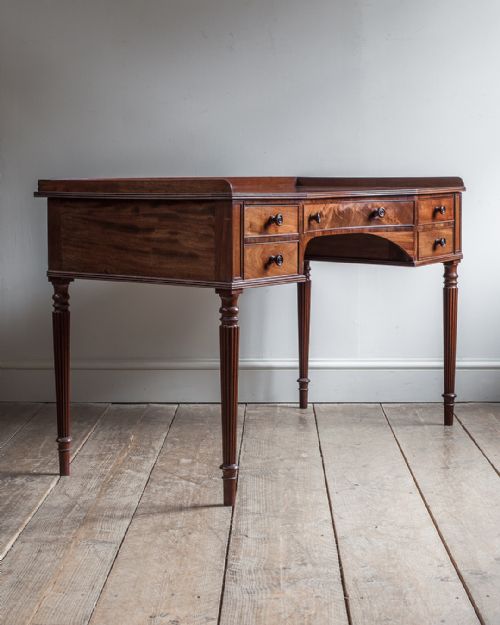
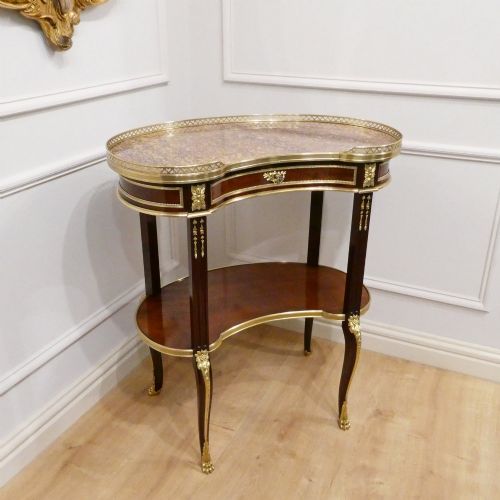
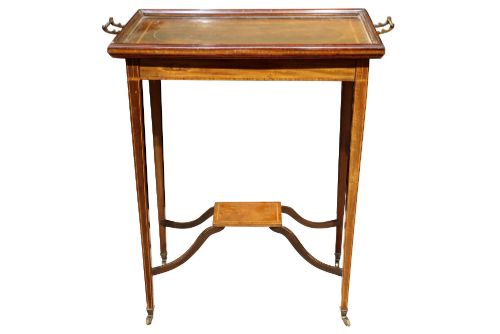
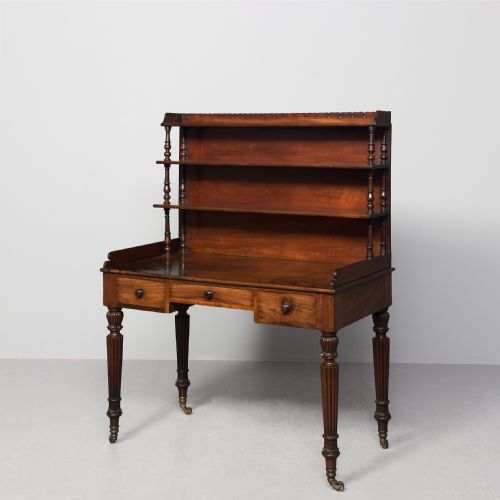
These mahogany gallery table examples combine fine timber with raised edges to hold precious small items securely.
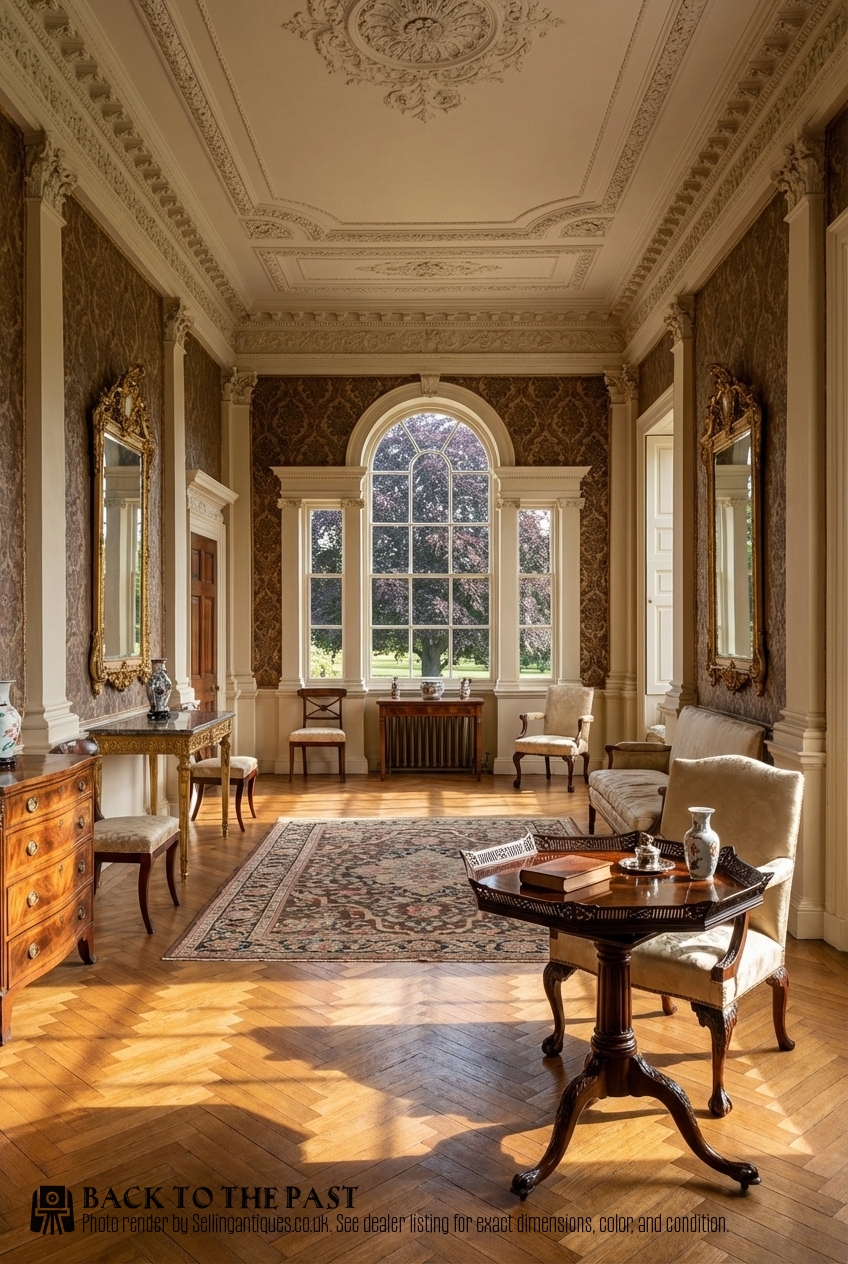
Mahogany Gallery Table
The pieces span several key eras, appearing frequently in Georgian and Regency interpretations alongside later Victorian and Edwardian examples. These tables served multiple functions in domestic interiors, operating as side pieces, serving stands, and writing surfaces.
Originating primarily in British workshops during the eighteenth and nineteenth centuries, these items demonstrate practical elegance. Surviving examples showcase diverse gallery constructions, from pierced brass rails to delicate wooden fretwork surrounds.
How they were made
Cabinet makers utilised dense solid timber and flame mahogany veneers over secondary woods to construct the main bodies and tops. Selected pieces incorporate contrasting inlay, satinwood stringing, and brass bound decoration to accent the primary dark grain.
The raised galleries were formed through different techniques, employing pierced brass baluster rails, fret-cut wooden frets, or shaped solid timber mouldings fixed to the table edge. Tripod bases feature turned columns supported by three sweeping legs, while rectangular versions utilise tapered or turned supports.
A sturdy gallery rail once stopped an overenthusiastic Regency wine glass from launching across the drawing room floor.
What varies in quality
The refinement of the timber selection dictates much of the visual appeal, with rich figuring and balanced grain patterns marking superior examples. Premium pieces display crisp craftsmanship in the fretwork or balanced casting in the brass gallery rails.
Proportion and structural integrity differentiate standard production from master craftsmanship. Subtle details such as finely turned columns, precise dovetailing in drawer construction, and intact original surface patination elevate the standing of an individual table.
Maple and Co·Maison Millet·James Mein of Kelso·Gillows
The Mahogany Gallery Table Glossary
- Gallery
- A raised rim or border around the edge of a tabletop. This feature protects objects from falling and adds decorative linear detail.
- Tripod table
- A small freestanding table supported by a central pillar and three legs. These versatile pieces gained popularity during the Georgian period for tea and wine service.
- Flame mahogany
- A veneer cut from timber where the branch meets the main trunk, producing a distinctive flickering flame-like pattern. Cabinet makers reserved this highly decorative grain for prominent surfaces.
- Fretwork
- Ornamental perforated woodwork cut in geometric or scroll patterns. Artisans applied this technique to create delicate gallery rails and aprons.
- Ormolu
- Gilded bronze ornamentation applied to furniture mounts and details. French pieces frequently incorporate this luxurious metalwork.
Mahogany Gallery Table: Frequently Asked Questions
What is a mahogany gallery table used for?
These tables served primarily as versatile surfaces for holding tea service items, wine glasses, or writing materials in drawing rooms and parlours. The raised gallery ensured that delicate porcelain or glassware remained secure when moved or used.
Today, collectors utilise them as compact accent tables, bedside stands, or display surfaces for small decorative objects. Their diminutive scale allows them to fit easily into various domestic settings.
What is a brass baluster gallery?
A brass baluster gallery consists of miniature turned brass pillars supporting a continuous metal rail around the tabletop perimeter. This specific style provides both physical security and a gleaming metallic contrast to the dark timber.
Cabinet makers frequently paired this metalwork with tripod wine tables and serving surfaces during the late eighteenth and nineteenth centuries.
How should I care for an antique mahogany table?
Protect the surface by keeping the table away from direct sunlight, heating vents, and rapid humidity changes to prevent the timber from splitting. Regular dusting with a soft, dry cloth maintains the finish without building up heavy wax residues.
Applying a pure beeswax polish occasionally nourishes the historic polish and preserves the deep lustre of the mahogany grain.