
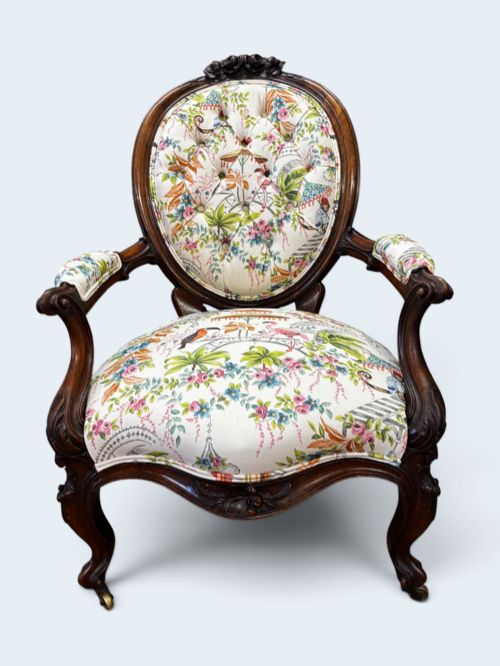
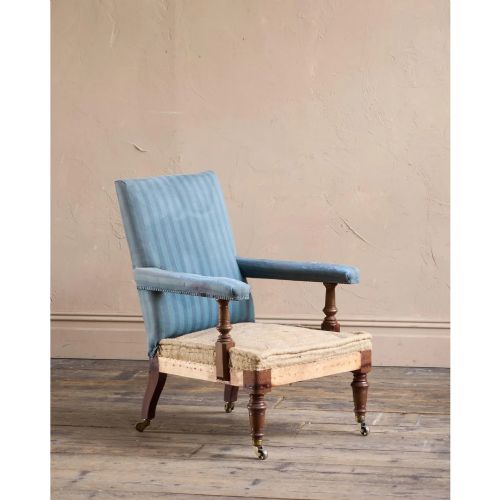

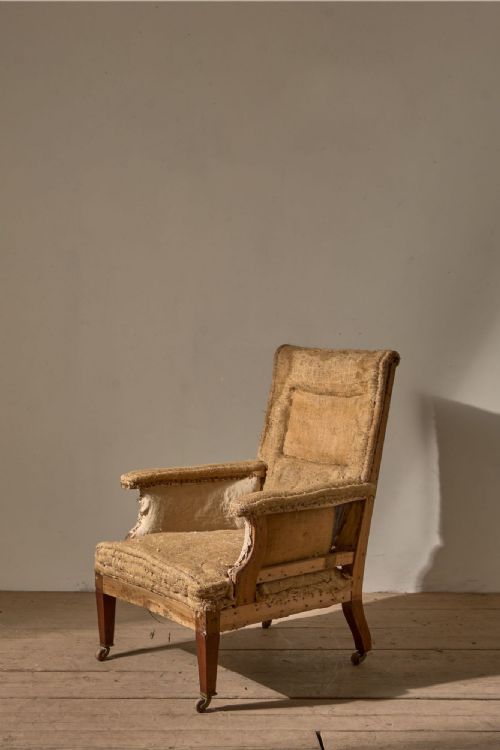
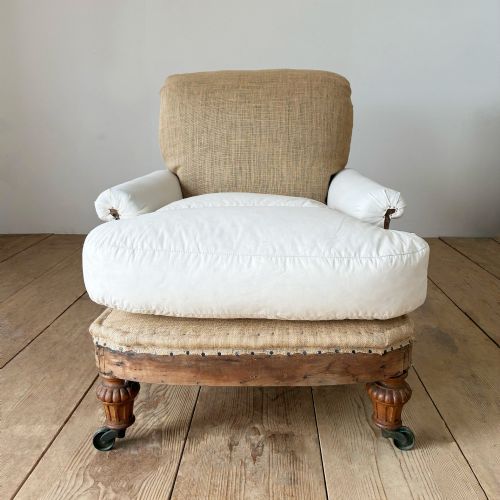
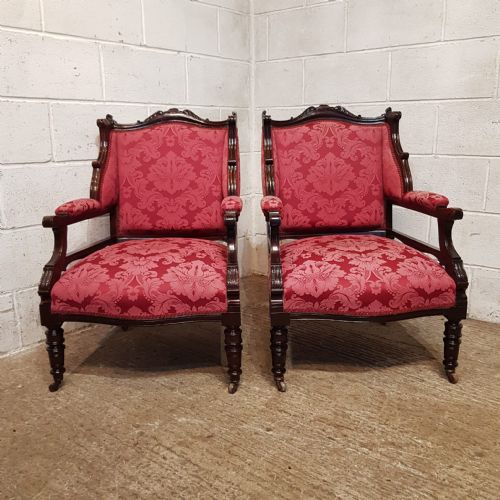
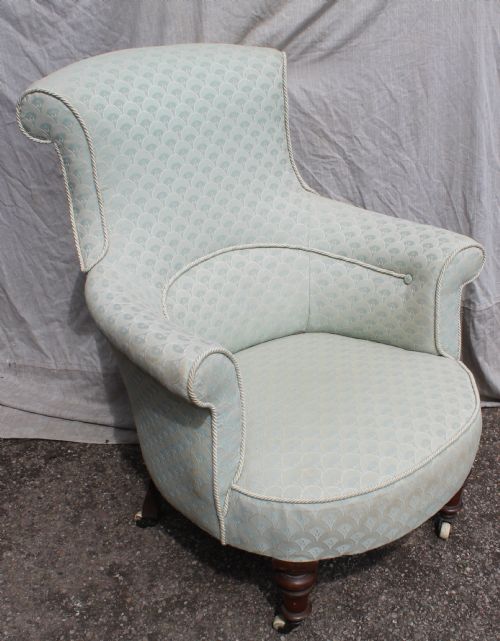
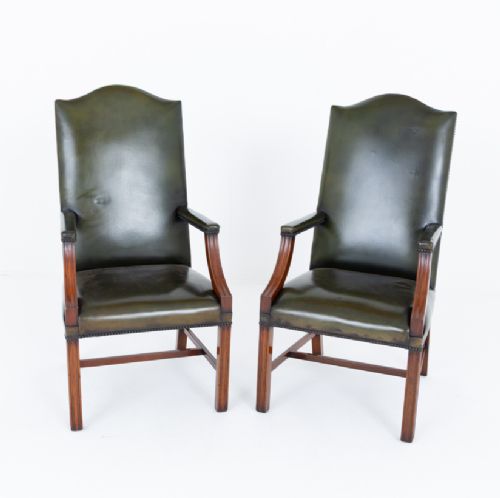
Mahogany Framed Armchair
When you search for a mahogany framed armchair, you are looking at substantial seating where dense timber meets traditional upholstery to anchor a room.

Mahogany Framed Armchair
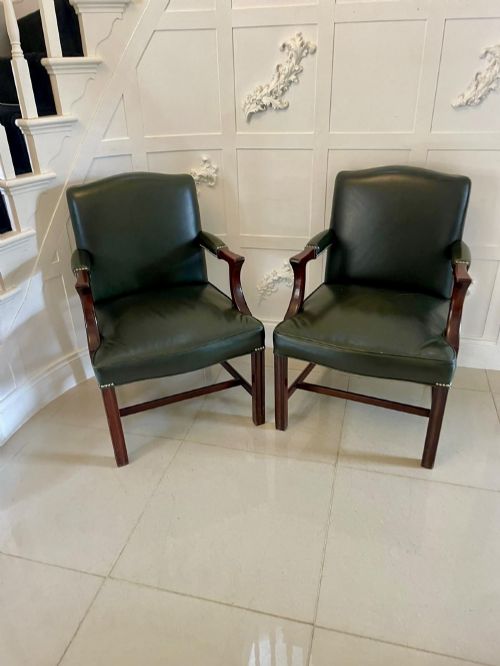
A mahogany framed armchair is a sturdy seat built around a durable exposed timber skeleton, frequently encountered in library, wingback, and nursing chair forms across this selection.
The pieces on this page span several distinct periods including Georgian, Regency, Victorian, and Edwardian eras, reflecting shifting tastes in domestic comfort and formal seating.
Makers utilised mahogany for its rich grain and structural strength, pairing the timber with open arms, buttoned backs, or enclosed wings depending on the era of manufacture.
How they were made
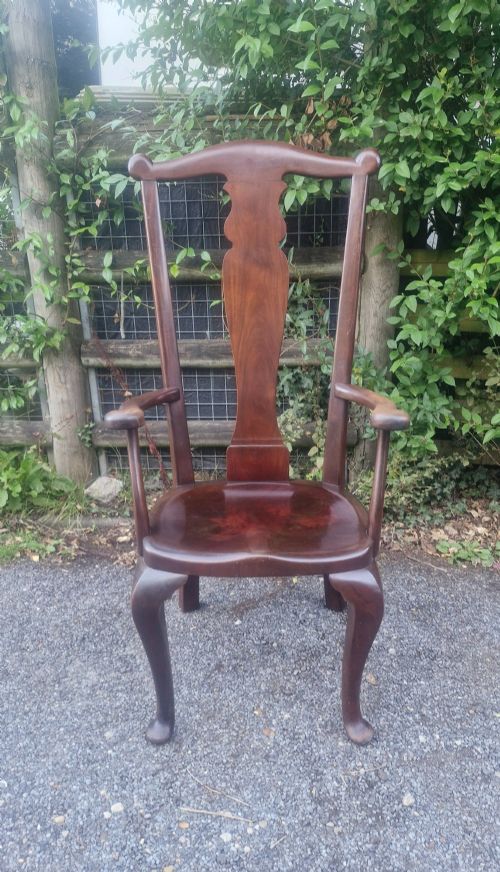
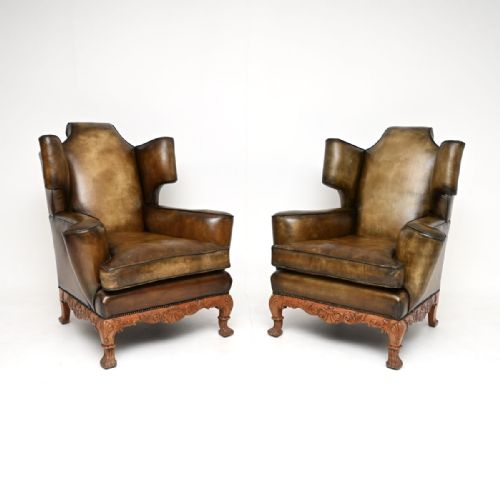
Cabinetmakers constructed the supportive skeletons using solid mahogany, frequently shaping show frames with carved details, sabre legs, or ball and claw feet.
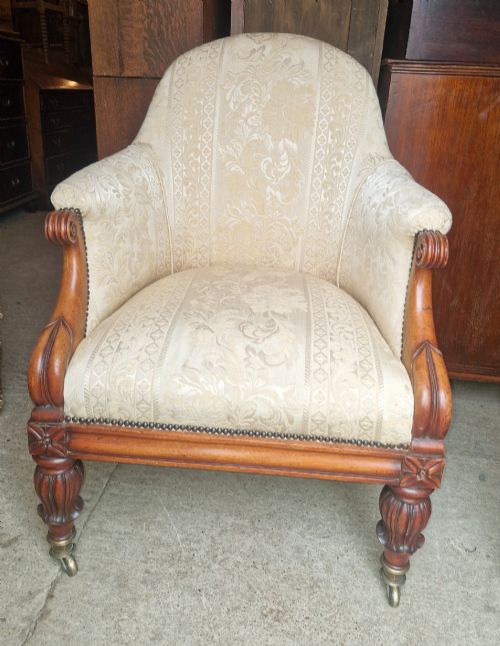
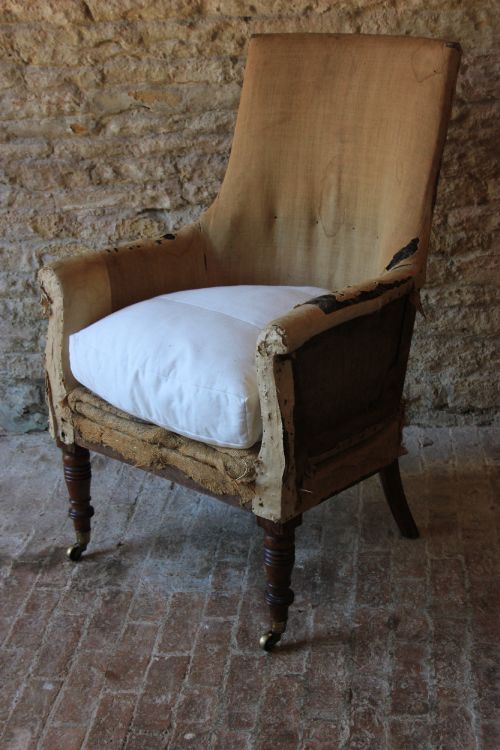
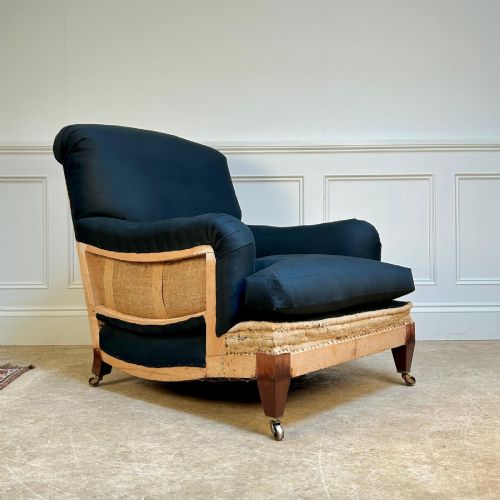
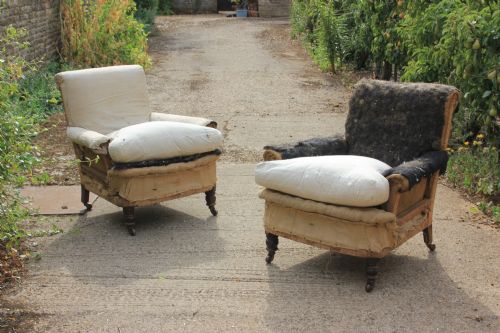
Traditional upholstery techniques layered internal materials like hessian, calico, and stuffing within iron or timber frames before finishing the exterior in leather, velvet, or woven fabric.
Some examples incorporate cane panels for lighter bergere seating, while others rely on brass castors and metal springs to enhance mobility and comfort.
Mahogany Framed Armchair Retail Price Guide 2026
Typical asking prices for mahogany framed armchair among the pieces listed under this phrase on Sellingantiques today, from the lower quarter to the upper quarter. They describe what is for sale here now, not the wider market.
Several armchairs incorporate hidden iron backs beneath their upholstery, offering robust nineteenth-century structural support disguised as comfortable domestic seating.
What varies in quality
The fineness of the mahogany framing distinguishes standard seating from exceptional library chairs, visible in the crispness of carved details and the selection of timber with rich grain patterns.
Construction integrity separates masterwork furniture from everyday pieces, seen in the rigidity of the joinery and the resilience of the underlying webbing and springs.
Provenance and originality elevate certain chairs, particularly when stamped by known workshops or retained in undisturbed upholstery condition.
Gillows·Morison and Co·Howard And Sons·Minter
The Mahogany Framed Armchair Glossary
- Gainsborough chair
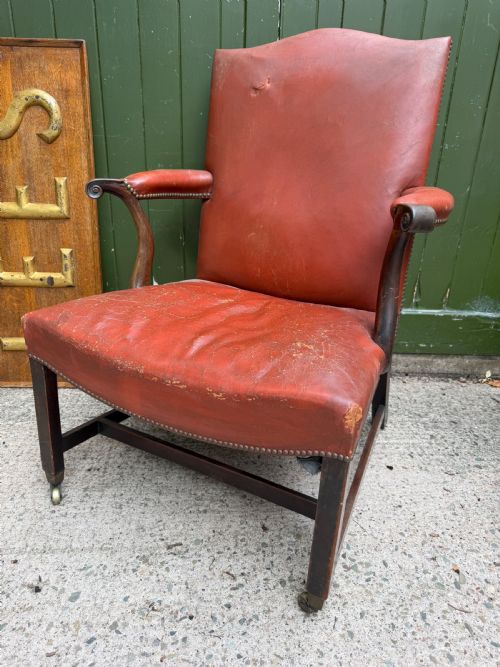
- A wide, open-armed mahogany armchair designed for writing desks, traditionally upholstered in leather. These pieces date predominantly from the Georgian period and its later revivals.
- Bergere
- An enclosed armchair featuring woven cane panels on the back and sides. This French-inspired form gained popularity in Edwardian and earlier British interiors.
- Wingback
- An upholstered armchair with projecting side panels designed to shield the sitter from draughts. Early examples frequently paired mahogany frames with leather or heavy fabric.
- Show frame
- A wooden structural skeleton left deliberately exposed around the upholstered elements of an armchair. This technique highlights the quality of the mahogany chassis.
- Sabre leg
- A concave, outwardly curving furniture leg that tapers toward the foot. This form is particularly characteristic of Regency library and desk chairs.
Mahogany Framed Armchair: Frequently Asked Questions
How do I identify a Georgian armchair?
Georgian armchairs often feature restrained mahogany frames with straight or cabriole legs, occasionally terminating in ball and claw feet. The proportions tend to be neat and balanced, reflecting the classical design principles of the eighteenth century.
Later revivals from the Edwardian period mimic these traits, so checking the timber age and construction methods helps confirm the original manufacturing date.
What is a library armchair used for?
Library armchairs were built for reading rooms and studies, offering deep seating and sturdy mahogany armrests for extended periods of use. Many examples are upholstered in durable leather to withstand daily study habits.
These chairs frequently appear as Gainsborough or tub back variants designed to fit comfortably beneath writing tables or beside large bookcases.
Are these chairs comfortable for daily use?
Many antique armchairs offer deep padding and supportive sprung backs that suit modern seating habits. Restored pieces often retain comfortable proportions while updating internal webbing for daily living.
Wingback and fireside variants provide particular ergonomic support around the back and shoulders, making them practical additions to living spaces.
How do I care for mahogany and leather?
Mahogany frames benefit from occasional polishing with traditional beeswax to nourish the timber grain and maintain a deep lustre. Avoid placing wooden furniture in direct sunlight or near heat sources to prevent the wood from drying out.
Leather upholstery requires regular conditioning to keep the surface supple and prevent cracking, using specialist balms suited to antique hides.