
Mahogany Display Etagere
A mahogany display etagere brings tiered elegance to a room, offering open shelving for treasured objects across various period forms.
Mahogany Display Etagere
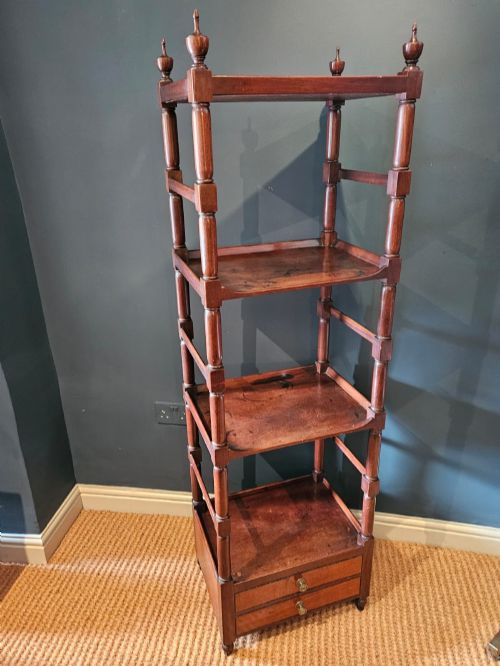
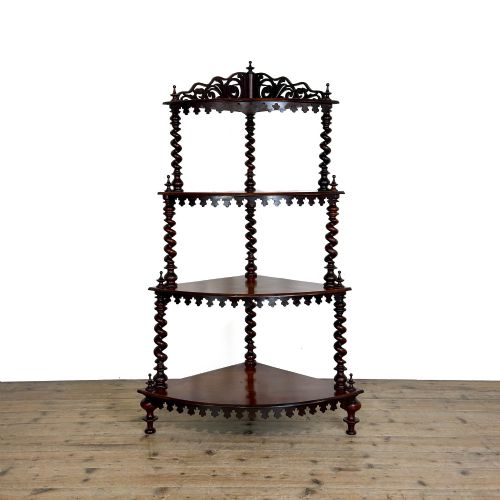
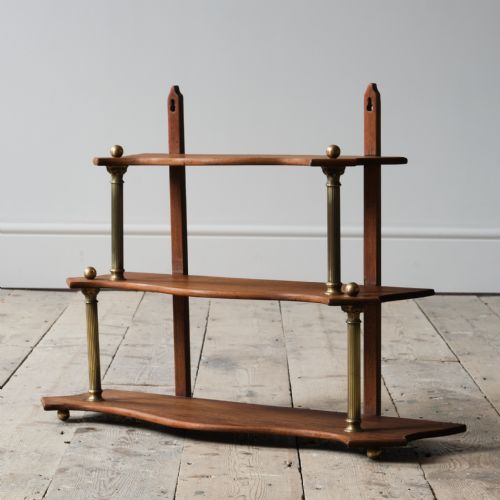
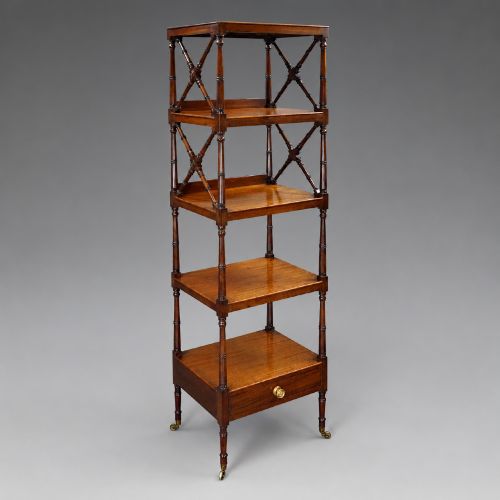
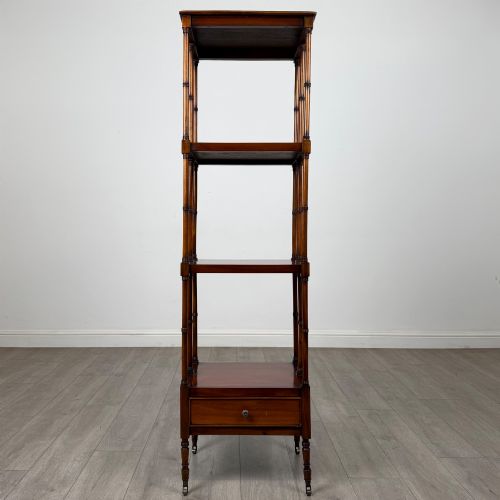
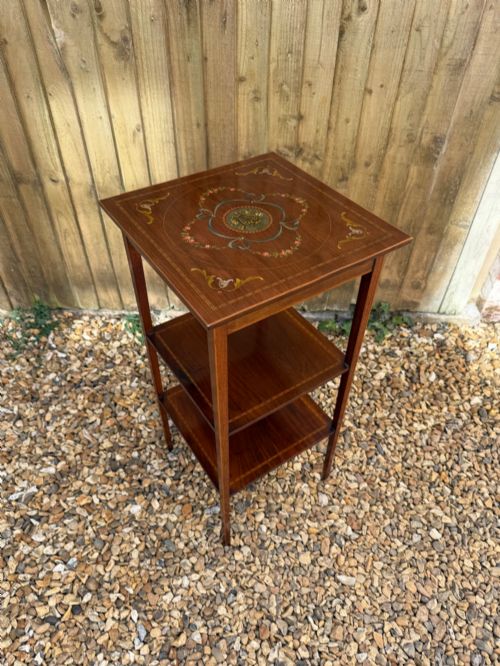
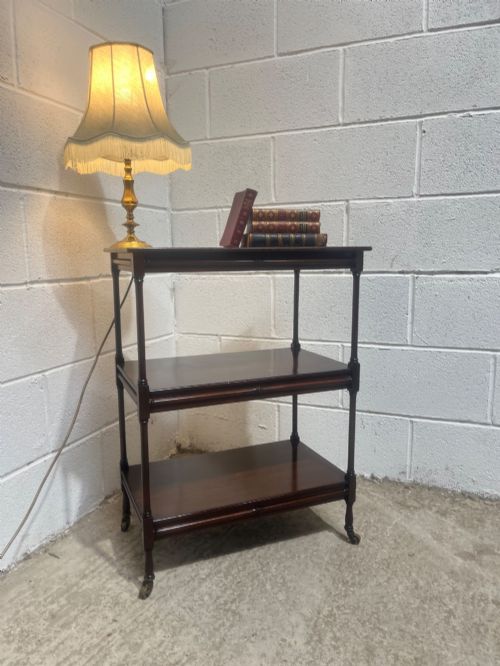
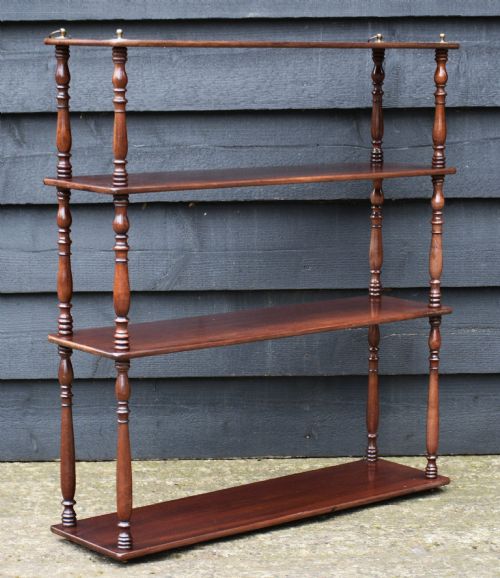
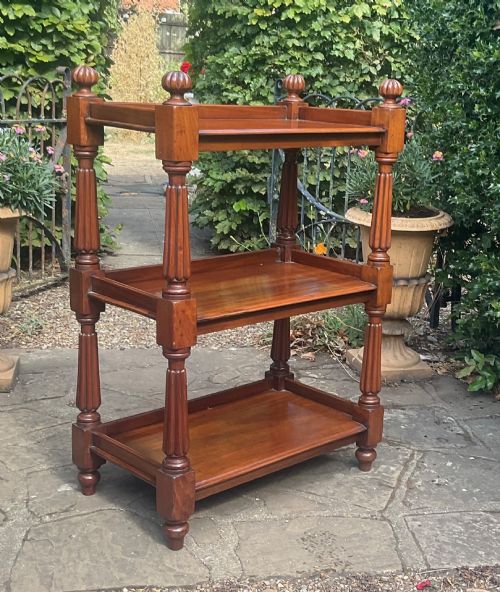
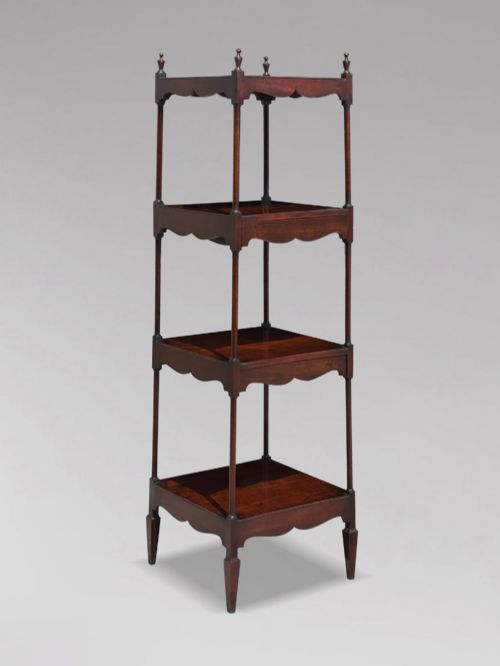
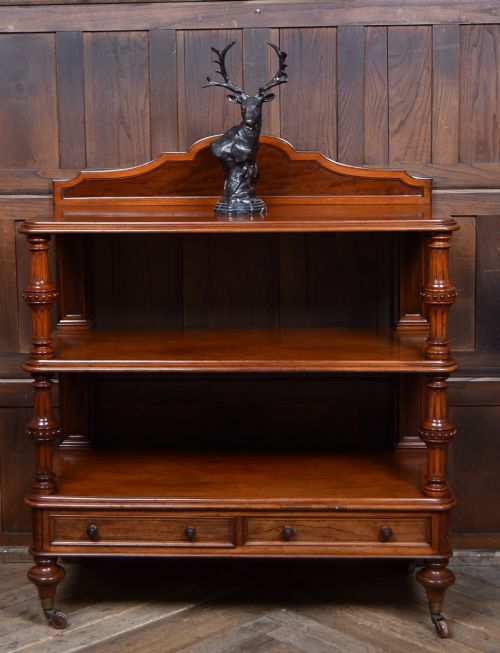
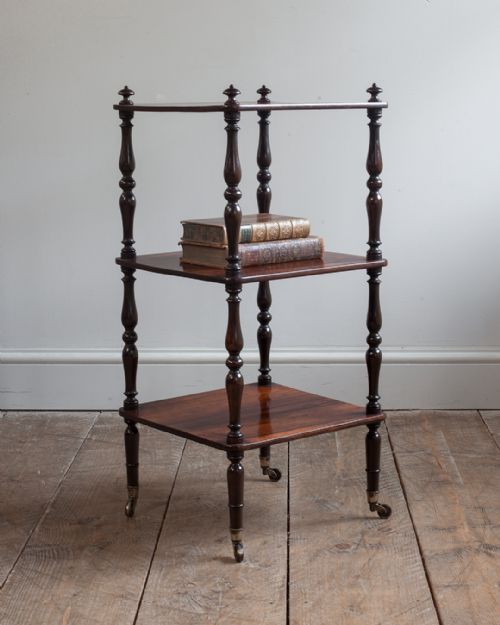
A mahogany display etagere takes many structural forms, appearing primarily as multi-tiered whatnots, wall hanging shelves, and occasional tables designed for display and storage. These open furniture pieces emerge across the Georgian, Regency, Victorian, and Edwardian periods.
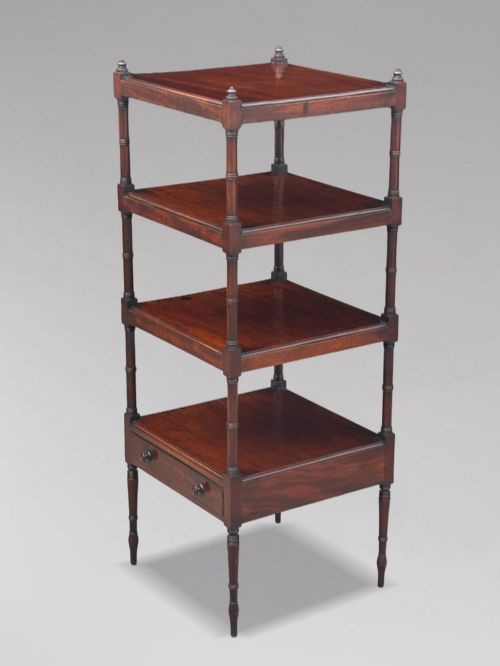
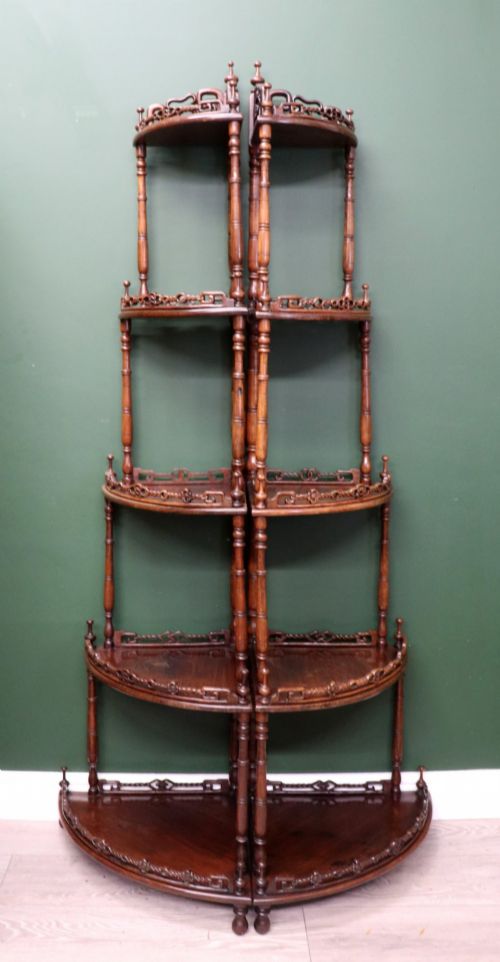
Buyers seeking a mahogany display etagere most frequently encounter multi-tier freestanding bookcases and corner whatnots from the nineteenth century. These items utilise rich timber grains and graduated shelving to hold books, ceramics, and ornaments in principal rooms.
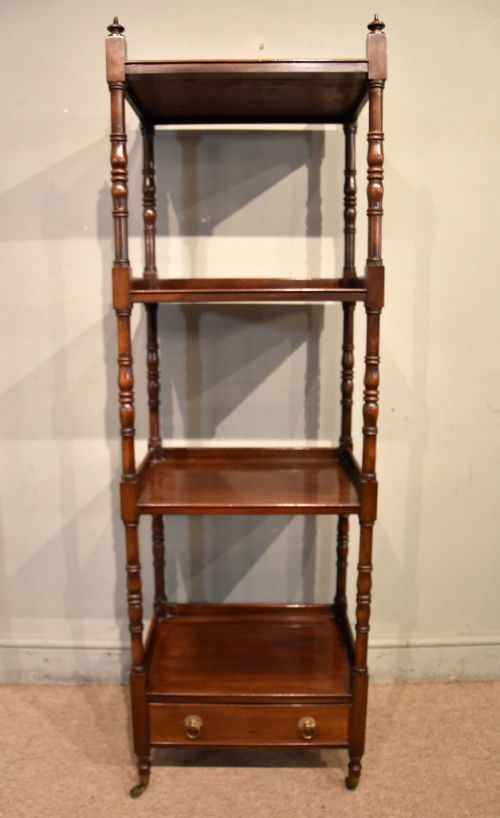
The inventory ranges from tall four-tier stands and music stands with drawers to compact wall-mounted shelving and oval etagere tables. Pieces reflect evolving domestic habits from the eighteenth century onwards, shifting from utilitarian stands to decorative display furniture.
Materials and Construction Methods
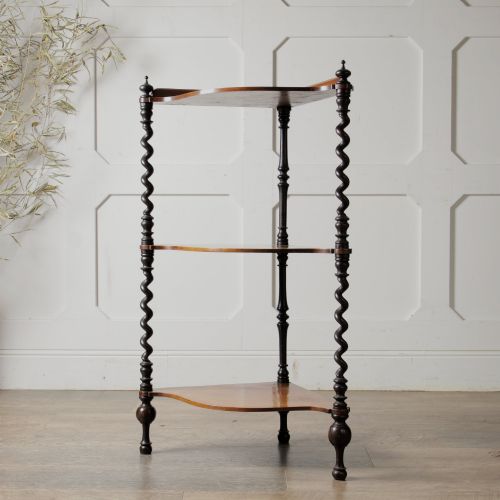
Cabinet makers constructed these etageres predominantly using solid mahogany and mahogany veneers, occasionally incorporating contrasting satinwood inlay or rosewood for decorative banding. Structural supports frequently integrate turned wooden columns or barley twist uprights.
Many examples utilise brass castors, hinges, and gallery rails to finish the edges of shelves or support upper tiers. Joinery methods of the period rely on precise hand-cut joints, securing stacked tiers to vertical corner posts with stability.
The recorded forms span freestanding multi-tier bookcases, corner whatnots, music stands, and wall-mounted shelving units.
Quality Variations across the Range
The standard of a mahogany display etagere rests on the choice of timber figurations, the crispness of turned supports, and the restraint of inlaid satinwood details. Superior examples exhibit tightly grained mahogany boards and balanced proportions across every tier.
Design sophistication dictates the upper tier of quality, seen in pieces featuring integrated drawers, shaped galleries, or attributed workshop origins. Lesser examples rely on plain timber and simpler vertical turning without decorative refinement.
Edwards and Roberts·Gillows
The Mahogany Display Etagere Glossary
- Etagere
- A piece of furniture consisting of a set of open shelves for displaying small objects or ornaments. The term often describes French or French-influenced tiered tables and stands.
- Barley Twist
- A type of woodturning shaped like a spiral or helix. This decorative form appears frequently on nineteenth-century upright column supports.
- Gallery
- A raised decorative edge or railing around the top of a shelf or table. It prevents items from sliding off the surface.
- Satinwood Inlay
- Contrasting light-coloured wood inserted into the mahogany surface in decorative patterns. It adds visual refinement to late-period pieces.
Mahogany Display Etagere: Frequently Asked Questions
What is a mahogany display etagere used for?
These tiered pieces were traditionally designed to hold books, ceramics, and decorative ornaments within principal rooms. Their open shelves allow objects to be viewed easily from multiple angles.
Today, they serve a similar purpose in domestic interiors, functioning as display stands for collections, plants, or bedside belongings.
How do I identify a Regency period piece?
Regency items date from the early nineteenth century and typically display classical restraint, fine mahogany veneers, and precise turned supports. They often incorporate brass details and architectural proportions.
Comparing the turning style and timber density against known examples helps confirm the period origin.
Where should I place an etagere at home?
Freestanding units suit corners or empty wall spaces where open shelving adds vertical storage without blocking light. Wall-hanging versions anchor well above desks or sideboards.
Ensure the placement protects the polished mahogany surface from direct sunlight and excessive temperature changes.
What is the difference between a whatnot and an etagere?
Both terms describe tiered open shelving, though whatnot is more commonly applied to British freestanding corner and bookcase units. Etagere frequently denotes lighter French-influenced tables and decorative stands.
In practice, makers and dealers used the terms interchangeably across the eighteenth and nineteenth centuries.