


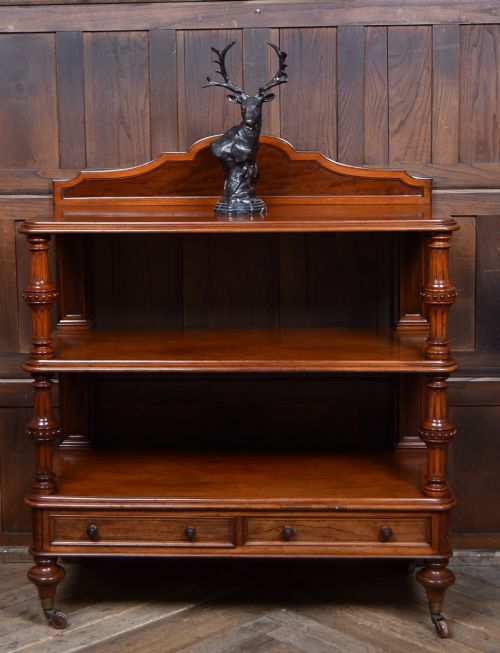
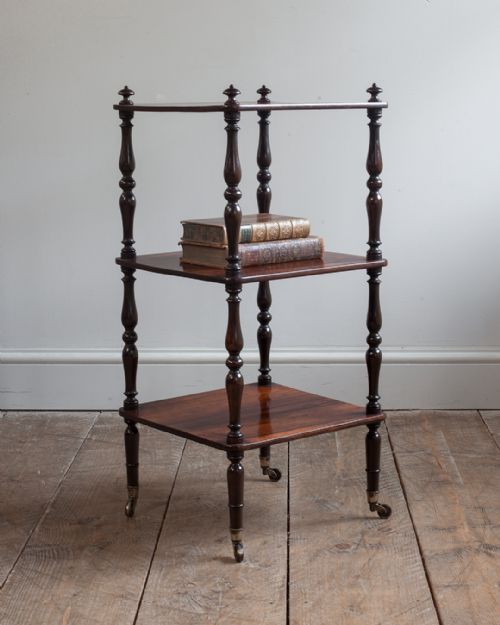
Victorian Tiered Whatnot
A victorian tiered whatnot offers tiered shelving for display, combining practical storage with elegant nineteenth-century design.
Victorian Tiered Whatnot
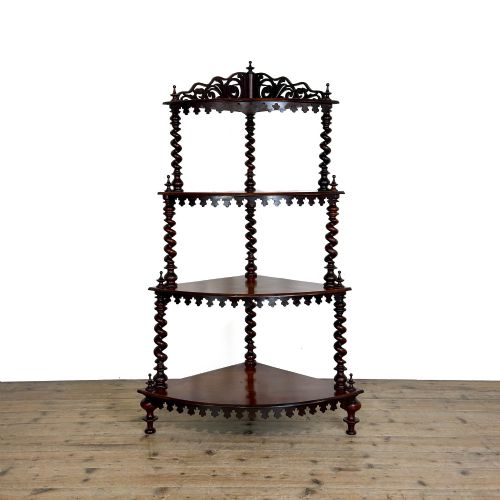
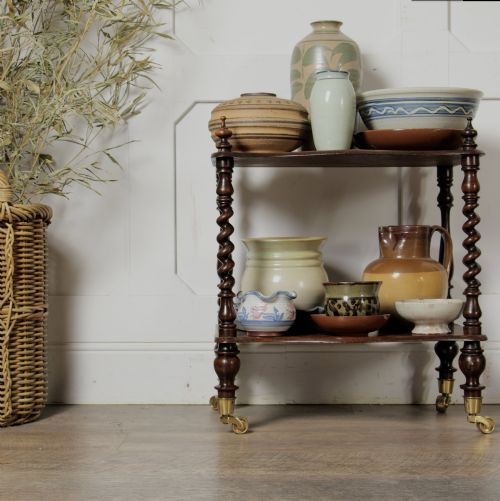
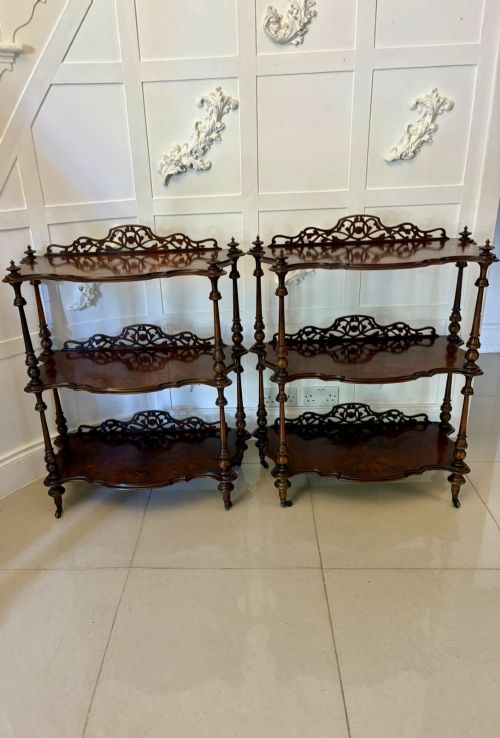
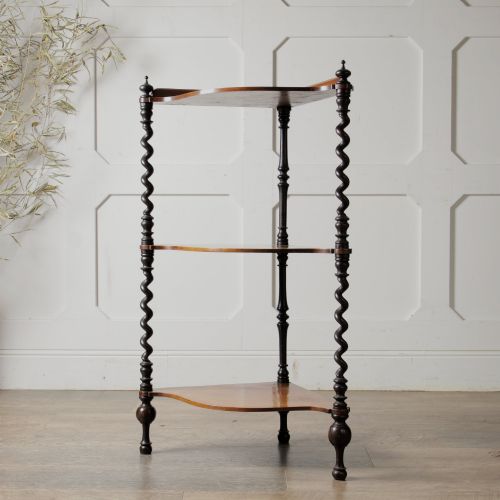
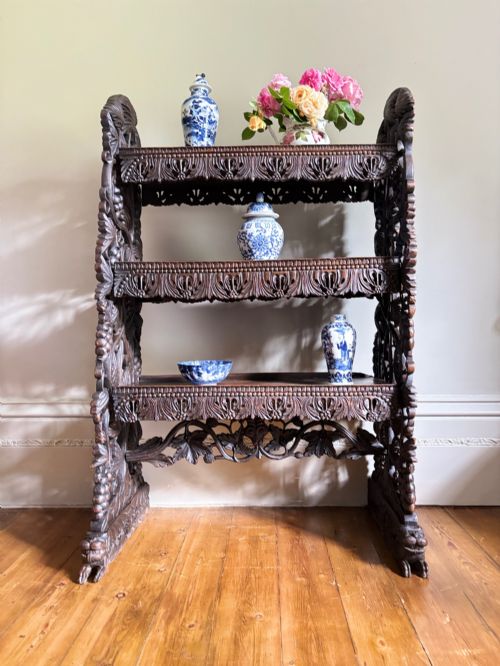
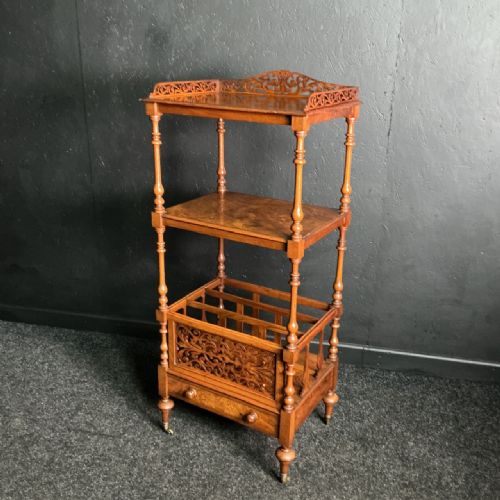
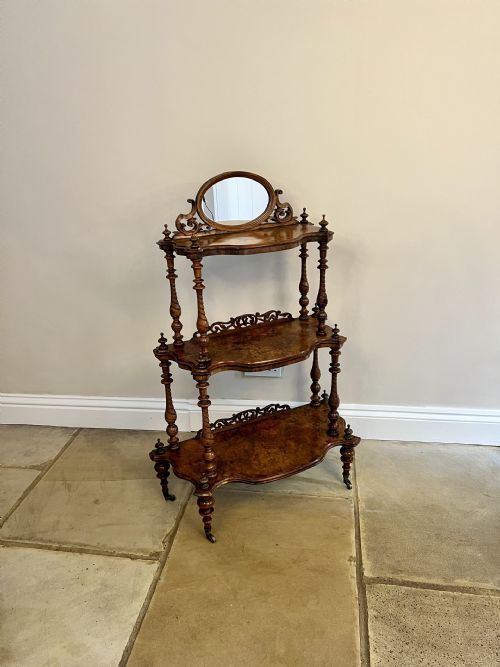
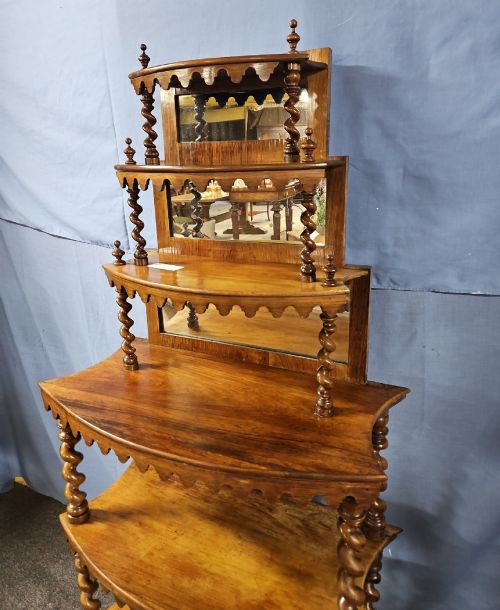
A victorian tiered whatnot provides multi-level shelving designed for displaying ornaments, books and small domestic objects in nineteenth-century interiors. These pieces appear frequently as freestanding models or corner units with three or four tiers supported by turned or barley twist columns.
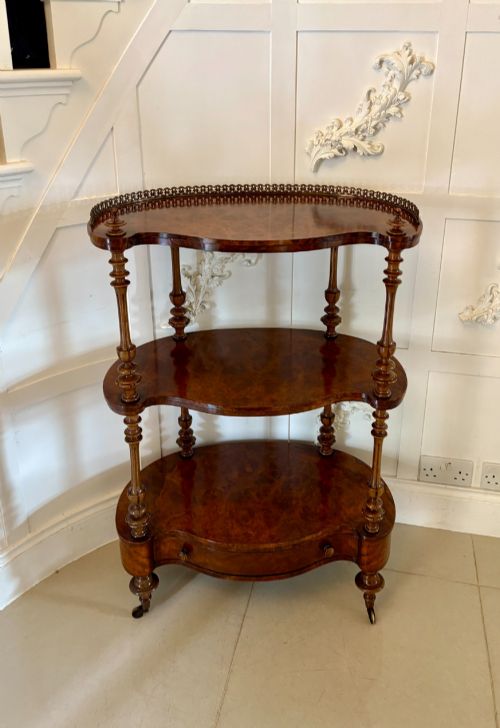
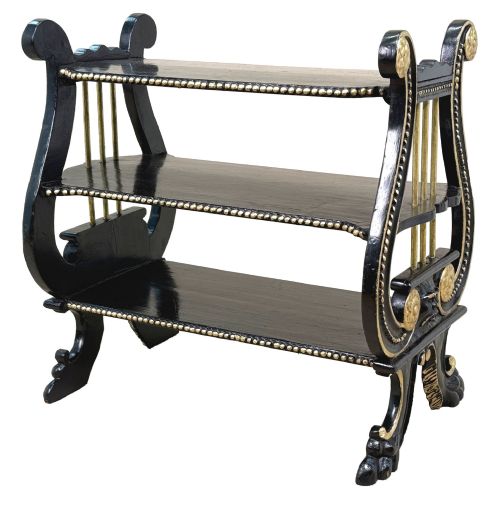
The materials and styles span standard Victorian mahogany and walnut to more decorative rosewood, ebonised wood and burr walnut examples. Many survive from the mid to late nineteenth century, reflecting varied domestic uses from music rooms to drawing rooms.
Materials and Construction
Cabinet makers utilised dense hardwoods such as mahogany, walnut and rosewood to construct the sturdy uprights and tiered platforms required to bear weight. Burr walnut veneers and ebonised finishes provided decorative surfaces, often enhanced with brass details, marquetry inlay or parcel gilding.
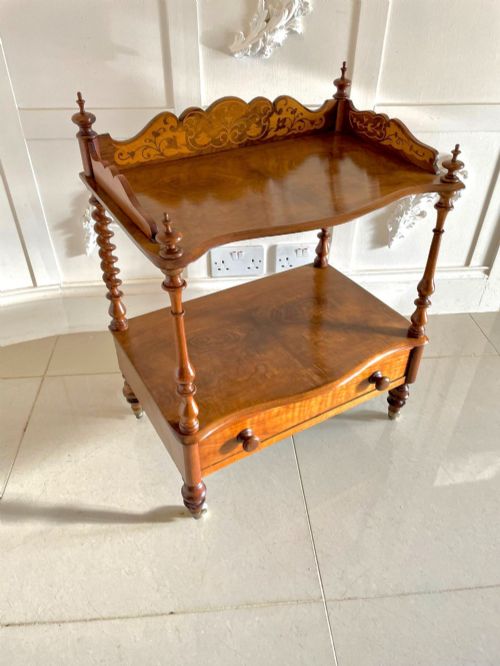
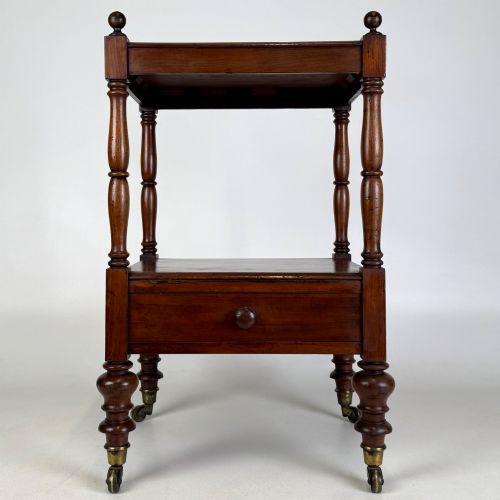
Structural support relied on turned columns, corner brackets and sturdy uprights, with specific variants incorporating barley twist supports or integrated cabinets and drawers beneath the open shelves.
Several examples incorporate built-in compartments for sheet music, proving that Victorian guests required constant musical interludes between displays of porcelain.
Evaluating Quality and Detail
The calibre of a victorian tiered whatnot is defined by the choice of timber figure, particularly the richness of burr walnut or the depth of grain in mahogany and rosewood. Superior examples display finer marquetry inlay, delicate brass mounts and precise joinery in the turning of the columns and tiers.
Proportion and stability separate standard utility pieces from exceptional salon furniture. Finer items exhibit balanced tiers, sophisticated serpentine shaping and well-integrated lower cabinets or drawers rather than basic stacked shelves.
Samson and Son London
The Victorian Tiered Whatnot Glossary
- Whatnot
- A piece of furniture consisting of a set of open shelves for displaying small objects. They became popular during the nineteenth century for drawing room use.
- Etagere
- A French style of tiered shelving unit designed for display. These frequently feature decorative ebonised finishes and parcel gilding.
- Barley twist
- A type of column turning resembling the spirals of barley sugar. This decorative support appears frequently on nineteenth-century stands and tables.
- Burr walnut
- Timber taken from the warted growths on walnut trees, yielding highly figured grain patterns. Cabinet makers utilised these veneers on top surfaces for dramatic visual effect.
Victorian Tiered Whatnot: Frequently Asked Questions
What was a victorian tiered whatnot used for?
These tiered units served primarily to display porcelain, silver, books and ornamental items in nineteenth-century reception rooms.
They allowed households to exhibit collections of decorative objects while keeping surfaces tidy and accessible.
How do I distinguish between different wood types?
Mahogany offers a dense, reddish-brown tone, whereas walnut presents richer brown shades with darker grain patterns.
Burr walnut displays swirling, knotty figures, and rosewood carries distinct dark streaking over a deep reddish-brown base.
Are corner units common among these listings?
Corner shelving units represent a significant portion of surviving examples, specifically tailored to utilise neglected room angles.
These pieces maintain the same tiered display function as freestanding models while occupying less floor space.
Did these pieces include closed storage?
Certain variations integrate small cupboards, drawers or Canterbury sections beneath the open display tiers.
These hybrid forms offered concealed storage for sheet music or smaller household items alongside the upper shelves.