


Four Tier Shelving Unit
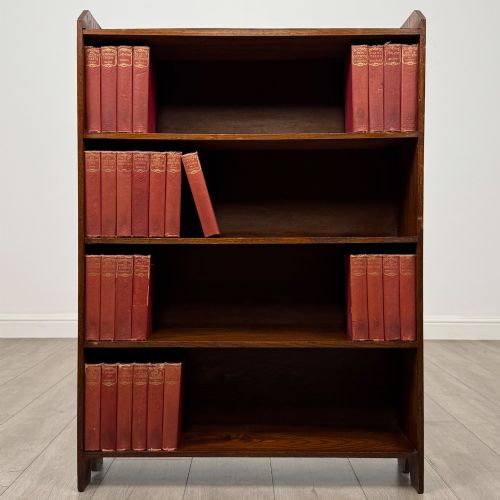
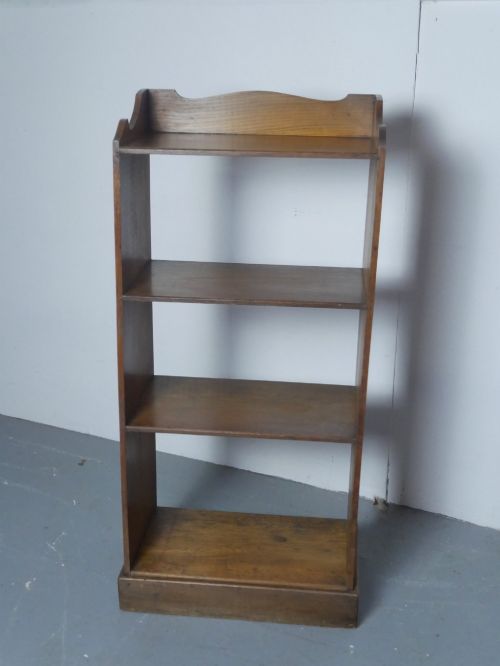
A four tier shelving unit brings timber tiered display and storage into period rooms.
Four Tier Shelving Unit
When you search for a four tier shelving unit, you find stacked tier furniture designed for display and storage. These pieces appear as whatnots, etageres, wall shelves, bookcases and hanging shelves.
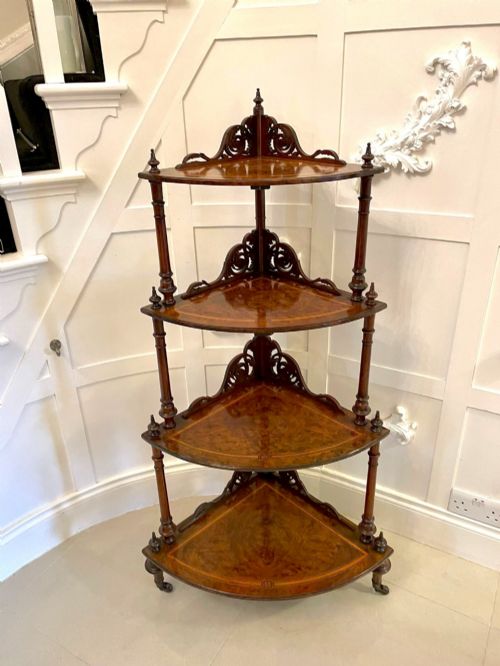
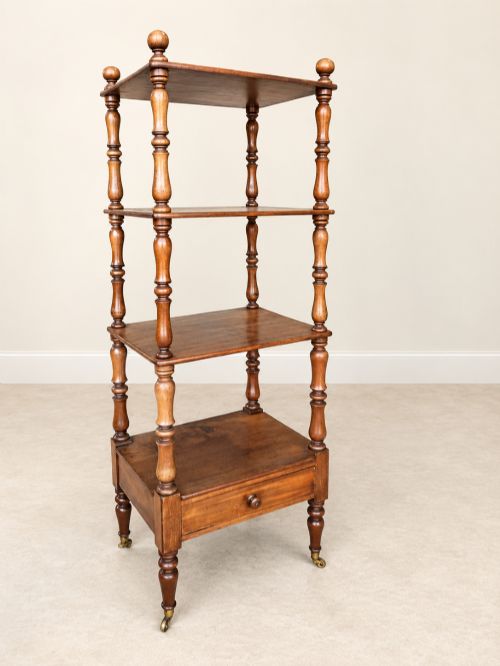
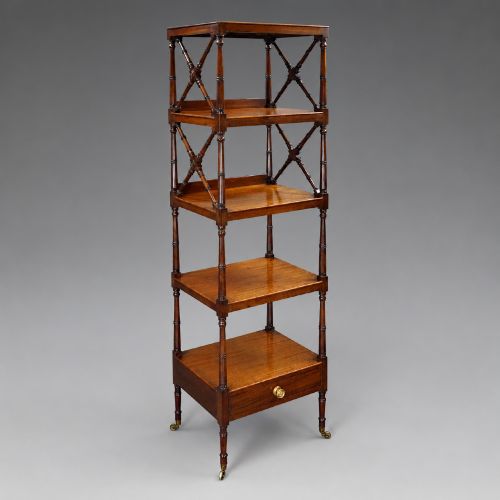
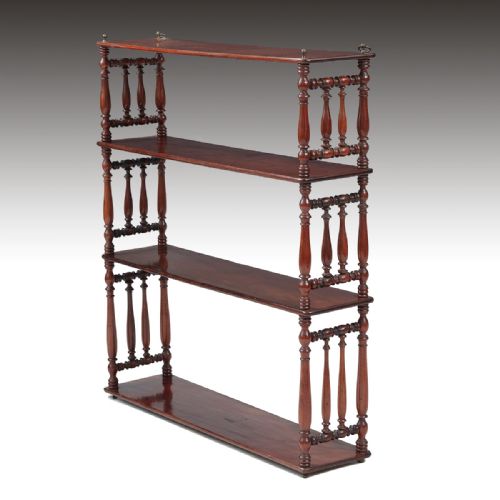
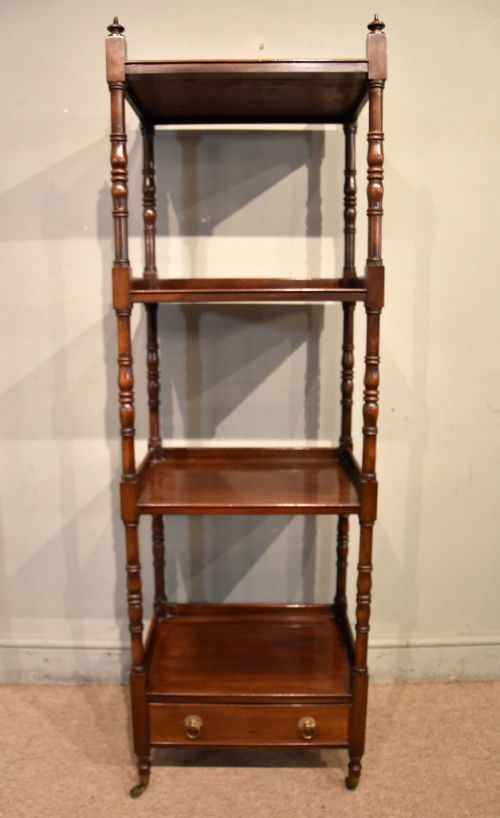
The most common examples on this page are standing whatnots and hanging shelves from the Georgian, Regency and Victorian periods. They use upright supports to hold multiple open tiers for books and decorative objects.
Materials and construction
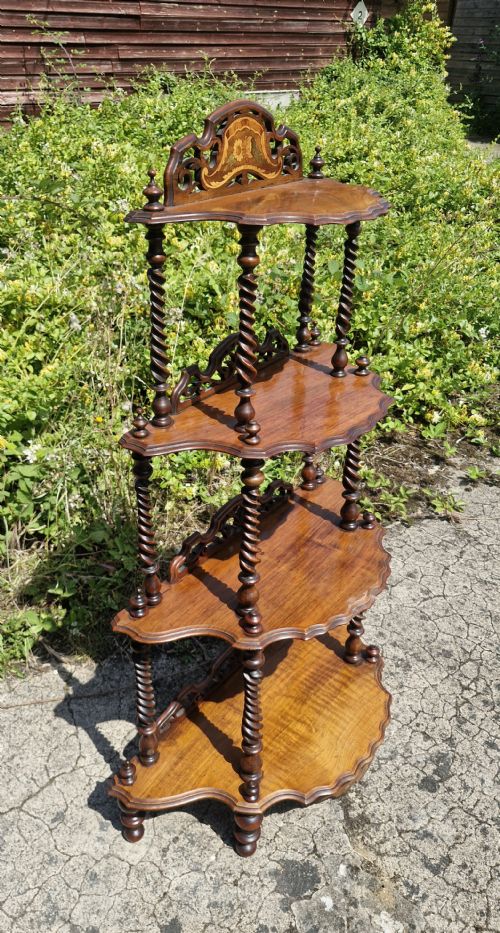
Cabinet makers built these pieces using timbers such as mahogany, walnut, rosewood, oak and burr walnut, alongside brass mounts. Wood inlay and marquetry inlay adorn surfaces on several examples.
Makers constructed standing and hanging frames with multiple tiers fixed between upright supports. Some designs utilise corner configurations or A-frame structures to fit specific domestic spaces.
Object forms span whatnots, etageres, wall shelves, hanging shelves, open bookcases, stacking bookcases and display stands.
Factors of quality
Quality rests in the choice of timber and the precision of the joinery between tiers and uprights. Figured woods like burr walnut and rosewood elevate a piece above standard mahogany or oak.
Surface details such as fine marquetry inlay and well-cast brass elements distinguish finer examples. The crispness of the turning on structural supports separates ordinary items from superior ones.
The Four Tier Shelving Unit Glossary
- Whatnot
- A piece of furniture with shelves for displaying ornaments or books. These multi-tiered stands appeared during the eighteenth century.
- Etagere
- A piece of furniture consisting of a set of open shelves for displaying small objects. They share similarities with whatnots.
- Marquetry
- Decorative woodwork in which pieces of finely cut wood and other materials are inserted into a veneer to form designs. This technique decorates several walnut pieces.
- Corner whatnot
- A tiered display stand designed to fit snugly into a room corner. These utilise otherwise empty architectural angles.
Four Tier Shelving Unit: Frequently Asked Questions
What is a four tier shelving unit used for?
These units served primarily for displaying ornaments, ceramics and books in domestic rooms. Their open tier structure kept small decorative objects visible and accessible.
Today, they function well in living spaces or bedrooms for holding books, plants and collections. Their vertical format provides display space without occupying a large floor area.
How do I identify a Victorian whatnot?
Victorian examples often feature dark hardwoods like mahogany or walnut, frequently paired with inlaid details. They date from the nineteenth century and typically show sturdy four-tier construction.
Corner designs and pieces utilising burr walnut also point towards the Victorian era. The turnings on the upright supports reflect nineteenth-century cabinet-making styles.
What is the difference between an etagere and a whatnot?
Both terms describe tiered open shelving furniture used for display. In practice, historical makers and contemporary dealers often use them interchangeably.
Etageres sometimes lean towards lighter, French-influenced decorative display pieces. Whatnots frequently include British standing and corner variations with structural uprights.