
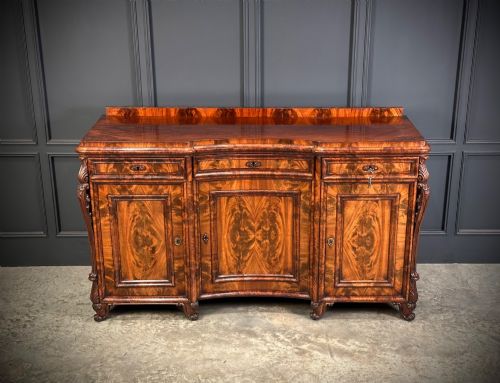
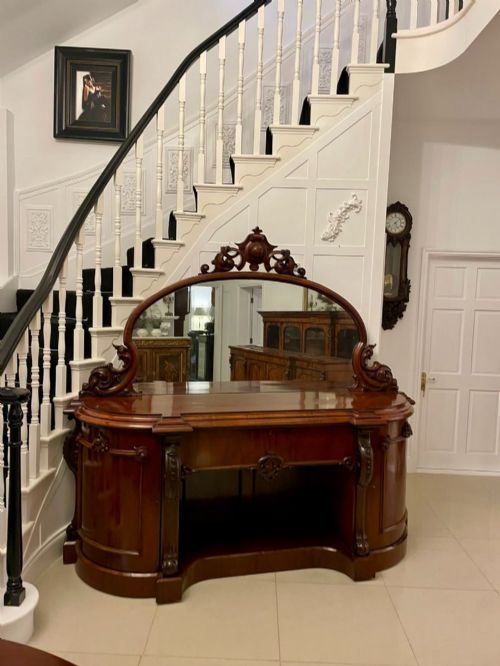
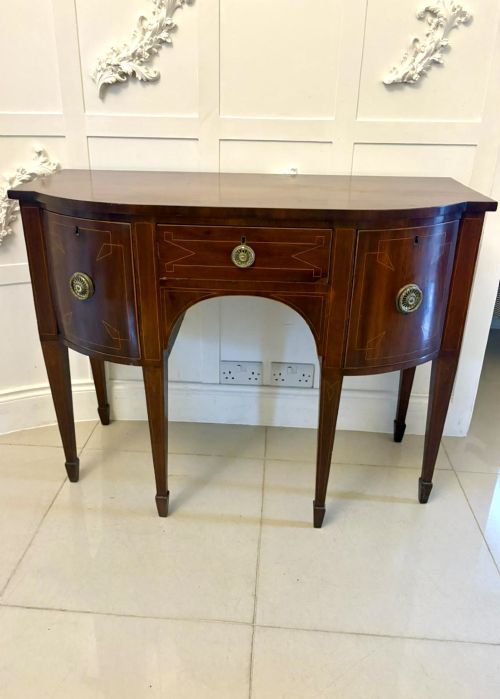

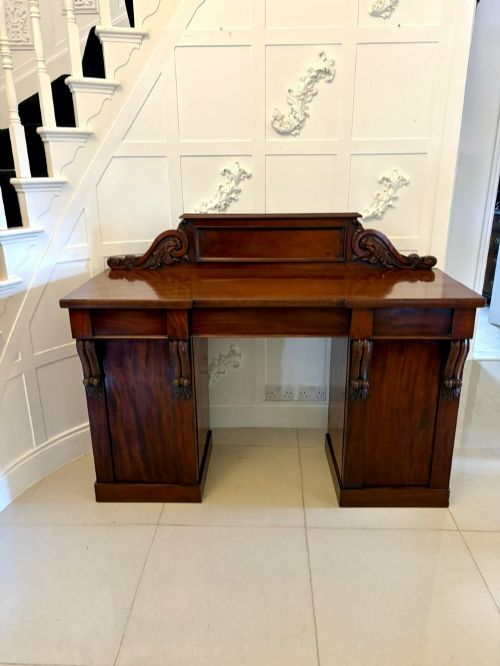

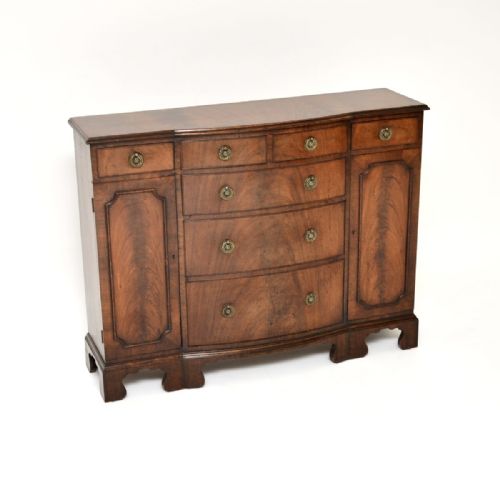
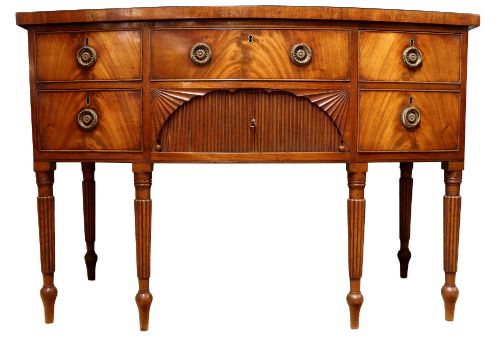
Mahogany Credenza Server
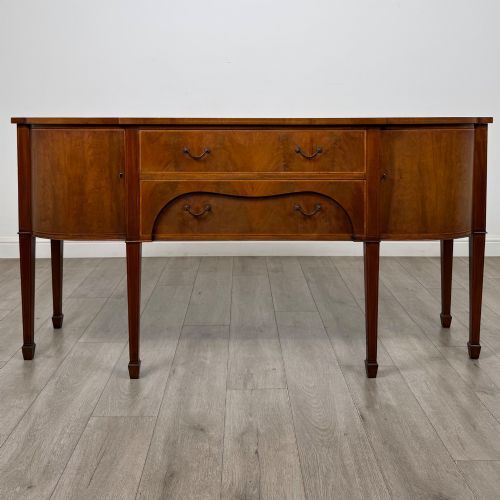
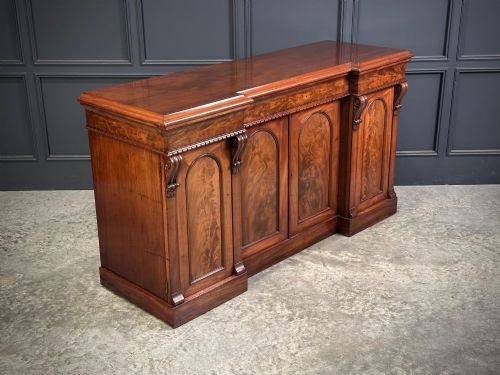
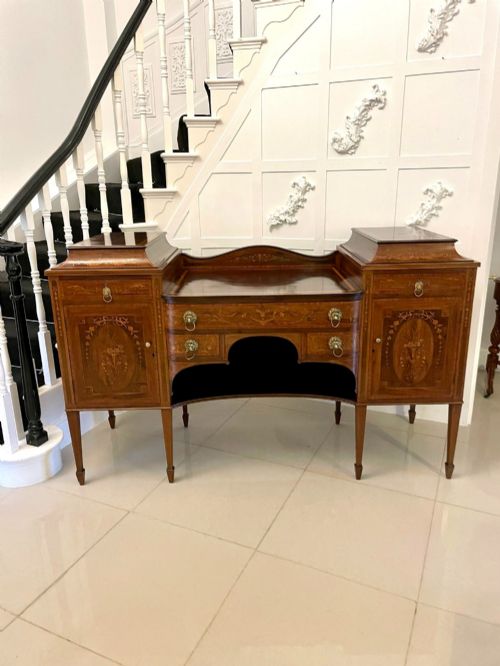
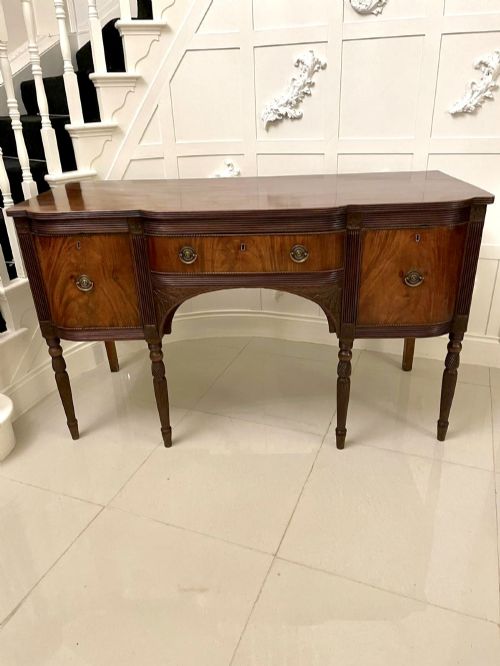
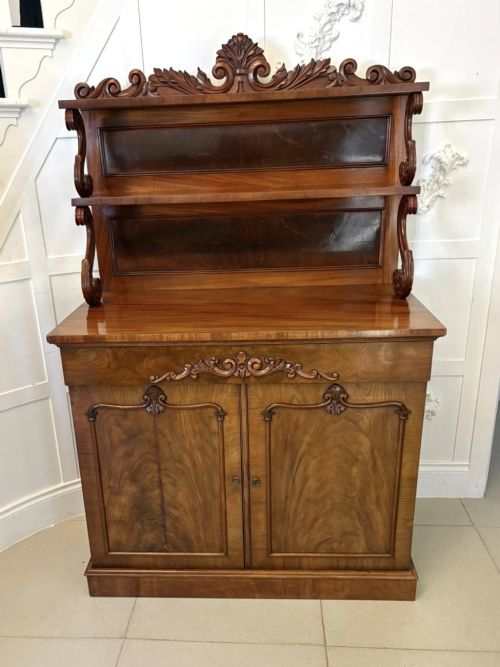
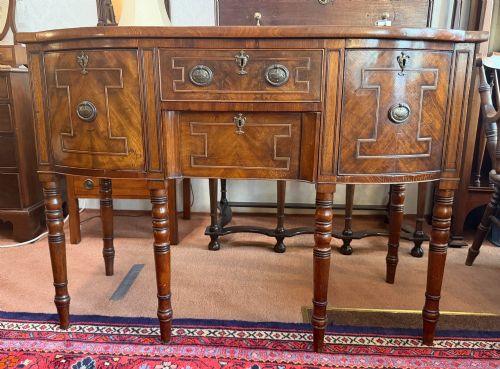
A mahogany credenza server brings rich timber grain and classic storage to a dining room, offering a stately surface for serving food and displaying silver.
Mahogany Credenza Server
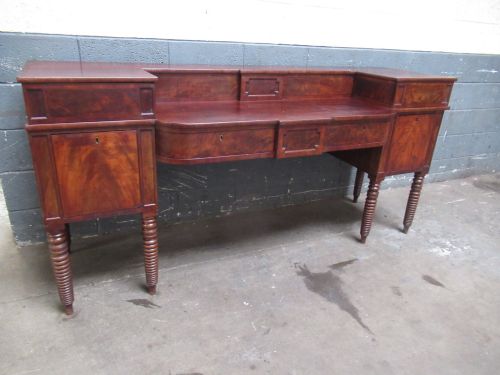
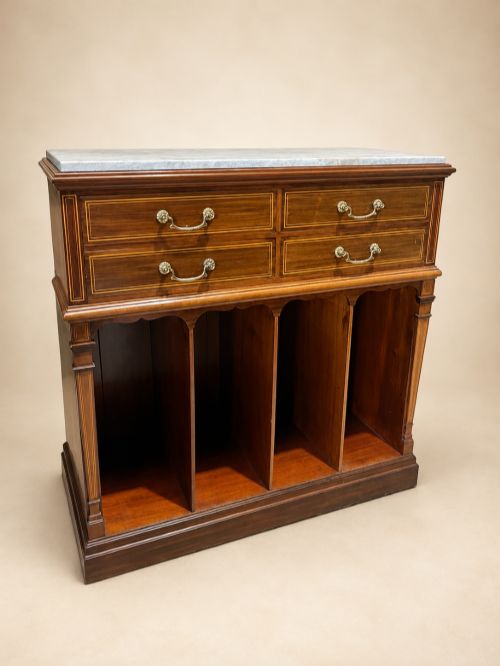
When you search for a mahogany credenza server, you are looking at large dining room storage pieces that share lineages with sideboards, buffets, and chiffoniers. These items serve as functional serving stations and storage units, appearing in forms ranging from compact bow fronts to expansive breakfronts.
The pieces on this page span the eighteenth, nineteenth, and early twentieth centuries, encompassing Georgian, Regency, Victorian, and Edwardian eras. You will frequently encounter nineteenth-century mahogany sideboards and chiffoniers adapted for modern serving and display uses.
Makers and cabinetmakers from periods such as the George III and Sheraton eras established the traditional proportions seen here. Regional variations, including Scottish and London workshops, produced distinct local interpretations of these serving pieces.
Materials and construction methods
Cabinetmakers built these pieces primarily using solid mahogany and flame mahogany veneer over secondary structural timbers. The distinctive figured grain relied on carefully sliced veneers laid down in symmetrical patterns across drawer fronts and cupboard doors.
Inlaid decoration often incorporates contrasting lighter timbers such as satinwood and boxwood, sometimes combined with delicate marquetry. Structural stability was maintained through traditional joinery, while brass handles, key escutcheons, and occasional lion paw feet provided functional and decorative hardware.
Listings feature multiple periods including George III, Regency, and Victorian, constructed from solid mahogany, flame mahogany veneer, and contrasting satinwood inlay.
Distinguishing quality and craftsmanship
The finest examples display exceptionally figured timber and precise matching of flame mahogany veneers across multiple doors and drawers. Superior pieces feature crisp hand-carved detailing, such as decorative mouldings or carved paw feet, executed with sharp definition rather than soft edges.
Interior construction reveals the maker's hand through the use of solid secondary timbers, hand-cut dovetails on drawer boxes, and original brass hardware. Lesser examples rely on simpler construction, plain timber stocks, and replaced fittings that alter the original character of the piece.
Hewetsons London
The Mahogany Credenza Server Glossary
- Bow front
- A convex curved cabinet front that projects outward in a smooth arc. This shape became popular during the Georgian and Regency periods to soften room angles.
- Breakfront
- A large piece of furniture where the central section projects forward from the flanking outer cabinets. This architectural arrangement creates depth and visual rhythm.
- Flame mahogany
- A veneer cut from the branch junctions of the mahogany tree, displaying a dramatic swirling flame pattern. Cabinetmakers reserved this prized timber for primary display surfaces.
- Chiffonier
- A low sideboard or cabinet featuring enclosed shelving below, sometimes surmounted by a mirror or small tier. These items evolved during the nineteenth century for dining and drawing rooms.
- Marquetry
- The art of forming decorative patterns by fitting together small pieces of contrasting veneers. Artisans utilised boxwood and satinwood to create floral or geometric motifs.
Mahogany Credenza Server: Frequently Asked Questions
What is a mahogany credenza server?
A mahogany credenza server is a large dining room storage unit designed for serving food and storing tableware. These pieces combine drawers and cupboards within a heavy timber frame.
They derive their forms from historical sideboards, buffets, and chiffoniers produced across the eighteenth and nineteenth centuries.
How do I date a mahogany server?
Dating involves examining the timber grain, construction techniques, hardware, and prevailing architectural styles. Georgian and Regency pieces show different proportions and inlay work compared to Victorian examples.
Secondary woods inside drawers and the presence of hand-cut dovetails also help establish the period of manufacture.
How were these servers used historically?
Historically, dining room servers held heavy platters, cutlery, and glassware during large meals. Servants placed dishes on the top surface before bringing them to the dining table.
Cupboard spaces below accommodated linens, bottles, and extra dining accessories out of sight.
How do I care for mahogany furniture?
Mahogany requires stable room temperatures away from direct sunlight and heat sources to prevent timber splitting. Regular dusting with a soft, dry cloth preserves the polished surface.
Occasional application of appropriate wax feeding helps maintain the depth and lustre of the antique finish.