




Mahogany Corner Vitrine
A mahogany corner vitrine turns dead wall space into a handsome display for silver and porcelain.
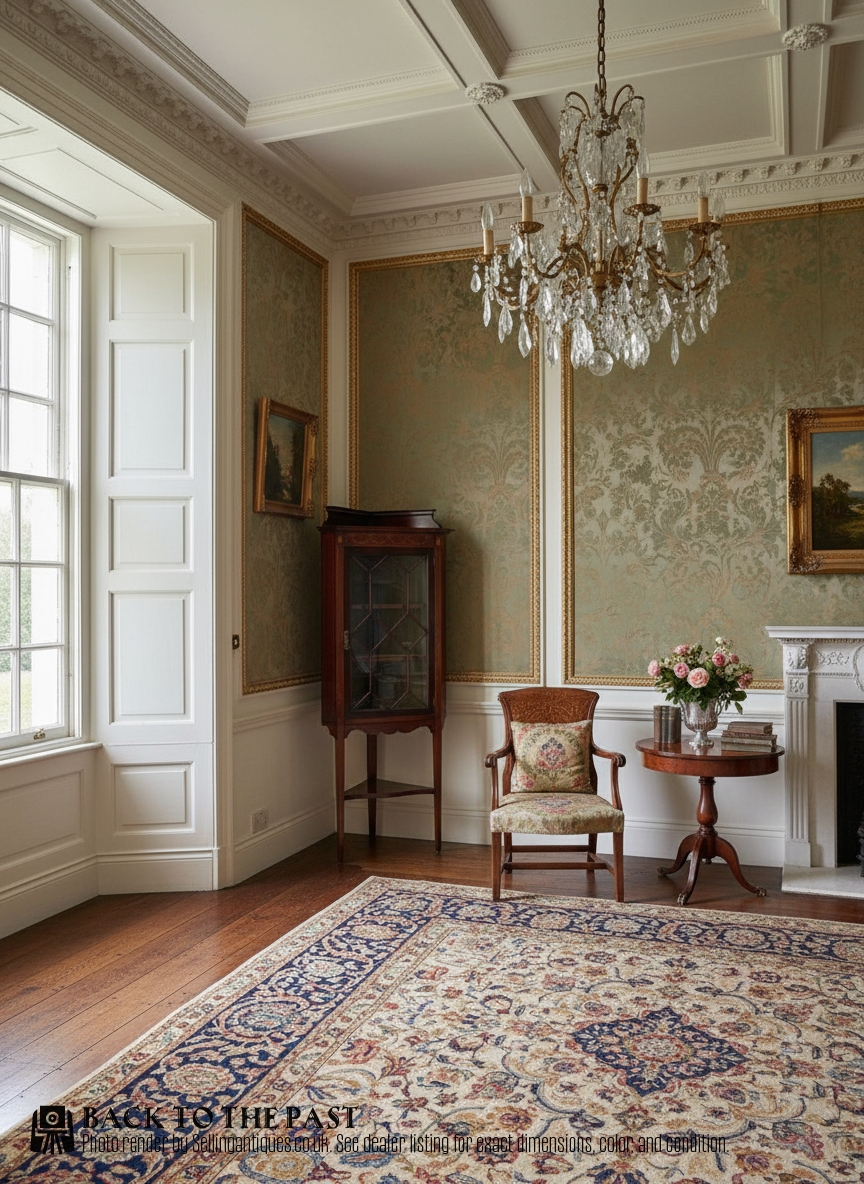
Mahogany Corner Vitrine
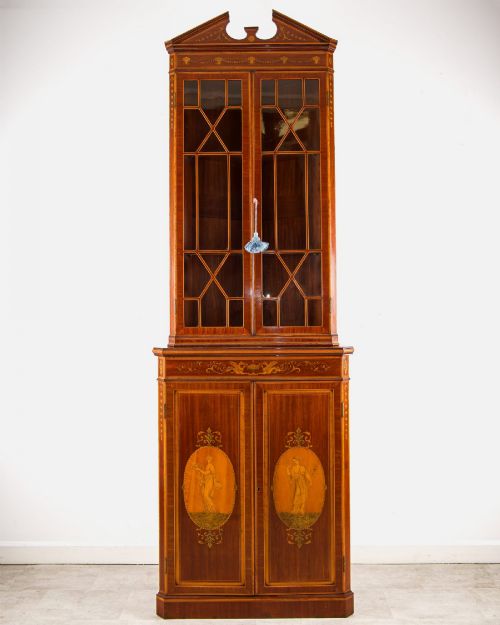
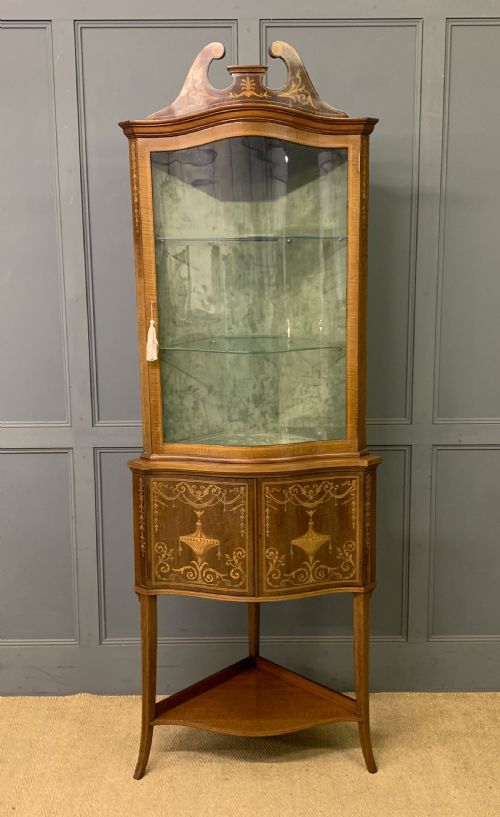
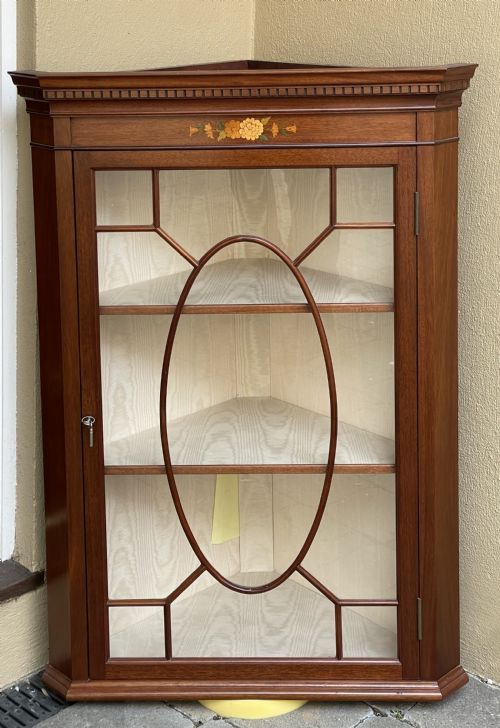
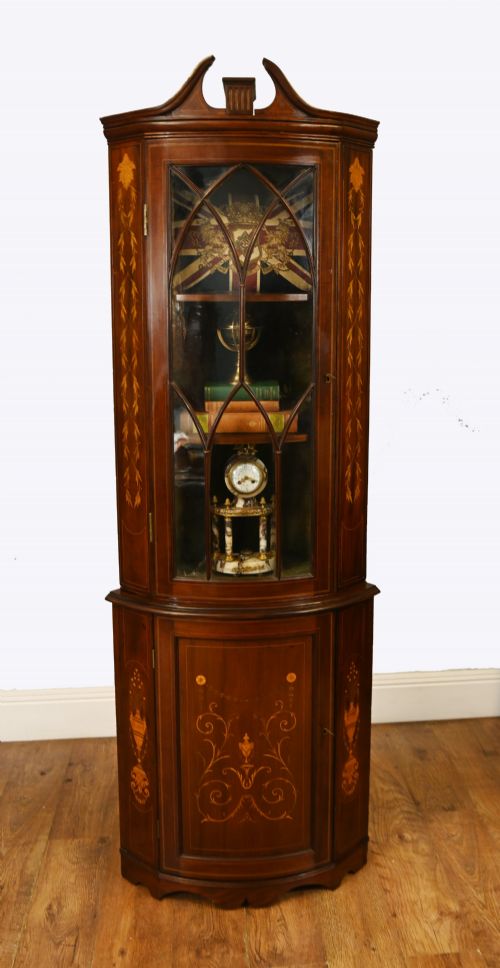
A mahogany corner vitrine uses glass doors and timber frames to showcase collections while tucking neatly into room angles. The pieces available span periods from the eighteenth century through the Edwardian era and into later revival styles.
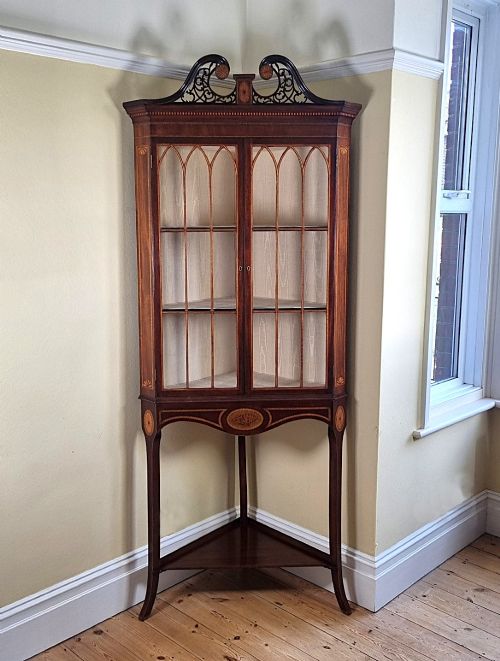
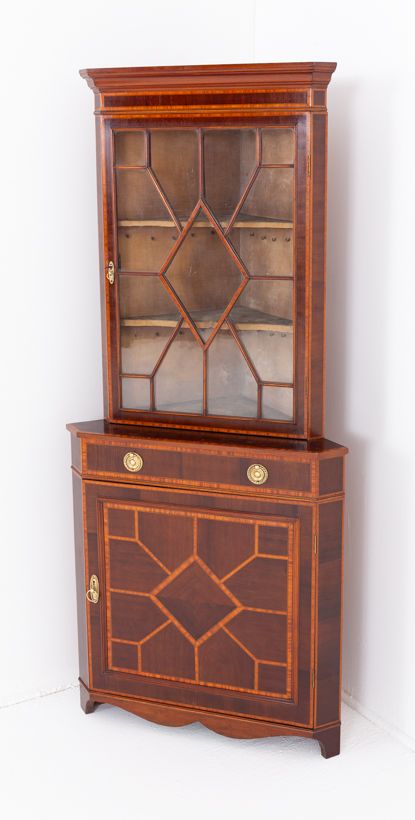
Buyers will encounter wall-hanging cupboards, floor-standing units, and glazed cabinets on stands. Edwardian and Sheraton Revival examples appear frequently alongside Georgian originals.
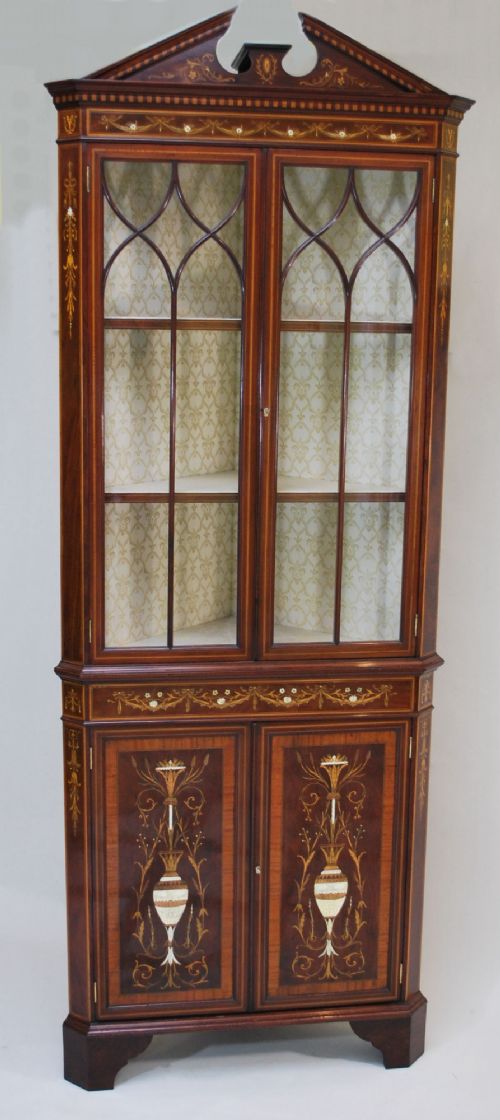
Makers utilised the natural grain of mahogany, often enriched with satinwood or boxwood inlay, to frame glazed display compartments.
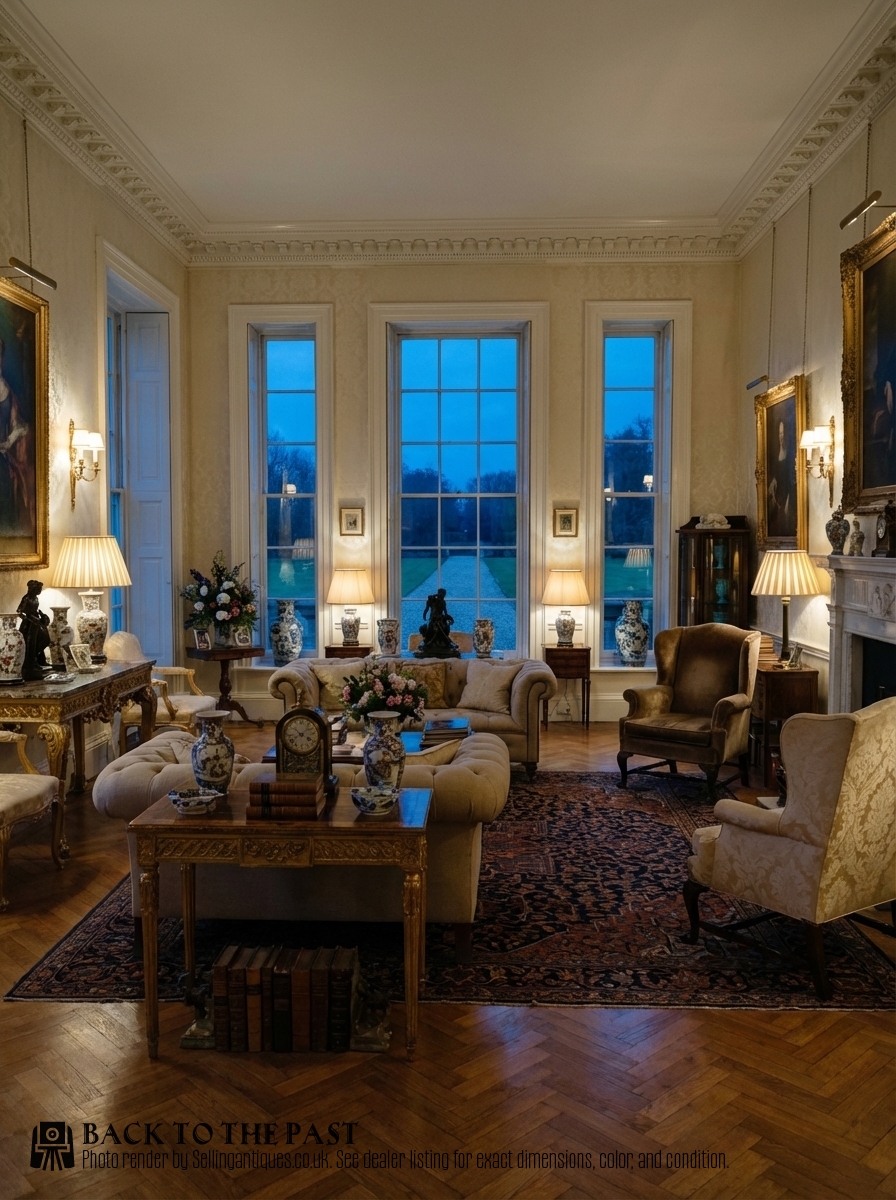
Materials and construction methods
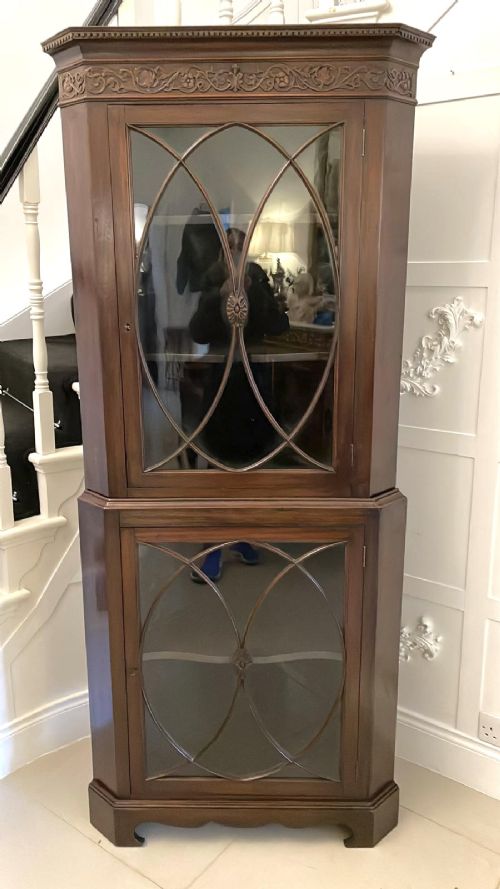
Cabinet makers relied on solid mahogany and carefully selected veneers to build the structural carcase, shaping the corner angles to fit domestic interiors. Glass panels, sometimes held by astragal glazing bars, protect the interior shelves while offering a clear view of objects placed within.
Inlay work in satinwood and boxwood adds delicate linear contrast to the dark timber ground. Brass hardware provides functional hinges and locks, while internal fabric linings occasionally back the display space.
Mahogany Corner Vitrine Retail Price Guide 2026
Typical asking prices for mahogany corner vitrine among the pieces listed under this phrase on Sellingantiques today, from the lower quarter to the upper quarter. They describe what is for sale here now, not the wider market.
Listings feature mahogany, satinwood, and boxwood inlay alongside glass, brass, and fabric components across multiple centuries.
Distinctions in craftsmanship
Quality rests in the crispness of the timber carving, the precision of the satinwood or boxwood inlay, and the refinement of the glazing bars. Earlier Georgian pieces and marked maker pieces demonstrate superior joinery and timber selection compared to later mass-produced alternatives.
The choice between a simple wall-hanging cupboard and a grand double-height standing vitrine with marquetry details marks the upper tier of the range.
John Stow Ltd of Bradford·Edwards And Roberts
The Mahogany Corner Vitrine Glossary
- Astragal glazing
- Timber bars dividing glass panes into smaller geometric sections. These delicate mouldings define the face of many display doors.
- Marquetry
- Decorative patterns formed by fitted veneers of different coloured woods. Craftsmen cut floral and geometric motifs into the mahogany surface.
- Vitrine
- A glass-fronted cabinet designed for displaying objects. These pieces protect delicate items from dust while keeping them visible.
- Serpentine front
- A curved furniture front featuring a convex centre flanked by concave wings. This shape adds movement and complexity to the cabinet profile.
Mahogany Corner Vitrine: Frequently Asked Questions
How do I secure a wall-hanging corner cabinet?
These cabinets require sturdy fixings driven directly into solid wall studs or masonry to support the weight of the timber and glass.
Professional installation prevents the unit from shifting once loaded with heavy ceramic or glass collections.
Are these cabinets suitable for small rooms?
The triangular footprint allows a corner vitrine to utilise wasted angles in compact spaces without blocking walkways.
Standing and wall-mounted formats both draw the eye upward and make efficient use of vertical room dimensions.
How do I tell Edwardian revivals from Georgian originals?
Georgian pieces generally show older timber patination, hand-cut joinery, and traditional carcase construction methods.
Edwardian and Sheraton Revival examples often feature machine-cut elements, brighter satinwood inlay, and lighter internal fittings.
What items look best inside a glass corner cabinet?
Porcelain figures, silver tableware, and small decorative glass vessels complement the mahogany shelves and mirrored backs.
Internal depth limits the display to smaller collectibles rather than large folio volumes or bulky objects.